
 Save 15% on your 1st Autoship learn more

 Email us
 Live Chat
 FAQs
FAQs





Introduction
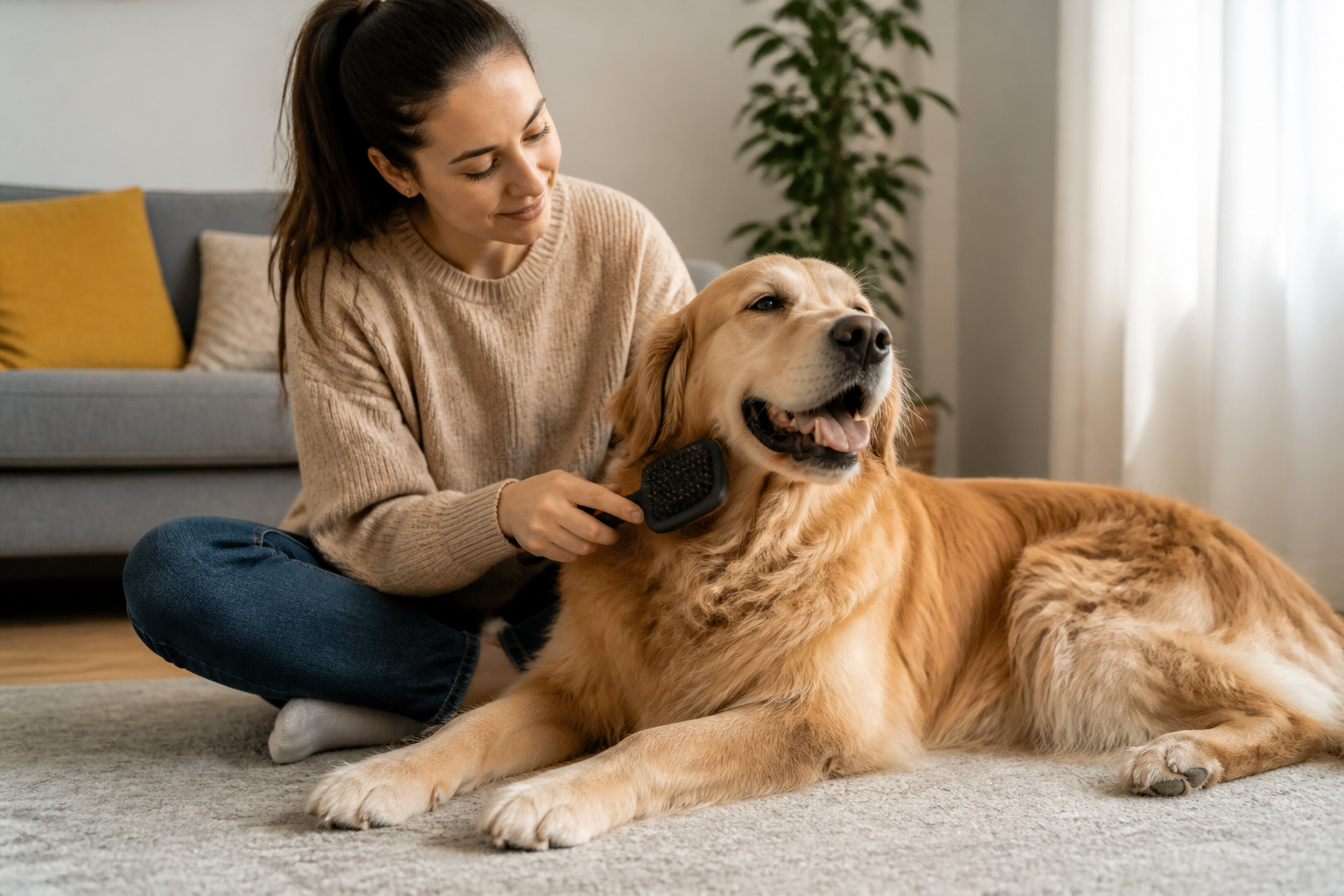
You are sitting on the living room rug when you notice a small tumbleweed of fur drifting across the hardwood. Or perhaps you reach down to scratch your dog behind the ears and feel a tight, stubborn knot forming in their coat. These are the moments when every pet owner asks if they should be doing more to keep up with grooming. At BaxterBoo, we see this question often from dedicated owners who want to keep their pets comfortable and their homes clean.
The answer depends largely on your dog's specific coat type and lifestyle. While every dog benefits from regular grooming, the difference between a quick weekly session and a mandatory daily routine is significant. This guide covers how to identify your dog's coat needs, the tools required for success, and how to turn grooming into a health check. By understanding these basics, you can prevent painful matting and keep your dog's skin in peak condition.
Determining Your Dog's Brushing Schedule
The frequency of your grooming routine is not a one size fits all decision. It is a biological requirement based on how your dog's hair grows and sheds. Some dogs have hair that grows continuously, much like human hair, while others have fur that reaches a certain length and then falls out.
Quick Answer: While daily brushing is ideal for bonding and debris removal, it is only strictly necessary for dogs with long, silky, or curly coats that mat easily. Short-haired breeds typically only need a thorough brushing once or twice a week to manage shedding and skin health.
If you have a breed known for a "drop coat" or a "curly coat," daily attention is often the only way to stay ahead of tangles. These coats do not shed in the traditional sense. Instead, loose hairs get trapped within the coat, leading to mats that can eventually pull painfully on the skin. For smooth-coated dogs, daily brushing is more about reducing the amount of fur on your furniture than it is about preventing medical issues.
Understanding Coat Types and Requirements
To know if you should brush your dog every day, you first need to identify their coat category. Each type reacts differently to friction, moisture, and environmental debris.
Smooth and Short Coats
Breeds like Boxers, Pointers, and Labradors fall into this category. Their fur is sleek and stays close to the body. You might think they do not need brushing because they do not get mats. However, these breeds often shed consistently throughout the year. Brushing them once or twice a week with a bristle brush or a rubber curry tool helps remove dead hair before it ends up on your clothes.
Double Coats
German Shepherds, Huskies, and Samoyeds have a dense undercoat protected by a coarser outer coat. These dogs go through a "blow out" twice a year where they lose massive amounts of fur. During these seasonal shifts, daily brushing is almost a necessity to manage the volume of hair. Outside of those seasons, two to three times a week is usually sufficient.
Curly and Wool Coats
Poodles, Bichon Frises, and many "doodle" mixes have hair that traps dirt and loose strands. Because this hair does not fall away from the body, it quickly forms knots. For these dogs, daily brushing is highly recommended. If a curly coat is left for even a few days without a comb-through, small tangles can turn into "pelting," where the hair mats all the way down to the skin.
Silky and Drop Coats
Yorkshire Terriers and Maltese dogs have long, fine hair that hangs down. This hair is very susceptible to tangles from harnesses, collars, and even the way the dog sleeps. Daily brushing is the best way to maintain the "flowy" look of a drop coat while ensuring the dog remains comfortable.
Key Takeaway: Match your brushing frequency to the "matting risk" of the coat. The longer and finer the hair, the more frequently you should reach for the brush.
The Health Benefits of Daily Grooming
Brushing is more than just an aesthetic choice: it is a vital part of preventative healthcare. When you brush your dog every day, you are performing a mini-physical exam. This allows you to spot changes that might otherwise go unnoticed under a thick layer of fur.
During your grooming session, you should be looking for:
- Redness or hot spots on the skin.
- The presence of fleas or flea dirt.
- Unusual lumps or bumps under the skin.
- Ticks that may have hitched a ride after a walk.
- Dry, flaky skin or excessive oiliness.
If you find that your dog is constantly itchy or has red, irritated skin during your daily brushing session, it might be more than just a stray tangle. Our pet pharmacy carries FDA-approved allergy medications and prescription skin treatments through our partnership with Pet's Choice. Sometimes a skin condition requires more than just a better brush, and we are here to help you bridge that gap.
Vet Tip: If you notice a new lump, persistent redness, or a foul odor coming from the skin or ears during grooming, schedule a visit with your veterinarian. Early detection of skin infections or growths is key to successful treatment.
Choosing the Right Tools for Your Dog
Using the wrong brush can be ineffective or even uncomfortable for your pet. A brush that is too soft will not reach the undercoat of a Husky, while a brush that is too stiff might irritate the skin of a thin-coated Greyhound.
- Slicker Brushes: These have fine wire bristles and are excellent for removing tangles and debris from medium to long-haired dogs.
- Bristle Brushes: These are best for smooth-coated dogs. They help distribute natural oils across the skin, creating a healthy shine.
- Pin Brushes: Similar to a human hairbrush, these are ideal for long, silky coats like those of a Golden Retriever or a Setters.
- Undercoat Rakes: These tools reach through the topcoat to pull out loose fur from the dense undercoat of double-coated breeds.
- Rubber Curry Brushes: These are perfect for short-haired dogs and are often enjoyed by pets as they provide a gentle massage.
BaxterBoo provides a wide selection of dog grooming supplies handpicked to ensure they are durable and effective for home grooming. Having a "kit" that includes a primary brush, a fine-toothed comb for detail work, and a detangling spray will make the daily routine much faster.
How to Brush Your Dog Correctly
The technique you use is just as important as the frequency. Simply dragging a brush over the top of a thick coat will not prevent mats near the skin. This is often called "surface brushing," and it can hide serious matting underneath.
Step 1: Start with a visual inspection.
Look for any obvious burrs, tangles, or areas of irritation. If you see a large mat, do not pull on it with a brush immediately.
Step 2: Use a detangling spray.
A light mist of a coat conditioner or detangler can provide "slip," making it easier for the brush to move through the hair without tugging.
Step 3: Work in sections.
Start at the bottom of the leg or the rear of the dog and work your way forward. This ensures you do not miss any spots.
Step 4: Use the "line brushing" technique.
For long-haired dogs, push the hair up with one hand and brush the hair down with the other. This allows you to see the skin and ensure you are brushing the entire length of the hair shaft.
Step 5: Reward and praise.
Always end the session on a positive note. A small treat or a favorite toy helps your dog associate the brush with a good experience.
For a two-sided option that combines pins and bristles, consider the U-Groom Combo Brush for Dogs and Cats.
Bottom line: Effective brushing requires reaching the skin safely to remove trapped hair and distribute natural oils.
Managing Shedding and the Home Environment
For many owners, the motivation for daily brushing is the battle against shed fur. While you cannot stop a dog from shedding, you can control where that hair ends up. Brushing your dog outside or in a dedicated grooming area once a day can reduce the amount of vacuuming you have to do inside.
If your dog is a heavy shedder, consider our Frequent Buyer Program for grooming supplies and supplements. Some dogs shed excessively due to a lack of Omega-3 fatty acids in their diet. Adding a skin and coat supplement can strengthen the hair follicle and reduce the volume of loose fur. We carry several trusted brands like Zesty Paws and Honest Paws that offer targeted support for coat health.
Regular grooming also prevents the buildup of dander in your home. This is particularly important if anyone in your household suffers from pet allergies. By removing the loose hair and dander daily, you keep the air quality in your home much higher.
Dealing with Stubborn Mats Safely
If you have missed a few days of brushing and find a mat, proceed with caution. Mats often form in high-friction areas like behind the ears, in the armpits, and where the collar sits.
Never use kitchen scissors to cut out a mat. A dog's skin is incredibly thin and can easily be pulled into the mat. If the mat is tight against the skin, it is much safer to use a dedicated mat-splitting tool or to consult a professional groomer. If you must tackle it at home, use a blunt-nosed safety shear and place a comb between the skin and the mat to act as a guard.
For additional guidance on preventing and handling tangles, read these tips for brushing and combing your dog after a bath.
Key Takeaway: If a mat is larger than a grape and tight against the skin, it is usually safer to have it professionally shaved than to risk cutting the dog at home.
Training Your Dog to Love Grooming
Not every dog starts out enjoying the brush. For some, the sensation is strange or even scary. Starting slow is the secret to a lifetime of easy grooming.
For a new puppy or a rescue dog, begin by just showing them the brush and giving them a treat. Gradually move to touching them with the back of the brush, then one or two gentle strokes. Keep sessions very short, perhaps only two minutes at a time. Within a few weeks of consistent, positive reinforcement, most dogs will begin to lean into the brush and enjoy the attention.
If your dog is particularly anxious about grooming, you might explore calming aids. We carry a variety of anxiety and calming solutions, including hemp-based chews and pheromone sprays, which can help take the edge off for sensitive pets.
The Role of Professional Grooming
Even with a daily brushing routine, most dogs still need a professional groom every six to eight weeks. Professionals have high-velocity dryers that can blow out undercoats and specialized tools for "sanitary trims" that are difficult to do safely at home.
Your daily brushing makes the professional groomer's job much easier. A dog that is well-maintained at home is less likely to need a full "shave down" due to matting. It also means the dog will be more comfortable during their appointment because they are already used to being handled and brushed.
Conclusion
Determining whether you should brush your dog every day comes down to their coat type and your goals for their health. While short-haired dogs can thrive on a weekly schedule, long-haired and curly-coated breeds truly need that daily attention to stay pain-free. We at BaxterBoo believe that these minutes spent grooming are some of the best moments you can have with your pet. It is a time for bonding, a time for health checks, and a simple way to show your dog you care about their comfort.
To get started on the right foot, ensure you have the correct tools for your dog's specific needs. Check out our full collection of brushes, combs, and detangling sprays to build your home grooming kit. If you find any skin concerns during your routine, remember that our pharmacy is available to provide the medications your veterinarian prescribes.
FAQ
What happens if I don't brush my dog for a week?
For short-haired dogs, a week without brushing usually results in a bit more fur on your carpet but no physical harm to the dog. For long-haired or curly breeds, a week without brushing can lead to significant matting, especially in high-friction areas like the armpits or under the collar. These mats can become painful and may require professional shaving if they become too tight.
Can I brush my dog too much?
It is possible to cause "brush burn" if you use too much pressure or focus on the same spot for too long, especially with a slicker brush or a shedding blade. Always use a light hand and keep the brush moving across the body. If you see the skin turning pink or red, stop immediately and give the area a break for a few days.
Is it better to brush a dog wet or dry?
It is almost always better to brush a dog when their coat is dry. Water can actually cause existing mats to tighten and shrink, making them much harder to remove. If your dog is dirty, brush out as many tangles as possible before the bath, then use a detangling spray after they are dry to finish the job.
Does brushing help with dog allergies?
Yes, regular brushing significantly reduces the amount of dander and loose fur in your home. By removing these allergens from the dog's coat in a controlled way, you prevent them from circulating in the air. For people with mild pet allergies, a daily brushing routine for the dog can make a noticeable difference in their comfort level at home.






