
 Save 15% on your 1st Autoship learn more

 Email us
 Live Chat
 FAQs
FAQs





Introduction
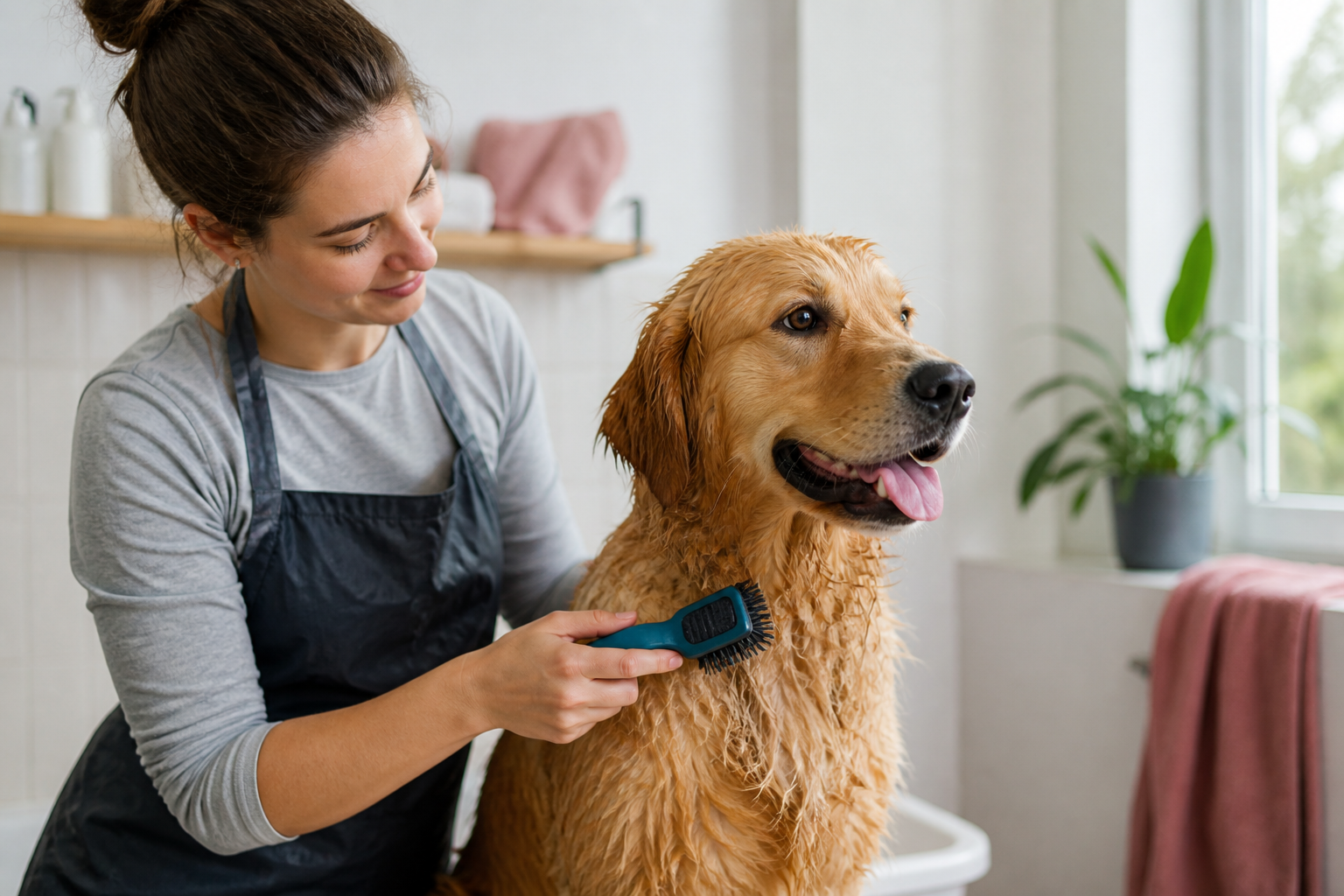
You just finished giving your dog a bath, and they are currently sprinting around the house performing the "zoomies." As they pause to shake off a cloud of water, you stand there with a brush in your hand and a common question. Should you start brushing while they are still soaked, or is it better to wait until they are completely dry? At BaxterBoo, we hear this question from pet parents every day. Most of us were taught to brush a dog when they are dry, but professional grooming techniques have evolved. This post covers the science of hair bonds, why a bone-dry coat is prone to damage, and how to use the "damp" method for the best results. Knowing the right timing will keep your dog's coat shiny and their skin healthy.
Quick Answer: You should generally avoid brushing a bone-dry coat or a dripping-wet coat. The best results come from brushing a damp coat that has been treated with a leave-in conditioner or grooming spray to provide lubrication and prevent breakage.
The Problem with Brushing a Bone-Dry Coat
Many owners believe that dry brushing is the safest way to maintain a coat. However, brushing a dog when their fur is completely dry can actually cause several issues. When hair is dry, it lacks flexibility. The friction from a brush or comb can lead to immediate hair breakage. This is especially true for dogs with long, fine hair or curly coats.
Dry brushing often creates static electricity. This static makes individual hairs stand up and wrap around each other. Instead of removing tangles, you might inadvertently create new ones. This static also attracts dust and dander. It can make the coat look dull and dirty even if you just finished a grooming session.
Furthermore, dry hair is rougher at a microscopic level. The brush catches on the cuticles of the hair shaft. This tugging can be painful for your dog. If grooming becomes a painful experience, your dog may start to hide as soon as they see the brush. We want grooming to be a bonding time, not a source of stress.
Key Takeaway: Brushing a bone-dry coat causes friction and static. This leads to hair breakage and discomfort for your dog.
The Science of Wet Hair and Breakage
To understand why wet brushing is controversial, we have to look at the structure of the hair. Dog hair is held together by different types of bonds. Hydrogen bonds are one of the most important. These bonds give the hair its strength and moisture. When you get your dog's hair wet, these hydrogen bonds break. This makes the hair much more elastic and stretchy.
While elasticity sounds like a good thing, it actually makes the hair fragile. If you pull too hard on a wet hair shaft, it will stretch until it snaps. This is why you should never aggressively brush a dog that is dripping wet. The hair is at its weakest tensile state when it is saturated with water.
The outer layer of the hair is called the cuticle. When hair gets wet, the cuticle swells. This makes the hair feel thicker, but it also makes it more susceptible to damage from metal brush pins. If you brush a wet coat without any lubricant, the pins can scrape away the protective cuticle. This leaves the hair porous and prone to future matting.
Why Damp Brushing is the Professional Secret
If dry brushing is too brittle and wet brushing is too fragile, what is the solution? Professionals often aim for the "damp" stage. This is when the hair has about 20 percent moisture left. At this stage, the hair is flexible but has regained some of its structural strength.
We recommend using a grooming spray or a leave-in conditioner during this phase. This provides "slip." Think of it like trying to remove a ring from a dry finger versus a soapy one. The lubrication allows the brush to glide through tangles rather than snapping through them.
At BaxterBoo, we find that this method is the most efficient for removing undercoat. Double-coated breeds like Golden Retrievers or Huskies benefit significantly from damp brushing. The moisture helps the dead undercoat slide out from the healthy topcoat without creating a cloud of dry dander in your living room.
Benefits of Damp Brushing
- Reduces the amount of flying fur and dander in your home.
- Distributes natural oils and conditioning products evenly.
- Prevents static electricity from forming during the session.
- Allows you to find small mats before they become tight clumps.
Brushing During the Bathing Process
There are times when brushing while the dog is actually in the tub is beneficial. This is usually done after you have applied a high-quality conditioner. If your dog has a very thick undercoat, the water and conditioner help to loosen the dead hair.
While the dog is saturated with conditioner, you can use a wide-toothed comb or a specialized rubber brush. Our favorite tool for this is the KONG Zoom Groom Natural Rubber Dog Grooming Brush. The thick rubber fingers massage the skin and grab onto loose hair while the conditioner provides the necessary lubrication. This process can cut your drying time in half because you are removing the bulk of the wet, dead hair before the dog even leaves the tub.
Vet Tip: If your dog has chronic skin issues or severe allergies, consult your veterinarian about their grooming routine. Our dog pharmacy carries FDA-approved medicated shampoos and prescription treatments through our partnership with Pet's Choice. These products often require a specific contact time on the skin and can be part of a professional-grade home grooming plan.
How Coat Types Change the Rules
Not every dog should be handled the same way. Your dog's breed and coat type will dictate whether you should lean toward the wet or dry side of the spectrum.
Curly and Doodle Coats
Poodles and Poodle-mixes have hair that grows in a spiral. If you let these coats dry completely without brushing, the hair will shrink and mat together. For these dogs, brushing while damp is mandatory. You should use a high-quality slicker brush and work in small sections. Brushing these dogs bone-dry is the leading cause of "coat funk" and frizz.
Double-Coated Breeds
German Shepherds, Labs, and Pomeranians have a soft undercoat and a coarse topcoat. For these breeds, you can do a quick dry brush to remove the heavy "bulk" of the shed. However, the deep deshedding should happen after a bath when the hair is damp. This ensures you are reaching the skin without scratching it.
Short-Haired Breeds
Boxers, Pugs, and Beagles are the easiest to manage. You can brush them wet or dry. A rubber curry brush works wonders on a dry coat to remove surface hair. During a bath, that same brush helps the shampoo reach the skin. These dogs rarely deal with breakage, so the rules are much more flexible.
| Coat Type | Best Brushing State | Recommended Tool |
|---|---|---|
| Curly / Doodle | Damp with spray | Slicker brush |
| Double Coat | Damp / Post-bath | Undercoat rake |
| Short Hair | Dry or Wet | Rubber curry brush |
| Long / Silky | Damp | Pin brush |
Essential Tools for Every Grooming Stage
Choosing the right tool is just as important as the timing. If you use a harsh tool on wet hair, you will cause damage no matter how careful you are. You can find brushes, combs, shampoos, conditioners, and other supplies in our dog grooming collection.
Pin Brushes
These are ideal for damp brushing long-haired breeds. Look for pins with rounded ends. These touch the skin gently and glide through the coat. They are much more forgiving on wet hair than a standard slicker brush.
Slicker Brushes
These are the workhorses of the grooming world. They are best used on damp or dry hair to break up mats. Be careful not to use these on soaking wet hair, as the fine wire bristles can be too aggressive for the swollen hair cuticles.
Rubber Brushes
Tools like the Kong ZoomGroom are perfect for the "wet" stage in the bathtub. They are impossible to over-use and provide a great massage. They are also excellent for short-haired dogs who might find wire brushes too scratchy.
Grooming Sprays
Think of a grooming spray as a liquid tool. It should be your first step before the brush ever touches the dog. These sprays often contain ingredients that strengthen the hair bonds and add a layer of protection against heat if you use a blow dryer. For bathing and conditioning options, explore our dog shampoo and conditioner selection.
Bottom line: Matching your brush to your dog's coat type and the moisture level of the hair is the key to a professional-looking finish.
Step-by-Step: The Perfect Grooming Routine
If you want to achieve the best results at home, follow this specific order of operations. This routine minimizes hair damage and maximizes the health of the skin.
Step 1: The Pre-Bath Check. / Briefly run a brush over your dog while they are dry. You are not trying to get every hair. You are looking for large mats that will tighten like a knot when they get wet.
Step 2: The Double Wash. / Get the dog completely wet. Use a high-quality shampoo and wash them twice. The first wash removes surface dirt. The second wash actually cleans the skin and hair.
Step 3: Deep Conditioning. / Apply a conditioner and let it sit for three to five minutes. This is the best time to use a rubber brush to start moving out the dead undercoat.
Step 4: The Towel Dry. / Blot the dog with a towel. Do not rub vigorously, as this creates tangles. You want the hair to be damp but not dripping.
Step 5: Apply Grooming Spray. / Mist the coat with a leave-in conditioner or detangling spray. This sets the stage for a safe brushing session.
Step 6: The Damp Brush. / Use your pin brush or slicker brush to work through the coat. Start at the bottom of the legs and work your way up the body.
Step 7: The Final Dry. / Use a blow dryer on a cool or warm setting. As the hair dries, give it one final pass with the brush to ensure everything is smooth and fluffy.
For additional bathing guidance, read our tips on how to make bath time easier for your dog.
Managing Senior Dogs and Skin Sensitivity
As dogs age, their skin becomes thinner and less elastic. This makes the timing of brushing even more critical. Senior dogs often develop lumps, bumps, or warts that can be easily snagged by a brush.
For older pets, we strongly recommend the damp brushing method. The moisture and grooming spray provide a buffer that protects the skin. If your dog has developed a "doggy smell" that won't go away, it might not be a dirty coat. It could be a skin infection or a change in their skin's pH.
Our pharmacy provides a wide range of support for these issues. From prescription diets like Royal Canin or Farmina Vet Life that support skin health to topical medications for hot spots, we can help you manage your senior dog's comfort. Always check your dog's skin for new growths during your grooming session. If you find something concerning, a trip to the vet is the best next step.
Key Takeaway: Senior dogs require a gentler touch. Damp brushing with a high-quality lubricant is the safest way to groom an aging pet with sensitive skin.
Common Myths About Brushing Wet or Dry
There is a lot of conflicting advice online about grooming. Let's clear up some of the most common misconceptions we see in the pet community.
Myth 1: Brushing a wet dog causes more mats.
This is only true if you do not dry the dog completely. If you brush a dog while wet and then leave them to air dry without finishing the job, the hair can curl back into mats. However, brushing while damp actually helps prevent mats by aligning the hair shafts.
Myth 2: You should never brush a dry dog.
While we prefer damp brushing, you can safely brush a dry dog if you use a grooming spray. The goal is to avoid "bone-dry" friction. A quick misting of water or spray makes dry brushing perfectly safe for a daily touch-up.
Myth 3: Shaving a matted wet dog is easier.
Never try to shave a wet, matted dog. Water causes mats to tighten and pull closer to the skin. This makes it incredibly easy to accidentally cut the dog with clippers. If a dog is severely matted, they should be groomed while dry by a professional.
Myth 4: Dish soap is a good substitute for dog shampoo.
Dish soap is designed to strip grease from pots and pans. It is far too harsh for a dog's skin. It strips away the natural oils that protect the hair bonds. Always use a shampoo formulated for a dog's specific pH level.
Why Quality Supplies Matter
Operating since 2006, BaxterBoo has seen thousands of grooming products come and go. We only carry the brands we trust for our own pets. Using a cheap brush with sharp metal pins can cause "brush burn," which is a painful scraping of the skin. Similarly, low-quality shampoos can cause the coat to become brittle and dry.
Investing in a few high-quality tools will save you money in the long run. A good pin brush can last for years, and a concentrated conditioner goes a long way. When you use the right products, you will find that you don't have to groom as often because the coat stays cleaner and more manageable.
Our MVP Rewards program is a great way to build your grooming kit over time. You can earn points on every purchase, including premium food and treats that support coat health from the inside out. Healthy hair starts with high-quality protein and Omega fatty acids.
Conclusion
Deciding whether to brush your dog wet or dry does not have to be a guessing game. While a bone-dry coat is prone to breakage and a soaking-wet coat is too fragile, the damp method offers the perfect balance. By using a grooming spray and the right tools for your dog's specific coat type, you can ensure a painless and effective grooming session. Remember to always use a lubricant to protect the hair bonds and keep the skin hydrated.
- Avoid brushing bone-dry fur to prevent static and breakage.
- Never aggressively brush a soaking-wet dog without conditioner.
- Use grooming sprays to provide "slip" and protection.
- Check your dog's skin for any irregularities during every session.
For all your grooming needs, from specialized brushes to medicated shampoos, visit our dog grooming supplies or our pharmacy for expert-grade solutions.
FAQ
Is it better to brush a dog before or after a bath?
It is best to do both for different reasons. A quick dry brush before the bath helps find large mats and removes surface debris. Brushing after the bath, while the coat is damp and conditioned, is the most effective way to remove the undercoat and leave the hair smooth.
Can I brush my dog when they are soaking wet?
You should only brush a soaking-wet dog if they are covered in a high-quality conditioner. Water alone makes the hair elastic and weak. The conditioner provides the lubrication needed to prevent the hair from snapping while you work through the coat.
Why does my dog get static when I brush them dry?
Static occurs because of the friction between the brush and the dry hair shafts. This is more common in winter or in dry climates. You can stop this by lightly misting the coat with a grooming spray or even a little bit of water before you start.
What happens if I never brush my dog when they are wet?
For most dogs, this is fine as long as you use a grooming spray for dry sessions. However, for curly-coated breeds like Poodles, skipping the damp brushing phase often leads to "shrinking" and tight mats. These mats can eventually cause skin irritation and require the dog to be shaved.






