
 Save 15% on your 1st Autoship learn more

 Email us
 Live Chat
 FAQs
FAQs





Introduction
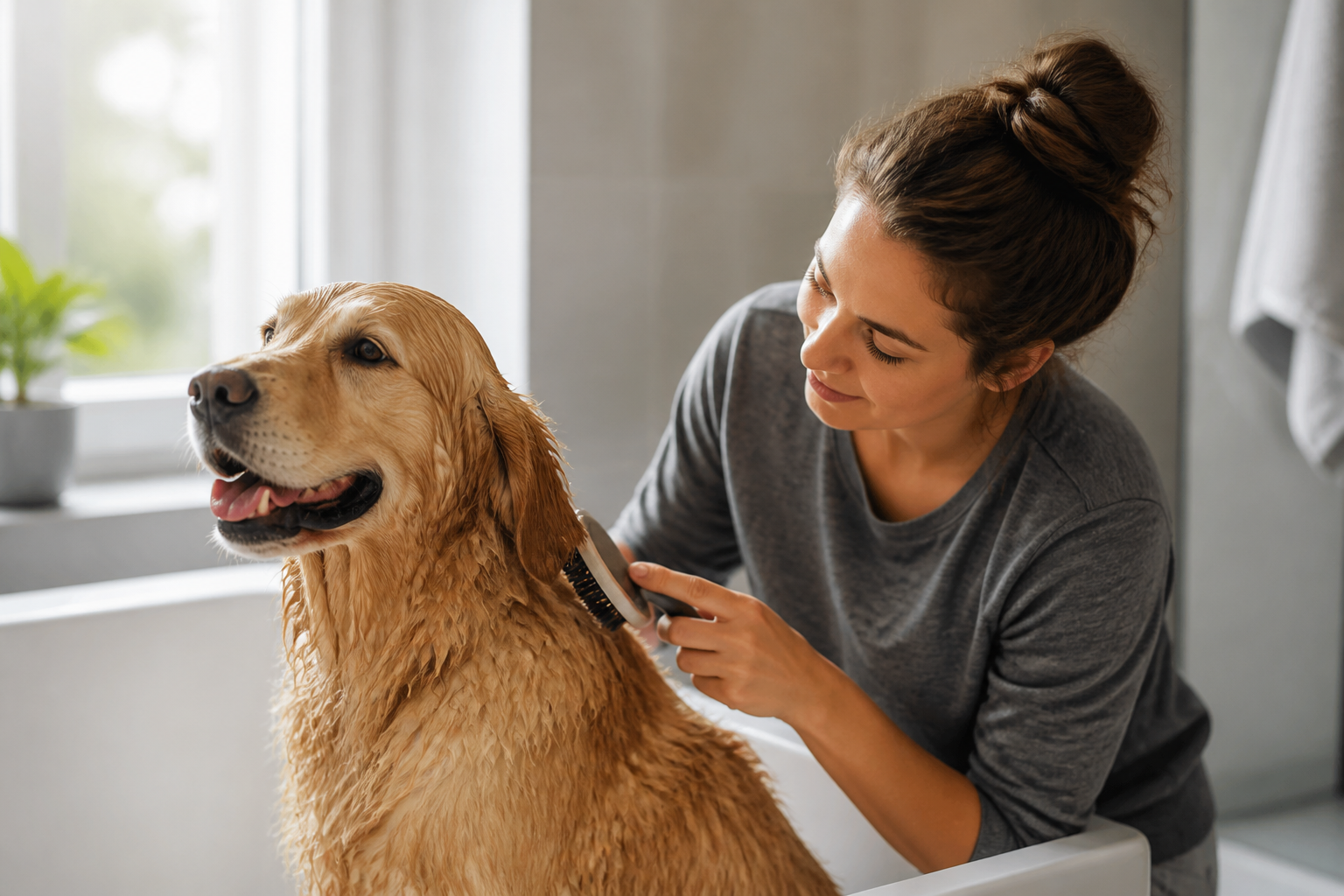
You have just finished giving your dog a bath, and they are currently a soggy, shivering mess. Or perhaps you just came inside after a walk in a sudden downpour. You reach for the brush, wondering if it is better to work through those tangles now or wait until the coat is bone dry. This is a common dilemma for pet owners. At BaxterBoo, we talk to people every day who want to keep their pets looking their best without causing discomfort or coat damage.
The short answer is that it depends on your dog's coat type and whether you are using the right products. Brushing a dripping wet dog without any lubrication can lead to hair breakage and skin irritation. However, brushing during the conditioning phase or when the coat is damp can actually be beneficial. This guide covers the science of wet hair, the dangers of wet mats, and how to choose the right tools for a safe grooming session.
The Science of Wet Canine Hair
Understanding the structure of your dog's hair helps explain why wet brushing is so controversial. When hair gets wet, it undergoes a physical change. Water breaks down the hydrogen bonds in the hair shaft. This makes the hair more elastic and stretchy than it is when dry. While elasticity sounds like a good thing, it actually makes the hair much more fragile.
If you pull a brush through saturated hair, the strands stretch to their limit before snapping. This leads to split ends and a frizzy, dull appearance once the coat dries. The outer layer of the hair, called the cuticle, also swells when it absorbs water. This makes the surface of the hair rougher. Rough hair strands are more likely to snag on each other, creating more friction as the brush passes through.
Quick Answer: You should generally avoid brushing a dripping wet dog. Hair is at its weakest when saturated with water, making it prone to stretching and snapping. It is best to brush when the coat is damp and treated with a conditioner or grooming spray.
The salt bonds and disulfide bonds in the hair provide its strength and shape. When you add water and physical tension from a brush, you risk compromising these bonds. This is why professional groomers are so careful about the timing of their brushing. They know that the wrong move on a wet coat can cause long term damage that takes months to grow out.
When Brushing a Wet Dog is a Good Idea
Despite the risks of breakage, there are specific times when wet brushing is actually the preferred method. The most common scenario is during the bath itself. Many professionals use a technique called wet brushing while the dog is saturated with conditioner. This is common for breeds with thick undercoats or long, silky hair.
When you apply a high quality conditioner, it smooths down the hair cuticle. This adds "slip" to the hair, which reduces friction. Brushing at this stage helps distribute the conditioner from the root to the tip of every hair. It also helps to pull out loose undercoat that the water has already started to lift. This can make the drying process much faster because you are not trying to blow air through a layer of dead, trapped fur.
- During the conditioning phase: Use a brush to work the product through the fur.
- For deshedding: Removing loose fur while wet can prevent "fur-nadoes" in your living room later.
- After towel drying: When the hair is damp but not dripping, a light brush can help separate the strands for faster air drying.
Brushing while wet is also useful for dogs with very short coats. For a breed like a Beagle or a Lab, a rubber curry brush used during the bath is excellent. It massages the skin, improves circulation, and helps scrub away dander. Since short hair does not tangle or stretch like long hair, the risk of breakage is almost zero.
Key Takeaway: Wet brushing is most effective when the hair is lubricated with conditioner. This technique helps distribute products evenly and removes loose undercoat before the drying process begins.
The Golden Rule: Never Brush Wet Mats
There is one situation where you should never, ever brush a wet dog: when they have mats or severe tangles. This is perhaps the most important rule in dog grooming. When a mat gets wet, it behaves like a sponge. The hair fibers soak up the water and then shrink as they begin to dry. This causes the knot to tighten significantly.
Trying to brush out a wet mat is like trying to untie a wet knot in a shoelace. It is nearly impossible to do without causing significant pain to your dog. The brush will tug at the skin, which is often already sensitive or slightly soft from the water. This can lead to brush burn or even small tears in the skin.
If you find a mat while your dog is wet, the best thing to do is leave it alone until the coat is fully dry. Or, better yet, find it before the bath. For additional bath and brushing guidance, read our tips for bathing your dog.
Vet Tip: Mats that stay wet for too long can trap moisture against the skin, leading to bacterial or fungal infections known as hot spots. If your dog has severe matting, consult your veterinarian or a professional groomer to avoid skin injuries.
If your dog’s skin is red, oozing, or smells unusual near a mat, do not try to fix it at home. Our pet pharmacy carries FDA approved treatments for skin infections. If your vet prescribes a medicated shampoo or topical treatment for a skin condition, it is vital to follow the instructions carefully. Often, these products need to sit on the skin for ten minutes, and brushing them through gently with a soft brush can help.
Choosing the Right Tools for Wet Grooming
Not every brush in your kit is suitable for wet work. Using a heavy slicker brush with sharp metal pins on wet, softened skin can cause irritation. At BaxterBoo, we recommend selecting tools specifically designed for the task. The right tool makes the difference between a relaxing spa day and a stressful experience for your pup. Explore our dog grooming collection to find brushes, shampoos, conditioners, and bath supplies.
Pin Brushes
A high quality pin brush with rounded tips is often the best choice for wet brushing long or medium coats. The pins should be spaced far enough apart that they do not create excessive tension. Look for a brush with a flexible rubber cushion. This cushion acts as a shock absorber, so if the brush hits a snag, it gives a little rather than pulling directly on the hair.
Rubber Curry Brushes
The KONG Zoom Groom Natural Rubber Dog Grooming Brush is a classic example of a tool that excels in the tub. These are made of soft rubber and have thick, flexible "fingers." They are perfect for short haired breeds. You can use them in circular motions while shampooing to get the soap down to the skin and pull out dead hair.
Wide Tooth Combs
A stainless steel comb with wide spacing is useful for checking your work. Once you think you have brushed through a damp section, gently run the comb through. If it catches, stop and use your fingers to see if there is a small knot. Never pull the comb through a snag.
Bottom line: Match the tool to the coat type and the wetness level to prevent skin damage and hair breakage.
The Importance of Brushing Before the Bath
To avoid the "wet mat" nightmare, the most important step happens before the water even touches the dog. Brushing your dog while they are dry allows you to identify and remove tangles while the hair is at its strongest. This "pre-bath brush" is the foundation of a good grooming routine. You can compare different options in our dog brushes and combs category.
Step 1: Check for mats. / Use your fingers to feel for any hard clumps of hair near the skin, especially behind the ears and in the armpits.
Step 2: Use a detangling spray. / If the coat is very dry, a light mist of a conditioning spray will reduce static and friction during the pre-bath brush.
Step 3: Work in sections. / Start at the bottom of the legs and work your way up, ensuring you reach all the way to the skin.
Step 4: The Comb Test. / Run a fine tooth comb through the coat. If it passes through without snagging, your dog is ready for the tub.
By removing the loose hair before the bath, you prevent that hair from swirling around and creating new tangles during the scrubbing process. It also ensures that the shampoo can actually reach the skin rather than just sitting on top of a layer of dead fur.
Skin Health and the Importance of Drying
Brushing is only one half of the post-bath equation. The other half is drying. If you brush a damp dog and then leave them to air dry, you might find that the coat looks "clumpy" or loses its volume. For double coated breeds like Huskies or Golden Retrievers, air drying can take hours or even days. Our dog towel collection can help you remove moisture more efficiently.
Leaving a thick coat damp for a long time is a recipe for skin problems. Moisture trapped in the undercoat creates a warm, dark environment where yeast and bacteria thrive. This can lead to a musty "wet dog smell" that lingers even after the coat is dry. It can also cause "hot spots," which are painful, inflamed areas of skin that dogs will lick or chew incessantly.
If your dog suffers from recurring skin issues or allergies, you may need a specialized routine. Our pharmacy offers a variety of prescription pet foods and medications that support skin barrier health. Managing skin health often requires a combination of proper grooming, high quality nutrition, and medical support from your veterinarian.
Key Takeaway: Thorough drying is just as important as proper brushing to prevent skin infections and keep your dog's coat smelling fresh.
How to Safely Brush Your Dog After a Bath
If you decide to brush your dog after they have left the tub, follow these steps to keep the experience safe and comfortable.
- Towel Dry First: Use a highly absorbent microfiber towel to squeeze moisture out of the coat. Do not rub the towel in circles, as this creates tangles. Pat and squeeze instead.
- Apply a Leave-In Conditioner: Use a grooming spray or leave-in conditioner. This replaces the natural oils stripped by the shampoo and provides the necessary slip for the brush.
- Start from the Ends: Just like human hair, you should start brushing near the ends of the hair and gradually work your way toward the skin. This prevents you from pushing multiple small tangles into one large knot.
- Use Low Heat: If you are using a hair dryer, keep it on a cool or low setting. High heat can dry out the hair shaft, making it brittle and more likely to break during brushing.
- Be Extra Gentle on Skin: Wet skin is more susceptible to "brush burn." Use light pressure and keep the brush moving.
Remember that grooming should be a bonding experience. If your dog is stressed by the dryer or the brush, take breaks. Offer treats and praise to build a positive association with bath time. If you have a regular grooming schedule, consider signing up for our Autoship programme. This ensures you never run out of the shampoos, conditioners, and grooming sprays you need, and you will save on every order.
A Note on Different Coat Types
The rules for wet brushing change depending on what kind of fur your dog has. A rule that applies to a Poodle might be a disaster for a Yorkie.
Double Coats (Huskies, Shepherds, Labs)
These dogs have a harsh outer coat and a soft, dense undercoat. Wet brushing with a deshedding tool or a rubber brush during the bath is excellent for removing the undercoat. However, once they are out of the bath, it is better to blow dry them while brushing to "pop" the dead hair out.
Curly and Wavy Coats (Poodles, Doodles)
These coats are the most prone to matting. Brushing while wet is often necessary to get a "fluff dry" look, but it must be done with plenty of leave-in conditioner. If a Doodle is not brushed while being blow dried, the hair will dry into tight curls that can quickly become mats.
Silky and Drop Coats (Yorkies, Maltese)
These hairs are very fine and stretch easily. You must be extremely gentle when these dogs are wet. Always use a high quality pin brush and never skip the conditioner.
Wire Coats (Terriers)
Wire coats are meant to be somewhat stiff. Excessive wet brushing or using too much conditioner can soften the coat more than desired. Usually, these dogs are best brushed when dry or just slightly damp.
Conclusion
Deciding whether to brush your dog when wet comes down to the condition of their coat and the tools you have on hand. While brushing a dripping wet, matted dog is a recipe for disaster, using a brush to distribute conditioner during a bath can improve coat health. Always remember that lubrication is the key. Whether it is a rinse-out conditioner in the tub or a detangling spray on damp fur, reducing friction is the best way to prevent breakage.
We want to help you make grooming a success at home. By understanding your dog's specific coat needs and staying ahead of mats with a pre-bath brush, you can keep your pet's coat shiny and their skin healthy. If you notice any skin irritation or persistent itching during your grooming sessions, consult your veterinarian for advice.
- Always brush before the bath to remove mats.
- Use conditioner if you plan to brush while the hair is wet.
- Dry the coat thoroughly to prevent skin issues.
- Use rubber brushes for short hair and pin brushes for long hair.
Our shop carries over 500 trusted brands to help with every stage of the grooming process. From professional-grade slicker brushes to FDA-approved skin treatments in our pharmacy, we are here to support your pet's wellness journey. If you are a frequent shopper, make sure to check out the MVP Rewards programme to earn points on all your grooming supplies.
FAQ
Is it better to brush a dog wet or dry?
For most dogs, it is better to do a thorough brushing while the coat is dry and before the bath. This prevents mats from tightening when they get wet. However, brushing during the conditioning phase of a bath is helpful for distributing product and removing loose undercoat.
Can brushing a wet dog cause skin problems?
Yes, if you use a sharp brush or too much pressure, you can cause "brush burn" on wet skin, which is softer and more sensitive than dry skin. Additionally, if you brush a wet dog but do not dry them completely, the trapped moisture can lead to hot spots or fungal infections.
What happens if I brush my dog's wet mats?
Brushing wet mats usually causes them to tighten and can lead to significant pain for your dog. Water makes the hair fibers swell and then shrink as they dry, locking the knot in place. It is always safer to wait until the mat is dry or use a dedicated detangling spray before attempting to work it out.
What kind of brush is best for a wet dog?
For short-haired dogs, a rubber curry brush is the best tool for wet grooming. For dogs with longer hair, a pin brush with rounded tips and a flexible cushion is ideal. Avoid using harsh de-shedding blades or sharp slicker brushes on saturated hair, as these can cause excessive breakage.






