
 Save 15% on your 1st Autoship learn more

 Email us
 Live Chat
 FAQs
FAQs





Introduction
You are standing in the bathroom with a soggy dog who is ready to shake water all over your walls. Or maybe you are looking at a coat full of trail dust and wondering if you should clean it before or after the bath. It is a common dilemma for every pet parent who wants to keep their dog looking sharp without causing discomfort. At BaxterBoo, we have been helping dog owners choose the right grooming supplies since 2006. We know that the timing of your brushing routine can make a huge difference in the health of your dog's skin and coat. This article covers the pros and cons of brushing wet versus dry hair. We will also look at how to handle specific coat types and the best tools for the job. Understanding these basics ensures that grooming stays a bonding experience rather than a struggle.
The Basics of Wet and Dry Brushing
The simple answer to whether you should brush wet or dry is that it depends on your goal. Most professional groomers recommend brushing a dog when the hair is dry. This is because hair is structurally different when it is saturated with water. However, there are specific moments during a bath where a brush can be a helpful tool.
Dry brushing is the standard for daily maintenance. It is the best way to remove loose fur and debris that your dog picks up outside. When the coat is dry, the hair is at its strongest. You can pull a brush through the fur with less risk of the individual strands stretching or snapping.
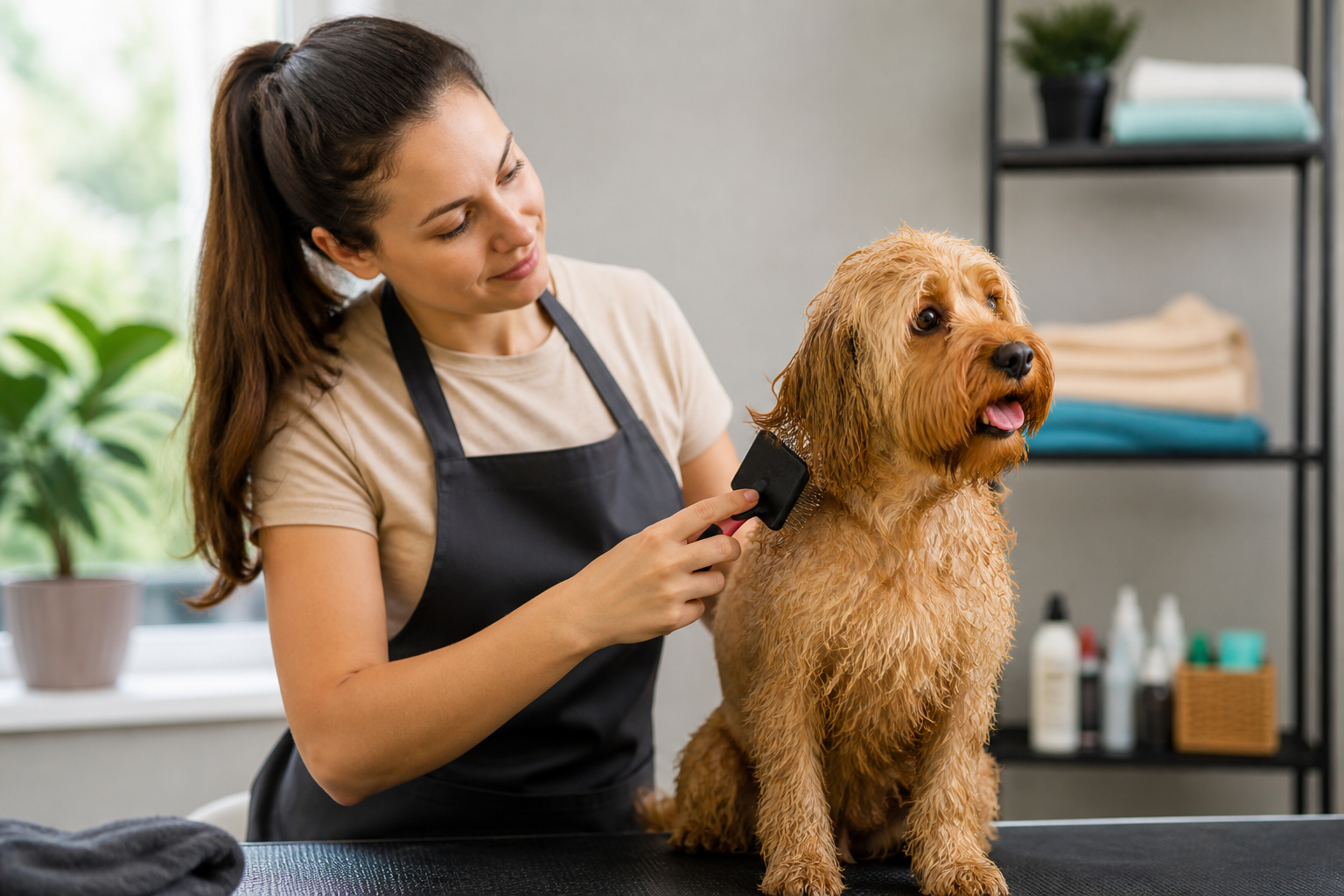
Wet brushing is a more specialized technique. It usually happens in the tub or immediately after a towel dry. You should only brush a wet dog if you have applied a high quality conditioner or detangling spray. Without product to provide "slip," brushing wet hair can be painful and damaging.
Quick Answer: In most cases, you should brush your dog when their hair is dry to prevent breakage. Only brush wet hair if you are using a conditioner to help the brush glide through the coat during or after a bath.
Why You Should Usually Brush a Dry Dog
For most breeds, dry brushing is the safest and most efficient method. When hair gets wet, it undergoes a physical change. The water breaks down hydrogen bonds in the hair shaft. This makes the hair more elastic and much weaker. If you pull a brush through wet hair, it can stretch to its breaking point.
Dry hair is also much easier to manage when it comes to shedding. If you have a breed that sheds heavily, like a German Shepherd or a Labrador, brushing them while dry allows the loose fur to fall away easily. When that same fur is wet, it clumps together. This can make the grooming process take twice as long.
Another reason to stick to dry brushing is the "mud factor." If your dog is covered in dirt or sand, adding water creates a muddy mess that gets trapped deep in the undercoat. Brushing the dog while they are dry allows you to flick away the surface dirt. This keeps your bath water cleaner and makes the shampoo more effective.
When Wet Brushing Is the Better Choice
There are specific times when wet brushing is actually beneficial. Many professional groomers use a technique called "wet brushing" specifically during the conditioning phase of the bath. This is not about removing mats. It is about hair health and product distribution.
When you apply a conditioner to a clean, wet coat, a gentle brushing helps distribute the product from the root to the tip. This ensures that the skin and the entire hair shaft benefit from the moisturizing ingredients. It also helps to "prime" the coat for the drying process. You can find conditioners and detangling products in our dog shampoo and conditioner collection.
Wet brushing can also be useful for dogs with very thick, double coats during their heavy shedding seasons. Using a specific tool in the tub can help pull out the dead undercoat that has been loosened by the warm water. However, this must be done with extreme care. You should never use a heavy hand when the hair is wet.
The Science of the Hair Shaft
To understand why moisture changes the rules of grooming, we have to look at the structure of the hair. Each hair on your dog is made of keratin. The outer layer is called the cuticle. It looks a bit like shingles on a roof.
When the hair is dry, these shingles lie flat. This protects the inner core of the hair and gives it a shiny appearance. When the hair gets wet, the cuticle swells. The shingles lift up. This makes the hair feel rougher and causes individual strands to catch on each other more easily.
This swelling is why mats often seem to get "tighter" after a bath. If you do not brush out a mat before your dog gets wet, the water causes the hair to expand and lock together. Once the hair dries, it shrinks back down, but the knot remains tightly bound.
Key Takeaway: Water makes the hair cuticle swell and weakens the hair structure. Always finish your heavy detangling work before the dog gets in the tub to avoid permanent damage to the coat.
Handling Different Coat Types
Not every dog has the same grooming needs. The rules for a Poodle are very different from the rules for a Boxer. Your dog's coat type determines how you should approach the wet versus dry debate.
Short and Smooth Coats
Dogs like Beagles, Boxers, and Pointers have short hair that does not mat. For these breeds, brushing can happen wet or dry. A rubber curry brush is often the best tool here. Using a rubber brush during the bath can help massage the skin and remove loose hair very effectively. Since there is no long hair to stretch or snap, the risk of damage is very low.
Double Coats
Breeds like Huskies, Golden Retrievers, and Pomeranians have a soft undercoat and a tougher outer coat. These dogs should almost always be brushed dry. The undercoat is very prone to matting when wet. If you try to brush a wet double coat without proper tools, you may end up pulling on the skin, which is very uncomfortable for the dog.
Curly and Wire Coats
Poodles, Doodles, and Terriers have hair that keeps growing. These coats are the most likely to mat. For these breeds, a thorough dry brush before the bath is mandatory. Once the dog is clean and conditioned, a light wet brush can help define the curls. However, you must be careful not to "frizz" the hair by brushing too much while it is damp.
Essential Grooming Tools for Every Dog
The tools you use are just as important as the timing. Using the wrong brush on a wet coat can cause micro-tears in the skin or snap the hair at the base. At BaxterBoo, we carry a wide variety of tools for every stage of the grooming process. Browse our dog brushes and combs to compare options for different coat types.
- Slicker Brushes: These have fine wire bristles. They are excellent for dry brushing and removing loose undercoat. Use these with a light touch.
- Pin Brushes: These look like human hairbrushes but with longer, more widely spaced pins. They are great for long-haired dogs. A pin brush is often the best choice if you must brush a damp coat.
- Rubber Curry Brushes: Brands like Kong make rubber brushes that are perfect for the bathtub. They are gentle on the skin and great for short-haired breeds.
- Steel Combs: A high quality comb is the best way to check for mats. Always use a comb after you think you are finished brushing to ensure you have reached the skin.
Vet Tip: If your dog has sensitive skin or a history of hot spots, avoid aggressive brushing when the skin is wet. Wet skin is softer and more prone to scrapes or "brush burn" from wire bristles.
Managing Mats and Tangles Safely
Mats are the biggest challenge in any grooming routine. A mat is a clump of dead hair that has tangled around live hair. They usually form in high friction areas like behind the ears, under the armpits, and where the collar sits.
You should never try to brush out a severe mat when it is wet. The water will only make the knot tighter. Instead, use a detangling spray on the dry coat. Work the mat apart with your fingers first. Then, use the end of a comb to gently pick at the fibers. For additional options, explore our grooming tools collection.
If a mat is too close to the skin, do not try to cut it out with scissors. It is very easy to accidentally cut the dog's skin. In these cases, it is better to use a pair of electric clippers or visit a professional groomer. Keeping up with a daily dry brushing routine is the best way to prevent these painful knots from forming in the first place.
Skin Care and Professional Guidance
Grooming is about more than just looking good. It is a vital part of your dog's overall health. While you are brushing, you should be checking for lumps, bumps, or signs of irritation.
If your dog's skin is consistently red, flaky, or has a strong odor, it may be time to talk to your veterinarian. These can be signs of allergies or skin infections. Sometimes, a regular grooming routine is not enough, and your dog might need a medicated shampoo or a specific treatment plan.
Our pharmacy offers FDA-approved medications and prescription pet foods through our partnership with Pet's Choice. If your vet recommends a prescription-strength shampoo for a skin condition, we can help you get exactly what you need. Managing skin health from the inside out is just as important as the brushes you use on the outside. Browse our pet pharmacy for specialized care.
Your Step by Step Grooming Routine
To get the best results, follow a consistent order of operations. This routine protects the hair and makes the bath much more effective.
Step 1: Perform a thorough dry brush. / Use a slicker brush or a comb to remove all loose fur and any small tangles before the water starts running.
Step 2: Check for mats. / Run a metal comb through the coat to ensure you can reach the skin without hitting any snags.
Step 3: Bathing and shampooing. / Wet the dog thoroughly and apply shampoo. Focus on the skin rather than just the top of the fur.
Step 4: Condition and optional wet brush. / Apply conditioner and let it sit for a few minutes. Use a wide-toothed comb or a gentle pin brush to distribute the product if your dog's coat type allows it.
Step 5: Towel dry and blow dry. / Squeeze the water out with a towel rather than rubbing vigorously. Use a blow dryer on a cool setting while lightly brushing to prevent the hair from tangling as it dries.
Key Takeaway: The best grooming results come from a "dry-wet-dry" approach. Brush while dry, wash and condition, then brush again once the coat is fully dry.
Conclusion
Deciding whether to brush your dog's hair wet or dry comes down to protecting the hair's integrity. For most days, a dry brush is the gold standard. It keeps the hair strong and prevents mats from tightening. Only introduce a brush to a wet coat when you have plenty of conditioner to act as a buffer. By choosing the right tools and following a consistent routine, you can keep your dog's coat shiny and their skin healthy. We are here to support your grooming journey with the best supplies and expert advice. For everything from slicker brushes to prescription skin support, explore our dog grooming collection or visit our pet pharmacy for specialized care.
FAQ
Is it okay to brush a dog after a bath?
It is usually best to wait until the dog is mostly dry before doing a full brushing. While the hair is damp, it is more fragile and prone to stretching or snapping. If you must brush after a bath, use a leave-in detangling spray to protect the hair fibers and use a gentle touch.
Why do mats get worse after a dog gets wet?
Water causes the hair shaft to swell and the outer cuticle to lift. If there is already a tangle in the fur, this swelling causes the hairs to lock together more tightly. Once the hair dries and shrinks, it creates a very dense, hard knot that is much harder to remove than a dry tangle.
What kind of brush should I use in the shower?
A rubber curry brush or a silicone massager is the best choice for the bathtub. These tools do not have sharp pins that can scratch wet, softened skin. They are excellent for massaging the shampoo down to the skin and helping to pull out loose fur on short-haired breeds.
Can I brush my dog every day?
Yes, daily brushing is highly recommended for most breeds, especially those with long hair or double coats. Short, daily sessions prevent mats from forming and help distribute natural skin oils. It also helps you stay aware of any new skin issues or parasites like fleas and ticks.






