
 Save 15% on your 1st Autoship learn more

 Email us
 Live Chat
 FAQs
FAQs





Introduction
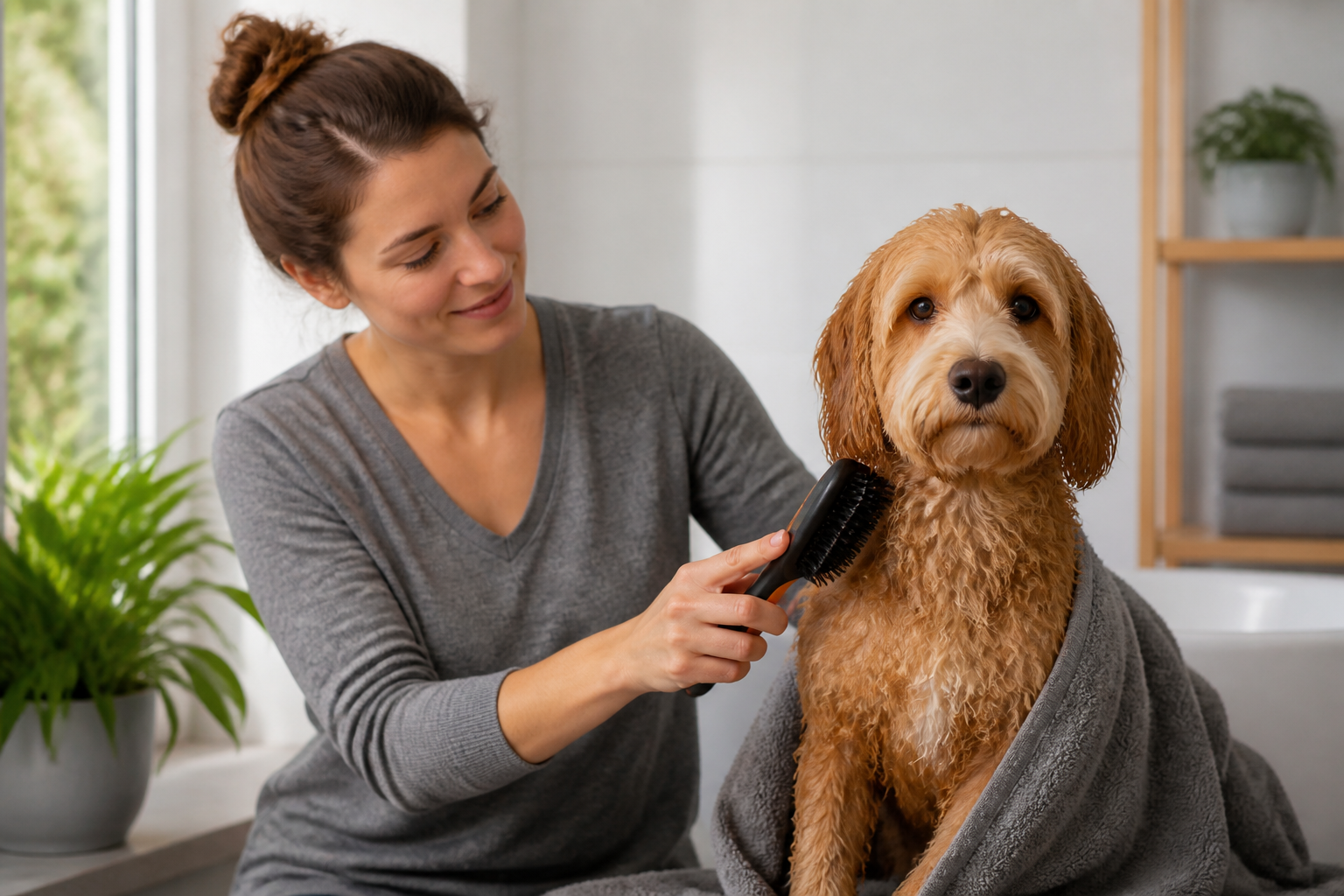
You are standing in the bathroom with a damp, shivering dog who just finished their bath. Your brush is in one hand and a towel is in the other. You might wonder if you should start detangling those curls now or wait until the coat is completely dry. This is a common crossroad for many owners who want to keep their pets looking great without causing pain or hair damage. At BaxterBoo, we have helped pet parents navigate grooming routines since 2006. We know that the right technique depends entirely on your dog's coat type and the specific tools you use. This post covers the science of hair strength, the dangers of dry brushing, and how to use the bath to your advantage. You will learn exactly when to reach for the brush to maintain a healthy, shiny coat.
Quick Answer: Brushing your dog while their hair is completely dry can lead to breakage and static, while brushing soaking wet hair can cause stretching and snapping. For most dogs, the best approach is to brush a dry coat that has been lightly misted with a grooming spray or to brush a damp coat that is saturated with conditioner during a bath.
The Structural Science of Canine Hair
To understand why the wet versus dry debate matters, you have to look at the anatomy of a hair strand. Canine hair is made of a protein called keratin. These strands are held together by different types of bonds. Hydrogen bonds are the most relevant when it comes to water. These bonds are responsible for the hair's shape and its ability to bounce back.
When your dog's hair gets wet, these hydrogen bonds break. This makes the hair more elastic. While elasticity sounds like a good thing, it actually makes the hair more vulnerable. A wet hair strand can stretch much further than a dry one, but it is also much thinner while stretched. If you pull a brush through soaking wet hair, you risk snapping those strands. This leads to frayed ends and a frizzy appearance once the coat dries.
Dry hair is structurally stronger because the hydrogen bonds are intact. However, dry hair lacks flexibility. If you encounter a knot in a dry coat, the hair is more likely to rip out at the follicle rather than slide through the brush. Dry brushing also creates friction. This friction leads to static electricity. Static causes individual hairs to stand up and wrap around each other, which actually creates new tangles while you are trying to remove old ones.
Key Takeaway: Water changes the physical properties of your dog's coat by breaking hydrogen bonds. This makes wet hair more elastic but also more prone to snapping if handled roughly with a brush.
The Best Time to Brush: The Three Stages
Grooming is not a single event. It is a process that happens in stages. Most professional groomers use a combination of wet and dry techniques depending on where the dog is in the bathing cycle.
The Pre-Bath Dry Brush
You should almost always give your dog a thorough brushing before they ever get near the water. This is especially true for long-haired or double-coated breeds. Water acts like a glue for existing mats. If your dog has a small tangle and you get it wet, the hair fibers swell and tighten. That small knot can quickly turn into a hard lump that is impossible to brush out.
Use this time to remove loose undercoat and debris. If you find a stubborn mat, do not yank on it. Use a detangling tool or your fingers to gently pull the hair apart. If the coat is very dusty or dirty, you might notice a "dust cloud" while brushing. This is normal. Removing this dirt now means your shampoo will work much better once the bath starts. Explore our dog grooming collection for brushes, combs, shampoos, and other bathing supplies.
Brushing in the Tub
There is a specific window where wet brushing is actually beneficial. This happens after you have applied a high-quality conditioner. While the dog is still in the tub, the conditioner provides "slip." This lubrication allows the brush to glide over the hair shafts without causing the friction that leads to breakage.
This technique is excellent for de-shedding. A rubber grooming tool, like a Kong ZoomGroom, is perfect for this stage. The rubber nubs massage the skin and grab onto loose hairs that the water has loosened. This prevents that hair from ending up on your furniture later. Always ensure the coat is fully saturated with product before you attempt this. Never brush a dog in the tub with just soap or water alone. You can compare options in our dog brushes and combs category.
The Post-Bath Damp Phase
Once the bath is over, you should towel dry your dog gently. Avoid vigorous rubbing, as this creates more tangles. The best time for the final brush-out is when the coat is damp but not dripping. If you are using a blow dryer, you can brush as you dry. The airflow helps separate the hairs while the brush removes any remaining loose fluff. The BASS Bathing Dog Brush is one option designed for bathing and blow-drying routines.
Vet Tip: If your dog has sensitive skin or a history of "hot spots," be very careful with wet brushing. Leaving a thick coat damp for too long can trap moisture against the skin and lead to bacterial infections. Always ensure your dog is thoroughly dried after any wet grooming session.
Managing Different Coat Types
The rules for a Golden Retriever are not the same as the rules for a Greyhound. Your dog's specific coat type dictates the best approach.
Double-Coated Breeds
Huskies, German Shepherds, and Labradors have a stiff outer coat and a soft, dense undercoat. For these dogs, dry brushing is your best friend for daily maintenance. However, during their heavy shedding seasons, wet brushing in the tub with a de-shedding conditioner is incredibly effective. It helps pull that "dead" undercoat out in clumps, saving you hours of vacuuming. For additional shedding guidance, read about managing an Australian Shepherd's shedding.
Curly and Wire Coats
Poodles, Doodles, and many Terriers have hair that keeps growing rather than shedding out. These coats are magnets for mats. You should never brush these dogs when they are bone dry. The static will make the hair look like a dandelion puff and can cause painful pulling. Always use a light leave-in spray or a damp brush technique for these breeds. Our guide to grooming dogs with curly hair covers brushing, tangles, and bath-day preparation.
Short, Smooth Coats
Boxers and Beagles are the easiest to manage. You can brush them wet or dry without much risk of breakage. A rubber curry brush used during the bath is often the most effective way to manage their shedding. Since they do not mat, the "never brush wet" rule is much more flexible for them.
Long, Silky Coats
Yorkies and Maltese have hair very similar to human hair. It is fine and easily damaged. For these dogs, a "line brushing" technique is best. This involves brushing small sections of damp hair at a time. This ensures you are reaching the skin and not just smoothing over the top layer.
Bottom line: Identify your dog's coat type before choosing a method, as curly and silky coats require much more lubrication than short or double coats.
Essential Tools for Every Stage
Having the right tool makes the difference between a pleasant experience and a chore. We carry a wide variety of grooming supplies at BaxterBoo that cater to these different needs.
- Slicker Brushes: These have fine wire bristles. They are best for dry brushing and removing mats before the bath.
- Pin Brushes: These look like human hairbrushes but with rounded ends. They are great for finishing a damp coat without scratching the skin.
- Rubber Curry Brushes: These are the gold standard for wet brushing in the tub. They are gentle and highly effective at grabbing loose fur.
- De-shedding Rakes: Use these on dry, double-coated dogs to reach the deep undercoat that regular brushes miss.
For a specific slicker option, consider the Master Grooming Tools Ergonomic Slicker Dog and Cat Brush.
The Role of Skin and Coat Health
A coat that breaks easily or tangles constantly might be a sign of an underlying health issue. Proper nutrition is the foundation of a healthy coat. Brands like Royal Canin or Farmina offer formulas specifically designed to support skin barriers and coat shine. If the hair is brittle, it will break regardless of whether you brush it wet or dry.
Sometimes, skin issues require more than just a better brush. If your dog has persistent dandruff, red spots, or a dull coat, it might be time to look at medical solutions. Our pharmacy offers FDA-approved treatments and prescription diets through our partnership with Pet's Choice. You can find medicated shampoos and supplements that help strengthen the hair from the inside out. Always consult your veterinarian if you notice sudden changes in your dog's hair texture or skin health.
Step-by-Step Guide to a Perfect Brush-Out
Following a consistent routine will help your dog get used to the process. It also ensures you are protecting the coat at every step.
Step 1: Perform a "pre-flight" check. / Run your hands over your dog's body while the coat is dry. Feel for any large mats or debris like burrs or dried mud.
Step 2: Brush through the dry coat. / Use a slicker brush or rake to remove as much loose hair as possible. Address any knots now so they do not tighten in the water.
Step 3: Apply a light mist. / If you are not doing a full bath, use a grooming spray to lightly dampen the hair. This reduces static and adds a protective layer to the hair shaft.
Step 4: Bathing and conditioning. / If it is bath day, apply conditioner and use a rubber brush to massage the skin. This is the only time you should brush soaking wet hair.
Step 5: Dry and finish. / Towel dry gently, then use a pin brush while blow-drying on a low heat setting. This fluffs the coat and ensures no new tangles formed during the bath.
Avoiding Common Grooming Mistakes
Even well-meaning owners can make mistakes that lead to a "bad hair day" for their pets. One of the biggest errors is "top-coating." This happens when you only brush the very top layer of hair. While the dog looks fluffy, mats are actually forming right against the skin. This is common in dogs with long or curly hair.
Another mistake is ignoring the sensitive areas. Tangles love to hide in the "armpits," behind the ears, and around the tail. These areas are also where the skin is thinnest. If you are brushing a wet dog in these spots, you must be extremely gentle. The skin is softer when wet and can tear or scrape more easily than when it is dry.
Finally, do not forget the reward. Grooming can be stressful for some dogs. Use treats or a lick mat to keep them occupied. This creates a positive association with the brush. If your dog is particularly anxious, we offer a range of calming aids in our Training and Behavior section to help make the process smoother for everyone.
Why Quality Products Matter
Using the wrong shampoo or a cheap, sharp brush can undo all your hard work. Harsh chemicals strip the natural oils that protect the hair. Without these oils, the hair becomes "high porosity," meaning it absorbs too much water and becomes even more fragile when wet.
We handpick every product we stock to ensure it meets high standards for safety and effectiveness. Whether you need a gentle oatmeal shampoo for sensitive skin or a professional-grade slicker brush, we have options that work for every budget. Our MVP Rewards program even allows you to earn points on every grooming purchase, which can be used for future savings.
When to Call a Professional
There are times when at-home grooming is not enough. If your dog is severely matted to the skin, do not try to brush it out wet or dry. This is incredibly painful and can cause skin bruising. In these cases, the mats usually need to be clipped out by a professional groomer.
If you notice your dog's skin is extremely greasy, has a strong odor, or is losing hair in patches, these are medical concerns. A professional groomer might be the first to notice these things, but a veterinarian should be the one to diagnose them. You can manage many chronic skin conditions with the help of our pharmacy. We provide easy access to the medications your vet prescribes to keep your dog's skin healthy and their coat easy to manage.
Summary of the Wet vs. Dry Debate
The goal of grooming is to keep your dog comfortable and clean. Brushing is a vital part of that, but timing is everything. Dry brushing is best for daily maintenance and pre-bath prep. Wet brushing is a specialized technique that should only be done with plenty of conditioner. Damp brushing with a spray is the best "middle ground" for most breeds.
By following these guidelines, you protect the structural integrity of your dog's hair. You also make the process much more comfortable for your pet. A dog who isn't being pulled and tugged on is a dog who will sit still for their next grooming session.
- Always brush out mats before getting the dog wet.
- Never brush a soaking wet coat without conditioner or product.
- Use a grooming spray for dry sessions to eliminate static.
- Choose the right brush for your specific breed's coat type.
Key Takeaway: Proper grooming timing prevents hair breakage and skin irritation. By using the right products and tools from BaxterBoo, you can maintain a professional-look coat at home while keeping your dog happy and healthy.
FAQ
Is it bad to brush my dog right after a bath?
It can be risky if the hair is still soaking wet and you are not using any product. Wet hair is more elastic and prone to snapping. It is better to towel dry your dog gently first and then brush while the coat is damp, preferably with a leave-in detangling spray to provide lubrication.
Can I brush my dog while they are in the tub?
Yes, but only if you have applied a generous amount of conditioner. Brushing in the tub is a great way to remove loose undercoat and distribute moisturizing products. Use a gentle rubber brush rather than a metal slicker brush to avoid irritating the wet, sensitive skin.
Why does my dog get so much static when I brush them dry?
Static occurs because the friction of the brush strips electrons from the hair shafts. This is especially common in dry indoor environments or on curly-coated breeds. To stop this, lightly mist the coat with a grooming spray or even a tiny bit of water before you begin brushing.
What should I do if I find a mat while my dog is wet?
Stop brushing that area immediately. Water causes the hair fibers in a mat to swell and tighten, making the knot much worse. Wait until the dog is dry, apply a detangling product, and then slowly work the mat apart with your fingers or a specialized mat-breaking tool.






