
 Save 15% on your 1st Autoship learn more

 Email us
 Live Chat
 FAQs
FAQs





Introduction
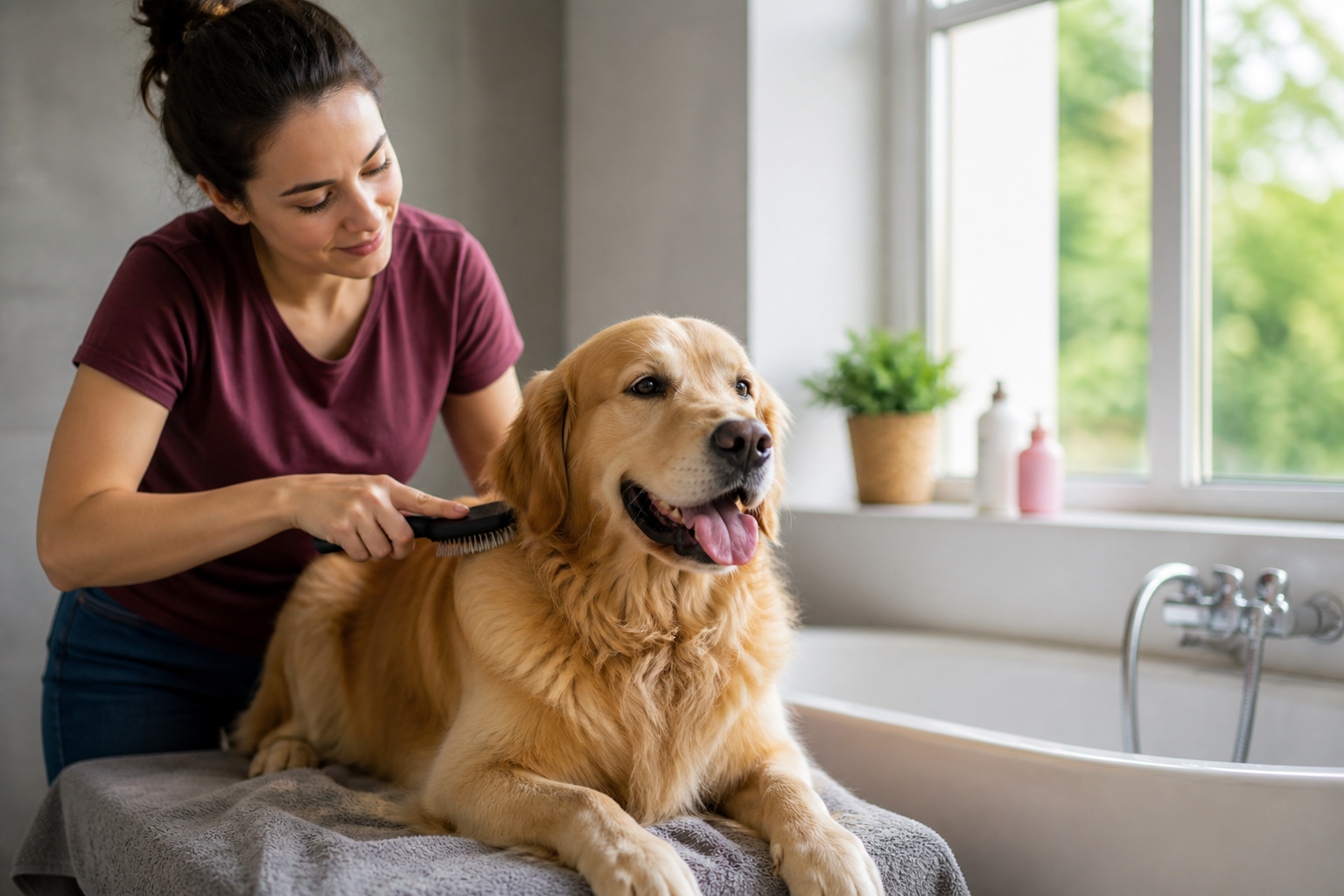
You are standing in the bathroom with a dog that just finished a muddy afternoon in the yard. Your first instinct is likely to turn on the warm water and reach for the shampoo immediately. However, taking a few minutes to grab a brush before the water starts running is a vital step for your pet's comfort. At BaxterBoo, we have helped thousands of owners build better grooming routines since 2006. Many people overlook the pre-bath brush, but it is the foundation of a healthy coat. Skipping this step can lead to painful tangles and skin irritation that lasts long after the bath is over. This guide explains why the order of your grooming routine matters for your dog's well-being and how to do it correctly.
Quick Answer: You should always brush your dog before bathing to remove loose hair and debris. Water acts like a glue that tightens existing tangles into dense mats. Brushing a dry coat first ensures that shampoo can reach the skin and makes the drying process much faster.
Why Brushing Before the Bath is Non-Negotiable
The biggest reason to brush before the bath involves the way hair reacts to water. When a dog's coat gets wet, the hair strands expand. As they dry, those strands shrink and tighten. If there is already a small tangle or a clump of loose shedding hair in the coat, the drying process will pull that knot even tighter. This often creates what groomers call a "permanent mat" that is almost impossible to remove without clippers.
Brushing a dry coat allows you to remove the "dead" hair that is already sitting loose against the skin. If you leave that hair in during the bath, it becomes a soggy, heavy mess. This extra hair traps soap and prevents you from getting the skin truly clean. It also makes it much harder to rinse the coat thoroughly. Leftover shampoo residue is a leading cause of itchy, flaky skin in dogs.
Key Takeaway: Brushing before the bath prevents small tangles from turning into painful mats that require professional clipping. It also allows for a deeper clean by removing loose fur that blocks shampoo from reaching the skin.
The Science of Water and Tangles
To understand why water makes mats worse, think about a wool sweater. If you wash it and dry it on high heat, the fibers tighten and the garment shrinks. While dog hair is not exactly like a sweater, the principle of friction and moisture is similar. When you scrub a dog with shampoo, you are adding friction to the coat. If there are existing tangles, that scrubbing motion twists the hair even further.
For dogs with double coats, like Golden Retrievers or Huskies, the undercoat is the primary concern. This soft, dense layer of fur sheds constantly. If you do not brush out that loose undercoat before the bath, the water will cause it to clump together. This creates a barrier of damp fur against the skin. This trapped moisture can lead to hot spots or bacterial infections because the skin cannot breathe.
The Problem with Friction
When you apply shampoo, most owners use a circular scrubbing motion. This feels natural, but it is actually one of the worst things you can do for a long-haired dog. This motion encourages hairs to wrap around each other. If those hairs were already starting to tangle, the soapy friction locks them together. By brushing first, you ensure the coat is smooth. This allows the shampoo to glide through the hair rather than getting stuck in knots.
Identifying Your Dog's Coat Type
Your approach to the pre-bath brush depends largely on what kind of hair your dog has. Not every dog needs an hour of preparation, but every dog benefits from at least a quick once-over.
Long and Silky Coats
Breeds like Yorkies, Maltese, or Setters have hair that is very similar to human hair. It tangles easily and can break if you are too rough. For these dogs, brushing before the bath is critical to maintain length. You should use a high-quality slicker brush or a pin brush to ensure every inch of the coat is free of snags.
Curly and Wavy Coats
Poodles and Doodles are the highest-priority dogs for pre-bath brushing. Their curly hair traps shed fur rather than letting it fall to the ground. If you bathe a Doodle without brushing it first, you are essentially creating a felted rug on their back. We often see owners who are surprised when a groomer has to shave their dog after a home bath. Usually, this is because hidden mats became "set" by the water. For more guidance, see our tips on grooming curly-haired dogs.
Double-Coated Breeds
Huskies, Shepherds, and Pomeranians have a thick undercoat. These dogs need a deshedding tool or an undercoat rake before the tub. Removing the "dead" coat first will cut your drying time in half. It also prevents your bathtub drain from clogging with massive amounts of fur.
Short-Haired Breeds
Labs, Boxers, and Pugs might seem like they can skip this step. However, brushing them before the bath helps lift dander and loose hair to the surface. A rubber curry brush is perfect for these breeds. It massages the skin and ensures the shampoo can work more effectively to remove oils.
The Danger of Hidden Mats
A mat is not just a cosmetic issue. It is a health concern. When hair mats tightly against the skin, it pulls with every movement the dog makes. This can be incredibly painful. Imagine having your hair in a ponytail that is much too tight. That is how a matted dog feels all over their body.
Furthermore, mats hide skin problems. You might not see a flea infestation, a rash, or a growth if the coat is thick and tangled. Brushing before the bath gives you a chance to inspect your dog's body. If you find a lump or a strange red patch, you can address it with your vet. Our pharmacy provides access to medicated shampoos and skin treatments if your vet finds a condition that needs attention.
Vet Tip: Never try to cut out a mat with scissors at home. A dog's skin is very thin and can easily be pulled into the mat. This often results in deep accidental cuts. If you find a mat that you cannot brush out, consult a professional groomer or your veterinarian for safe removal.
Essential Tools for Pre-Bath Brushing
You do not need a professional salon setup to do a great job at home. However, using the right tools will make the process much faster and more comfortable for your dog. We carry a wide variety of these tools in our dog brushes and combs collection.
- Slicker Brush: This is the workhorse of dog grooming. It has fine wire bristles that are slightly angled. It is excellent for removing loose hair and breaking up small tangles in medium to long coats.
- Metal Comb: Often called a Greyhound comb, this is your best diagnostic tool. After you think you are finished brushing, run the comb through the coat. If it snags, you still have work to do.
- Undercoat Rake: This tool has long, blunt tines that reach through the topcoat to pull out the loose undercoat. It is essential for heavy shedders.
- Rubber Curry Brush: Ideal for short-haired dogs. It helps loosen dirt and dead hair while stimulating the skin's natural oils.
- Detangling Spray: If you hit a tough spot, a light mist of detangling spray can help the brush glide through without pulling the skin.
How to Perform the "Comb Test"
Professional groomers use a specific technique to ensure a dog is ready for the tub. You can easily do this at home. Once you have brushed your dog thoroughly, take a stainless steel metal comb. Start at the head and work your way to the tail.
The comb should be able to pass through the hair from the skin all the way to the ends without catching. Pay close attention to high-friction areas:
- Behind the ears.
- The armpits.
- The "trousers" or back of the thighs.
- The base of the tail.
- Where the collar or harness sits.
If the comb catches in these areas, use your slicker brush to gently work the hair apart. Hold the hair at the base near the skin so you do not pull on the dog's body. Once the comb passes through easily, your dog is ready for the water.
Managing Skin Conditions During Grooming
If you notice that your dog is scratching frequently or has red, irritated skin during your pre-bath brush, it might be time for a specialized approach. Many dogs suffer from seasonal allergies or skin sensitivities that are exacerbated by dirt and dander.
When you find these issues, a standard grocery store shampoo might not be enough. This is where a prescription-strength or medicated shampoo can help. Through the BaxterBoo pharmacy, we offer FDA-approved options that can help manage these chronic conditions. Whether your pet needs an anti-fungal wash or a soothing oatmeal treatment, having the right supplies on hand makes a difference. Always talk to your vet to get an accurate diagnosis before starting a new medicated routine.
Step-by-Step Guide to a Better Bath Routine
Following a consistent order will help your dog feel more relaxed. Dogs thrive on routine and knowing what comes next reduces anxiety.
Step 1: The Initial Brush-Out
Spend 5 to 15 minutes brushing your dog while they are dry. Focus on removing the bulk of the loose shedding hair. This is the best time to find any ticks or burrs that might have hitched a ride from outside.
Step 2: Clear the "High-Traffic" Areas
Check the armpits and the areas under the ears. These are the most common spots for mats to hide. If your dog has a lot of hair on their paws, check between the toes for tangles or debris like dried mud or small pebbles.
Step 3: The Bath
Use lukewarm water and a shampoo formulated specifically for dogs. Human shampoo has a different pH balance and can strip the protective oils from a dog's skin. We recommend a gentle, soap-free formula for most pets. Work the shampoo in the direction of hair growth rather than in circles. Browse our dog shampoo and conditioner selection for bath-time options.
Step 4: Conditioning
For dogs with longer coats, a conditioner is very helpful. It helps close the hair cuticle and makes the post-bath brush much easier. It also adds a layer of protection against future tangles.
Step 5: Drying
Towel dry your dog by blotting rather than rubbing. If you use a hair dryer, keep it on a low, cool setting. High heat can burn a dog's sensitive skin very quickly. Make sure the coat is 100% dry before moving to the final step.
Step 6: The Finishing Brush
Once the coat is dry, brush it one more time. This removes any hair that was loosened during the washing process but did not fall out. This final step gives the coat that fluffy, professional look and ensures no new tangles formed during the drying process. For additional bath-safety ideas, read our guide to the dos and don'ts of bathing your dog.
Bottom line: A consistent routine of brushing both before and after the bath is the most effective way to keep your dog's coat healthy and mat-free.
When You Should Not Brush Before a Bath
There is one major exception to the "brush first" rule. If your dog is covered in a sticky substance like sap, tar, or fresh paint, do not brush it. Brushing will only spread the substance further down the hair shaft and potentially onto the skin.
In these cases, you may need to use a specific cleaner or even a bit of dish soap on the affected area only to break down the oils before the main bath. If the substance is toxic or covers a large area of the body, skip the home grooming entirely and head straight to your veterinarian.
The Importance of Professional Guidance
While home grooming is a great way to save money and bond with your pet, it does not replace the need for professional care. Some coat types are simply too demanding for a standard home setup. Furthermore, some skin conditions require more than just a good cleaning.
If you find that your dog's skin is consistently greasy, has a strong odor, or shows signs of hair loss, please consult a veterinarian. They can determine if there is an underlying issue like a thyroid imbalance or a skin infection. If a prescription is required, you can use our pharmacy services to get the necessary medications delivered right to your door. This integration of retail and pharmacy is part of our commitment to total pet wellness at BaxterBoo.
Maintaining Your Tools
To get the best results from your pre-bath brushing, your tools need to be in good shape. Over time, the wire bristles on a slicker brush can bend or develop sharp edges. If the tool looks worn out, it can scratch the dog's skin.
Keep your brushes clean by removing the hair after every use. You can wash most plastic and metal tools with a bit of mild soap and water. Just be sure to dry them thoroughly to prevent rust. High-quality tools are an investment in your dog's comfort. You can also explore our Master Grooming Tools selection for additional grooming options.
Making the Experience Positive
If your dog hates being brushed, the idea of a pre-bath session might feel daunting. The key is to start slow. You do not have to do the whole dog at once. You can brush the front legs in the morning and the back legs in the afternoon.
Use plenty of treats and praise. At BaxterBoo, we believe that grooming should be a time for bonding. If your dog learns that brushing leads to a tasty reward, they will eventually stop trying to hide under the couch when the brush comes out. This patience pays off as your dog ages and may need more frequent grooming to stay comfortable.
Training Your Puppy for Grooming
If you have a new puppy, start the brushing routine immediately. Even if they do not have much hair yet, getting them used to the feeling of the tools is vital. Touch their paws, look in their ears, and run a soft brush over their back daily. This desensitization makes future baths much less stressful for everyone involved. Our puppy shop includes grooming supplies for getting started.
Puppies have very sensitive skin, so choose a soft-bristled brush to start. Keep the sessions short, perhaps only two or three minutes. As they grow and their adult coat comes in, you can transition to more effective tools like slicker brushes and undercoat rakes.
Saving with the MVP Rewards Program
Regular grooming requires a steady supply of shampoos, conditioners, and new brushes. We want to make it easier for you to provide the best care for your pet. When you shop with us, you can join the MVP Rewards program. This allows you to earn up to 5% back on your purchases. It is a simple way to get more value while keeping your dog looking and feeling their best. We also offer an Autoship program, which is perfect for ensuring you never run out of your favorite grooming supplies. You can even save on your first order when you sign up.
Conclusion
Brushing your dog before a bath is one of those small steps that yields big results. It protects the coat from damage, prevents painful mats, and ensures your dog gets the cleanest skin possible. By taking ten minutes to prep the coat, you are investing in your dog's long-term health and comfort. Remember to use the right tools for your dog's specific coat type and always check your work with a metal comb. If you notice any skin issues during your routine, our pharmacy is here to help with FDA-approved treatments recommended by your vet. For all your grooming needs, from brushes to specialty shampoos, we have you covered.
Next Steps for a Healthy Coat
- Check your kit: Ensure you have a slicker brush and a metal comb.
- Inspect the skin: Look for redness or lumps during your next brush-out.
- Join MVP Rewards: Start earning back on your grooming and pharmacy supplies.
- Set a schedule: Aim for a full brush-out at least once a week, regardless of bath time.
Key Takeaway: Pre-bath brushing is the most effective way to prevent matting and ensure a deep clean. It transforms a stressful chore into a healthy bonding routine for you and your dog.
FAQ
Can I brush my dog while their hair is still wet?
It is generally best to avoid brushing a wet dog unless they have a very specific coat type or you are using a lot of conditioner. Wet hair is more elastic and prone to stretching and snapping. Brushing while wet can also be quite painful for the dog because the brush pulls on the skin more easily. Wait until the coat is fully dry for the best and safest results.
What should I do if I find a mat before the bath?
If you find a mat, try to work it out gently with your fingers or a slicker brush before the dog gets wet. You can use a detangling spray to help the hair slide apart. If the mat is tight against the skin and will not budge, do not wash the dog yet. Adding water will only make that mat tighter and more difficult to remove later.
Do short-haired dogs really need to be brushed before a bath?
While short-haired dogs are not at risk for matting, brushing them before a bath is still very beneficial. It helps remove the top layer of dead skin cells and loose fur. This allows the shampoo to penetrate the remaining coat and clean the skin more effectively. It also significantly reduces the amount of hair that ends up in your bathtub drain.
How often should I bathe and brush my dog?
Most dogs benefit from a bath once every four to six weeks, depending on their lifestyle. However, brushing should happen much more frequently. Long-haired or curly-coated breeds often need daily brushing to stay mat-free. Shorter-haired dogs can usually go a week or two between sessions. Regular brushing reduces the need for frequent baths by removing dirt and spreading natural oils.






