
 Save 15% on your 1st Autoship learn more

 Email us
 Live Chat
 FAQs
FAQs





Introduction
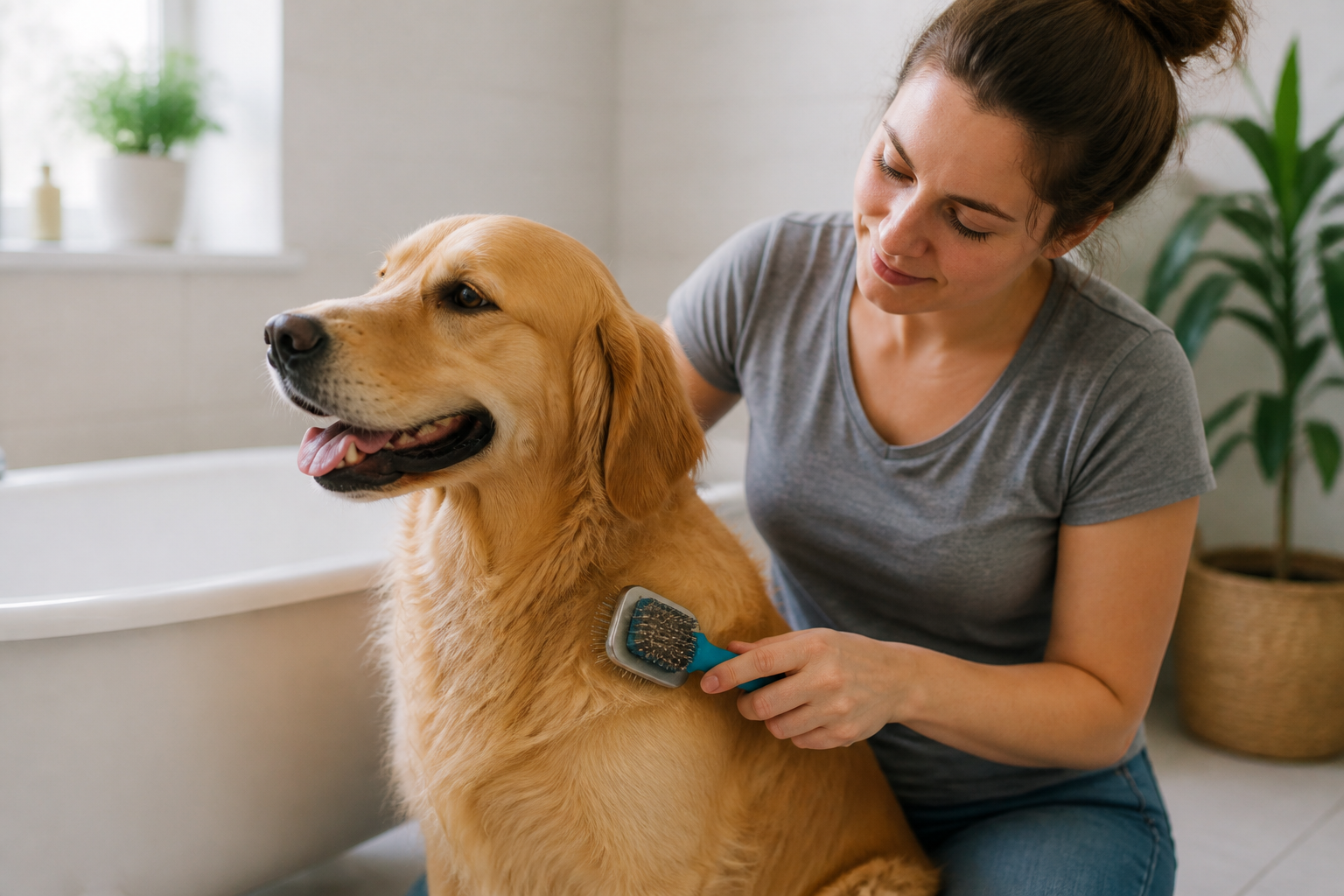
It is a familiar scene for many pet owners. You are standing in the bathroom with a muddy dog and a bottle of shampoo. You want to get your pup clean as quickly as possible. You might wonder if you should jump straight into the bath or take the time to grab a brush first. At BaxterBoo, we have helped thousands of owners navigate the basics of home grooming since 2006. While it might seem like a small detail, the order of operations matters. Brushing at the wrong time can actually make a coat harder to manage. This guide explains why the timing of your grooming routine is so important. We will cover how water interacts with different fur types and the best way to handle tangles. Following a consistent system will make bath time easier for you and more comfortable for your dog.
Quick Answer: You should brush your dog before the bath to remove loose hair and tangles. Water often acts like a glue that tightens existing knots. Once the dog is clean and fully dry, you should brush them again to finish the coat.
The Problem With Water and Tangles
Many owners assume that water and shampoo will help loosen up tangles. It seems logical that a slippery soap would help a brush glide through the hair. In reality, the opposite is usually true. When hair gets wet, it expands and then contracts as it dries. If there is already a small knot in the fur, the moisture causes the hair strands to swell. This often locks the tangle into a tight mat.
Think of a piece of string with a loose knot in it. If you soak that string in water, the fibers tighten. This is exactly what happens to your dog's undercoat. This is especially true for dogs with curly or double coats. Poodles, Doodles, and Golden Retrievers are very prone to this "water-locking" effect. If you skip the pre-bath brush, you might find that those small tangles have turned into hard lumps by the time the dog is dry.
Loose hair is another issue. Dogs are constantly shedding dead fur that gets trapped in the living coat. If you put a shedding dog in the tub without brushing first, that loose hair becomes a wet, heavy mess. It clogs your drain and makes it much harder to get the shampoo down to the skin. Brushing first removes that "dead" weight. It allows the water and soap to reach the skin where the dirt and oils actually live.
Why the Pre-Bath Brush Is Essential
The pre-bath brush is the most important step in your grooming routine. It serves as a diagnostic tool. As you move the brush through the coat, you can feel for hidden mats, burrs, or sticky spots. It is much easier to work through a dry tangle with a detangling spray than to try and cut out a wet mat later.
Working on a dry coat also protects your tools. Grooming equipment like slicker brushes and steel combs can be sensitive to moisture over time. More importantly, using these tools on a dirty, dry coat helps pull away the top layer of dust and dander. This means your shampoo does not have to work as hard. You will likely find that you need less product to get a good lather. Our dog grooming supplies include brushes, combs, shampoos, conditioners, and other bath-time essentials.
Key Takeaway: Brushing before the bath prevents "wet mats" from forming. It ensures that shampoo can reach the skin and makes the drying process much faster.
The Benefits of a Clean Tool on a Clean Coat
Professional groomers often talk about the wear and tear on their equipment. Brushing a dirty dog can be tough on fine bristles. However, for a home groomer, the biggest concern is efficiency. A pre-bath brush removes the bulk of the debris. This leaves the bath to handle the deep cleaning. When you brush a clean, dry dog after the bath, the hair is at its strongest. The natural oils have been balanced by conditioner. This final brush is what gives the coat that soft, fluffy finish that looks like a professional job.
A Step-By-Step Bath Day Routine
To get the best results, you should view grooming as a complete system rather than a single task. Following a specific order helps keep your dog calm and ensures no steps are missed.
Step 1: Perform a thorough dry brush. Use a slicker brush to work through the coat in sections. Pay close attention to high friction areas like the armpits and behind the ears.
Step 2: Use a metal comb to check your work. If the comb snags on any spots, those are hidden tangles. Work them out before moving to the tub.
Step 3: Secure the ears. You can place cotton balls in the outer ear to prevent water from getting into the canal. This helps prevent ear infections.
Step 4: The initial rinse. Use lukewarm water to soak the dog completely. Ensure the water reaches the skin through the thickest parts of the coat.
Step 5: Shampoo and rinse. Apply shampoo and work it into a lather. Avoid using circular motions on long-haired dogs. This can actually twist the hair into new knots. Instead, massage the soap in the direction the hair grows.
Step 6: Condition. Use a dog-safe conditioner to help smooth the hair cuticle. This makes the post-bath brush much easier.
Step 7: Dry completely. Use towels to pat the dog dry. If you use a hair dryer, keep it on a cool setting. Do not attempt to brush the coat while it is soaking wet.
Step 8: The final finish. Once the dog is 100 percent dry, do a final pass with your brush. This separates the hair and gives it a healthy shine. For additional bath-time preparation, review these dos and don'ts for bathing your dog.
Vet Tip: If you notice your dog has persistent skin irritation or a very dull coat, it might be time for a professional checkup. Skin issues can sometimes be linked to underlying health conditions. Our dog pharmacy carries a variety of medications and prescription diets through our pharmacy.
Managing Different Coat Types
Not every dog needs the same level of care. The "brush before and after" rule is a solid standard, but the tools and time required will change based on the breed.
Short-Haired Dogs
Dogs like Boxers, Labradors, or Beagles are the easiest to manage. You might think they do not need a pre-bath brush because they do not mat. However, these breeds are heavy shedders. Brushing a Labrador with a rubber curry brush like a KONG Zoom Groom Natural Rubber Dog Grooming Brush before the bath will remove an incredible amount of loose hair. This keeps your bathroom cleaner and makes the bath more effective. For these dogs, the post-bath brush is usually just to remove any hair that was loosened by the warm water.
Double-Coated Dogs
Huskies, German Shepherds, and Golden Retrievers have a soft undercoat and a tougher topcoat. These dogs require the most pre-bath work. The undercoat can become compacted, which traps heat and moisture against the skin. You must use an undercoat rake to pull out the dead fluff before you get them wet. If you bathe a double-coated dog without removing that dead undercoat, the hair may take days to fully dry. This can lead to a musty smell or even "hot spots" on the skin.
Curly and Wavy Coats
Poodles and Doodles have hair that grows constantly. It does not fall out like a Lab's fur. Instead, the dead hair gets caught in the curls. This creates mats very quickly. For these breeds, the "Comb Test" is vital. After you brush, you must be able to run a metal comb from the skin to the ends of the hair without it catching. If the comb catches, the dog is not ready for the bath.
Wire-Haired Dogs
Terriers often have a crisp, wiry coat. While they do not mat as easily as Poodles, they still trap dirt and debris. A quick brush before the bath helps lift that dirt so the shampoo can wash it away. Brushing after the bath helps reset the texture of the coat.
| Coat Type | Pre-Bath Focus | Post-Bath Focus | Recommended Tool |
|---|---|---|---|
| Short | Remove loose shedding hair | Shine and final shed check | Rubber Curry Brush |
| Double | Pull out dead undercoat | Ensure total dryness | Undercoat Rake |
| Curly | Total knot removal | Fluffing and separating curls | Slicker Brush & Metal Comb |
| Long/Silky | Detangling ends | Smoothing and shine | Pin Brush |
The Dangers of Brushing Wet Hair
It is a common mistake to start brushing as soon as the dog hops out of the tub. We often do this with our own hair, so it feels natural. However, dog hair is different. When hair is wet, it is at its most elastic state. This means it can stretch much further than usual before it breaks.
While stretching sounds like a good thing for detangling, it actually damages the hair shaft. When the hair eventually snaps back or breaks, it leaves the ends frayed. Frayed hair tangles much faster than healthy hair. If you consistently brush your dog while they are wet, you might find that they develop more mats over time. The only exception to this is if you are using a specific wet-brush technique with a heavy amount of conditioner, which is often done by professional groomers. For home care, waiting for a dry coat is the safest path.
Wet brushing is also uncomfortable for the dog. The brush tends to "drag" on wet skin. This can cause "brush burn," which is a red, irritated rash. If your dog starts to hide when they see the brush, it might be because the process has become painful. Keeping the hair dry ensures the bristles glide rather than pull.
Bottom line: Brushing wet hair stretches and damages the coat, leading to more tangles in the long run.
Choosing the Right Products for the Job
The products you use in the tub will directly impact how easy it is to brush your dog afterward. At BaxterBoo, we emphasize the importance of using high-quality formulas that respect the pH balance of a dog's skin. Human shampoo is much too acidic for dogs. Using it can strip away the natural oils that keep the coat manageable. Our dog shampoo and conditioner collection offers formulas made specifically for dogs.
If your dog has a history of skin issues, you might want to look into specialized options. Our pharmacy offers medicated shampoos and treatments that can be used under the guidance of your veterinarian. These are especially helpful for dogs with yeast issues or seasonal allergies.
Conditioner is often overlooked by dog owners, but it is a vital tool for long-haired breeds. A good conditioner closes the hair cuticle after the shampoo has cleaned it. This makes the hair smoother and less likely to cling to other strands. If you find that your dog is always tangled, adding a conditioner to your routine can be a major help.
How to Handle Existing Mats
If you find a mat during your pre-bath brush, do not panic. Do not immediately reach for the scissors. Cutting a mat out can leave a hole in the coat and carries the risk of nicking the skin.
Instead, use a detangling spray. Saturate the mat and let it sit for a few minutes. Use your fingers to gently pull the mat apart from the outside in. Once it is loosened, you can use the edge of a slicker brush to pick through the remaining tangles. If the mat is tight against the skin, it is often safer to let a professional groomer handle it. They have specialized clippers that can safely remove the mat without hurting the dog.
Essential Grooming Tools for Home Use
Having the right kit makes the "before and after" routine much more effective. You do not need dozens of tools, but you do need the right ones for your dog's specific coat.
- A High-Quality Slicker Brush: This is the workhorse of dog grooming. It has fine wire bristles that are slightly hooked. It is perfect for removing loose hair and breaking up small tangles.
- A Stainless Steel Comb: This is your checking tool. A comb will find the tangles that a brush skips over. It is essential for curly and long-haired breeds.
- An Undercoat Rake: If you have a shedding breed like a Shepherd or a Husky, this tool is a must. It reaches through the topcoat to pull out the dead undercoat.
- Detangling Spray: This acts as a lubricant. It helps the brush move through the hair without causing breakage.
When you shop with us, you can earn rewards on these essentials through the MVP Rewards program. It is a great way to save on the tools you use every day to keep your pup looking their best.
Why Consistency Is Key
The best way to make the "before and after" routine work is to do it often. If you only brush your dog once a month before their bath, the job will be difficult. If you brush your dog for five minutes every other day, the pre-bath brush will be a breeze.
Regular grooming also helps your dog get used to being handled. This is especially important for puppies. If a puppy learns that brushing is a calm, rewarding experience, they will be much more cooperative in the tub as they grow. Use treats to reward your dog for staying still during the pre-bath check. This builds a positive association with the entire grooming process.
Key Takeaway: Short, frequent grooming sessions are more effective and less stressful than one long, difficult session on bath day.
Health Signs to Watch For During Grooming
Grooming is not just about looks. It is a health check. Because you are touching every part of your dog's body, you are in the best position to notice changes.
- Lumps and Bumps: As you brush, feel for any new growths under the skin.
- Parasites: Look for fleas or ticks that might be hiding in the thickest parts of the coat.
- Skin Color: The skin should be a healthy pink or pigmented color. Redness or flaky patches can indicate an allergy or infection.
- Odor: A healthy dog might smell like "dog," but they should not smell foul. A strong, yeasty odor can indicate a skin or ear infection.
If you find anything unusual, it is always best to consult your veterinarian. They can help determine if the issue requires a simple change in shampoo or something more involved like a prescription from our pharmacy.
Conclusion
The answer to whether you should brush before or after a bath is simple. You should do both, but the pre-bath brush is the most critical for preventing mats. Brushing a dry coat removes the debris and loose hair that makes bathing difficult. It ensures that your shampoo can do its job properly and prevents "water-locked" tangles from ruining your dog's coat. Once the bath is over and the dog is completely dry, a final brush finishes the look and ensures the coat stays healthy and separated.
- Always brush a dry coat to remove mats before they get wet.
- Use a metal comb to check for hidden tangles near the skin.
- Never brush a soaking wet coat, as this causes breakage and discomfort.
- Choose high-quality shampoos and conditioners designed specifically for dogs.
- Finish with a post-bath brush once the coat is 100 percent dry.
Maintaining a clean and tangle-free coat is one of the best things you can do for your dog's comfort. If you need to restock your grooming kit or pick up some specialized shampoo, we invite you to browse our full selection of grooming supplies. For those with recurring needs, our Autoship program offers a convenient way to save on your favorite products while ensuring you never run out of the essentials.
FAQ
Can I just brush my dog while the conditioner is still in their hair?
While some professional groomers do this, it is generally not recommended for homeowners. It is very easy to accidentally pull too hard or scrape the dog's skin when the hair is wet and slippery. It is much safer and more effective to brush the coat when it is fully dry, as the hair is stronger and the skin is less sensitive.
What if my dog has very short hair and never gets tangles?
Even if your dog has very short hair, like a Greyhound or a Boxer, brushing before a bath is still beneficial. It helps loosen up dead skin cells and "shed" hair that would otherwise end up in your bathtub. This makes the bath more hygienic and helps the shampoo penetrate deeper into the coat.
My dog hates being brushed. Can I skip the pre-bath step?
If your dog is stressed by brushing, skipping the pre-bath step might seem easier, but it often leads to more pain later when you have to deal with tight mats. Try using a very soft brush and plenty of treats to build confidence. If the coat is already heavily matted and your dog is distressed, it may be best to visit a professional groomer who can safely clip the hair.
Does a hair dryer make the post-bath brush easier?
Yes, using a high-quality pet dryer can help separate the hair fibers as they dry. This prevents the hair from clumping together in "curtain" mats. Just make sure the dryer is on a cool or low-heat setting to avoid burning your dog's skin. Once the hair is fully dry from the air of the dryer, the final brush-through will be much faster.






