
 Save 15% on your 1st Autoship learn more

 Email us
 Live Chat
 FAQs
FAQs





Introduction
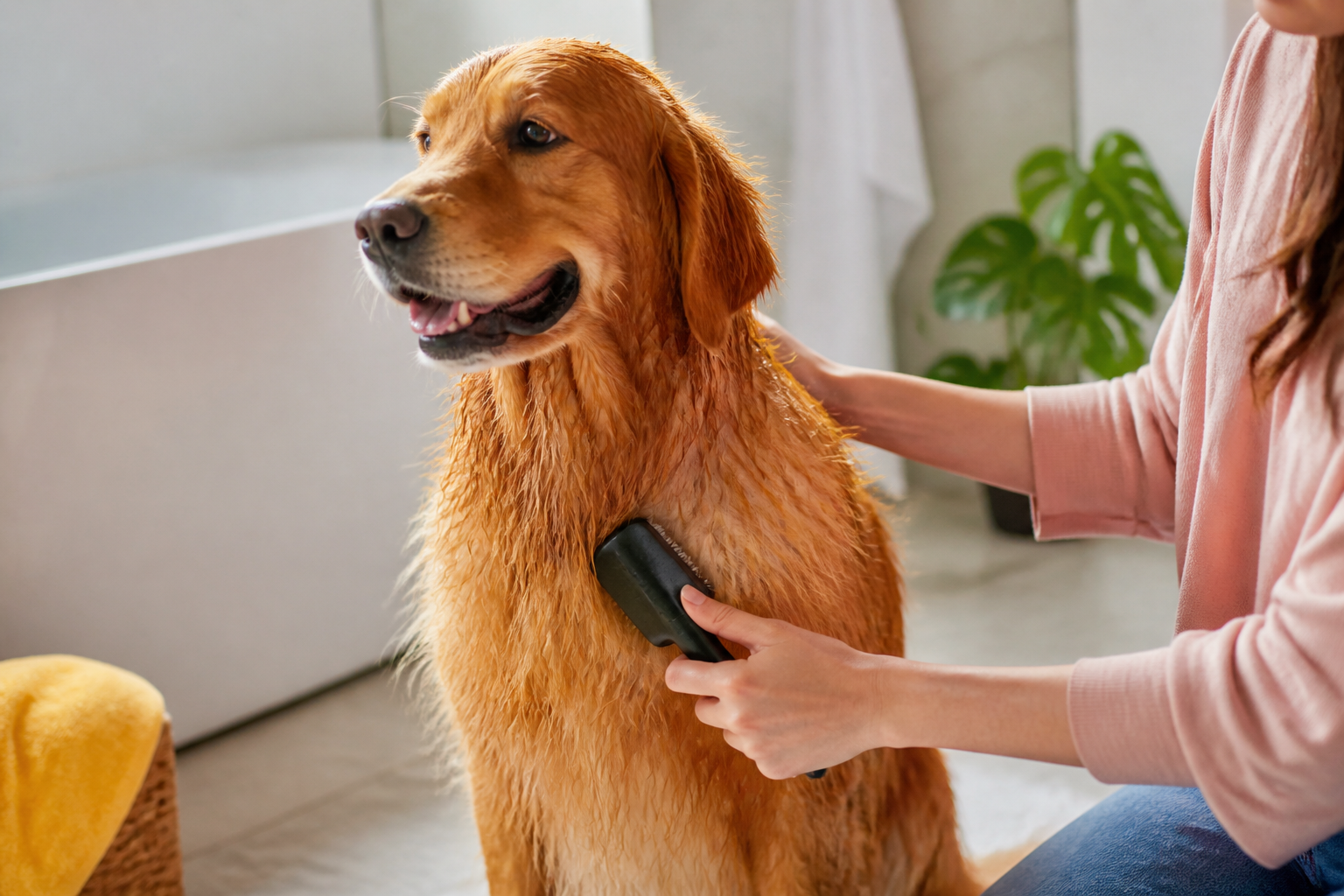
You just finished giving your dog a bath. They are soaking wet and currently doing that frantic post-bath zoomie around the living room. You are standing there with a towel in one hand and a slicker brush in the other. You might wonder if you should start brushing now to get ahead of the tangles or if you need to wait until the fur is bone dry. It is a common crossroads for pet owners. At BaxterBoo, we talk to people every day who want to keep their dogs looking great without causing unnecessary pain or coat damage. The answer to whether you should brush a wet dog is not a simple yes or no. It depends entirely on the technique and the products you use. While brushing a "naked" wet coat can lead to breakage, strategic brushing during the conditioning phase is a secret weapon for professional groomers. This guide will help you master the timing of your grooming routine.
The Science of Wet Hair and Why Timing Matters
To understand why brushing a wet dog can be risky, you have to look at the hair itself. Each strand of your dog's fur is made of keratin. When that fur gets saturated with water, the structural bonds change. Specifically, the hydrogen bonds in the hair break down when wet. This makes the hair more elastic. While elasticity sounds like a good thing, it actually means the hair is at its weakest tensile state.
When you pull a brush through wet, unconditioned fur, the hair stretches. If it stretches too far, it snaps. This leads to frayed ends and a dull appearance over time. Additionally, the cuticle or the outer layer of the hair shaft swells when wet. This creates more friction between the brush and the fur. Without the right lubrication, the brush can act like sandpaper on the hair.
However, the rules change when you add a high quality conditioner. Conditioner fills in the gaps in the hair cuticle. It provides "slip," which allows a brush or comb to glide through without the tugging that causes breakage. This is why professional groomers often do their heavy lifting in the tub.
Quick Answer: You should only brush a dog when wet if they are saturated with a high quality conditioner. Brushing a soaking wet dog without any product can cause the hair to stretch and snap, leading to permanent coat damage.
The Benefits of Wet Brushing in the Tub
When we talk about wet brushing, we specifically mean brushing during the bath while the conditioner is still on the dog. This is a game changer for certain breeds. It is particularly effective for dogs with thick undercoats or long, flowing hair.
One of the biggest hurdles in grooming is the "dead coat" or shedding hair that gets trapped against the skin. When the coat is wet and conditioned, this dead hair becomes heavy and slippery. A brush can help pull that loose fur out much more efficiently than it can when the coat is dry. This reduces the amount of hair you will find on your furniture later.
Wet brushing also helps distribute your grooming products. Instead of the conditioner just sitting on the top layer of fur, the brush work pushes it down to the skin. This ensures that the hydrating ingredients actually reach the areas that need them most.
How to Safely Brush in the Bath
Step 1: Wash your dog twice with a gentle shampoo to remove all dirt and oils.
Step 2: Apply a generous amount of conditioner from the ears to the tail.
Step 3: Use a wide-tooth comb or a soft-pin brush to gently work through the coat.
Step 4: Start at the ends of the hair and work your way up to the skin.
Step 5: Rinse thoroughly until the water runs clear and no bubbles remain.
For additional bath preparation and rinsing guidance, read our tips on bathing your dog.
Key Takeaway: Brushing during the conditioning phase helps remove trapped undercoat and ensures even product distribution. Never attempt this on a coat that has only been shampooed.
Why You Should Never Brush a Bone-Dry Coat
On the other end of the spectrum, brushing a completely dry coat can be just as problematic as brushing a wet one without product. Dry hair is prone to static electricity. When you pull a brush through dry fur, the friction creates a static charge. This causes the individual hairs to repel each other. They stand on end and become much easier to tangle.
Dry brushing also creates a "flyaway" effect. The hair becomes brittle and can break off in small pieces. You might notice a fine dust of hair falling off your dog as you brush. That is a sign of mechanical damage. To prevent this, we always recommend a light mist of a detangling spray or a leave-in conditioner. This provides just enough moisture to neutralize static and protect the hair shaft from the brush.
Our warehouse at BaxterBoo stocks several grooming sprays from trusted brands like Chris Christensen and Ice on Ice. These sprays act as a buffer. They make the grooming process more comfortable for your dog and more effective for you. You can find brushes, combs, shampoos, conditioners, and other supplies in our dog grooming collection.
Handling Different Coat Types
Every dog is different. A Labrador has very different grooming needs than a Goldendoodle. Knowing how to handle your dog's specific coat type will save you a lot of frustration.
Double-Coated Breeds
Breeds like Huskies, Golden Retrievers, and Shepherds have a soft undercoat and a coarse topcoat. For these dogs, wet brushing in the tub is the best way to manage shedding. The water helps the thick undercoat "blow out" more easily. If you wait until they are dry, the undercoat can become felted and difficult to move.
Curly and Drop Coats
Poodles, Shih Tzus, and Malteses have hair that grows continuously. These coats are the most prone to matting. For these breeds, you should never brush them when they are "squeaky clean" and wet without conditioner. However, once they are towel-dried and damp, a brush and a high-velocity dryer are your best friends. This helps straighten the hair as it dries, which prevents the tight curls from tangling back together.
Short-Haired Breeds
For Boxers or Labs, wet brushing is less about tangles and more about deshedding. A rubber curry brush used during the shampoo phase can help lift out thousands of loose hairs that a regular bath might miss. Since their hair is short, the risk of breakage is much lower.
Vet Tip: If you notice your dog has red, flaky, or irritated skin after a bath, they may be sensitive to a specific ingredient. Our dog pharmacy carries FDA-approved medicated shampoos for dogs with chronic skin conditions through our partnership with Pet's Choice. Always consult your veterinarian if your dog's skin seems painful or if they are losing hair in patches.
Choosing the Right Tools for the Job
The brush you use is just as important as the timing. If you use a harsh metal slicker brush on a wet, sensitive coat, you can cause "brush burn." This is a painful scraping of the skin that can lead to infections.
- Pin Brushes: These are excellent for wet brushing. Look for pins with rounded ends. They glide through the coat and are gentle on the skin.
- Wide-Tooth Combs: These are the safest bet for the tub. They don't pull as hard as a brush and are great for finding hidden mats.
- Rubber Curry Brushes: These are the gold standard for short-haired dogs. They massage the skin and grab loose hair without any risk of breakage.
- Slicker Brushes: These are best used on a dry or damp coat. They are great for "fluffing" the fur but should be used with a light touch.
For more options suited to different coat types, explore our dog grooming tools.
| Brush Type | Best Use Case | Risk Level on Wet Hair |
|---|---|---|
| Rubber Curry | Deshedding short coats in the tub | Very Low |
| Wide-Tooth Comb | Detangling long hair with conditioner | Low |
| Pin Brush | General grooming for medium to long coats | Medium |
| Slicker Brush | Finishing and fluffing a dry coat | High |
Common Mistakes to Avoid
Many well-meaning owners make mistakes that lead to a "bad hair day" for their pets. One of the most common is not rinsing enough. Shampoo residue is a magnet for dirt. If you don't rinse until the coat is completely clean, any brushing you do afterward will feel sticky. This residue can also cause the skin to become itchy and inflamed.
Another mistake is "scrubbing" the dog with a towel. When you rub a wet dog vigorously with a towel, you are essentially knotting the hair on purpose. This creates "friction mats." Instead, you should pat the dog dry or wrap them in an absorbent towel to soak up the moisture. This keeps the hair shafts lying flat and makes the subsequent brushing much easier.
Lastly, never try to brush out a severe mat while the dog is wet. Water causes mats to tighten. If your dog has "pelting" or thick mats against the skin, adding water will make them shrink and pull on the skin. In these cases, the mats often need to be clipped out by a professional before a bath ever happens.
Creating a Positive Experience
Grooming should be a bonding time, not a struggle. If your dog is afraid of the brush, start slow. Offer high-value treats while the brush is nearby. At BaxterBoo, we recommend keeping a stash of healthy treats like those from Stella & Chewy's or Zuke's to reward your dog for staying calm.
If your dog is particularly anxious about the bath or the brush, you might look into calming supplements. Options like Honest Paws or Zesty Paws can help take the edge off during a long grooming session. Our pharmacy also provides prescription options for dogs with severe grooming phobias through our Pet's Choice partnership. Talk to your vet to see if a calming protocol is right for your pet.
Key Takeaway: Preparation is everything. Having your tools, treats, and products ready before you start the bath ensures a smoother process for both you and your dog.
Summary of the Best Practices
To keep your dog's coat in top condition, follow these simple rules. Never brush a soaking wet dog unless they are covered in conditioner. Use a light detangling spray if you need to brush a dry coat. Always use the right tool for your dog's specific hair type. Finally, make sure to rinse every bit of product out to avoid skin irritation.
- Brush in the tub only with conditioner.
- Pat dry rather than rubbing with a towel.
- Use a detangling spray on dry coats.
- Reward your dog frequently to build a positive association.
Brushing is about more than just looks. It is an opportunity to check your dog for lumps, bumps, or pests like ticks. Regular grooming keeps your dog comfortable and helps you catch health issues early.
Bottom line: Wet brushing is a professional technique that requires the right lubrication to prevent breakage and pain.
The Role of Nutrition in Coat Health
While your brushing technique is vital, a beautiful coat starts from the inside. A dog that is missing key nutrients will have hair that is brittle and prone to breaking, regardless of how careful you are with a brush. Omega-3 and Omega-6 fatty acids are essential for maintaining the lipid barrier of the skin and the shine of the fur.
We carry premium brands like Farmina, Orijen, and Open Farm that prioritize high quality proteins and healthy fats. If your dog has persistent coat issues like dullness or excessive shedding, it might be time to look at their bowl. Sometimes a switch to a limited ingredient diet or adding a skin and coat supplement can make a world of difference. Browse our dog food selection when reviewing your dog's everyday nutrition.
Our MVP Rewards programme is a great way to save on these premium foods. You can earn points on every purchase and get exclusive offers on the brands your dog loves. If you find a food that works, our Autoship programme ensures you never run out and gives you a discount on your orders.
Conclusion
Determining whether you should brush a dog when wet comes down to understanding the state of the hair. Avoid brushing a "naked" wet dog to prevent breakage and pain. Instead, embrace the wet brushing technique by using a high quality conditioner in the tub to help slide out dead undercoat. When the coat is dry, always use a grooming spray to protect against static and friction. By following these professional steps, you can maintain a salon-quality finish at home. If you need to restock your grooming kit or want to explore medicated options for skin health, visit our dog grooming collection or our pet pharmacy. Keeping your dog's coat healthy is a journey, and we are here to provide the tools and expertise you need every step of the way.
FAQ
Is it better to brush a dog before or after a bath?
It is usually best to brush your dog both before and after a bath. Brushing before the bath removes loose hair and prevents existing mats from tightening when they get wet. Brushing after the bath, once the coat is damp or dry, helps achieve a smooth finish and ensures no new tangles formed during the washing process.
Can I brush my dog while they are still in the soapy stage of the bath?
You should generally avoid brushing during the shampoo stage because shampoo is designed to lift dirt and open the hair cuticle, which increases friction. Brushing at this stage can be harsh on the hair and skin. It is much safer and more effective to wait until the conditioning stage when the hair is lubricated and protected.
What happens if I brush my dog's wet hair without any conditioner?
Brushing wet hair without conditioner often leads to mechanical damage like breakage and split ends. Because wet hair is more elastic, it can stretch to the point of snapping when pulled by a brush. This can leave your dog's coat looking frizzy, dull, and thin over time.
Why does my dog's hair seem to mat more after I wash them?
This usually happens because of "friction matting" caused by vigorous towel drying or because small tangles were not brushed out before the bath. Water causes hair to swell and can make existing knots shrink and tighten. To prevent this, always detangle before the bath and use a patting motion to dry your dog rather than rubbing them.






