
 Save 15% on your 1st Autoship learn more

 Email us
 Live Chat
 FAQs
FAQs





Introduction
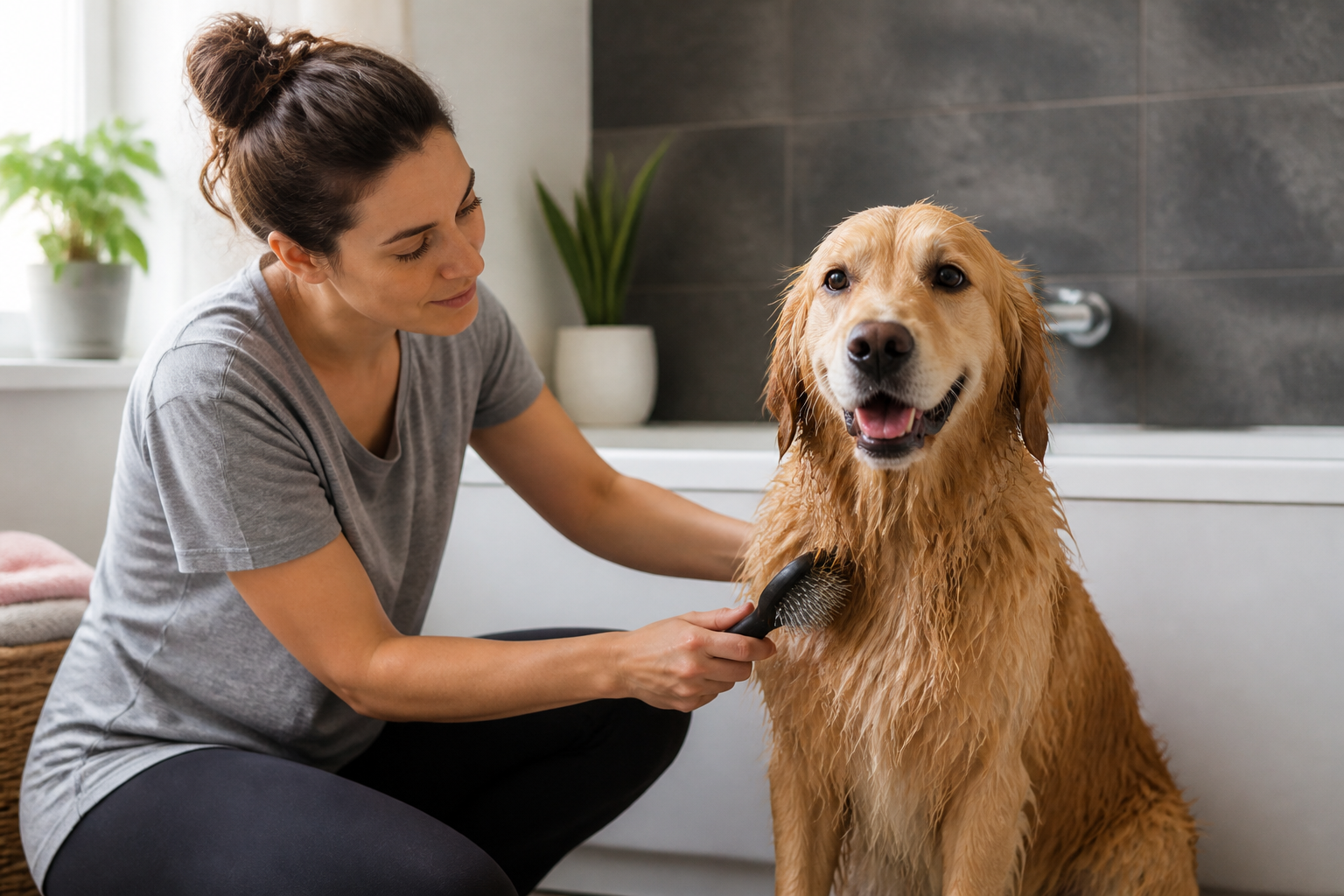
You just finished a long bath with your dog. Your pup is shaking off water and the bathroom is officially a splash zone. You reach for the brush to help tidy up their coat before they jump on the couch. At BaxterBoo, we hear from owners all the time who are unsure if this is the right move. Brushing while the hair is damp feels like it might save time, but it can actually lead to broken hair and skin irritation if done incorrectly. This post covers the science of wet hair, when wet brushing is helpful, and the tools you need to keep a coat healthy. Understanding the difference between a quick tidy-up and a deep grooming session will save your dog from unnecessary discomfort. Wet brushing is a specific technique that requires the right products to avoid damaging the hair.
Quick Answer: Brushing a wet dog is usually a mistake because wet hair is at its weakest and most elastic state. However, brushing in the tub while using a high-quality conditioner can be a helpful technique for de-shedding certain breeds.
Why the Pre-Bath Brush Matters
The most important step in grooming happens before the water even starts running. You should always aim to give your dog a thorough brushing while their coat is completely dry. This is because water acts like a glue for existing tangles. If your dog has small knots or mats, getting them wet causes the hair fibers to swell and tighten. Once those mats are wet, they are much harder to remove without cutting them out.
Working on a dry coat also helps you see the condition of the skin. You can spot red patches, dry flakes, or unwanted guests like fleas more easily when the hair is dry and separated. If you find heavy matting, you may need to use a dematting tool for dogs or a slicker brush to gently break them apart. Taking ten minutes to brush before the bath prevents the "wet mat" problem that many owners face after towel drying.
Dry brushing is also the best time for de-shedding. Loose, dead hair comes off much more easily when it is dry. If you skip this step, all that loose fur will end up clogging your drain or clumping together during the shampooing process. A clean, pre-brushed coat allows the shampoo to reach the skin where it can actually do its job.
Key Takeaway: Water tightens existing mats and knots. Always remove tangles with a brush or comb before getting your dog wet to prevent painful pelted hair.
The Science of Wet Hair Bonds
To understand why wet hair is fragile, we have to look at the structure of the hair itself. Dog hair is held together by different types of bonds. Hydrogen bonds are the ones most affected by water. When your dog’s coat gets wet, these bonds temporarily break. This makes the hair much more elastic than usual. While elasticity sounds like a good thing, it actually means the hair can stretch until it snaps.
When the hair is saturated, the outer layer called the cuticle begins to swell. This makes the surface of the hair shaft rough. If you run a brush through these swollen, rough hairs, they catch on each other. This friction leads to split ends and breakage. In some cases, the stretching can be so severe that it damages the hair follicle itself.
Dry hair is structurally stronger and less likely to stretch. This is why a brush glides through dry hair with less resistance. When you add water into the mix, you lose that natural strength. If you must brush a wet coat, you have to replace that lost strength with lubrication. This is why professional groomers emphasize that wet brushing should only happen when the hair is coated in a slippery product.
When Wet Brushing is Beneficial
Despite the risks of breakage, there are times when wet brushing is actually a pro-level move. This technique is specifically useful for de-shedding double-coated breeds or managing very thick, curly hair. The secret is that it should never be done on "plain" wet hair. It must be done during the conditioning phase of the bath.
Applying a heavy-duty conditioner or a detangling spray provides "slip." Lubrication allows the brush pins to glide over the hair shafts rather than pulling on them. When the coat is saturated with conditioner, the brush can help distribute the product all the way down to the skin. This ensures that the moisturizing ingredients reach the areas that need them most. A product such as earthbath® Oatmeal & Aloe Conditioner can be used as part of a dog-focused conditioning routine.
Wet brushing in the tub is also a fantastic way to pull out dead undercoat. The water and conditioner work together to release the trapped fur. For dogs like Shelties or Labradors, you might be surprised at how much extra hair comes out in the tub compared to a dry brushing session. This keeps the hair from ending up on your furniture later.
Bottom line: Only brush a wet dog if the coat is saturated with conditioner to provide the necessary lubrication and protection.
Choosing the Right Grooming Tools
The brush you use on a dry dog is not always the best choice for a wet one. Our experts at BaxterBoo handpick tools that are designed for specific coat types and conditions. For wet brushing, you want tools that are gentle on the skin and do not have sharp edges that could cut the swollen hair shafts. You can compare options in our dog brushes and combs category.
- Pin Brushes: These are often the best choice for wet hair. Look for pins with rounded tips. They reach through the layers of the coat without scratching the sensitive, wet skin.
- Slicker Brushes: These are great for dry brushing and removing mats. Use them with extreme caution on wet hair, as the fine wire bristles can be too aggressive for elastic wet fur.
- Rubber Curry Brushes: These are perfect for short-haired breeds. You can use them while shampooing to massage the skin and pull out loose hair without any risk of breakage. Our natural rubber grooming brushes include options designed for wet or dry use.
- Wide-Tooth Combs: A stainless steel comb with wide spacing is excellent for checking your work after applying conditioner.
Using a high-quality pin brush allows you to feel for resistance. If the brush catches, you know you need more conditioner or a gentler touch. Avoid using cheap plastic brushes with sharp seams. Those seams can snag and tear the hair cuticles, leading to a dull coat over time.
The Step-by-Step Wet Brushing Method
If you decide to try wet brushing to help with shedding or product distribution, follow this process. It protects the coat while making the most of the bath time.
Step 1: Thoroughly wash the dog. / Ensure all dirt and oils are removed so the conditioner can bond directly to the hair shaft.
Step 2: Apply a generous amount of conditioner. / Use a product formulated for dogs and focus on the thickest areas of the coat.
Step 3: Use a pin brush or rubber brush. / Start at the ends of the hair and work your way toward the skin using very gentle strokes.
Step 4: Rinse with cool or lukewarm water. / Rinsing helps the hair cuticle lay flat again, sealing in the moisture from the conditioner.
Step 5: Blot the hair dry with a towel. / Never rub the hair vigorously with a towel. Rubbing causes tangles and breaks the fragile, wet strands.
Step 6: Use a leave-in detangling spray. / Apply this before using a hair dryer to add one final layer of protection against the heat and any final brushing.
Vet Tip: If your dog has sensitive skin or a history of hot spots, be careful with wet brushing. Excessive pulling can cause micro-tears in the skin that may lead to bacterial infections. Always consult your vet if you notice sores or persistent redness after grooming.
Handling Mats and Tangles Safely
Mats are the biggest hurdle in dog grooming. A mat is more than just a tangle. It is a dense clump of live and dead hair that has woven itself together. When these get wet, they can shrink and pull tightly against the skin. This is painful for the dog and can cause skin bruising or "brush burn" if you try to pull them out.
If you discover a mat while your dog is wet, do not try to brush it out. The best approach is to apply a leave-in conditioner and wait for the coat to dry. Once the hair is dry, it will regain its strength, making it safer to work on. You can then use a specialized dematting tool or a slicker brush to gently tease the hairs apart.
For dogs with chronic matting issues, regular grooming every few days is essential. This prevents the tiny knots from turning into large mats. If your dog’s coat is severely pelted, where the mats are tight against the skin, do not attempt to brush them out at home. This often requires a professional groomer to safely shave the coat to prevent skin tearing.
| Feature | Dry Brushing | Wet Brushing (With Conditioner) |
|---|---|---|
| Primary Goal | Remove mats and tangles | De-shed and distribute product |
| Hair Strength | Strong and resilient | Weak and elastic |
| Risk of Breakage | Low | High (unless lubricated) |
| Best Tool | Slicker brush or rake | Pin brush or rubber curry |
| Skin Impact | Minimal | Higher sensitivity |
Skin Health and the Role of Professional Care
Grooming is about more than just looking good. It is a vital part of your dog’s overall health. While you are brushing, you should be looking for any signs of skin issues. This includes lumps, bumps, rashes, or dry patches. We see it often at the BaxterBoo warehouse. Owners come in looking for brushes but leave with a better understanding of their dog's skin health.
If you find that your dog’s skin is frequently irritated after grooming, it might be an allergy or a fungal issue. In these cases, standard shampoos might not be enough. BaxterBoo provides access to our pet pharmacy through our partnership with Pet's Choice. This allows you to get FDA-approved medicated shampoos and topical treatments that your veterinarian prescribes.
Medicated shampoos often require a specific contact time on the skin to be effective. During this time, a very gentle wet brush with a rubber tool can help the medicine reach the skin. However, you should never use a metal brush on irritated or medicated skin unless your vet specifically tells you to.
Key Takeaway: Proper grooming tools and techniques prevent skin damage. If you notice persistent skin issues, a trip to the vet and a visit to our pharmacy may be necessary to find a solution.
Common Myths About Dog Grooming
One common myth is that shaving a long-haired dog in the summer keeps them cool. For many breeds, the coat actually acts as insulation against the heat. Brushing out the dead undercoat is much more effective for cooling than shaving. Shaving can also expose the skin to sun damage and permanent coat changes.
Another myth is that dogs should be bathed as often as humans. For most dogs, a bath once a month is plenty. Over-bathing can strip the natural oils that keep the skin and coat healthy. If your dog gets dirty between baths, a quick dry brushing or a wipe-down with a damp cloth is usually enough. For additional bathing guidance, read our tips for bathing your dog.
Finally, many people think that human shampoo is fine for dogs. Human skin has a different pH balance than dog skin. Using human products can disrupt the "acid mantle" of your dog’s skin, leaving them vulnerable to bacteria and parasites. Always use a pH-balanced dog shampoo to maintain their natural defenses.
Summary of Best Practices
Grooming your dog at home is a great way to bond and save money, but it requires the right approach. Remember that the condition of the hair changes when it is wet. Protecting that fragile state is the key to a shiny, healthy coat.
- Brush before the bath. This is the golden rule for preventing mats.
- Avoid brushing "naked" wet hair. Use conditioner as a lubricant if you must brush in the tub.
- Blot, don't rub. Use a towel to soak up water without causing friction.
- Use the right tools. Match your brush to the coat type and the wetness of the hair.
- Watch the skin. Look for redness or irritation every time you groom.
If you find that your dog's coat is becoming unmanageable or their skin is showing signs of distress, reach out to your veterinarian. They can help diagnose underlying issues that might be affecting coat quality. For any prescription needs, our pharmacy partnership offers a convenient way to get the help your pet needs delivered to your door.
Bottom line: Brushing a wet dog is a specialized technique for de-shedding. For everyday tangles, stick to dry brushing to keep your dog's hair strong and healthy.
FAQ
Can I brush my dog while they are still damp after a bath?
It is better to wait until the coat is fully dry or use a leave-in detangling spray to provide some protection. Brushing damp hair without any product can still lead to snagging and breakage because the hair has not yet regained its full strength. If you must brush, use a wide-tooth comb or a very soft pin brush and move slowly to avoid pulling the skin.
Why does my dog's hair feel rougher after I brush it wet?
This usually happens because the hair cuticles were swollen and open when you brushed them. The friction of the brush can cause the cuticle to stay "ruffled" or even break off, leading to a coarse texture. To fix this, ensure you are using a high-quality conditioner and rinsing with cool water to help the hair shaft close and smooth out.
Is it okay to brush a short-haired dog when they are wet?
Short-haired dogs are at much lower risk for matting, so wet brushing is generally safe for them. Using a rubber curry brush during the bath is actually a great way to remove loose hair and massage the skin. Since there is less hair to stretch and break, you do not have to worry as much about the elasticity issues that affect long-haired breeds.
What should I do if I find a mat while my dog is in the tub?
Do not try to brush it out while it is wet. Instead, apply a large amount of conditioner directly to the mat and let it sit for a few minutes before rinsing. Once the dog is completely dry, the mat will be easier to manage. You can then use your fingers to pull it apart slightly before using a slicker brush or a de-matting tool to finish the job.






