
 Save 15% on your 1st Autoship learn more

 Email us
 Live Chat
 FAQs
FAQs





Introduction
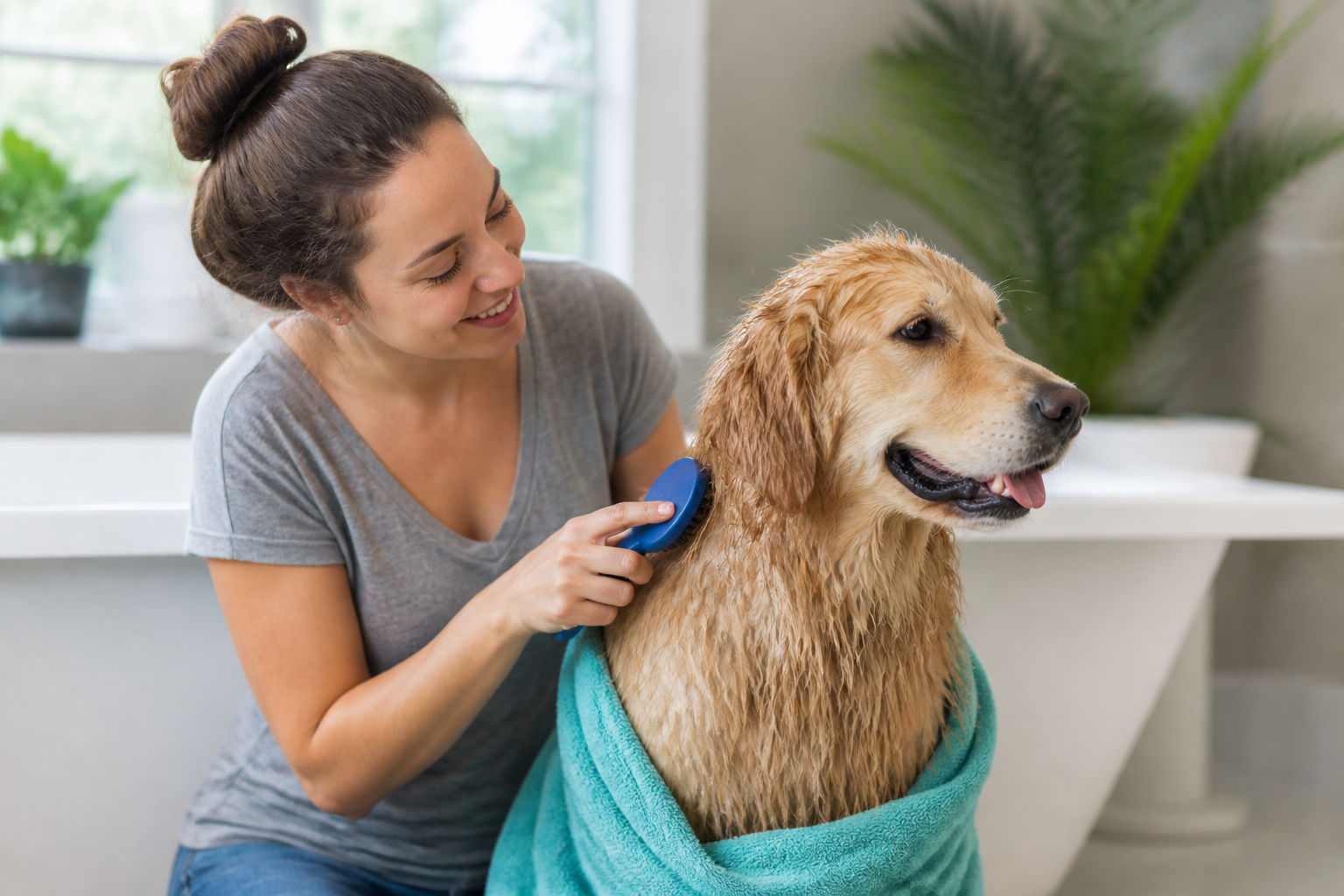
You just finished giving your dog a bath, and they have already performed the inevitable full-body shake that leaves your bathroom walls dripping. As you reach for the towel, you might see a few stray tangles or a mountain of loose fur and wonder if now is the right time to pull out the brush. It seems logical to handle the grooming while the hair is already slick, but the answer to whether you should brush a wet dog is not a simple yes or no.
At BaxterBoo, we know that proper grooming is about more than just looking good. It is about maintaining the health of the skin and the integrity of the coat. This post covers the science behind wet hair, the specific situations where brushing a wet dog is actually helpful, and the dangerous mistakes that could lead to painful breakage or skin irritation. Understanding these nuances will help you keep your dog comfortable and their coat shining.
Quick Answer: You should generally avoid brushing a soaking wet dog because wet hair is more fragile and prone to breakage. However, brushing a damp dog is acceptable if you use a high-quality conditioner or detangling spray to provide "slip" and prevent pulling.
The Science of Wet Canine Hair
To understand why brushing a wet dog can be risky, we have to look at the structure of the hair itself. Dog hair is held together by different types of bonds. One of the most important for daily grooming is the hydrogen bond. These bonds help the hair stay strong and maintain its shape. When hair gets saturated with water, these hydrogen bonds temporarily break.
This process causes the hair shaft to swell. The outer layer of the hair, known as the cuticle, lifts up rather than lying flat. While this makes the hair more elastic and stretchy, it also makes it significantly weaker. If you pull a brush through hair in this state, the "stretch" often reaches a breaking point before the tangle actually releases.
When you brush a dry dog, the hair is at its strongest tensile strength. It does not stretch much, so the brush can more effectively flick away loose fur or debris. When the coat is wet, that same brushing motion can overstretch the hair, leading to split ends or a frizzy, damaged appearance once the coat dries.
How Water Impacts Different Coat Types
Not every dog reacts to water the same way. The impact of moisture depends heavily on the specific coat type.
- Double-Coated Dogs: Breeds like Huskies or Golden Retrievers have a dense undercoat. When wet, this undercoat can become a heavy, soggy mass. Brushing this while wet without the right tools can be like trying to comb through wet wool.
- Curly-Coated Dogs: Poodles and Doodles often have hair that tightens when wet. Brushing these curls while wet can actually be beneficial if done with plenty of conditioner, as it helps prevent the hair from "shrinking" into tight mats as it dries.
- Short-Haired Dogs: For dogs with very short, sleek coats, the risk of breakage is lower. However, the skin is more exposed. Brushing a wet, short-haired dog can easily lead to "brush burn" because the water makes the skin softer and more sensitive to the bristles.
When Wet Brushing is Actually Beneficial
While the general rule is to wait until the coat is dry, there are specific times when professional groomers actually prefer a "wet brush" technique. The key is that they never do it on a coat that is just water-soaked. They use lubrication.
The Conditioning Phase
The best time to brush a wet dog is while they are still in the tub and covered in a thick layer of conditioner. High-quality conditioners help the cuticles of the hair lie flat and provide a "slip" that allows the brush to glide through. This is often the most efficient way to remove a heavy undercoat or to distribute a deshedding treatment.
If you are using this method, ensure the coat is not dripping. You want the hair to be damp and fully saturated with product. This technique is particularly helpful for dogs that shed year-round, as the water and conditioner together help release the "dead" hair that is stuck in the follicles.
For a rinse-out option, consider a fragrance-free organic conditioner for dogs designed to help detangle wet fur.
The Damp Drying Phase
Another acceptable window is after you have towel-dried the dog. The hair should not be dripping, but it should still feel cool and moist to the touch. Using a leave-in detangling spray at this stage provides a protective barrier. This helps the brush move through the coat without the friction that causes breakage.
A leave-in conditioner and detangling spray can be applied to damp fur before gently brushing through trouble spots.
Key Takeaway: Never brush a wet dog without a lubricant like conditioner or a detangling spray. The added "slip" is the only thing protecting the weakened hair shafts from snapping under the pressure of the brush.
The Dangers of Brushing a Soaked Dog
The most common mistake owners make is trying to brush out a dog that is soaking wet and dirty. If your dog just came in from a rainstorm or a swim in a muddy pond, do not grab the brush immediately.
Increased Risk of Breakage
As mentioned, the hair is at its weakest when saturated. Without conditioner, the friction between the brush bristles and the swollen hair shaft is extremely high. This leads to "mechanical damage." You might notice that the brush seems to be pulling out more hair than usual. While you might think you are doing a great job deshedding, you are likely just snapping healthy hairs off at the midpoint.
Worsening Existing Mats
Water acts like a glue for existing tangles. If your dog has a small knot and it gets wet, the hair fibers swell and tighten around each other. Brushing these wet mats is incredibly painful for the dog. Instead of sliding apart, the wet fibers grip one another. This usually results in the mat becoming tighter and harder to remove once the dog is dry.
For additional bathing guidance, read our article on safe dog bathing and handling mats after a bath.
Skin Irritation and Hot Spots
Wet skin is much more delicate than dry skin. The protective oils are often washed away during a bath, leaving the skin surface vulnerable. If you are brushing vigorously while the dog is wet, the pins of the brush can cause micro-scratches on the skin.
Furthermore, if you brush the top layer but leave the undercoat damp and tangled, you create the perfect environment for "hot spots." These are bacterial skin infections that thrive in warm, moist areas. If moisture is trapped against the skin by a thick, wet, partially brushed coat, your dog could end up needing a trip to the vet.
Proper Tools for Wet vs. Dry Brushing
Using the wrong brush for the job is a recipe for a bad grooming experience. If you are going to brush a damp or conditioned dog, you need tools designed for that specific purpose.
Choosing the Right Brush
| Brush Type | Best Use | Caution |
|---|---|---|
| Pin Brush | Damp coats and long hair | Ensure pins have rounded tips to protect wet skin. |
| Slicker Brush | Dry coats and deshedding | Can be too sharp for wet, softened skin. |
| Wide-Tooth Comb | Detangling in the tub | Best for checking for mats after conditioning. |
| Rubber Curry Brush | Short-haired dogs | Great for massage and deshedding in the bath. |
We carry a wide variety of brushes and grooming tools at BaxterBoo that cater to these specific needs. Explore our dog brushes and combs for options suited to different coat types and grooming stages.
For wet brushing, a high-quality pin brush with polished tips is usually the safest bet. It allows for deep penetration of the coat without the aggressive "grabbing" action of a wire slicker brush.
The Role of Detangling Sprays
If you choose to brush while the dog is damp, a detangling spray is a must-have tool. Brands like Chris Christensen or Ice on Ice offer sprays that reduce static and add a silk-like coating to the hair. This makes the grooming process much faster and significantly more comfortable for your pet.
You can also explore our waterless grooming collection for coat sprays and other grooming products designed for between-bath care.
Step-by-Step Guide: How to Groom Correct-Way
If you want to ensure your dog’s coat remains healthy, follow this specific order of operations. This routine minimizes damage and maximizes the effectiveness of your tools.
- The Pre-Bath Brush: Always brush your dog thoroughly before they ever touch the water. This removes loose fur and, most importantly, identifies and breaks up mats. Once a mat gets wet, it is twice as hard to fix.
- The Bath and Condition: Wash your dog with a gentle shampoo. Follow up with a heavy-duty conditioner. If your dog has a long or difficult coat, use a wide-tooth comb or a wet-rated pin brush to work the conditioner through the fur while they are still in the tub.
- The Towel Blot: Do not rub your dog vigorously with a towel. This creates tangles. Instead, blot the coat to soak up excess water.
- The Spray Application: Apply a leave-in conditioner or detangling spray while the coat is still damp.
- The Gentle Detangle: Use your brush to gently work from the ends of the hair up toward the skin. If the brush catches, do not pull. Use your fingers to separate the hair and try again.
- The Full Dry: Allow the dog to dry completely, either naturally or with a pet-safe blow dryer.
- The Final Polish: Once the coat is bone dry, do one last pass with the brush. This is when the coat will truly shine and any remaining loose undercoat will come away easily.
Vet Tip: If you notice your dog's skin looks red, bumpy, or irritated after a bath and brush session, they may have a sensitive skin condition or a mild infection. Our pet pharmacy offers FDA-approved medicated shampoos and topical treatments through our Pet's Choice pharmacy partnership, but you should always consult your veterinarian first to ensure you are using the right product for their specific skin health needs.
Managing Mats in Wet Fur
If you find a mat while your dog is wet, your first instinct might be to keep brushing until it is gone. This is usually the wrong move. If the mat is small and saturated with conditioner, you might be able to gently tease it apart with a comb.
However, if the mat is large or close to the skin, stop. Brushing a wet mat often causes the dog significant pain and can lead to skin tears. The best approach is to wait. Let the area dry completely. Once the hair is dry and the bonds have strengthened, you can apply a specialized mat-breaking spray. If the mat is still too tight to move, it may need to be carefully clipped out by a professional.
Special Considerations for Senior Dogs and Puppies
The "to brush or not to brush" debate gets more serious when dealing with very young or very old pets.
Puppies
Puppies are still learning how to behave during grooming. If you brush them while they are wet and it pulls or hurts, they will develop a negative association with bath time. For puppies, it is best to keep things as easy as possible. Focus on short, dry brushing sessions that involve plenty of treats. If you must brush them wet, be extremely gentle and use plenty of puppy-safe conditioner.
Senior Dogs
Older dogs often have thinner skin and may suffer from arthritis. Standing in a tub for a long time can be exhausting. If you try to brush them while they are wet, the added weight of the water in their coat can put extra strain on their joints. For seniors, we recommend keeping the bath quick and doing the majority of the grooming when they are dry and comfortable on a non-slip surface.
Summary of Best Practices
Maintaining a dog's coat is a balancing act between cleanliness and hair integrity. While the temptation to brush a wet dog is high, doing so without caution can lead to more work in the long run.
- Avoid brushing a dripping wet dog with no product.
- Encourage brushing in the tub with plenty of conditioner.
- Utilize detangling sprays for damp grooming.
- Prioritize a full dry before doing heavy deshedding.
Key Takeaway: The health of your dog's coat depends on the strength of the hair bonds. Respect the elasticity of wet hair by using the right lubricants and tools, or simply wait for the coat to dry.
Conclusion
Brushing your dog is a vital part of their care, but timing is everything. While it is possible to brush a wet dog, it should only be done when the hair is protected by high-quality conditioners or sprays. For most pet owners, the safest and most effective routine involves a thorough brush before the bath and a final grooming session once the coat is completely dry. This approach protects the hair from breakage and keeps your dog’s skin healthy and irritation-free.
If you are looking for the right tools to make your home grooming sessions easier, we recommend exploring our dog grooming supplies and our wide selection of pin brushes, slickers, and high-quality conditioners.
- Use a pre-bath brush to stop mats before they start.
- Always apply a detangling spray to damp fur.
- Wait for the coat to be fully dry for the best deshedding results.
Bottom line: Brushing a soaking wet dog causes breakage, so stick to damp brushing with a quality detangling spray for the best results.
FAQ
Is it better to brush a dog wet or dry?
For most dogs, it is better to brush them when they are dry because the hair is at its strongest. Brushing a dry coat allows you to remove loose fur and debris without overstretching or breaking the hair shafts. If you must brush a wet dog, only do so when the coat is damp and saturated with a detangling spray or conditioner to provide necessary lubrication.
Why does my dog's hair feel rough after brushing it wet?
If the hair feels rough or frizzy after a wet brush session, you likely caused "mechanical damage" or breakage. When you pull a brush through wet hair, the cuticle layer can become ruffled or snapped, leading to split ends. To avoid this, always use a leave-in conditioner and ensure you are using a brush with rounded, polished pins.
Can brushing a wet dog cause skin problems?
Yes, brushing a wet dog can lead to skin irritation or even infections like hot spots. Wet skin is softer and more prone to scratches from brush bristles. Additionally, if you brush the top layer of a wet coat but leave moisture trapped in the dense undercoat, the lack of airflow can create a breeding ground for bacteria against the skin.
Should I brush my dog before or after a bath?
You should always brush your dog before a bath to remove loose fur and untangle any mats. Water acts like a glue for knots, making them much tighter and harder to remove once they are wet. Brushing after the bath should only happen once the dog is either damp with a detangling product or completely dry.






