
 Save 15% on your 1st Autoship learn more

 Email us
 Live Chat
 FAQs
FAQs





Introduction
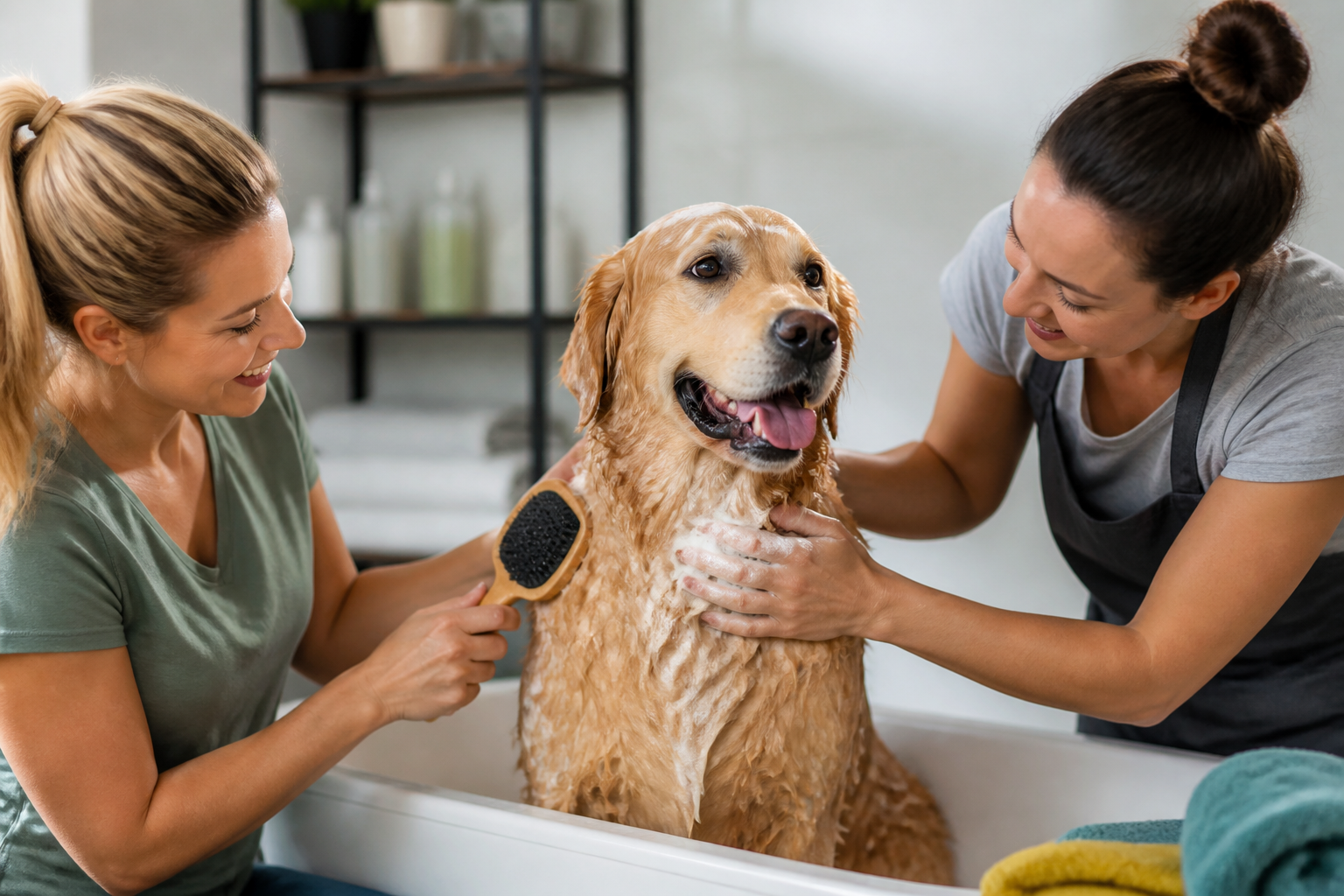
You just finished a long afternoon at the park and your dog is covered in trail dust or has that distinct "outside" smell. You head straight for the tub to start the scrub, but you might be skipping the most important step of the entire process. At BaxterBoo, we see many pet owners struggle with mats and tangles that seem to appear out of nowhere right after a bath. The order in which you brush and bathe can make the difference between a relaxing spa day and a painful grooming session for your pet. While it might seem like water would help loosen tangles, it often does the exact opposite. This article covers the essential timing for brushing and how to keep your dog's coat healthy through the washing process. Brushing before you turn on the faucet is the secret to a smooth, mat-free coat.
Quick Answer: You should always brush your dog before a bath to remove tangles and loose hair. Water can tighten existing knots and mats, making them nearly impossible to remove once the coat is wet. Brushing again after the coat is completely dry provides a smooth, polished finish.
The Science of the Wet Coat
To understand why brushing before a bath is so important, you have to look at what happens to a hair shaft when it gets wet. Hair is porous. When water hits the coat, the hair swells and the outer layer, called the cuticle, can become slightly roughened. If there is already a small tangle or a clump of loose shedding hair, the water acts like a physical binder. It causes the hair strands to cling together more tightly.
Think of it like a piece of wool jewelry. If you get a wool sweater wet and agitate it, the fibers lock together. This is exactly what happens during a dog's bath. If you scrub a tangled coat with shampoo, those small knots can turn into hard, tight mats that sit right against the skin. Once the hair dries in that tangled state, it becomes much more difficult to separate without causing discomfort.
The Problem with Scrubbing
Many owners use a circular scrubbing motion when applying shampoo. While this feels like it gets the dog cleaner, it actually twists the hair strands around each other. If you have not brushed out the loose undercoat first, that dead hair gets tangled into the healthy, attached hair. This creates a web of fur that is a nightmare to brush out later.
Benefits of Brushing Before the Bath
Brushing before the water starts flowing is about more than just avoiding mats. It is a foundational part of hygiene. When you remove the dead undercoat and loose fur ahead of time, you are clearing the way for the cleaning products to do their job.
- Better Product Penetration: If your dog has a thick or double coat, a layer of shedding hair can act like a waterproof barrier. Brushing it out allows the shampoo and water to actually reach the skin.
- Faster Drying Time: A coat full of dead, trapped hair holds onto a significant amount of water. By removing that extra bulk, your dog will dry much faster.
- Saving Your Plumbing: Washing a shedding dog without brushing first is a fast way to clog your bathtub drain. Removing that hair with a brush first keeps it out of your pipes.
- Finding Skin Issues: Brushing is the best time to check for ticks, fleas, hot spots, or unusual lumps. It is better to find these before you start scrubbing an irritated area.
Pre-Bath Checklist
- Check for mats behind the ears and under the armpits.
- Use a slicker brush to lift the undercoat.
- Follow up with a metal comb to ensure you reached the skin.
- Address any localized "sticky" spots like sap or burrs.
Key Takeaway: Brushing before the bath is the only way to ensure that shampoo and treatments actually reach the skin instead of just sitting on top of a layer of dead fur.
When the Bath Becomes a Treatment
Sometimes a bath is about more than just getting rid of mud. If your dog is dealing with itchy skin, seasonal allergies, or a fungal issue, the bath is a medical treatment. This is where the order of operations becomes even more critical. If you do not brush the coat first, the medicated shampoo cannot sit against the skin effectively.
Our pharmacy offers a wide range of FDA-approved medications and prescription pet foods through our partnership with Pet's Choice. If your veterinarian has prescribed a specific medicated wash for a skin condition, they likely want that product to remain in contact with the skin for five to ten minutes. If the coat is matted or packed with dead hair, the medicine never reaches the target area. We carry these specialized treatments in our pharmacy section, ensuring you have access to the exact formulas your vet recommends for chronic skin management.
Vet Tip: If your dog is constantly itching or has red, inflamed skin, do not just reach for a standard scented shampoo. Consult your veterinarian to see if a prescription-strength wash is necessary. Using the wrong product on an active skin infection can sometimes make the irritation worse.
The Post-Bath Brush: The Finishing Touch
While the pre-bath brush is the most important for health, the post-bath brush is what gives your dog that professional look. However, there is a major rule you must follow: never brush a soaking wet coat.
Wet hair is more elastic than dry hair. When you pull a brush through wet fur, the hair stretches. If it stretches too far, it snaps or becomes permanently damaged and frizzy. This damaged hair is more likely to tangle in the future. Instead, you should towel dry your dog or use a blow dryer on a cool setting. Wait until the coat is at least 90 percent dry before you go back in with your tools.
Why the Post-Bath Brush Matters
Once the dog is clean and dry, a final brush removes any hair that was loosened during the washing process but did not fall out. It also helps to separate the hair shafts, giving the coat more volume and shine. This is the time to use a finishing spray or a light leave-in conditioner. These products help seal the hair cuticle that we talked about earlier, making the coat smoother and more resistant to dirt.
For additional bath-day guidance, read our article on dos and don'ts for bathing your dog.
Tool Selection: Using the Right Brush
Using the wrong tool can make the "before and after" routine frustrating for both of you. You need tools that are appropriate for your dog's specific coat type. A brush that works for a Doberman will do absolutely nothing for a Newfoundlander.
The Slicker Brush
This is the workhorse of the grooming world. It has fine, short wires spaced closely together on a flat or curved head. It is excellent for removing mats and tangles in medium to long-haired dogs. Use this before the bath to "fluff" the coat and find hidden knots.
You can compare options in our dog brushes and combs category.
The Metal Comb
Commonly called a "greyhound comb," this tool is essential for the "Comb Test." After you think you are done brushing before the bath, run a metal comb through the coat from the skin out. If the comb catches, there is still a tangle that needs your attention.
The Rubber Curry Brush
For short-haired breeds like Labs or Boxers, a rubber curry brush is perfect. It massages the skin and pulls out loose, dead hair. On these breeds, you can actually use the curry brush during the bath to help work the shampoo in and pull out shedding fur simultaneously.
A rubber grooming tool such as the KONG Zoom Groom Natural Rubber Dog Grooming Brush can be used wet or dry.
Undercoat Rakes
If you have a double-coated breed like a Husky or a Golden Retriever, an undercoat rake is a must. These have long tines that reach through the topcoat to pull out the thick, downy undercoat that causes the most problems in the tub.
Bottom line: The slicker brush removes the bulk, but the metal comb tells the truth about whether your dog is ready for the water.
Step-by-Step Grooming Routine
To make this process as smooth as possible, follow this specific order. This routine is designed to minimize stress and maximize cleanliness.
Step 1: The Initial Assessment. Run your hands over your dog's entire body. Feel for any large mats or sensitive spots. If you find a mat that is as hard as a rock, do not get it wet. You may need to carefully clip it out or use a detangling solution first.
Step 2: The Deep Brush. Use your slicker brush or rake to go through the coat in sections. Start at the bottom of the legs and work your way up the body. This is called "line brushing." It ensures you are reaching the hair closest to the skin.
Step 3: The Comb Test. Run a metal comb through the coat. If it glides through without snagging, your dog is officially ready for the bath.
Step 4: The Controlled Wash. When you apply shampoo, try to massage it in the direction of hair growth. Avoid those rough, circular motions that create new tangles.
Step 5: The Rinse and Dry. Rinse until the water runs completely clear. Squeeze the excess water out with a towel rather than rubbing vigorously. Use a blow dryer on a low, cool setting if your dog tolerates it.
Step 6: The Final Polish. Once the dog is dry, do one more quick pass with the slicker brush and comb. This will remove the "bath shed" and leave the coat looking its best.
Common Grooming Mistakes to Avoid
Even with the best intentions, it is easy to make mistakes that lead to skin irritation or coat damage. Avoiding these common pitfalls will keep your dog's grooming experience positive.
One of the biggest mistakes is using human shampoo. A dog's skin has a much different pH balance than ours. Human products are too acidic and will strip away the natural oils that protect a dog's skin. This leads to dryness, flaking, and a coat that feels coarse. Always use a formula specifically designed for canines.
You can find shampoos, conditioners, brushes, and bathing supplies together in our dog grooming collection.
Another mistake is neglecting the "hidden" areas. Many people brush the back and sides but forget the "friction areas." These include the armpits, the area behind the ears, and the "trousers" on the back legs. These are the places where mats form the fastest and tighten the most during a bath.
Finally, do not forget about the ears and nails. While you are waiting for the coat to dry, you can clean the outer ear and trim the nails. Keeping the nails short helps with your dog's posture and prevents the "splaying" of the paws. We carry a variety of nail trimmers and ear cleaning solutions at BaxterBoo to help you round out your home grooming kit.
Managing Matting and Severe Tangles
If you start your pre-bath brush and realize the matting is severe, do not put the dog in the tub. If the mats are tight against the skin, they can trap moisture against the body. This creates a warm, damp environment that is a breeding ground for bacteria and hot spots.
In cases of extreme matting, the most humane thing to do is to clip the hair short. Trying to brush out a pelted coat is incredibly painful for the dog and can cause them to fear grooming for the rest of their life. If you are unsure if a mat can be saved, consult a professional groomer. They have specialized tools and experience to determine if the coat is salvageable.
Vet Tip: If your dog's coat is severely matted, check the skin underneath once the hair is removed. Mats can hide skin infections, bruising, or even wounds that have gone unnoticed. If the skin looks raw or oozing, schedule a visit with your veterinarian.
Training Your Dog to Love the Brush
Not every dog is a fan of the grooming process. If your dog runs away when they see the brush, you need to rebuild that trust. Start by letting them sniff the tool and give them a high-value treat. Gradually move to doing one or two strokes, followed by a reward.
Grooming should be a bonding experience. At BaxterBoo, we recommend keeping your initial sessions short and positive. You do not have to brush the whole dog in one sitting. Do the front legs one day and the back legs the next. By keeping the sessions stress-free, your dog will eventually learn to relax, making bath day much easier for everyone involved.
Our MVP Rewards program is a great way to save on the treats and tools you need for these training sessions. You can earn points on every purchase of brushes, shampoos, and high-value rewards to keep your pup motivated.
Special Considerations for Coat Types
Every coat type has a different "personality" when it gets wet. Understanding your dog's specific needs will change how you approach the bath.
Double Coats
Dogs like Pomeranians or Shepherds have a soft undercoat and a coarse topcoat. The undercoat is what mats. If you do not get it all out before the bath, you will end up with "clumping" that is very hard to dry.
Curly and Wavy Coats
Doodles and Poodles have hair that grows continuously. It does not shed out on its own. Instead, the dead hair gets trapped in the curls. Brushing before a bath is non-negotiable for these breeds. If you wash a curly coat that hasn't been brushed, you are essentially creating a felted rug on your dog's back.
Short and Smooth Coats
Dogs like Pugs or Beagles are the easiest to manage, but they still shed. Brushing them before the bath helps get that "needle hair" out so it doesn't end up all over your house and clothes after they shake dry.
The Role of Conditioners and Detanglers
While brushing is the primary way to manage tangles, products can help. A good dog conditioner helps to smooth the hair shaft and reduce static. This makes the post-bath brush much easier.
For a broad selection of shampoos, conditioners, and grooming products, explore our dog skin and coat care collection.
If you encounter a tough knot during your pre-bath brush, use a detangling spray. Spray it directly on the knot and work it in with your fingers before using the brush. This provides "slip," allowing the hairs to slide past each other rather than breaking.
Bottom line: Think of detangling spray as a tool, just like your brush. It reduces friction and saves the coat from unnecessary damage.
Choosing the Right Environment
Where you groom matters as much as how you groom. Make sure you have good lighting so you can see down to the skin. Having your dog on a non-slip surface, like a rubber mat, helps them feel secure. If they are sliding around in the tub or on the floor, they will be anxious, which makes them more likely to wiggle while you are trying to brush or clip.
If you find that home grooming is becoming too difficult, remember that we are a hybrid retailer. You can visit our warehouse store in Vernon Hills, Illinois, to see products in person and talk to our knowledgeable staff about which tools might be best for your specific dog. If you are not local, our online selection is expertly curated to ensure you only get the best for your pet.
Conclusion
The answer to whether you should brush before or after a bath is clear: do both, but never skip the pre-bath session. Brushing before the bath prevents mats from tightening, saves your plumbing, and ensures your cleaning products actually work. Brushing after the bath, once the coat is dry, provides the shine and fluff that makes your dog look their best.
- Always brush a dry coat to remove mats.
- Never scrub in circles during the bath.
- Wait for the hair to be dry before the final brush-through.
- Use a metal comb to verify your work.
Establishing a consistent routine will keep your dog's coat healthy and their skin comfortable. Whether you are managing a high-maintenance show coat or a rugged outdoor adventurer, the right tools and timing are key. For all your grooming needs, from slicker brushes to medicated shampoos from our pharmacy, our dog grooming supplies can help you prepare for bath day.
Key Takeaway: Proper grooming order is the best defense against painful matting. By brushing first, you protect your dog's skin and ensure a much cleaner, happier pet.
FAQ
Can I brush my dog while the shampoo is still on them?
For short-haired breeds, using a rubber curry brush during the shampoo phase is actually helpful for removing loose hair. However, for long-haired or curly breeds, you should avoid brushing while wet. The friction of the brush combined with the weight of the water can cause the hair to stretch and break, leading to more tangles later.
What should I do if I find a mat after I have already started the bath?
If you find a mat while the dog is wet, do not try to brush it out immediately. Apply a generous amount of conditioner to that specific spot and let it sit. Once the bath is over and the dog is completely dry, use a detangling spray and slowly work the mat apart with your fingers and a slicker brush.
How often should I bathe and brush my dog?
Most dogs benefit from a bath once a month, though this varies based on their lifestyle and coat type. Brushing should happen much more frequently. Long-haired and curly breeds often need a full brush-through every two to three days to stay mat-free, while short-haired dogs can go a week or two between sessions.
Why does my dog seem to shed more right after a bath?
The bathing process, especially the massaging and warm water, loosens the hair that was already in the "telogen" or shedding phase. This is often called a "bath shed." This is why the final post-bath brush is so important. It captures all that newly loosened hair so it doesn't end up on your furniture.






