
 Save 15% on your 1st Autoship learn more

 Email us
 Live Chat
 FAQs
FAQs





Introduction
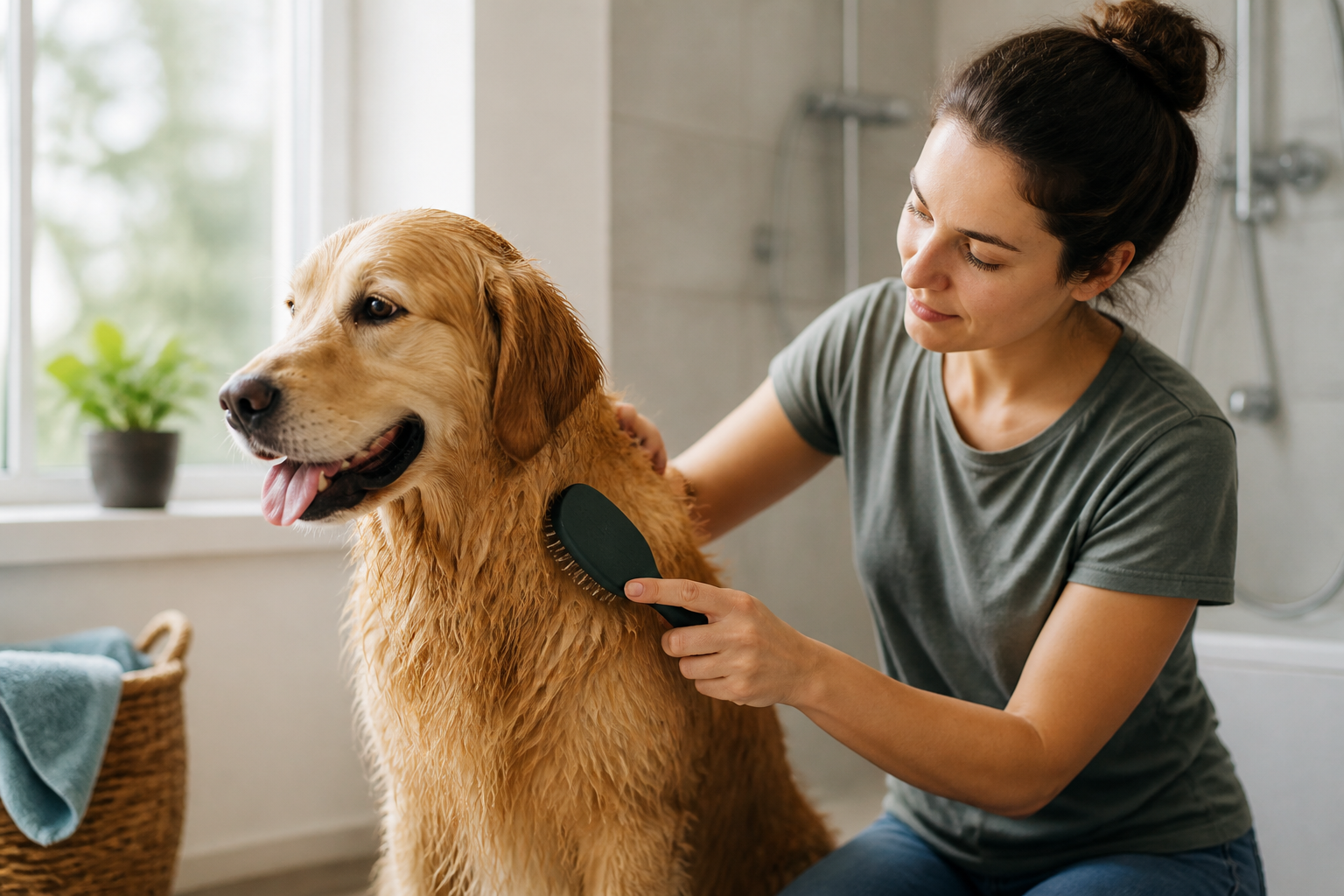
You have just finished bath time. Your dog is a soggy, shaking mess, and you are standing there with a slicker brush in hand. It seems like the natural time to get those tangles out. However, many owners wonder if they are doing more harm than good. At BaxterBoo, we have spent years helping pet parents navigate the nuances of grooming. Brushing at the wrong time can lead to coat breakage, skin irritation, and a very unhappy dog. The truth is that there is no single rule for every dog. Whether the coat should be wet or dry depends on the hair type, the products you use, and the goal of the grooming session. This guide will walk you through the science of hair bonds and the safest methods for keeping your dog’s coat healthy and tangle-free.
Quick Answer: Dry brushing is best for routine maintenance and removing loose undercoat before a bath. Wet brushing should only be done when the coat is saturated with conditioner or a detangling spray to provide lubrication and prevent hair breakage.
The Science of Dog Hair and Water
To understand why the wet versus dry debate matters, you have to look at the structure of a dog's hair. Every strand is made of keratin and held together by different types of bonds. The most common are hydrogen bonds. These bonds are responsible for the hair's strength and shape. When hair gets wet, these hydrogen bonds break. This makes the hair more elastic. While elasticity sounds like a good thing, it actually makes the hair much weaker and more prone to snapping.
When the hair is saturated with water, the cuticle or the outer layer of the hair shaft also swells. This makes the hair "grabby." If you pull a brush through hair in this state without any lubrication, the bristles will snag on the swollen cuticles. This leads to split ends and a dull, frizzy appearance once the coat dries. We see many owners who think they are helping their dog by brushing after a bath, but they are actually causing microscopic damage to the coat.
The Three Main Hair Bonds
- Hydrogen Bonds: These are temporary and break when the hair is wet. They reform as the hair dries.
- Disulfide Bonds: These are the strongest bonds and give the hair its permanent shape. Damage here leads to frizz and style loss.
- Salt Bonds: These are fragile and can be broken by sudden changes in the pH level of the skin or products.
Key Takeaway: Water breaks the hydrogen bonds in your dog's hair. This makes the hair more elastic but significantly weaker and more likely to break under the pressure of a brush.
When Dry Brushing Is the Better Choice
For the vast majority of your dog's life, dry brushing is the way to go. This is your primary tool for maintenance. If you have a dog with a double coat, such as a Siberian Husky or a German Shepherd, dry brushing is essential for deshedding. In a dry state, the hair is at its strongest tensile strength. This allows you to pull out dead undercoat without stretching or damaging the healthy topcoat. For routine maintenance, explore our dog brushes and combs.
Dry brushing is also the mandatory first step before any bath. If your dog has mats or tangles, adding water will often make them worse. Water causes the hair fibers to swell and tighten within the mat. This turns a simple tangle into a hard knot that might eventually need to be cut out. Always do a thorough "pre-groom" to ensure the coat is clear of debris and knots before you ever turn on the faucet.
Benefits of Dry Brushing
- Maximum Strength: The hair is less likely to snap or stretch.
- Debris Removal: It is easier to shake out dried mud, twigs, and dander from a dry coat.
- Mat Prevention: You can identify and work through small tangles before they become wet and tightened.
- Efficiency: For short-haired breeds, a dry rubber curry brush is often all that is needed to manage shedding.
The Rules for Wet Brushing
There are specific times when brushing a wet dog is actually beneficial. Professional groomers often use a technique called "wet brushing" during the bath. However, this is not just brushing a dog that happens to be wet. It is a controlled process that involves specific products.
You should only brush a wet dog when the coat is heavily lubricated with a high-quality conditioner. The conditioner acts as a buffer. It smooths down the swollen hair cuticles and allows the brush pins to glide through the hair rather than snagging on it. This is particularly helpful for dogs with curly coats, like Poodles or Doodles, where the hair can be difficult to manage when dry.
Why Conditioner is Mandatory
If you try to brush a wet coat without product, you are fighting against the hair's natural resistance. When you add a conditioner, you are providing "slip." This lubrication protects the hair shaft. It also helps to distribute the beneficial ingredients in the conditioner all the way down to the skin. This can improve blood flow and support the health of the hair follicles. A detangling formula such as Arm & Hammer Ultra Fresh 2-in-1 Detangling Dog Shampoo + Conditioner can help provide the necessary slip during bath time.
Vet Tip: If your dog has sensitive skin or is prone to hot spots, be very gentle when wet brushing. Wet skin is softer and more prone to "brush burn" or irritation. Always consult your veterinarian if you notice persistent redness, bumps, or an unusual odor from the skin.
Tools of the Trade
Using the right tool is just as important as the timing. A brush that works well on a dry Labrador will not be the right choice for a wet Goldendoodle. We carry a wide variety of tools at BaxterBoo designed for specific coat types and states. You can browse our dog grooming supplies to compare brushes, conditioners, shampoos, and bath accessories.
Choosing Your Brush
| Brush Type | Best State | Best Coat Type |
|---|---|---|
| Slicker Brush | Dry or Damp | Double coats, curly coats, and mats |
| Pin Brush | Wet (with product) | Long, silky coats and show coats |
| Rubber Curry | Wet or Dry | Short-haired breeds and deshedding in the tub |
| Undercoat Rake | Dry | Heavy shedders like Malamutes or Collies |
Brushing Sprays and Detanglers
If you aren't doing a full bath but need to brush out a tangle, never do it on a bone-dry coat. Use a leave-in detangling spray. This provides the necessary lubrication without the need for a full tub session. These sprays often contain silk proteins or light silicones that coat the hair and reduce static electricity. Static is a major cause of tangles because it makes the hair stand on end and attracts dust and debris. For lighter grooming sessions, see our waterless grooming options.
Step-by-Step: The Safe Brushing Routine
To keep your dog’s coat in top shape, follow this workflow. This ensures you are using the strengths of both wet and dry methods.
Step 1: The Pre-Bath Dry Brush
Remove all loose hair and debris while the coat is dry and strong. Use a slicker brush or a comb to ensure there are no mats. If you find a mat, work it out slowly from the ends toward the skin.
Step 2: The Cleansing Wash
Bathe your dog with a gentle shampoo. Do not scrub in circles, as this creates tangles. Instead, massage the soap in the direction of hair growth.
Step 3: The Conditioning Phase
Apply a generous amount of conditioner. This is the only time you should consider brushing while the dog is in the tub. Use a wide-toothed comb or a soft pin brush to distribute the product.
Step 4: The Towel Dry
Squeeze the water out of the coat. Do not rub vigorously. Rubbing the coat with a towel while it is wet is a leading cause of "fritzing" and tangles.
Step 5: The Finishing Spray
Apply a light mist of detangling spray. If you are using a hair dryer, this spray will also act as a heat protectant for the hair.
Step 6: The Final Dry Brush
Once the dog is 100 percent dry, do a final pass with a brush. This is when the hydrogen bonds have reformed, and the coat will have its natural shine and bounce.
Bottom line: Always brush before the bath to remove mats and only brush while wet if the coat is fully saturated with conditioner or detangler.
For additional bath preparation and rinsing guidance, read these dos and don'ts for bathing your dog.
Managing Shedding and Coat Health
Shedding is a natural process, but it can be overwhelming for owners. Regular brushing is the only way to manage it effectively. For dogs with thick undercoats, the "blow out" that happens twice a year can result in a massive amount of hair. During these times, the combination of a high-velocity dryer and a dry undercoat rake is your best defense.
The health of the coat also starts from within. A dull or brittle coat can be a sign of nutritional deficiencies. We recommend looking for foods rich in Omega-3 and Omega-6 fatty acids. Brands like Orijen, Acana, and Stella and Chewy's often include these essential fats to support skin and coat health. If your dog's coat remains poor despite good grooming habits and quality food, it may be time for a checkup.
Skin Conditions and Medications
Sometimes, grooming issues are actually health issues. If your dog is scratching constantly, they may have environmental or food allergies. This can lead to skin infections that make grooming painful. For pets with diagnosed skin conditions, our pharmacy provides FDA-approved medications and prescription diets through our partnership with Pet's Choice. Whether you need a medicated shampoo or a prescription allergy treatment, having access to a reliable pharmacy ensures your pet gets exactly what they need to feel comfortable.
Common Grooming Mistakes to Avoid
Even the most well-meaning owners can make mistakes that lead to a trip to the professional groomer for a "shave down."
Shaving Double-Coated Dogs
Many owners think shaving a dog in the summer helps them stay cool. For double-coated breeds, this is a mistake. The undercoat actually provides insulation against the heat. Shaving can also damage the hair follicles, causing the coat to grow back patchy or with a different texture. Instead of shaving, focus on deep deshedding to allow the skin to breathe.
Neglecting the Ears and Paws
Water in the ear canal can quickly lead to an infection. Always use cotton balls to block the ears during a bath. Similarly, the hair between the paw pads can trap mud and moisture, leading to fungal issues. Keep the paw hair trimmed and check for mats between the toes.
Poor Rinsing
If you don't rinse the shampoo out completely, it will dry on the skin and cause intense itching. This leads to the dog scratching, which creates tangles and potential skin breaks. Always rinse until the water runs completely clear, and then rinse for another minute just to be sure.
Brushing a "Damp" Dog
There is a dangerous middle ground where the dog is no longer in the tub but is still damp. Without the heavy lubrication of a conditioner, the hair is at its most vulnerable. Avoid brushing during the "air dry" phase unless you are using a blow dryer and a protective spray.
Conclusion
Deciding whether to brush your dog wet or dry is about more than just convenience. It is about protecting the integrity of the hair and the health of the skin. For everyday maintenance, stick to dry brushing to take advantage of the hair's natural strength. Reserve wet brushing for the bathtub, and only when you have applied a quality conditioner to provide the necessary slip. By following these simple rules, you can keep your dog’s coat looking like they just stepped out of a professional salon.
- Always pre-groom a dry dog before the bath to remove mats.
- Never brush a wet dog without a lubricant like conditioner or detangling spray.
- Use tools specifically designed for your dog's coat type.
- Maintain a regular schedule to prevent mats from forming in the first place.
Our pharmacy and wide selection of grooming tools are here to support you in every stage of your pet's care. If you want to make sure you never run out of your favorite shampoos or conditioners, consider using our Autoship programme. It saves you time and ensures your grooming kit is always stocked.
FAQ
Is it better to brush a dog before or after a bath?
It is almost always better to brush your dog before a bath. Water can cause existing mats and tangles to tighten, making them much harder to remove once the coat is wet. Brushing a dry dog also allows you to remove loose undercoat and debris while the hair is at its strongest.
Can I brush my dog while they are still wet from the rain?
You should avoid brushing a dog that is wet from rain or a swim until you have applied a detangling spray. Rainwater does not provide the lubrication needed to protect the hair shaft. Brushing a "naked" wet coat can lead to stretching and breakage of the hair.
What happens if I brush my dog's dry hair too much?
While dry hair is stronger than wet hair, excessive brushing can still cause damage. Over-brushing can lead to skin irritation known as "brush burn" or cause the hair to become brittle from friction. Use a light hand and focus on removing loose hair rather than repeatedly scrubbing the same area.
Does wet brushing help with shedding?
Wet brushing in the tub with a conditioner can be very effective for deshedding certain breeds. The conditioner helps the dead hair slide out more easily, and the water helps carry it away. However, this should always be followed by a thorough drying and a final dry brush to ensure all the loose coat is removed.






