
 Save 15% on your 1st Autoship learn more

 Email us
 Live Chat
 FAQs
FAQs





Introduction
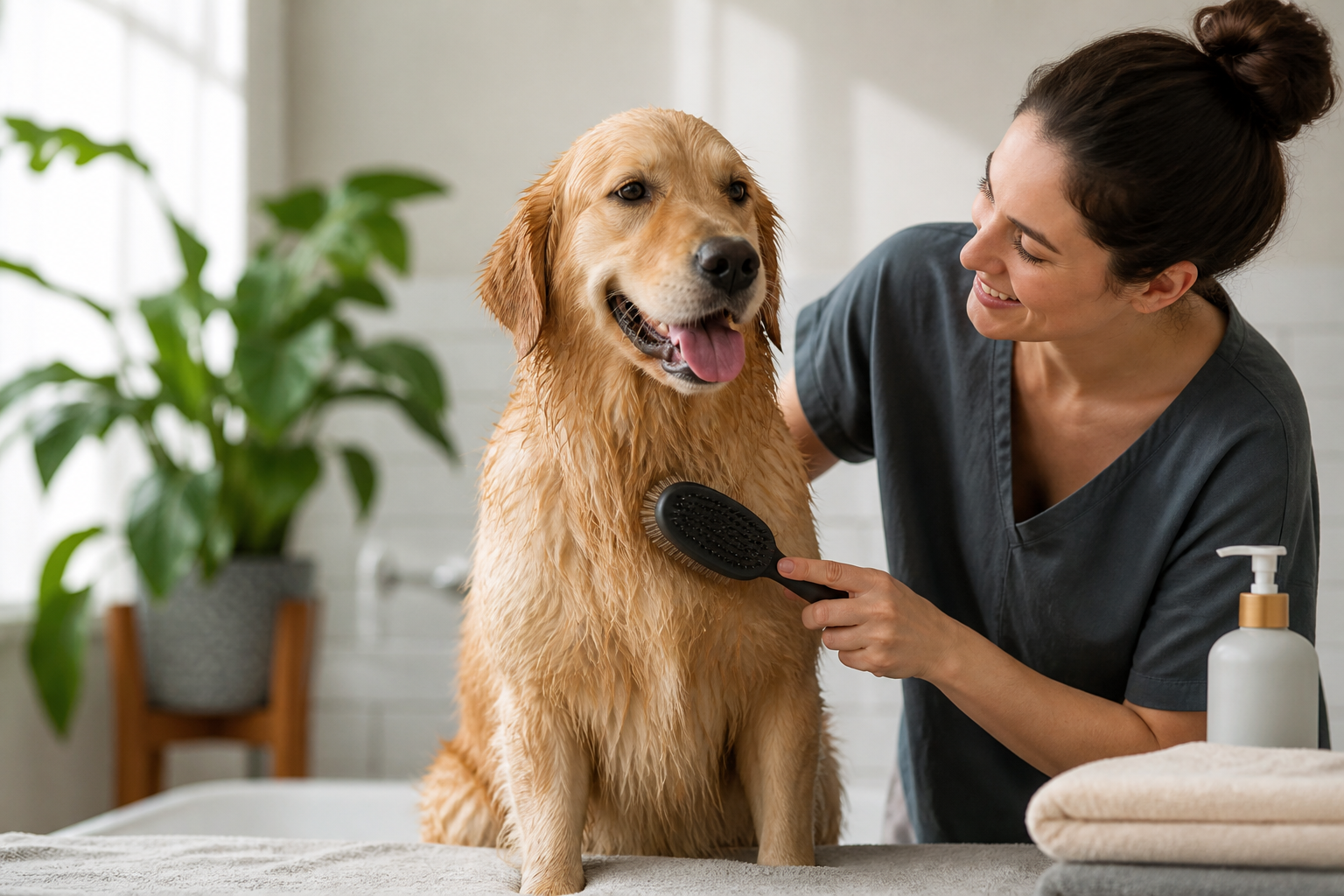
You have just finished washing your dog. They are wet, shaking off water, and looking half their usual size. You reach for the brush to smooth out their coat, but you stop. Should you brush them now while they are wet, or wait until they are dry? This is a common question for many pet owners at our warehouse and for those shopping online. The timing of your grooming routine is more than just a matter of convenience. It actually impacts the health of your dog's skin and the integrity of their fur. This post covers the science of wet hair, the dangers of brushing damp coats, and the specific order you should follow to keep your pet comfortable. Brushing both before and after a bath is the secret to a healthy, mat-free coat.
Quick Answer: You should always brush your dog before a bath to remove tangles and again after they are completely dry to finish the coat. Brushing a wet dog should only be done if you are using a high-quality conditioner during the bath to help slide out dead hair.
The Essential Pre-Bath Brush
The most important rule of dog grooming is to never put a tangled dog in the tub. Water acts like a physical adhesive for mats and knots. If your dog has a small tangle before the bath, that tangle will often tighten into a hard knot once it gets wet and then dries. Professional groomers sometimes call this cementing the coat.
Brushing your dog while they are dry and dirty might feel counterintuitive. You might think it is better to clean the hair first. However, removing loose fur and debris while the coat is dry is much easier on the dog. A dry coat has less friction than a wet one. Your brush can glide through the fur and find hidden mats near the skin that you might not see.
If you skip the pre-bath brush, you are also making the washing process less effective. Thick mats and dense undercoats can trap dirt and skin oils. If the water and shampoo cannot reach the skin because of a layer of dead, tangled hair, your dog will not actually get clean. You will end up with a dog that smells like wet fur and shampoo mixed with old dirt.
Why Pre-Bathing Brushing Saves Time
- It removes the bulk of shedding hair before it clogs your drain.
- It allows shampoo to penetrate down to the skin.
- It prevents small tangles from becoming permanent mats.
- It makes the drying process significantly faster.
The Science of Wet Hair and Elasticity
To understand why brushing a wet dog is risky, you have to look at the structure of the hair. Each hair strand is made of proteins held together by different types of bonds. One of these is the hydrogen bond. Hydrogen bonds are responsible for the hair's strength and its ability to hold a shape.
When hair gets saturated with water, these hydrogen bonds temporarily break. This makes the hair much more elastic than when it is dry. You might notice that a wet hair strand can stretch much further before it snaps. While elasticity sounds like a good thing, it actually makes the hair fragile.
When you pull a brush through wet, elastic hair, you are stretching the strands to their limit. This can lead to microscopic tears in the hair shaft. Over time, this damage makes the coat look frizzy, dull, and prone to even more tangles. If the hair is stretched too far, it will eventually lose its ability to bounce back and will simply break off.
Key Takeaway: Water weakens the internal bonds of your dog's hair. This makes the coat more prone to breakage and stretching damage if you brush it while it is soaking wet without the right products.
The Conditioner Exception: Brushing in the Tub
There is one specific scenario where brushing a wet dog is actually helpful. This is during the conditioning phase of the bath. Many professional groomers use this technique to manage heavy shedders or dogs with very thick double coats.
When the coat is saturated with a high-quality dog conditioner, the product provides "slip." This slip reduces the friction between the hair strands and the grooming tool. While the conditioner is sitting on the coat, you can use a wide-toothed comb or a specialized grooming rake to gently pull out dead undercoat.
This is not the same as detangling. You should never try to pull a mat apart while the dog is in the water. The goal of tub-brushing is simply to move the loosened, shedding hair out of the coat while the conditioner helps it slide. This can drastically reduce the amount of fur you have to blow-dry later.
Step-by-Step Tub Brushing
Step 1: Wash the dog twice. The first wash removes surface dirt. The second wash cleans the skin.
Step 2: Apply a generous amount of dog conditioner. Focus on the areas with the most fur, like the haunches and neck.
Step 3: Use a grooming tool with smooth, rounded teeth. Avoid sharp slicker brushes on wet, soft skin.
Step 4: Gently comb in the direction of hair growth. If you hit any resistance, stop immediately.
Step 5: Rinse thoroughly. Any leftover conditioner can cause skin irritation or make the coat feel greasy.
For additional bath-day guidance, read our tips on bathing your dog safely and effectively.
Why You Should Avoid Brushing a Damp Dog
After the bath, your dog is in the damp stage. This is the most dangerous time to pick up a brush. As the hair begins to dry, the hydrogen bonds start to reform. However, they are not fully stable yet. The hair is still somewhat elastic, but it is also starting to "set" in whatever position it is in.
Brushing at this stage often causes the hair to frizz. It can also be quite painful for the dog. Damp hair has a high amount of surface tension. The hair strands want to stick to each other and to the brush. This leads to a lot of pulling on the skin.
If your dog has a curly coat, like a Poodle or a Doodle, brushing while damp can ruin the natural curl pattern. It can also cause the hair to "velcro" together. It is much better to either blow-dry the coat completely or let it air-dry before you start your final finishing brush.
Vet Tip: If your dog has sensitive skin or a history of hot spots, always ensure they are dried thoroughly. Trapped moisture in a thick, unbrushed coat is a primary cause of bacterial skin infections. For chronic skin issues, our dog pharmacy offers medicated shampoos and treatments.
The Finishing Brush: Why Post-Bath Brushing Matters
Once your dog is 100 percent dry, it is time for the final brush. This is where you see the real results of your hard work. Brushing a clean, dry coat is a completely different experience than brushing a dirty one. The brush should glide through the hair with very little effort.
The post-bath brush serves several purposes. First, it helps separate the hair strands that may have clumped together during the drying process. This gives the coat that fluffy, professional look. Second, it allows you to find any small tangles that the bath might have revealed.
Finally, this is your chance to do a thorough skin check. Clean fur is easier to part, allowing you to see the skin clearly. You can check for any new lumps, bumps, or signs of irritation. This is also the perfect time to apply any topical flea and tick preventatives, which we carry in various brands through our pharmacy.
Final Brush Checklist
- Check the "friction zones." These are the areas behind the ears, under the armpits, and where the collar sits.
- Use a stainless steel comb to ensure you can reach the skin.
- Look for redness or dry patches.
- Reward your dog with a high-quality treat for finishing the session.
Choosing the Right Tools for Each Stage
Not all brushes are created equal. Using the wrong tool at the wrong time can lead to a frustrated dog and a damaged coat. Since we have been in business since 2006, we have seen which tools work best for different coat types and grooming stages.
For the pre-bath brush, a slicker brush is often the best choice. It has fine, wire bristles that are slightly hooked. This design is perfect for grabbing loose undercoat and breaking up surface tangles. Brands like Kong offer durable options that are easy on your hands.
For the bath itself, a rubber grooming mitt is excellent. The rubber nubs massage the skin and help work the shampoo down to the roots. It also helps grab loose hair without the risk of scratching the skin while it is wet and soft.
For the post-bath finish, a stainless steel comb is essential. A comb is the only way to truly tell if a coat is mat-free. If a comb can't pass through from the skin to the tips, there is still a tangle that needs attention.
Explore our dog grooming supplies for brushes, combs, shampoos, conditioners, and bath accessories.
| Tool Type | Best Use Stage | Purpose |
|---|---|---|
| Slicker Brush | Pre-Bath | Removing mats and loose undercoat |
| Rubber Mitt | During Bath | Massaging skin and lathering shampoo |
| Undercoat Rake | During Bath (with conditioner) | Sliding out heavy shedding hair |
| Stainless Steel Comb | Post-Bath | Final check for tangles and fluffing |
Coat-Specific Guidance
Every dog is different. A Greyhound does not have the same grooming needs as a Bernese Mountain Dog. You should tailor your "brush before or after" routine to your dog's specific hair type.
Short-Haired Dogs
For dogs with very short coats, like Labradors or Boxers, the pre-bath brush is mostly about deshedding. You don't have to worry about mats, but you do want to get as much loose hair off as possible. These dogs usually do not need to be brushed while wet. A quick brush after they dry will help bring out the natural shine of their coat.
Double-Coated Dogs
Dogs like Huskies, Shepherds, and Goldens have a dense undercoat. For these breeds, the tub-brushing technique with conditioner is a life-saver. It allows you to remove the "dead" hair that would otherwise take hours to blow-dry. However, the pre-bath brush is still mandatory to ensure the water can actually reach the skin.
Curly and Long-Haired Dogs
Poodles, Shih Tzus, and Malteses are the most prone to matting. For these dogs, you should never skip the pre-bath brush. If you find a mat that you cannot brush out, it is often better to carefully cut it out or see a professional before the bath. Brushing them while they are damp is a mistake. Wait until they are fully dry, then use the "line brushing" method to ensure you are getting all the way to the skin.
For more guidance, see our guide to grooming dogs with curly hair.
Key Takeaway: The thicker and longer the coat, the more important the pre-bath brushing session becomes. Short-haired dogs are more forgiving, but still benefit from the routine.
Maintaining Skin Health
Grooming is not just about looks. It is a health requirement. When you brush your dog, you are distributing natural oils across the skin. This prevents dryness and creates a barrier against allergens. If your dog is constantly itchy or has a dull coat, their grooming routine—or their food—might be the cause.
We carry many premium food brands like Farmina, Royal Canin, and Open Farm that are formulated for skin and coat health. Sometimes, a "bad" coat is actually a sign of a nutritional deficiency or an allergy. If your dog's skin is red, inflamed, or has a strong odor even after a bath, it is time to consult your veterinarian.
If your vet prescribes a specific medicated wash or a prescription diet, our dog pharmacy is here to help. We can fulfill prescriptions that support your dog's ongoing wellness needs. Proper grooming combined with the right medical support keeps your dog feeling as good as they look.
Bottom line: A consistent brushing routine allows you to monitor your dog's skin health and catch medical issues before they become serious.
Common Brushing Mistakes to Avoid
Many well-meaning pet owners make mistakes that can turn bath day into a stressful event. One of the most common is using human shampoo. Human skin has a different pH level than dog skin. Using our shampoo can strip their natural oils, making the hair brittle and more likely to tangle during the bath.
Another mistake is "circle scrubbing." When you are shampooing your dog, it is tempting to rub the soap in big, circular motions. This is a guaranteed way to create mats in long-haired dogs. Instead, you should always massage the shampoo in the direction that the hair grows. Think of it as "petting" the soap into the fur.
Lastly, do not forget the "hidden" areas. Many people brush the back and sides of the dog but forget the belly, the inner thighs, and the tail. These are the areas where mats are most likely to form. Because the skin is thinner in these spots, removing mats there is much more painful for the dog.
Brushing Best Practices
- Use a detangling spray on dry hair to help with tough spots.
- Always brush in the direction of hair growth.
- Keep sessions short and positive.
- Check your tools for sharp edges or missing teeth.
Drying Techniques for a Better Coat
How you dry your dog also impacts how easy they are to brush. If you simply towel-dry your dog and let them run around, they will likely rub themselves against the carpet or furniture. This creates friction and tangles.
If you have a dog with a lot of hair, a high-velocity dryer is a great investment. These dryers don't use high heat. Instead, they use a powerful blast of air to "push" the water out of the coat. This also helps push out any remaining loose hair that the brush might have missed.
If you are air-drying, try to keep your dog in a clean, confined area until they are fully dry. Once the moisture is gone, do your final brush. You will find that the hair is much more cooperative and has a natural, healthy bounce.
Conclusion
Brushing your dog is a vital part of their care, but the order of operations matters. Always start with a thorough pre-bath brush to remove tangles before they get wet. Save the deep detangling for when the coat is dry to avoid breaking fragile, elastic wet hair. If you have a heavy shedder, a gentle comb-through with conditioner during the bath can help, but always finish with a final brush once the coat is completely dry.
Maintaining a regular routine makes bath day easier for both you and your pet. It keeps their coat shiny, their skin healthy, and your home a little less furry. For all your grooming needs, from slicker brushes to medicated shampoos, explore our grooming category or visit our dog pharmacy for prescription support. Don't forget that our MVP Rewards programme lets you earn points on every grooming tool and treat you buy.
Bottom line: Brush before the bath to prevent mats, and brush after the bath to finish the look.
FAQ
Is it okay to brush a dog while they are soaking wet?
It is generally not recommended to brush a soaking wet dog because the hair is at its weakest and most elastic state. Brushing wet hair can cause it to stretch and break, leading to a damaged, frizzy coat. The only exception is if you are using a high-quality conditioner in the tub to help slide out loose undercoat, and even then, you must be very gentle.
Why does my dog's hair feel matted after a bath?
This usually happens because the dog was not brushed thoroughly before the water hit the coat. Water causes existing tangles and loose hair to clump together and tighten. As the hair dries, these clumps shrink and become hard mats. Always ensure your dog is 100 percent tangle-free before you start the bath to avoid this problem.
How do I dry my dog to make brushing easier?
The best way to dry a dog for easier brushing is to pat them with a towel rather than rubbing them vigorously. Rubbing creates friction and knots. If possible, use a blow dryer on a cool or low-heat setting to separate the hair as it dries. Once the coat is completely dry, the hair will be much easier to brush through and fluff.
Should I use a detangling spray after the bath?
Yes, a detangling spray or leave-in conditioner can be very helpful after the bath. You should apply it to the dry coat before your final finishing brush. It helps reduce static, adds shine, and provides a protective layer that can help prevent future mats from forming. Just ensure the product is specifically formulated for dogs to maintain their proper skin pH.






