
 Save 15% on your 1st Autoship learn more

 Email us
 Live Chat
 FAQs
FAQs





Introduction
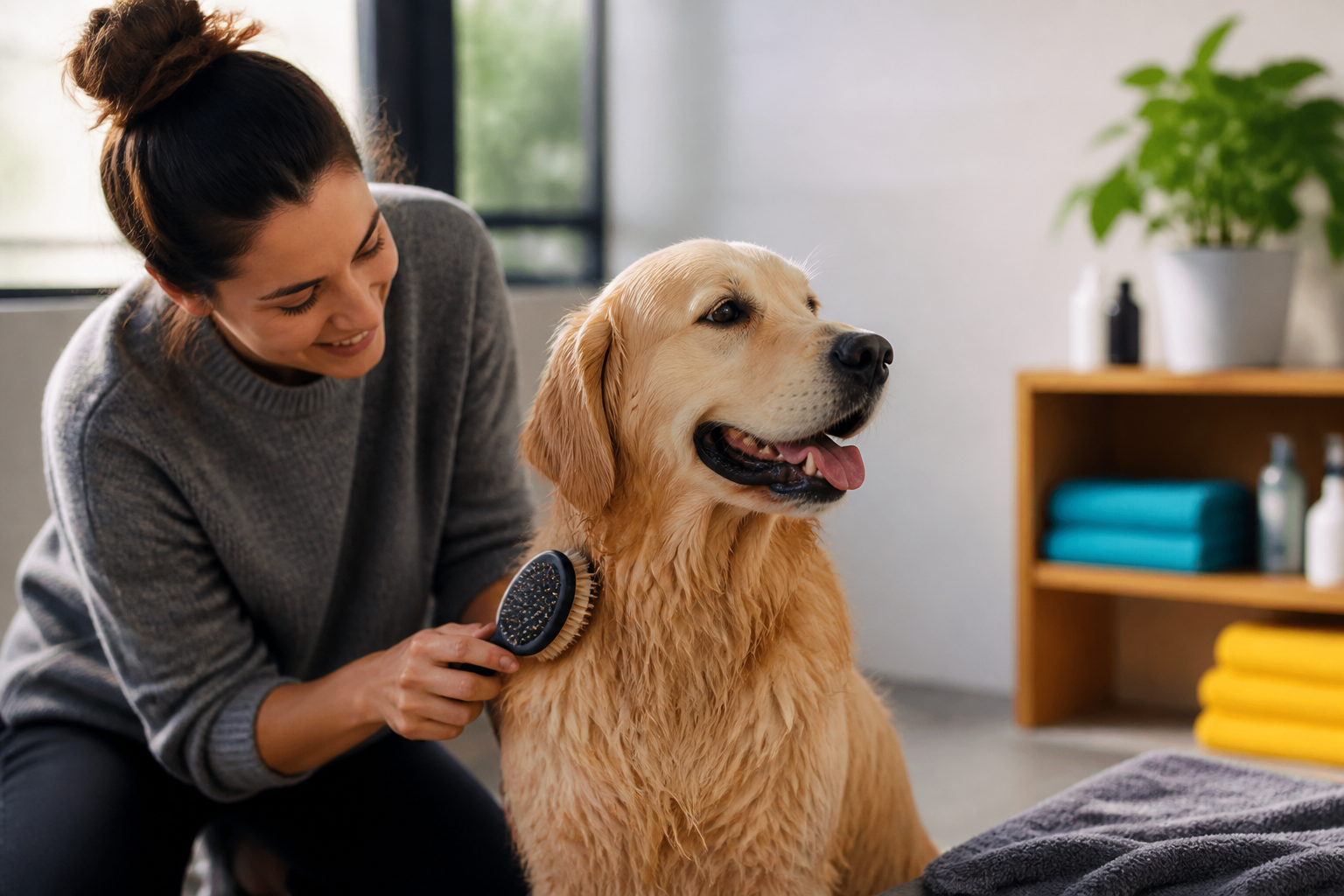
Your dog just jumped out of the tub and is currently doing a celebratory lap around the living room. They are soaking wet, shaking water onto your furniture, and smelling like a mix of damp fur and shampoo. You might be reaching for the brush right now to help them dry off or tidy up their coat. At BaxterBoo, we talk to pet parents every day who want to know the secret to a professional looking coat at home. It turns out that the timing of your brushing routine is the most important part of the process. This post covers exactly when you should pick up the brush to prevent mats and keep your dog comfortable. Success on bath day depends entirely on following the right order of operations.
The Golden Rule of Bath Day Brushing
The most important thing to know about grooming is that you should always brush your dog before the bath. Most people think the bath is the first step, but it should actually be the second. Brushing a dry coat allows you to find tangles, loose fur, and hidden knots before they get wet. Once water hits a knot, it acts like a tightening agent. This makes the tangle much harder to remove and can cause pain for your dog during the drying process.
Quick Answer: You should brush your dog after a bath only once their coat is 100 percent dry. For the best results, always perform a thorough brushing session before the bath to remove knots that water would otherwise tighten.
If you skip the pre-bath brush, you are essentially washing a tangled mess. The shampoo and water will get trapped inside those knots. This prevents the skin from getting clean and makes it nearly impossible to rinse the soap out completely. Leftover soap residue leads to skin irritation and itching later on.
Why Water and Tangles Do Not Mix
To understand why timing matters, you have to look at the structure of dog hair. When hair gets wet, it becomes more elastic and heavy. If there is already a small knot in the fur, the water causes the hair to swell and the fibers to cling together. As the coat dries, those fibers shrink back down, but they often shrink around each other. This creates a much tighter, firmer mat than you had before the bath.
The Problem with Friction
When we wash our dogs, we tend to scrub in circular motions. This feels natural, but it is actually one of the quickest ways to create new tangles. If your dog has a medium or long coat, those circular motions twist the hair strands together. If the coat was already brushed, the strands might separate easily. If the coat was already messy, those circles create "velcro" sections that are very difficult to brush out later.
Weakness of Wet Hair
Hair is at its weakest state when it is saturated with water. The hydrogen bonds in the hair are temporarily broken, making the strands more prone to snapping. If you take a fine-toothed brush or a comb to a soaking wet coat, you risk stretching and breaking the hair. This can lead to a frizzy texture and damaged follicles over time. Except for very specific circumstances involving heavy conditioner, your dog is better off if you leave the brush alone until the moisture is gone.
The Post-Bath Brushing Routine
Once the bath is over and your dog is clean, the next step is drying. You should use a towel to gently pat the coat rather than rubbing it vigorously. Rubbing with a towel is just as bad as scrubbing with shampoo. It creates friction that leads to mats. Once the coat is damp, you can let it air dry or use a blow dryer on a cool setting.
Key Takeaway: Brushing after the bath is for "finishing" the coat, while brushing before the bath is for "prepping" the coat. Never try to brush out a heavy mat while the dog is wet.
Waiting for the Complete Dry
You should wait until you can reach down to the skin and feel no moisture before you start your final brushing session. For double-coated breeds like Golden Retrievers or Huskies, this can take a long time. The top layer might feel dry, but the undercoat can stay damp for hours. If you brush too early, you might still cause breakage. Once they are dry, the hair will be at its strongest, and the brush will glide through much more easily.
The Benefits of the Final Brush
Brushing a clean, dry coat is a much different experience than brushing a dirty one. The shampoo and conditioner have helped to smooth the hair cuticle. A final brush-through after the bath serves a few purposes:
- It removes any hair that was loosened during the washing process.
- It helps to fluff up the coat and restore its natural volume.
- It allows you to check for any spots you might have missed during the pre-bath brush.
- It distributes the natural oils that were stirred up during the bath.
For more bath-day guidance, read our tips on what to do and avoid when bathing your dog.
Brushing in the Tub: The Only Exception
There is one specific situation where brushing a wet dog is actually helpful. If your dog has a very long or curly coat that is prone to severe matting, some groomers use a technique called "wet brushing" while the dog is still in the tub. However, this is only done when the coat is saturated with a high-quality conditioner.
The conditioner provides "slip," which means the hair strands can slide past each other without catching. If you choose to do this, you must use a brush with wide, flexible bristles. You should never use a metal comb or a stiff slicker brush on a wet coat in the tub. This technique is really about distributing the conditioner and gently separating large sections rather than a deep de-matting session.
Vet Tip: If your dog has a skin condition or is prone to hot spots, ensuring the coat is fully dry before brushing is essential. Trapped moisture near the skin can lead to bacterial growth and infections. Always consult your veterinarian if you notice red, crusty, or oozing spots after a bath.
Tools of the Trade
Using the right tools makes a significant difference in how your dog feels about grooming. At BaxterBoo, we recommend having a few different items in your grooming kit to handle different stages of the bath. You can browse our dog grooming supplies to build a bath-day kit.
The Slicker Brush
A slicker brush has fine, short wires close together on a flat or curved surface. It is the best tool for the pre-bath brush and the post-bath finish. It is excellent at grabbing loose undercoat and breaking up small tangles. Use gentle, short strokes. Do not press too hard, as you do not want the wires to scratch the skin.
The Stainless Steel Comb
A metal comb is your best "truth teller." After you think you are finished brushing, run the comb through the coat. If it catches on anything, you still have a tangle. This is especially useful for the areas behind the ears, the tail, and the "armpits" of the dog, where mats love to hide.
Undercoat Rakes
For dogs with thick, double coats, a rake is necessary. These have long tines that reach through the top layer to pull out the dead hair underneath. Using a rake before the bath will significantly reduce the amount of fur you have to deal with in the tub. Browse our grooming tools for brushes, combs, rakes, and other at-home grooming essentials.
Understanding Different Coat Types
Not every dog needs the same routine. Your neighbor’s Labrador has different needs than your sister’s Goldendoodle. Knowing your dog's coat type will help you decide how much time to spend on each step.
Short-Haired Breeds
If your dog has short, sleek fur like a Boxer or a Beagle, the rules are much more relaxed. These dogs do not really get "mats" in the traditional sense. You should still brush them before the bath to remove dead skin and loose hair. This makes the shampooing more effective. Brushing them while they are damp with a rubber curry brush is actually fine, as it helps massage the skin and pull away shedding fur.
Long-Haired and Silky Breeds
Dogs like Yorkies or Maltese have hair that is very similar to human hair. It tangles easily and can break if handled roughly. For these dogs, the "brush before, dry, then brush after" rule is mandatory. If you find a knot after the bath, use a tiny bit of detangling spray to help loosen it before you try to work through it with a comb.
Double-Coated Breeds
Huskies, Shepherds, and Pomeranians have a soft undercoat and a tougher outer coat. The undercoat is what clogs your drain and sticks to your clothes. For these breeds, the pre-bath brush is the most important step of all. If you do not remove the loose undercoat first, the water will turn that fur into a heavy, wet blanket that takes forever to dry.
Curly and Wire-Haired Breeds
Poodles and Doodles have hair that keeps growing and curls back on itself. This is the most challenging coat to manage. If you skip a brush before the bath, you will almost certainly end up with "tight mats" that might require a professional groomer to shave off. These dogs often benefit from a blow-dryer while being brushed to "straighten" the hair and prevent it from curling into knots as it dries. For additional guidance, see our guide to grooming curly-haired dogs.
Step-by-Step Bath Day Routine
To make things easier, follow this specific order the next time your dog needs a wash.
Step 1: Perform a full dry brush. Use your slicker brush and comb to ensure there are no knots. If you find a mat that you cannot brush out, it is better to trim it or deal with it before the water hits.
Step 2: Protect the ears and eyes. Place a large cotton ball in the outer part of each ear to keep water out. Avoid getting soap directly in the eyes.
Step 3: Wet and wash. Use warm water and apply shampoo. Work the soap into the coat using downward motions. Do not scrub in circles.
Step 4: Rinse thoroughly. This takes longer than most people think. If the fur feels "slimy," there is still soap in it. Keep rinsing until the water runs clear and the coat "squeaks" a little.
Step 5: Dry completely. Pat with a towel, then use a blow dryer or let them air dry in a warm room.
Step 6: The final brush. Once the dog is totally dry, go over the whole body with your brush and comb one last time. When you need a product for bath day, explore our dog shampoo and conditioner selection.
Bottom line: Brushing before the bath prevents mats, while brushing after a complete dry restores the coat's beauty.
Common Mistakes to Avoid
Even with the best intentions, it is easy to make a few mistakes that can hurt your dog's skin or coat.
Using Human Shampoo
Never use your own shampoo on your dog. Dogs have a different skin pH than humans. Our shampoo is much too acidic for them. Using it can strip their natural oils and lead to dry, flaky skin. If your dog has persistent skin issues, our pharmacy carries various medicated shampoos and treatments. Through our partnership with Pet's Choice, we can help you get the FDA-approved medications or prescription diets your vet recommends for chronic skin allergies.
Ignoring the Ears
Water in the ear canal is a leading cause of ear infections. The canal is shaped like an "L," so once water gets down there, it is very hard for it to get out. Always be careful when washing the head. Using a damp washcloth for the face and ears is much safer than using a sprayer or a cup of water.
Shaving Too Short in Summer
Many people think shaving a double-coated dog helps them stay cool in the heat. This is a myth. That thick coat actually provides insulation against the heat and protects their skin from sunburn. Instead of shaving, focus on a deep brushing routine to remove the excess undercoat. This allows air to circulate near the skin while keeping the protective outer layer intact.
When to Seek Professional Help
Sometimes, a coat gets beyond what you can handle at home. If your dog is severely matted down to the skin, do not try to brush it out. This is incredibly painful and can tear the skin. In these cases, a professional groomer is the safest option. They have the tools to safely remove the mats and start fresh.
Regular grooming at home is about maintenance and bonding. If you keep up with a weekly brushing schedule, bath day becomes much easier. You will find fewer surprises, and your dog will learn to enjoy the one-on-one attention.
Conclusion
Brushing your dog is about more than just looking good. It is a vital part of their overall health and comfort. By sticking to the "brush before, dry, then brush after" routine, you save yourself time and save your dog from the pain of tightened knots. Remember to always use the right tools for your specific breed and wait for the coat to be fully dry before that final fluffing session. If you are managing ongoing skin issues or need specific grooming supplies, we are here to help. You can also sign up for our Autoship programme to ensure you never run out of the shampoos and conditioners your pup needs.
FAQ
Is it better to brush a dog wet or dry?
It is almost always better to brush a dog when they are dry. Wet hair is weaker and more prone to breaking, and water causes existing tangles to tighten into difficult mats. The only exception is if you are using a heavy amount of conditioner in the tub to help separate a long, silky coat.
What happens if I don't brush my dog before a bath?
If you skip the pre-bath brush, any loose hair or tangles in the coat will clump together once they get wet. This can lead to severe matting that is painful for the dog and difficult to remove. It also makes it harder to get the shampoo down to the skin and harder to rinse it out afterward.
Can I blow dry my dog after a bath?
Yes, you can use a blow dryer, but you must use the lowest heat setting or a cool air setting. Dogs' skin is more sensitive to heat than human skin, and you can easily burn them with a standard dryer. Keep the dryer moving and avoid holding it in one spot for too long.
How do I get my dog to enjoy being brushed?
The best way to make grooming positive is to start slow and use plenty of treats. Start by just showing them the brush and giving a treat, then move to one or two gentle strokes. Pair the grooming session with a high-value reward so they associate the brush with something they love.






