
 Save 15% on your 1st Autoship learn more

 Email us
 Live Chat
 FAQs
FAQs





Introduction
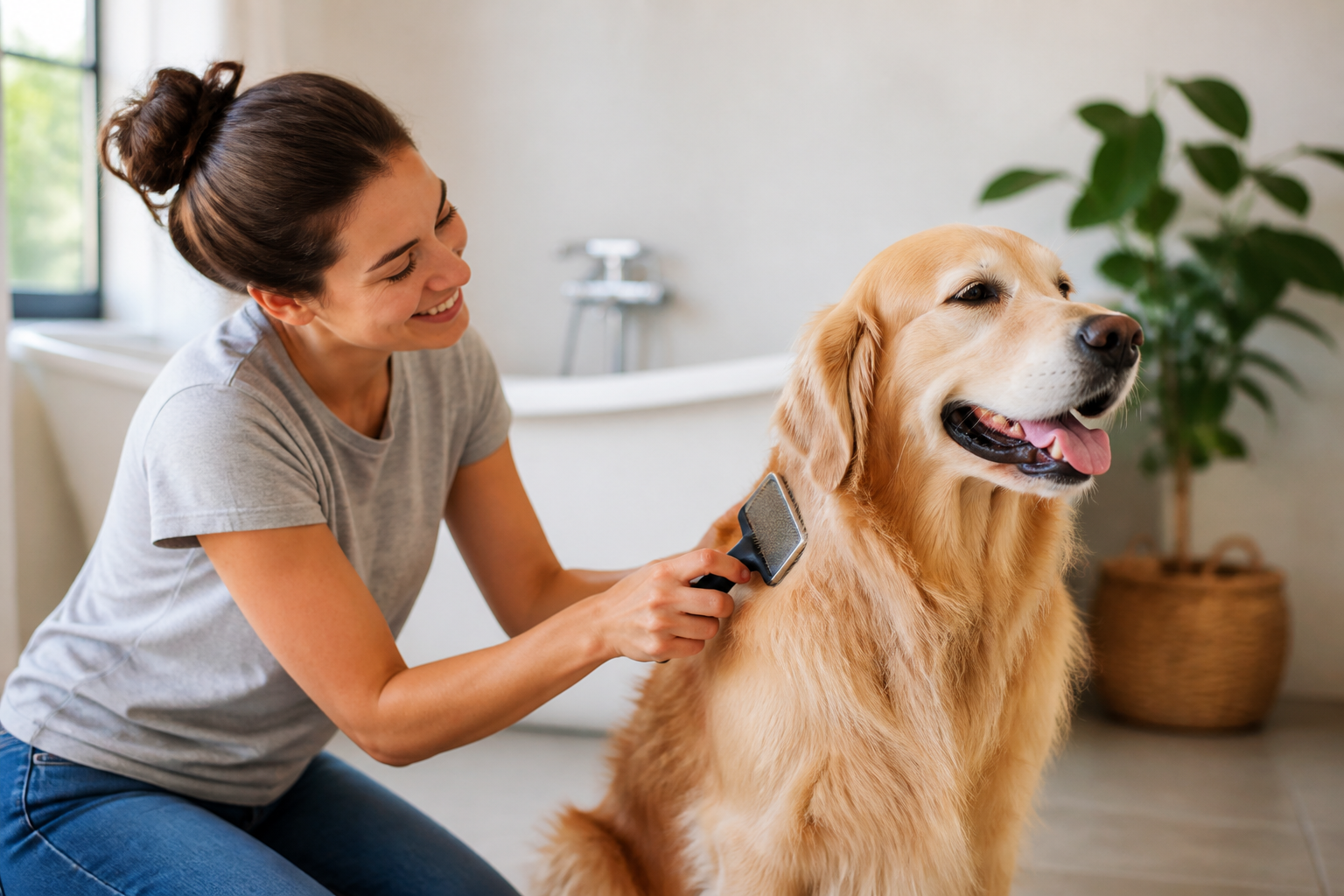
You are standing in the bathroom with towels at the ready and a bottle of shampoo open on the counter. Your dog is likely watching you with a mix of curiosity and suspicion. Before you turn on the water, you might wonder if you should pick up the brush first. It is a common question that can change the entire outcome of your grooming session. At BaxterBoo, we have spent years helping pet owners find the right tools for every coat type. We know that the order you follow determines whether your dog ends up with a fluffy finish or a tangled mess. This article explains why the pre-bath brush is the most important step in your routine. You will learn how to handle different coat types and how to protect your dog’s skin. Following the right steps makes bath time easier for you and more comfortable for your pet.
The Case for Brushing Before the Bath
The short answer to this common grooming question is a firm yes. You should always brush your dog before a bath. While it might seem like a bath would help loosen up knots, the opposite is usually true. Water acts like a tightening agent for tangles and mats. When hair gets wet, the shafts can swell and the strands often cling together. If there is already a knot present, the moisture and the mechanical action of scrubbing shampoo only serve to pack that knot tighter. This can lead to a condition known as felting, where the hair becomes so densely matted that it must be shaved off to provide relief.
Quick Answer: Brushing your dog before a bath is essential because it removes loose fur and debris that would otherwise clog the tub. Most importantly, it ensures you are not tightening existing mats with water and shampoo, which makes them nearly impossible to remove later.
Brushing a dry coat allows you to identify problem areas without the distraction of soap and water. You can feel for small tangles or clumps of trapped undercoat that are hidden near the skin. Removing these before the hair is wet ensures that your shampoo can actually reach the skin. If you wash a matted dog, the soap often gets trapped inside the mat. This residue can lead to skin infections or "hot spots" because the damp hair against the skin never truly dries. Brushing first is the best way to prevent these painful health complications.
Understanding Your Dog's Coat Type
Every dog has unique needs based on the texture and length of their fur. A routine that works for a short-haired Beagle will not be sufficient for a thick-coated Samoyed. Knowing your dog's specific coat type helps you decide how much time to spend on the pre-bath brush.
Short-Haired Coats
Dogs with short, smooth coats like Boxers or Pugs still need a pre-bath brush. While they do not usually get mats, they do carry a lot of loose, dead hair. If you skip the brush, that hair will end up in your drain or clumped all over the dog's body while they are wet. A rubber curry brush is often the best tool here. It massages the skin and pulls the dead hair to the surface so it can be easily rinsed away.
Double-Coated Breeds
Huskies, German Shepherds, and Golden Retrievers have a dense undercoat protected by a longer topcoat. These dogs are the champions of shedding. If you do not brush a double-coated dog before a bath, you will likely find yourself washing a "wall" of fur. The water may not even penetrate the undercoat to reach the skin. This can lead to a dog that smells like wet fur even after a bath because the deep layers remained dirty.
Curly and Long-Haired Coats
Poodles, Doodles, and Shih Tzus require the most intensive pre-bath grooming. Their hair is prone to intricate tangles. For these breeds, the pre-bath brush is a non-negotiable safety step. If you find a mat that you cannot brush out, it is better to address it while the dog is dry. You may need to use a detangling spray or carefully trim the mat out before the bath begins. Once that hair is wet, a small knot can turn into a hard lump that pulls painfully on the dog's skin. For additional guidance, read our guide to grooming a curly-haired dog.
Key Takeaway: The denser and longer the coat, the more critical the pre-bath brush becomes. Skipping this step for long-haired or double-coated dogs often leads to permanent mats that require professional clipping.
Essential Tools for a Better Bath
Having the right equipment makes the pre-bath process much more efficient. At BaxterBoo, we handpick tools that are designed to handle specific coat challenges. You do not need a professional grooming salon to get professional results, but you do need the right types of brushes and combs. Explore our dog grooming supplies for brushes, combs, bathing tools, and other grooming essentials.
- Slicker Brushes: These have fine, wire bristles that are slightly angled. They are perfect for removing loose undercoat and breaking up surface tangles in medium to long hair.
- Undercoat Rakes: These tools have long, blunt tines that reach through the topcoat to pull out dead hair from the undercoat. They are essential for heavy shedders.
- Stainless Steel Combs: A comb is your best diagnostic tool. After you think you have finished brushing, run a medium-tooth comb through the coat. If it catches, you still have a tangle to work on.
- Rubber Curry Brushes: These are ideal for short-haired dogs. They stimulate oil production in the skin while removing surface dust and loose fur.
- Detangling Sprays: These can be used on a dry coat to help the brush glide through difficult spots. Look for formulas that do not leave a greasy residue.
Using the wrong tool can cause "brush burn," which is skin irritation from too much pressure or the wrong bristle type. Always use a gentle touch, especially around sensitive areas like the belly, ears, and back legs. If your dog seems to be in pain during brushing, you may be pulling too hard on a mat.
Vet Tip: If you discover a mat that is tight against the skin, do not try to cut it out with pointed scissors. It is very easy to accidentally snip the skin, which is thin and moves easily. Consult a professional groomer or your vet to have the mat safely removed with electric clippers.
Skin Health and the BaxterBoo Pharmacy
The pre-bath brush is your best opportunity to perform a "wellness check" on your dog. As you move through the coat, you are closer to their skin than at any other time. This is when you might find fleas, ticks, or unusual lumps. It is also the time to look for signs of allergies, such as redness, flaking, or "yeasty" smelling skin.
If you notice that your dog is constantly itchy or has developed sores, a standard shampoo might not be enough. Our pet pharmacy offers prescription medications and prescription pet foods. Many dogs with chronic skin issues require medicated shampoos that can only be obtained with a prescription from your veterinarian. These shampoos often need to sit on the skin for ten minutes to be effective, which is only possible if the coat has been thoroughly brushed out first.
We carry a wide range of supplements that support skin and coat health from the inside out. Brands like Zesty Paws or Honest Paws provide Omega-3 fatty acids that can help reduce dryness. If your dog’s coat is brittle or dull, it might be a sign that they need a nutritional boost. Always talk to your vet if you notice a sudden change in your dog's skin or coat condition, as this can sometimes signal an underlying health issue.
Step-by-Step Pre-Bath Routine
To make the process as smooth as possible, follow this logical order. This helps ensure that no area is missed and that your dog stays calm throughout the process.
Step 1: Create a calm environment. / Use a non-slip mat so your dog feels secure. Have your brushes and treats ready before you bring the dog into the grooming area.
Step 2: Start with a general brush-over. / Use your slicker brush or curry brush to remove the easy, loose hair. Work from the head toward the tail, following the direction of hair growth.
Step 3: Focus on the "friction zones." / These are the areas where mats form most often. Pay close attention to the hair behind the ears, the armpits, the groin, and where the collar or harness sits.
Step 4: The Comb Test. / Take your stainless steel comb and run it through the coat from the skin outward. If the comb stops, you have found a hidden knot.
Step 5: Address knots individually. / Use your fingers to pull the hair apart gently. If the knot is stubborn, apply a small amount of detangling spray and use the edge of your slicker brush to "pick" at the knot.
Step 6: Final check. / Once the comb passes through the entire coat freely, your dog is ready for the water. This ensures the shampoo can penetrate every layer of the fur.
Bottom line: A thorough pre-bath brush saves you time during the drying process and prevents painful mats from forming.
When to Brush After the Bath
While the pre-bath brush is the most important for mat prevention, the post-bath brush is the secret to a professional finish. However, timing is everything. You should never brush a dripping wet coat. Wet hair is more elastic and fragile than dry hair. Brushing it while it is soaking wet can cause the strands to stretch and snap, leading to a frizzy and damaged texture.
The best approach is to towel dry your dog gently. Do not rub the towel in circles, as this creates new tangles. Instead, pat the coat and squeeze the moisture out. If you use a hair dryer, use a low heat setting. As the hair becomes damp rather than wet, you can begin to brush again. This is called "fluff drying." It helps the hair dry in a straight, organized fashion. For double-coated dogs, using a high-velocity dryer after the bath can help blow out any remaining loose undercoat that the brush might have missed. For more bath guidance, see our tips for bathing your dog.
Managing the Mess
Bathing a dog can be a messy business, but a good pre-bath brush significantly reduces the cleanup. By removing the majority of the loose hair before the dog enters the tub, you protect your plumbing. Dog hair is a leading cause of clogged bathroom drains. It acts like a net that catches soap scum and other debris.
If you find that your dog sheds excessively during the bath despite your best efforts, consider using a drain strainer. You can also look into our Autoship program for regular deliveries of deshedding tools and specialized shampoos. This ensures you never run out of the supplies you need to keep the hair in the brush and out of the drain.
Special Considerations for Senior Dogs
As dogs age, their skin often becomes thinner and less elastic. They may also develop arthritis, making it uncomfortable for them to stand in a tub for long periods. For senior pets, the pre-bath brush is a way to shorten the actual bath time. The more dirt and hair you remove beforehand, the faster the washing and rinsing will go.
Be extra gentle when brushing around joints or bony areas like the hips and spine. Senior dogs may also have more skin tags or fatty lumps. A thorough brush allows you to locate these so you do not accidentally nick them with a brush or comb during the bath. If your senior dog finds bath time too stressful, you might use waterless shampoo or grooming wipes between deep cleans.
Vet Tip: For dogs with mobility issues or anxiety, keep grooming sessions short. You can brush one side of the dog in the morning and the other side in the afternoon to avoid overtaxing them.
Summary of Benefits
Brushing your dog before a bath is the foundation of a good grooming routine. It protects the skin, preserves the coat, and makes the entire process more efficient. By taking ten to fifteen minutes to prepare the fur, you avoid the frustration of dealing with tightened mats and clogged drains.
- Prevents mats from becoming permanent and painful.
- Allows shampoo and conditioner to reach the skin effectively.
- Provides an opportunity to check for skin issues or parasites.
- Reduces the amount of hair that ends up in your plumbing.
- Speeds up the drying process.
A clean, brushed dog is a happy dog. When you combine the right techniques with high-quality products from BaxterBoo, you are providing the best possible care for your companion. Whether you are visiting our warehouse in Vernon Hills or ordering online for home delivery, we are here to support your pet's health and happiness. Our experts handpick every item to ensure it meets the standards your pet deserves.
Bottom line: Never let water touch a matted coat. Brush first to ensure a safe, clean, and comfortable bath every time.
FAQ
Can I skip brushing if my dog has very short hair?
Even short-haired dogs benefit from a pre-bath brush to remove loose fur and skin dander. This prevents the hair from clumping on their skin during the bath and helps the shampoo work more effectively. It also significantly reduces the amount of hair that will shed in your home after the bath is over.
What should I do if I find a mat that won't come out?
If a mat is too tight to brush out, do not soak it in water, as this will only make it tighter. Try using a detangling spray and a slicker brush to work on the edges of the knot. If it still will not budge, it is safest to have a professional groomer or vet clip it out to avoid hurting the dog's skin.
Is it okay to brush my dog while they are still covered in shampoo?
For most long-haired or curly dogs, it is better to avoid brushing while they are soapy because the hair is more prone to breakage. However, for short-haired breeds, using a rubber curry brush during the shampoo phase can help massage the skin and loosen stubborn dirt. Always be gentle to avoid irritating the skin.
How do I know if my dog needs a medicated shampoo from the pharmacy?
If your dog has persistent skin issues like extreme itchiness, redness, or a strong odor, you should consult your veterinarian. They can diagnose the issue and provide a prescription for a medicated shampoo through our pet pharmacy. These products are specifically formulated to treat underlying conditions that standard shampoos cannot reach.






