
 Save 15% on your 1st Autoship learn more

 Email us
 Live Chat
 FAQs
FAQs





Introduction
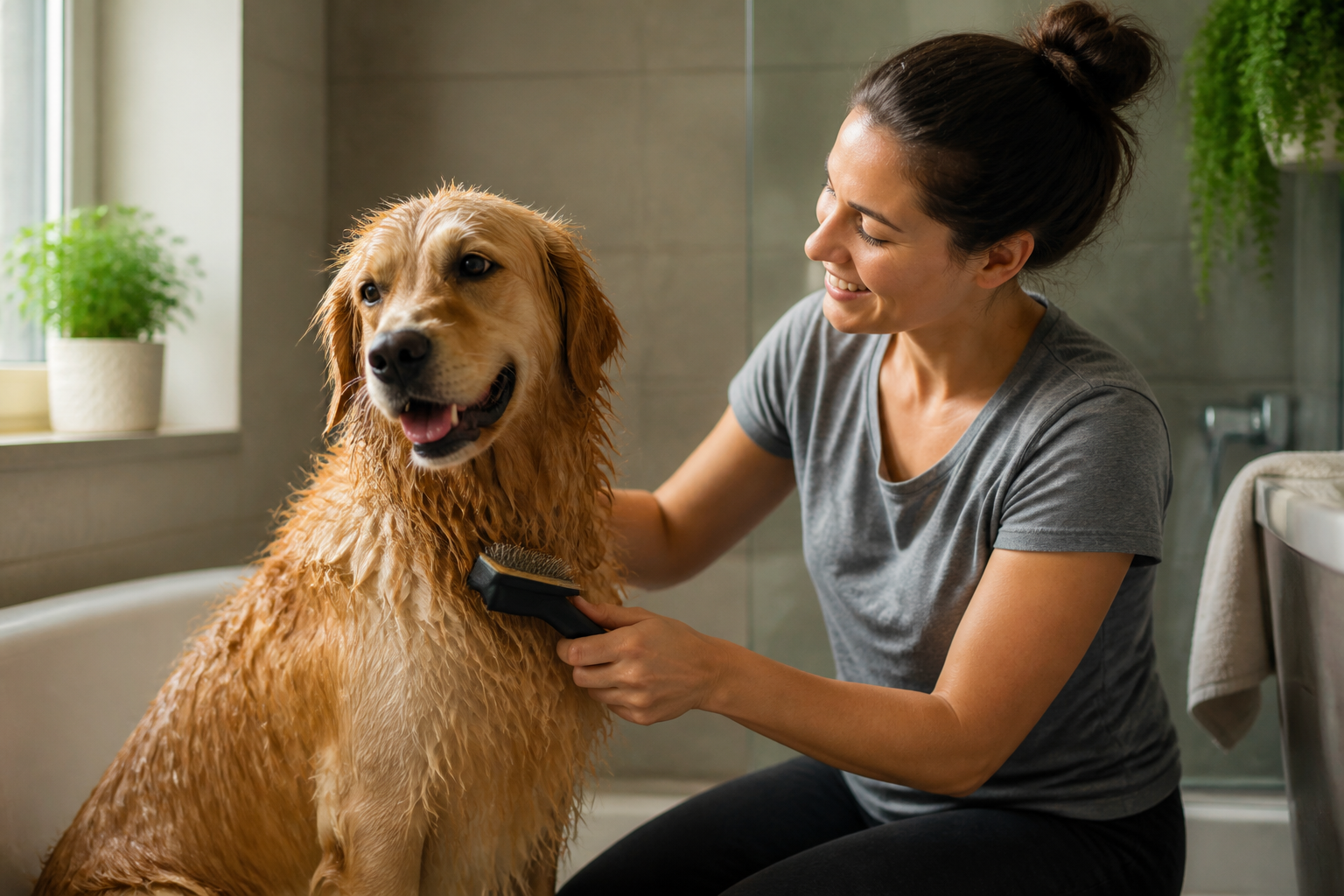
You just finished wrestling your dog through a bath, and now you are looking at a soggy, shivering pup who looks twice their normal size. Your first instinct is to grab a brush and start working through those damp curls or thick fur to get them looking tidy again. However, many pet owners stop and wonder if they are actually doing more harm than good. At BaxterBoo, we hear this question often from our neighbors and customers who want to keep their dogs comfortable and their coats healthy. This article looks at the mechanics of wet hair, when it is safe to brush, and when you should wait for the coat to dry completely. Understanding the relationship between water and canine fur will help you avoid unnecessary breakage and skin irritation.
The Science of Wet Hair and Elasticity
To understand why brushing a wet dog is often discouraged, we have to look at the structure of the hair itself. Dog hair is made of proteins held together by different types of bonds. One of the most important for grooming is the hydrogen bond. These bonds are easily broken by water. When your dog gets wet, the hair shaft becomes significantly more elastic and flexible than it is when dry. While elasticity might sound like a good thing, it actually makes the hair much weaker.
When you pull a brush through wet hair, the strands stretch further than they should. This stretching can lead to microscopic tears in the hair shaft or complete breakage. Once the hair dries and the hydrogen bonds reform, the damaged strands often feel brittle or frizzy. Dry hair is structurally much stronger and can withstand the tension of a brush far better than saturated fur.
Key Takeaway: Water weakens the structural integrity of your dog's coat by breaking temporary hydrogen bonds, making the hair prone to stretching and snapping during grooming.
When Wet Brushing Becomes a Mistake
The biggest risk of brushing a wet dog involves tangles and mats. If your dog has any existing knots before they go into the tub, water will often make them worse. Water causes the hair shaft to swell. When those swollen hairs are clumped together in a mat, they tighten like a wet knot in a shoelace. Attempting to brush these out while wet is painful for the dog and highly inefficient for you.
Brushing a wet, matted coat often results in "brush burn." This occurs when you have to apply extra pressure or repeat strokes over the same area of damp skin to get through a knot. Because wet skin is softer and more sensitive than dry skin, it irritates much faster. If you notice your dog has significant matting, it is always better to tackle those tangles while the coat is dry before the bath even starts. A tool such as the Master Grooming Tools Coat Mat and Tangle Splitter can help you address knots before bathing.
Quick Answer: In most cases, you should not brush your dog while they are soaking wet. It is best to brush them thoroughly before the bath to remove mats and then wait until they are at least 75 percent dry before finishing the job.
The Exception: Brushing During the Bath
While "never brush a wet dog" is a common rule of thumb, professional groomers often use a specific technique called wet brushing to their advantage. This happens in the tub, specifically while the dog is covered in a high-quality conditioner. The conditioner provides "slip," which is a lubricating layer that allows grooming tools to slide over the hair rather than pulling on it.
This method is particularly useful for deshedding double-coated breeds or distributing product through thick fur. By using a brush while the conditioner is still on the coat, you can help the product reach the skin and loosen dead undercoat that is ready to fall out. The key is that the hair is never "naked" and wet. It must be saturated with a slick product to prevent the stretching and breakage mentioned earlier.
Step 1: Wash the dog thoroughly to remove all dirt and oils.
Step 2: Apply a generous amount of dog-specific conditioner.
Step 3: Use a wide-toothed comb or a gentle pin brush to work the product through.
Step 4: Rinse the coat completely and towel dry gently.
Vet Tip: If you notice your dog has persistent skin irritation, redness, or a strange odor after bathing, consult your veterinarian. Our dog shampoo and conditioner collection includes bathing products for different coat-care needs.
For additional bathing guidance, read our article on the dos and don'ts of bathing your dog.
Choosing the Right Tools for Damp Hair
If you decide to brush your dog while they are damp, the tool you choose is critical. You should avoid using fine-toothed slicker brushes or deshedding tools with blades on wet fur. These tools are designed to grab the hair, and on a wet coat, they grab too hard. This leads to snagging and pain.
Instead, look for a high-quality pin brush with rounded tips. These pins are spaced further apart and allow for more airflow and less tension. A wide-toothed comb is also an excellent choice for checking for missed tangles without causing breakage. We carry a wide variety of these specialized tools in our dog brushes and combs category to ensure you have exactly what fits your dog's specific coat type.
Tool Comparison for Wet vs. Dry Grooming
| Tool Type | Best Used On | Why? |
|---|---|---|
| Slicker Brush | Dry Coat | Great for removing debris and fluffing fur, but too harsh for wet hair. |
| Pin Brush | Damp or Dry Coat | Rounded pins glide easier through damp strands with less pulling. |
| Wide-Tooth Comb | Wet (with conditioner) | Best for distributing product and finding deep mats without snapping hair. |
| Undercoat Rake | Dry Coat | Essential for deshedding, but can scrape sensitive wet skin. |
The BASS Brushes selection includes bathing and grooming brush options for different stages of the routine.
Managing Different Coat Types
Not all dogs react the same way to water. A short-haired Labrador has a very different grooming requirement than a Poodle or a Golden Retriever. You must tailor your approach to the specific texture and length of your dog's fur.
Curly and Wavy Coats
Dogs with curly hair, like Poodles or Bichon Frises, are the exception to many rules. If you let a curly coat air dry completely without any brushing, the hair often forms tight curls or "frizz" that can quickly lead to matting. For these breeds, brushing while the coat is slightly damp—often while using a blow dryer on a cool setting—is actually preferred. This helps straighten the hair as it dries, making it easier to manage and less likely to tangle later.
For more guidance, see our guide to grooming a dog with curly hair.
Double Coats
Breeds like Huskies, Shepherds, and Newfoundlands have a dense undercoat protected by longer guard hairs. Brushing these dogs while dripping wet is almost impossible and incredibly messy. The best approach for double coats is the "high-velocity" method. Use a strong dryer to blow the water and loose undercoat out of the fur first. Once the dog is damp rather than wet, a pin brush can help remove the remaining loose fluff.
Silky and Long Coats
For breeds like Yorkies or Malteses, the hair is very fine. This hair type is the most susceptible to breakage when wet. You should be extremely gentle and always use a leave-in detangling spray if you must brush them before they are fully dry. The spray acts like a liquid shield, adding much-needed slip to the fine strands.
The Importance of Pre-Bath Prep
The most effective way to avoid the "should I brush them wet" dilemma is to do the heavy lifting before the dog ever gets into the water. A thorough pre-bath brush-out removes the majority of loose fur and identifies any mats that need attention. Dirt and oils also act as a physical barrier. Removing them while dry keeps your bathwater cleaner and allows your shampoo to work more effectively.
If you skip the pre-bath brush, all that loose hair just sits in the tub and becomes a heavy, soggy blanket on your dog's skin. This makes it much harder to rinse the soap out completely. Leftover soap residue is a leading cause of itchy, flaky skin in dogs.
For more bathing preparation ideas, review our dog bathing tips.
Bottom line: A ten-minute brush before the bath saves thirty minutes of struggling with damp tangles afterward.
Skin Health and the BaxterBoo Pharmacy
Grooming is about more than just looking good. It is a vital part of monitoring your dog's health. While you are brushing, whether the coat is wet or dry, you have the perfect opportunity to check for lumps, bumps, or skin issues. Wetting the hair often makes the skin more visible, allowing you to spot hot spots or rashes that are usually hidden by fur.
If you discover that your dog has a chronic skin condition, allergies, or fungal issues, it might require more than just a standard shampoo. Our dog pharmacy offers prescription shampoos and medications for concerns that require veterinary guidance.
Vet Tip: Never ignore persistent scratching or red patches on the skin. While grooming helps, these are often signs of allergies or infections that require a veterinary diagnosis and specific medical treatment.
Step-by-Step: The Safest Way to Groom After a Bath
If you want to ensure your dog's coat remains healthy and shiny, follow this routine for post-bath grooming. This process minimizes tension on the hair and protects the skin.
Step 1: Towel dry by blotting. Do not rub the towel vigorously back and forth, as this creates tangles and frizz. Squeeze the water out of the ears, legs, and tail.
Step 2: Apply a leave-in conditioner or detangling spray. This replaces the oils stripped away by the shampoo and adds a protective layer to the hair.
Step 3: Let the dog air dry or use a pet-safe dryer until the coat is about 80 percent dry. The hair should feel cool to the touch but not damp.
Step 4: Use a pin brush to gently work from the ends of the hair up toward the skin. This "bottom-up" method prevents you from tightening existing knots.
Step 5: Reward your dog with a high-quality treat. Positive reinforcement makes the next grooming session much easier for both of you.
Bottom line: Patience is the best grooming tool you have. Waiting for the coat to dry slightly will always result in a better finish and a happier dog.
Conclusion
Brushing your dog when wet is a task that requires the right timing and the right tools. While the general rule is to wait for the coat to dry to prevent breakage, using conditioner during a bath or brushing a curly coat while damp can be beneficial. Always prioritize the comfort of your dog and the integrity of their fur by avoiding heavy pulling on saturated strands. At BaxterBoo, we want to help you make grooming a bonding experience rather than a chore. Whether you need a sturdy pin brush, a soothing conditioner, or a prescription treatment from our pharmacy, we have the supplies to keep your dog's coat in peak condition.
- Prep first: Always brush out mats before the bath.
- Use slip: Only brush wet hair if it is saturated with conditioner.
- Pick the right tool: Use pin brushes for damp hair, not slickers.
- Monitor health: Use grooming time to check skin and consult a vet for any concerns.
Check out our full collection of dog grooming tools and shampoos to find the perfect match for your dog's coat type.
FAQ
Is it okay to brush my dog right after a bath?
It is generally better to wait until your dog is at least mostly dry. Brushing soaking wet hair can cause it to stretch and break because the water weakens the hair's natural bonds. If you have a curly-coated breed, you can brush them while damp to prevent frizz, but avoid doing so when they are dripping wet.
Can wet brushing help with shedding?
Wet brushing can be an effective deshedding technique if done correctly in the bathtub with conditioner. The conditioner helps the dead undercoat slide out more easily without pulling on the skin. However, you should use a gentle tool like a rubber curry brush or a wide-toothed comb rather than a sharp deshedding blade on wet skin.
For more information about undercoats and shedding, read our guide to Australian Shepherd shedding.
Why does my dog's hair feel frizzy after I brush it wet?
Frizz is often a sign of damage to the hair cuticle or the result of the hair stretching and then snapping back into a distorted shape. When you brush wet hair, you are likely overstretching the strands. To prevent this, always use a detangling spray and wait until the hair is nearly dry before performing a full brush-out.
What should I do if I find a mat while my dog is wet?
Do not try to brush or pull a mat while the hair is wet, as this will usually tighten the knot and cause your dog pain. Instead, apply a bit of leave-in conditioner or detangling spray to the area and let the dog dry completely. Once the hair is dry, the mat will be much easier to work through gently with a comb or your fingers.






