
 Save 15% on your 1st Autoship learn more

 Email us
 Live Chat
 FAQs
FAQs





Introduction
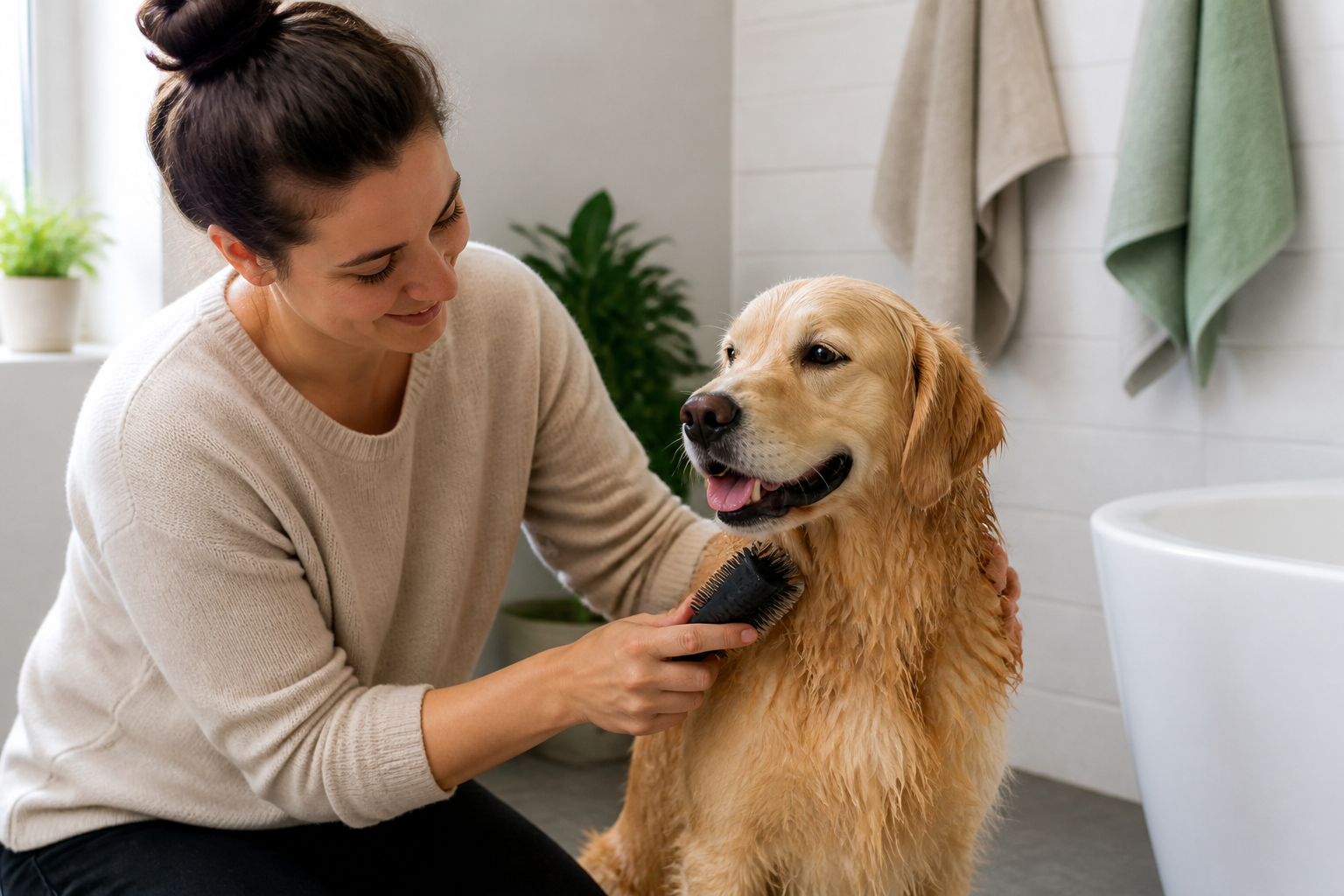
Standing in front of a tub with a soapy dog is a common scene for many pet owners. You might notice a clump of tangled fur and wonder if you should grab the brush now or wait until the coat is dry. This is a vital question for maintaining your dog's comfort and coat health. At BaxterBoo, we see this struggle often when helping neighbors pick out the right grooming gear.
The short answer depends on your goal, but for most home groomers, the order matters. Brushing before a bath prevents mats from tightening, while brushing after helps with the finishing touches. This article covers the pros and cons of each timing, how different coat types change the rules, and the tools you need for a professional result at home. Understanding the mechanics of wet hair will help you give your dog a pain-free grooming experience every time.
Quick Answer: You should almost always brush your dog before a bath to remove loose fur and detangle knots. Water acts like glue on existing mats, causing them to tighten and become nearly impossible to remove without discomfort once wet.
The Importance of the Pre-Bath Brush
Brushing your dog before they ever touch the water is the golden rule of home grooming. When hair gets wet, the structure of the strand changes. It becomes more elastic and prone to stretching. If that hair is already wrapped in a knot or a mat, the water causes the fibers to swell and then tighten as they dry. This creates a brick-like knot that is painful to remove and often requires clipping the hair down to the skin.
By brushing first, you clear out the debris that the bath would otherwise trap. Dogs spend their time outside collecting dust, burrs, and loose undercoat. If you don't brush these out, you are essentially washing dirt into a tangled web of fur. A thorough pre-bath session ensures the shampoo can actually reach the skin. This leads to a much deeper clean and a better-smelling dog. Explore our dog grooming collection for brushes, combs, shampoos, and other bath-time essentials.
Key Takeaway: Brushing before the bath is a preventative measure. It protects the coat from severe matting and ensures your cleaning products work as intended.
How Water Affects Mats and Tangles
Mats are more than just messy hair. They are tightly packed clusters of live hair, dead fur, and skin oils. When you add water to these clusters, the moisture penetrates the center of the mat. As the hair dries, it shrinks slightly. This shrinkage pulls the mat even closer to the dog's skin. In some cases, this can lead to skin irritation or even "hot spots" because air cannot reach the skin surface.
For dogs with thick undercoats, like Huskies or Golden Retrievers, the "water-matting" effect is even more pronounced. Their undercoat is designed to trap heat, but when it is tangled, it traps moisture against the skin. This creates a breeding ground for bacteria. Brushing before the bath removes that dead undercoat, allowing the water and shampoo to flow through the hair easily. For more guidance on bath preparation, read our tips for bathing your dog.
Vet Tip: If you find a mat that is already tight against the skin, do not try to pull it out with a brush. This can tear the skin. Consult a professional or use blunt-nosed safety shears to carefully remove it before the bath.
When Brushing After the Bath Makes Sense
While the pre-bath brush is the priority, there is still a place for the post-bath brush. This is often called the "finishing brush." Once the dog is clean and the coat is partially or fully dry, brushing helps to distribute natural oils. This gives the coat that healthy, glossy shine you see after a professional grooming appointment.
Professional groomers sometimes use a technique where they brush a dog while the coat is saturated with heavy conditioner. This is helpful for certain long-haired breeds to help "slide" dead hair out. However, this requires specific tools and a lot of water pressure to rinse the loosened fur away. For most owners working at home, waiting until the dog is dry is the safer bet to avoid skin tugging.
The Drying Phase
Brushing during the drying process is a middle-ground approach. If you use a hair dryer on a low, cool setting, you can lightly brush the hair in the direction of growth. This helps the coat lay flat and prevents new tangles from forming as the hair moves around. It is particularly effective for curly-haired breeds like Poodles or Doodles who may "frizz" if left to air dry completely. Owners of curly-coated dogs can also review this guide to grooming curly hair.
Step-by-Step Grooming Routine
Following a consistent order will make the process faster for you and less stressful for your dog. Most dogs thrive on routine, so doing things the same way every time helps them stay calm.
Step 1: Perform a full body scan.
Run your hands over your dog to feel for any hidden mats, bumps, or skin irritations before you start brushing.
Step 2: The deep detangle.
Use a slicker brush or a metal comb to work through the entire coat. Pay special attention to high-friction areas like behind the ears and under the armpits. You can find dog brushes and combs for detangling for different coat types.
Step 3: The bath.
Once the coat is clear of knots, proceed with your shampoo and conditioner. Ensure you rinse every trace of soap out to avoid itchy skin later.
Step 4: Towel and air dry.
Gently pat the dog dry rather than rubbing vigorously. Rubbing can create new tangles in long hair.
Step 5: The finishing brush.
Once the dog is about 90 percent dry, do a final pass with a soft brush to fluff the coat and ensure no new knots formed during the washing process.
Bottom line: Brushing is the "bookends" of the bathing process, starting the session to prevent damage and ending it to add shine.
Considering Your Dog's Coat Type
Not all dogs require the same level of pre-bath work. The "before or after" debate changes slightly depending on what kind of fur you are dealing with.
Short-Haired Breeds
For breeds like Boxers, Labradors, or Beagles, matting is rarely an issue. However, these dogs are heavy shedders. Brushing a short-haired dog before a bath with a rubber curry brush will loosen an incredible amount of dead hair. This means less hair ends up clogging your bathtub drain. You can also use the rubber brush during the bath to massage the shampoo in and pull out even more fur.
Long-Haired and Silky Breeds
Breeds like Yorkies or Shih Tzus have hair that is very similar to human hair. It can get tangled easily. For these dogs, brushing before the bath is mandatory. If you skip this, you will likely spend twice as long trying to fix the mess after they dry. Using a leave-in detangling spray before the pre-bath brush can make the process much smoother.
Double-Coated Breeds
Huskies, Shepherds, and Newfoundlands have a dense, soft undercoat and a tougher outer coat. The undercoat is what usually mats. Using an undercoat rake before the bath is the best way to manage their shedding. If you bathe a double-coated dog without brushing them first, the water may never even reach the skin through the dense layer of trapped dead fur.
Curly and Wire-Haired Breeds
Poodles and Airedale Terriers have coats that trap dead hair rather than letting it fall to the floor. This makes them "low shed" but high maintenance. Their hair should be brushed and combed thoroughly before the bath. If you want that fluffy Poodle look, you must also brush them as they dry to straighten the curls.
Health and Skin Safety During Grooming
Grooming is about more than just looks. It is a health check. While you are brushing before the bath, you should be looking for signs of skin trouble. If you notice redness, flaky skin, or small bumps, these could be signs of allergies or environmental irritation.
Many skin conditions can be managed with the right topical treatments. Our pet pharmacy offers a variety of FDA-approved medicated shampoos and treatments through our partnership with Pet's Choice. These products can help with everything from fungal issues to chronic itchiness. If your dog is constantly scratching or has a "yeasty" smell, a bath with a specialized shampoo might be exactly what they need.
Vet Tip: If you notice your dog has persistent skin issues, bald spots, or an unpleasant odor that doesn't go away after a bath, consult your veterinarian. They can provide a diagnosis and a prescription for the appropriate medicated wash or flea and tick preventive.
Essential Tools for Every Stage
Having the right tool for the right time makes the "before and after" process much easier. You do not need a professional salon setup, but a few basics are necessary. Browse our grooming tools to build a routine suited to your dog's coat.
- Slicker Brush: The workhorse of the grooming world. Great for removing loose hair and breaking up small mats before the bath.
- Metal Comb: Essential for checking your work. If a comb can't pass through the hair, there is still a knot there.
- Rubber Curry Brush: Best for short-haired dogs to remove dander and loose fur.
- Undercoat Rake: Necessary for double-coated breeds to reach the deep layers of fur.
- Detangling Spray: A "liquid brush" that helps tools slide through tough spots without pulling the skin.
| Tool Type | Best Use Case | Timing |
|---|---|---|
| Slicker Brush | All-purpose detangling | Before and after |
| Undercoat Rake | Removing heavy shedding | Before bath only |
| Rubber Curry | Short coats and massage | During and after |
| Metal Comb | Fine-tuning and checking | Before and after |
Common Mistakes to Avoid
Even with the best intentions, it is easy to make mistakes that lead to a "bad hair day" for your pet. One of the most frequent errors is assuming the bath will "wash away" the tangles. It won't.
Another mistake is using human shampoo. A dog's skin has a different pH balance than ours. Using human products can strip away the protective oils, leading to dry, cracked skin. Always use a high-quality dog shampoo.
Rinsing is another area where people often rush. Soap residue is a major cause of post-bath itching. You should rinse until the water runs completely clear, then rinse for another minute just to be sure. Check the "hidden" spots like the belly and the armpits where soap likes to hide.
Key Takeaway: Proper technique is just as important as timing. Always brush before, use dog-specific products, and rinse thoroughly to ensure a healthy coat.
Managing Shedding and Future Tangles
The best way to make the "before or after" question easier is to brush regularly between baths. If you brush your dog for five minutes every other day, the pre-bath session will be a breeze. Regular brushing prevents the formation of those deep, painful mats that require professional intervention.
For dogs that shed heavily, consider using our Autoship programme for your favorite grooming supplies. This ensures you never run out of the brushes, wipes, or shampoos you need to keep the house clean. Plus, keeping the coat clear of dead hair helps regulate your dog's temperature, keeping them cooler in the summer and warmer in the winter.
If you are dealing with seasonal allergies that cause your dog to chew on their fur, this can lead to "saliva matting." These mats are particularly tough because the saliva acts as a glue. In these cases, a trip to the pharmacy for an allergy treatment might be necessary to stop the chewing at the source.
Drying Techniques for Best Results
How you dry your dog also impacts how much brushing you need to do afterward.
The Towel Method
Most people's first instinct is to rub the dog down with a towel. For short-haired dogs, this is fine. For long-haired dogs, this "scrubbing" motion creates friction and causes the hair to twist around itself. Instead, wrap the dog in a towel and squeeze. Let the towel soak up the moisture without moving the hair around too much.
The Blow Dryer
If you use a blow dryer, always use the cool setting. Dogs can overheat quickly, and their skin is more sensitive to heat than ours. Keep the dryer moving and use your fingers to separate the hair. This is the best time to do your light "after-bath" brushing. The airflow helps lift the hair from the root, giving the coat more volume and helping you spot any tiny knots you might have missed.
Bottom line: Gentle drying prevents new tangles and makes the final brushing much more effective.
Conclusion
The secret to a successful home grooming session is all in the preparation. Brushing your dog before the bath is the single best way to prevent pain and keep their coat in top condition. While a quick finishing brush after they dry adds that professional shine, it cannot replace the deep work done before the water starts running. By choosing the right tools for your dog's specific coat type and checking for skin issues along the way, you can turn bath time into a positive bonding experience.
We are proud to support your pet care journey with over 500 brands and a dedicated pharmacy for all your health needs. Whether you are starting with a new puppy or managing the needs of a senior dog, having the right supplies makes all the difference. Start earning rewards on your grooming gear today by joining our MVP Rewards programme.
FAQ
Can I brush my dog while they are covered in shampoo?
For short-haired dogs, using a rubber curry brush during the bath is a great way to remove extra fur. For long-haired or double-coated dogs, you should avoid heavy brushing while they are wet as it can pull the skin and cause discomfort. Stick to a thorough pre-bath brush instead.
What should I do if my dog already has a large mat before the bath?
Do not get the mat wet. Try to gently tease it apart with your fingers or a metal comb using a detangling spray. If it is too tight, it is safer to carefully clip it out with safety shears or visit a professional groomer to avoid cutting the skin.
Is it okay to let my dog air dry without brushing?
Short-haired dogs usually do fine with air drying. However, dogs with long, curly, or double coats can develop "pin mats" if they aren't brushed as they dry. Lightly brushing as the hair dries ensures the coat stays smooth and fluffy.
Why does my dog’s hair feel coarse after a bath even if I brushed it?
This is often caused by soap residue or not using a conditioner. Always rinse thoroughly and consider a dog-specific conditioner to smooth the hair cuticle. If the skin feels dry or flaky, you may want to check our pharmacy for a moisturizing or medicated shampoo.






