
 Save 15% on your 1st Autoship learn more

 Email us
 Live Chat
 FAQs
FAQs





Introduction
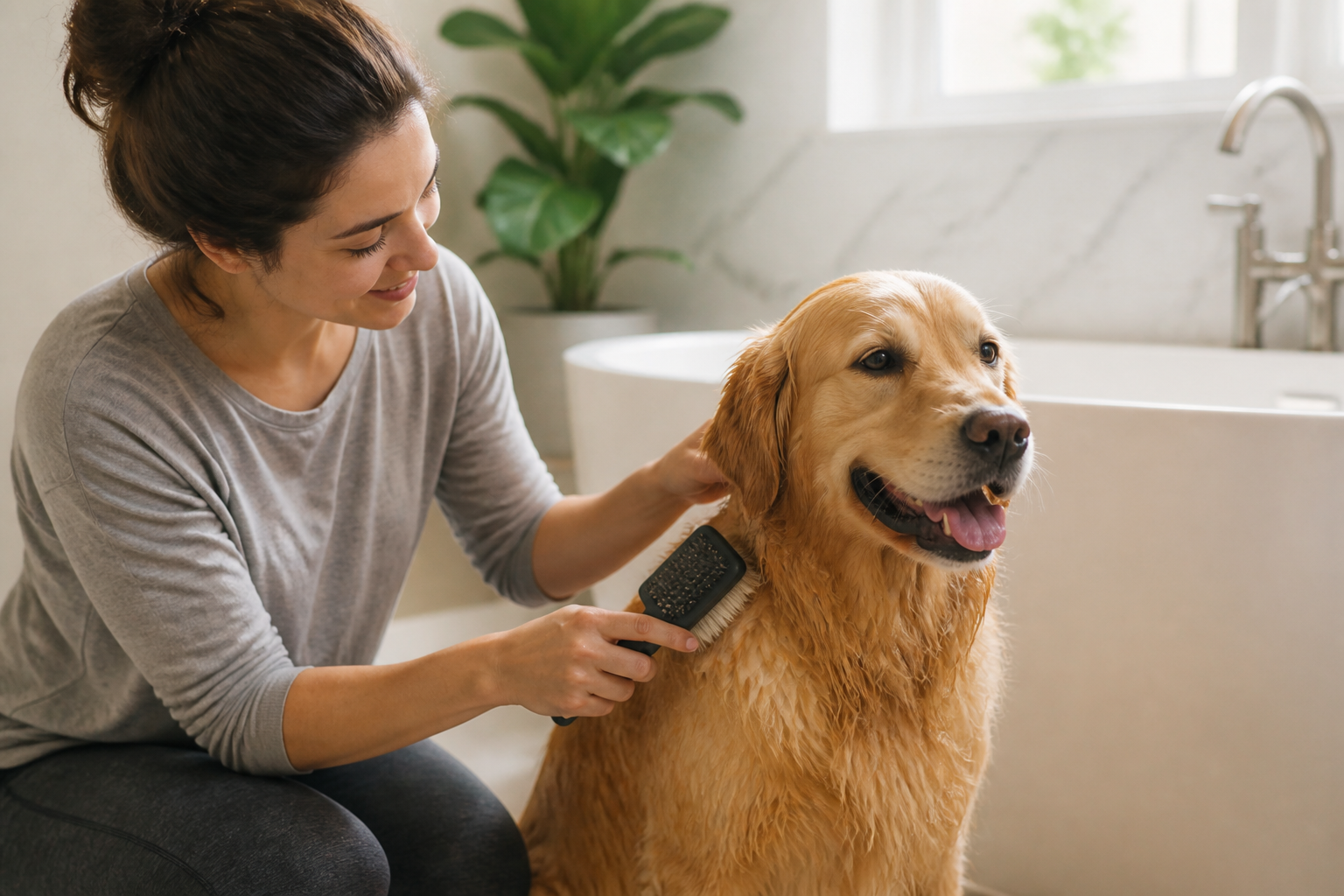
You just finished giving your dog a bath, and they are currently a soggy, shivering mess of fur. You have a brush in one hand and a towel in the other, but you pause. You might wonder if you should wait for the coat to dry completely or if you should start working through those tangles while the hair is still damp. It is a common dilemma for many pet owners who want to keep their dog looking sharp without causing unnecessary pain or hair breakage.
At BaxterBoo, we have spent years helping pet parents find the right tools for every grooming scenario. Whether you are dealing with a thick-coated Alaskan Malamute or a silky-haired Yorkie, the timing of your brushing session matters more than you might think. This guide covers the science of hair bonds, the pros and cons of wet versus dry brushing, and how to protect your dog’s skin. We want to ensure your grooming routine is a bonding experience rather than a struggle.
Quick Answer: For most dogs, the best practice is to brush the coat while it is dry before the bath to remove mats, then again while it is damp and saturated with conditioner. Never brush a dripping wet coat without some form of lubrication, as hair is weakest when it is fully saturated with water.
The Science of Your Dog's Hair
To understand why the wet versus dry debate exists, we have to look at the structure of a dog's hair. Canine hair is made of keratin, which is held together by three different types of bonds. These are hydrogen bonds, disulfide bonds, and salt bonds. Understanding these helps you realize why water changes how a brush moves through the fur.
Hydrogen bonds are the most relevant when it comes to moisture. These bonds help the hair retain its shape and moisture levels. When you soak your dog in the tub, the water actually breaks these hydrogen bonds. This makes the hair more elastic and stretchable, but it also makes it significantly weaker. When a hair strand is stretched too far, it snaps. This is why brushing a soaking wet dog without any product can lead to a frizzy, damaged coat.
Disulfide bonds are much stronger and provide the permanent shape of the hair. If these are damaged by harsh chemicals or excessive heat, the coat will look dull and lifeless. Salt bonds are temporary and very sensitive to pH levels. This is why using human shampoo is a bad idea. Human products can disrupt the pH balance, breaking those salt bonds and leading to skin irritation or a brittle coat.
Key Takeaway: Water breaks the hydrogen bonds in hair, making it more elastic but far more prone to breakage. Always treat wet hair with extra care to avoid damaging the coat.
Why Most Owners Should Brush Before the Bath
For the average pet owner at home, dry brushing is usually the safest starting point. This is especially true if your dog has any visible mats or tangles. If you have ever tried to untangle a wet knot of wool, you know it only gets tighter as it dries. The same thing happens to your dog's fur.
The Problem with Wet Mats
When hair gets wet, the cuticles swell. If there is already a knot present, the moisture causes the individual hairs to expand and lock together even tighter. Brushing a wet mat often requires more force, which pulls on the dog's sensitive skin. This can lead to "brush burn" or skin irritation. We always recommend doing a thorough pass with a slicker brush or metal comb from our dog grooming collection while the dog is completely dry.
Protecting Your Tools
Brushing a dry, dirty dog is not always ideal for your equipment, but it is better than trying to cut through wet knots. Removing loose fur, dried mud, and debris before the bath ensures that your shampoo can actually reach the skin. If you skip the pre-bath brush, you might find yourself washing a solid "shell" of fur that traps soap and dirt underneath.
The Professional Secret: Brushing While Damp
While many sources tell you to never brush a wet dog, professional groomers often do exactly that. The difference is in the technique and the products they use. They do not brush a "dripping" wet dog. Instead, they work with a damp coat that has been treated with high quality conditioners or grooming sprays.
The Role of Conditioner
When you apply a conditioner after shampooing, you are adding lubrication to the hair shaft. This "slip" allows a brush or comb to glide through the fur without catching. At BaxterBoo, we see the best results when owners apply a conditioner or a detangling spray before they ever pick up a brush. Our dog shampoo and conditioner selection includes formulas designed for different coat-care needs.
Benefits of Damp Brushing
- Faster Drying: Brushing through a damp coat helps separate the hairs, which allows air from a dryer to reach the skin faster.
- De-shedding: Many professional groomers use the "bath and brush" method to remove undercoat. The moisture and conditioner help the dead fur slide right out of the follicles.
- Skin Health: Gentle brushing during the conditioning phase can stimulate blood flow and help distribute natural oils across the skin.
Vet Tip: If your dog has a history of skin infections or "hot spots," be very careful with wet brushing. Always consult your veterinarian if you notice red, oozing, or smelly patches on the skin, as these may require a prescription medicated shampoo from our pet pharmacy.
The Dangers of Dry Brushing a Clean Coat
It might sound counterintuitive, but brushing a bone-dry, clean coat can also cause damage. This is primarily due to static electricity and friction. When you run a brush through dry hair, it creates a static charge. This causes the hairs to stand up and repel each other, which actually makes it easier for them to tangle later.
Friction and Breakage
Without any moisture or lubrication, the bristles of your brush create friction against the hair cuticle. Over time, this can wear down the hair, leading to split ends and a dull appearance. This is particularly problematic for "drop-coated" breeds like Shih Tzus or Maltese, where the hair is long and fine.
Using a Brushing Spray
To avoid these issues, many experts suggest using a light misting of a grooming spray even when the dog is dry. You do not need to soak them. A fine mist provides just enough lubrication to stop static and protect the hair from the mechanical action of the brush. We carry several brands like Chris Christensen and Earthbath that offer sprays specifically for this purpose.
Choosing the Right Tools for the Job
The "wet or dry" debate also depends heavily on which brush you are holding. Not all tools are safe for a damp coat. Using the wrong tool can turn a simple grooming session into a painful experience for your pet.
Pin Brushes
A high quality pin brush is often the best choice for damp or wet hair. Look for pins that are rounded at the tips so they do not scratch the skin. These brushes are designed to penetrate the coat without snagging or tearing the hair. They are excellent for long-haired breeds and help distribute conditioner through the coat.
Slicker Brushes
Slicker brushes have fine, short wires close together. These are fantastic for removing mats from a dry coat. However, you must be very gentle if you use them on wet hair. Because wet skin is softer and more sensitive, it is easy to accidentally cause irritation with the sharp wires of a slicker brush.
Rubber Curry Brushes
If you have a short-haired breed like a Beagle or a Lab, a rubber curry brush is your best friend in the tub. You can use these while the dog is fully lathered with shampoo. The rubber "teeth" massage the skin and pull out loose hair without any risk of breaking the hair shafts or scratching the skin.
Bottom line: Match your brush to your dog's coat state: slickers for dry mat removal, pin brushes for damp conditioning, and rubber brushes for short-haired bath time.
Step-by-Step: The Ideal Grooming Routine
If you want the best possible results for your dog’s coat, follow this routine. It combines the benefits of both dry and wet brushing while minimizing the risks of breakage and pain.
Step 1: The Pre-Bath Dry Brush.
Use a slicker brush or metal comb to check for mats. Focus on high-friction areas like behind the ears, under the armpits, and where the collar sits. If you find a mat, work it out slowly from the ends toward the skin.
Step 2: The Initial Wash.
Wet the dog thoroughly and apply a dog-specific shampoo. Avoid getting water in the ears or nose. If the dog is very dirty, you may need to wash and rinse twice to get down to the skin.
Step 3: Conditioning and Damp Brushing.
Apply a generous amount of conditioner. While the conditioner is sitting on the coat, use a pin brush or a wide-toothed comb to gently brush through the fur. This is the "wet brushing" phase. The conditioner provides the lubrication needed to prevent breakage.
Step 4: The Final Rinse and Towel Dry.
Rinse the coat until the water runs clear and you no longer feel any "slick" residue. Gently pat the dog dry with a towel. Avoid vigorous rubbing, as this creates new tangles.
Step 5: The Finishing Spray and Dry.
Mist the damp coat with a leave-in detangler or finishing spray. As you blow-dry the dog, continue to brush lightly to keep the hair separated and smooth.
When Health Becomes a Factor
Sometimes the condition of a dog's coat is about more than just brushing technique. If your dog is constantly matting or has a very dry, brittle coat, there might be an underlying health issue. Allergies, thyroid problems, and nutritional deficiencies can all manifest in the skin and fur.
Our warehouse in Vernon Hills often sees customers looking for solutions for "itchy" dogs. If your dog has red, inflamed skin or is losing hair in patches, a standard grooming spray might not be enough. This is where professional medical guidance is necessary. Through our pharmacy partnership, we offer access to prescription medications. This includes prescription shampoos and treatments for flea-bite dermatitis or fungal infections.
Vet Tip: Persistent mats can trap moisture against the skin, leading to bacterial infections. If you cannot get a mat out without causing pain, it is better to have a professional groomer or vet shave it out rather than risking a skin tear at home.
Understanding Different Coat Types
The answer to "should you brush wet or dry" changes slightly depending on your dog's specific genetics. Every coat type has different needs.
Double-Coated Dogs (Huskies, Shepherds, Goldens)
These dogs have a soft undercoat and a tougher outer coat. Wet brushing with a de-shedding tool or a high-velocity dryer is often the most effective way to manage their "blow out" seasons. The moisture helps release the undercoat that is trapped by the guard hairs.
Curly and Poodle-Mixes (Doodles, Poodles, Bichons)
These coats are the most prone to matting. Dry brushing before the bath is non-negotiable. If you get a Doodle wet while it has mats, those knots will become like concrete. Use a high-quality slicker brush and the "line brushing" technique to ensure you are reaching the skin.
Silky and Drop Coats (Yorkies, Shih Tzus)
These hairs are very similar to human hair. They are prone to breakage and static. Using a brushing spray is essential for these breeds. Wet brushing during the conditioning phase helps keep the hair long and flowing without split ends.
Short and Smooth Coats (Boxers, Pugs, Labradors)
These dogs are the easiest to manage. You can brush them wet or dry. A rubber curry brush used during the bath is often the most efficient way to handle their constant shedding.
Common Myths About Brushing
There is a lot of misinformation on the internet regarding pet grooming. Let's clear up a few of the most common myths.
Myth 1: Brushing a wet dog always ruins the coat.
It only ruins the coat if the hair is "naked." As long as you have a conditioner or spray acting as a lubricant, the hair is protected. The problem is mechanical friction, not the water itself.
Myth 2: You should only brush your dog when they are dirty.
Actually, brushing a dirty coat is harder on your tools and the dog's hair. Regular brushing of a clean coat, with a light spray, is the best way to maintain health and shine.
Myth 3: Shaving a matted dog is "lazy."
Sometimes, it is the most humane thing to do. If a dog is severely matted, the skin is being pulled constantly. Attempting to brush out "pelted" fur is incredibly painful. Shaving allows the skin to breathe and gives you a fresh start for a better grooming routine.
Grooming as a Health Check
Every time you sit down to brush your dog, whether the coat is wet or dry, you have an opportunity to perform a mini-health exam. Feel for new lumps, bumps, or skin tags. Check for "crawlies" like fleas or ticks.
If you find evidence of pests, our pharmacy carries a wide range of preventives. Fleas can cause severe allergic reactions that make the coat brittle and difficult to groom. Catching these issues early during your weekly brush-out saves your dog from discomfort and saves you from expensive vet bills later.
Key Takeaway: Regular grooming is your first line of defense in spotting skin changes, parasites, or lumps that need a veterinarian's attention.
Maximizing the Experience
Grooming should not be a chore. If your dog runs away when they see the brush, try to change the environment. Use high-value treats and keep sessions short. We often suggest using a "lick mat" smeared with peanut butter to keep a dog occupied while you work through their fur.
If you are just starting out with a puppy, get them used to the feeling of the brush before they actually need it. Touch their paws, ears, and tail frequently. Reward them for staying still. By the time they have a full adult coat that requires significant maintenance, they will be a pro on the grooming table.
At BaxterBoo, we want to make sure you have everything you need to keep your pet healthy. From the right pin brush to the best medicated shampoo, our selection is handpicked by people who actually know and love pets. Our hybrid model means you get the convenience of online ordering with the expertise of a local warehouse store that has been operating since 2006.
Conclusion
The debate over whether to brush a dog wet or dry does not have a single winner. Instead, the best approach is a combination of both. Dry brush before the bath to tackle mats and debris, then use a pin brush on a damp, conditioned coat to finish the job and protect the hair's integrity. Never forget the power of a good grooming spray to reduce static and friction.
By following a consistent routine, you can prevent painful mats and keep your dog's coat looking its best. If you ever notice persistent skin issues or hair loss, remember to consult your veterinarian for a professional diagnosis.
- Always dry brush before getting the dog wet if mats are present.
- Use conditioner or a detangling spray for any wet or damp brushing.
- Choose rounded pin brushes for wet hair and rubber brushes for short coats.
- Monitor skin health and use our pharmacy for any prescription needs.
To find the perfect tools for your dog’s specific coat type, browse our full collection of grooming supplies. You can also save on your favorite shampoos and sprays by signing up for our Autoship programme or joining the MVP Rewards programme to earn points on every purchase.
FAQ
Is it bad to brush a dog when they are soaking wet?
It is not necessarily "bad," but it is when the hair is at its weakest. Without a conditioner or grooming spray to provide lubrication, the bristles can easily stretch and snap the hair shafts. Always use a product to help the brush glide if the coat is saturated.
Can I brush my dog while they are still in the bathtub?
Yes, and this is actually a great time to brush if you have applied conditioner. The moisture and product work together to help loose undercoat slide out easily. Just be sure to use a gentle brush like a rubber curry or a wide-toothed comb to avoid scratching the wet, sensitive skin.
What happens if I get a mat wet before brushing it out?
Water often causes the hair cuticles to swell and tighten around the knot, making the mat much harder to remove. It is always best to find and resolve mats while the coat is completely dry. If a mat does get wet, apply a heavy amount of detangler and work it out slowly.
Should I use a blow dryer while brushing?
Using a blow dryer on a low or cool setting while brushing is an excellent way to prevent tangles and speed up the process. The air helps separate the hair strands so you can see down to the skin. Just ensure you are using a light mist of grooming spray to prevent the air from creating too much static.






