Save 15% on your 1st Autoship learn more

 Email us
 Live Chat
 FAQs
FAQs





Introduction
You are sitting on the sofa with your cat purring in your lap. As you stroke their back, you notice a dusting of white flakes along their fur. It looks a bit like salt or tiny scraps of paper. You might wonder if you are brushing them enough or if their skin is simply dry from the winter air. At BaxterBoo, we know that a cat's coat is a window into their overall health. While a few flakes are normal, a sudden increase often signals that something is off. One of the most common but overlooked triggers for these skin changes is emotional stress.
This post will explain how anxiety impacts a cat's skin and why it leads to those frustrating white flakes. We will cover the difference between normal shedding and actual dandruff. You will also learn about environmental factors and how to support your cat through nutrition and grooming. Our goal is to help you understand when to manage this at home and when it is time to call the veterinarian.
Quick Answer: Stress causes cat dandruff by disrupting normal grooming habits or triggering hormonal changes that affect skin oils. Managing the source of anxiety and providing skin-supporting nutrients like Omega-3s can help clear the flakes.
Is it Dandruff or Dander?
Many pet owners use these terms interchangeably. However, they are quite different. Dander consists of microscopic dead skin cells that all cats shed as part of their normal biology. You cannot see dander with the naked eye. It is the protein in this dander that often triggers allergies in humans. Every healthy cat produces dander every day.
Dandruff is different because it is visible. These are larger clumps of skin cells that have stayed together. They appear as white flakes on the fur or the skin surface. While dander is a sign of a healthy body renewing itself, dandruff suggests an imbalance. It usually happens when the skin is too dry or too oily.
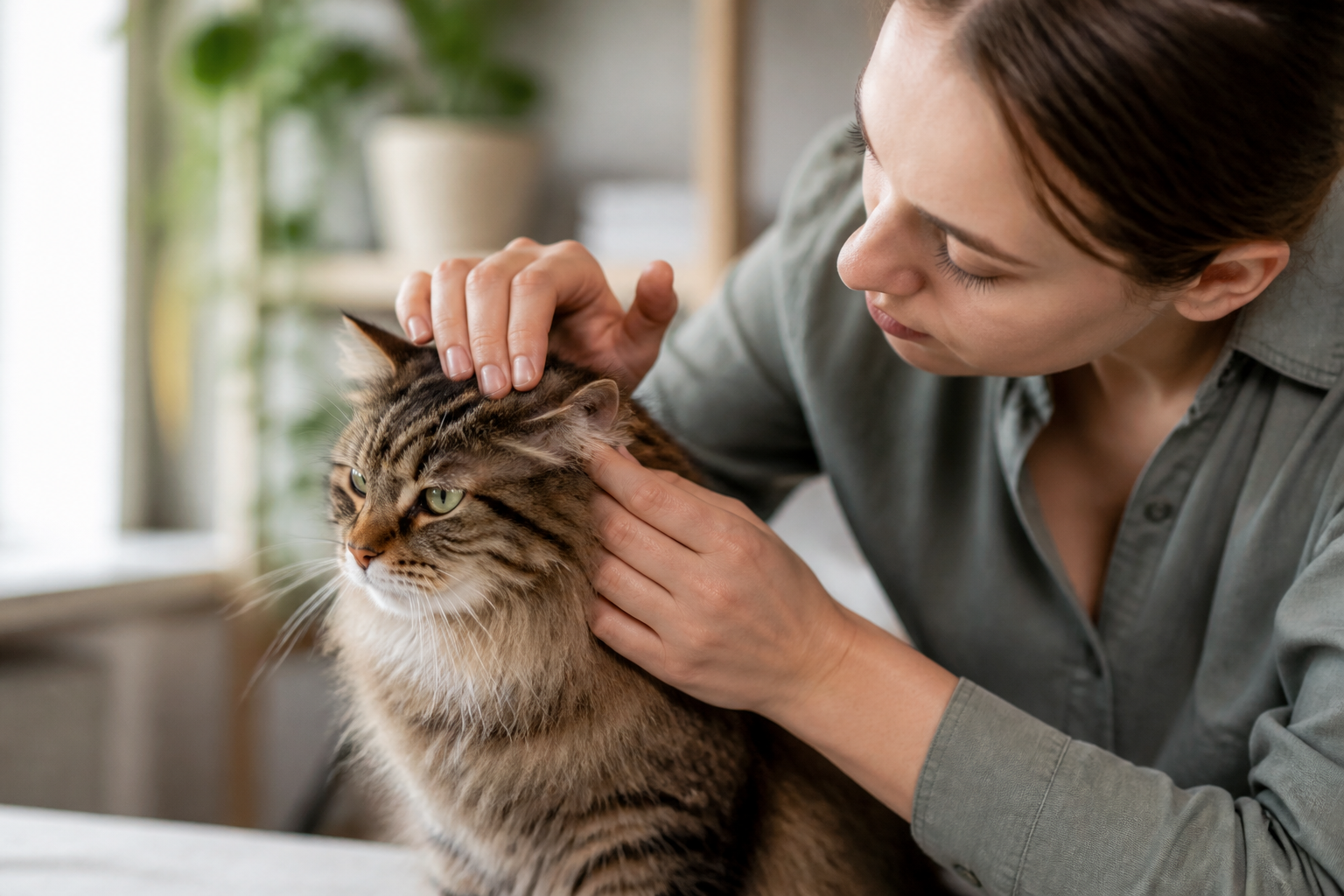
If you see these flakes, it means the skin cells are shedding faster than they should. This condition is sometimes called seborrhea. It is not a disease itself but a symptom of an underlying issue. Sometimes the flakes are accompanied by a dull coat or a greasy feeling when you pet your cat.
How Stress Impacts a Cat's Skin
Cats are creatures of habit. They thrive on routine and predictability. When their environment changes, their bodies react physically. Stress triggers the release of hormones like cortisol. These hormones can shift the balance of oils on the skin surface. This shift often leads to irritation and the formation of dandruff.
Stress also changes how a cat behaves. Some cats respond to anxiety by over-grooming. They may lick a specific spot until the skin is red and the fur is gone. This constant moisture and friction can damage the skin barrier. Other cats do the opposite and stop grooming entirely.
When a cat stops grooming, the natural oils and dead skin cells are not brushed away by their tongue. They sit on the surface and clump together. This creates a buildup of flakes that becomes very obvious within just a few days. Common stressors include:
- Moving to a new home or rearranging furniture.
- The addition of a new pet or a new human family member.
- Changes in your work schedule that affect feeding or play times.
- Loud noises like construction or thunderstorms.
- Conflicts with other cats in the household.
Key Takeaway: Stress disrupts the skin's natural balance and the cat's grooming routine. This leads to a buildup of dead skin cells that appear as visible white flakes.
Environmental Factors and Dry Air
While stress is a primary cause, the environment often makes the problem worse. During the winter months, indoor humidity levels drop significantly. Forced-air heating systems pull moisture out of the air and out of your cat's skin. This causes the skin to become tight and itchy.
When the skin is dry, it loses its elasticity. Small cracks can form in the skin barrier. This makes the cat feel itchy, so they scratch more. Scratching further irritates the skin and knocks loose more flakes. You may notice that the dandruff is worse near the base of the tail or along the spine. These are the areas where skin tends to be the driest.
Low humidity can turn a minor stress response into a major skin problem. If your cat is already feeling anxious, the added discomfort of itchy skin can create a cycle of distress. They feel stressed, so they stop grooming. Their skin gets dry and itchy, which makes them feel more stressed.
The Role of Grooming and Physical Health
Sometimes cat dandruff caused by stress is compounded by physical limitations. If a cat is stressed because they are in pain, they will not groom themselves effectively. This is especially common in senior cats or cats struggling with their weight. Regular brushing and other tools from our cat grooming collection can help support a consistent care routine.
Obesity and Hard-to-Reach Areas
If a cat is overweight, they simply cannot reach every part of their body. The lower back and the base of the tail are usually the first areas to suffer. Dead skin and oils accumulate in these spots. This creates a thick layer of dandruff and sometimes matted fur. We often see this in cats who have lost interest in play due to stress or a sedentary lifestyle. We carry specialized weight management foods from brands like Farmina Vet Life and Royal Canin to help address these concerns.
Arthritis and Joint Pain
Stress can be a physical response to chronic pain. A cat with arthritis might find it painful to twist and reach their back for grooming. The lack of grooming leads to flakes. The pain itself causes stress, which further degrades the skin quality. If you notice your cat is jumping less or moving stiffly, their dandruff might be a sign that they need joint support or a veterinary evaluation.
Identifying Different Types of Flakes
Not everything that looks like dandruff is actually dead skin. It is important to look closely at the flakes to determine the cause. This helps you decide if you need a change in diet or a trip to our cat pharmacy.
Dandruff vs. Flea Dirt
Flea dirt is often mistaken for dandruff, but the color is the giveaway. Dandruff is white or clear. Flea dirt looks like small specks of black pepper. Flea dirt is actually flea waste, consisting of digested blood. If you see black specks, your cat likely has fleas. This is a major source of stress for any feline. The itching from flea bites causes significant anxiety and skin damage.
Our pharmacy carries a wide range of FDA-approved flea and tick preventives. Through our partnership with Pet's Choice, we can help you get the exact prescription or over-the-counter treatment your vet recommends. Keeping your cat on a regular preventive schedule is one of the best ways to reduce skin-related stress. For additional guidance, read our article about flea and tick prevention products.
Walking Dandruff (Cheyletiella Mites)
There is a specific parasite called the Cheyletiella mite. It is often called walking dandruff because the mites are large enough to be seen with the naked eye. They are white and move around under the fur. They look exactly like moving flakes of skin. This condition is highly contagious and very itchy. It requires specific medical treatment to clear up.
Vet Tip: If the flakes on your cat appear to be moving, or if you see black specks among the white flakes, consult your vet immediately. These are signs of parasites that require professional treatment rather than just home grooming.
Supporting Skin Health Through Nutrition
A cat's skin needs specific nutrients to stay supple and healthy. If their diet is lacking, their skin will be the first place you see the results. High-quality proteins and healthy fats are the building blocks of a glossy coat. You can explore our cat skin and coat health selection for foods and supplements that fit into your cat's routine.
The Power of Omega Fatty Acids
Omega-3 and Omega-6 fatty acids are essential for skin health. They help maintain the skin's moisture barrier. This prevents water from escaping and keeps irritants out. Many commercial cat foods are balanced, but some cats need a little extra help. Adding a fish oil supplement can make a dramatic difference in skin flakiness.
Brands like Zesty Paws or Honest Paws offer feline-friendly options that are easy to administer. You can also look for foods that prioritize these fats. We carry brands like Stella and Chewy's and The Honest Kitchen, which use high-quality ingredients that naturally support skin and coat health.
Hydration and Skin Elasticity
Dehydration is a quiet contributor to dandruff. Cats have a low thirst drive. If they only eat dry kibble, they may be chronically under-hydrated. This leads to dry, inelastic skin. Adding wet food to their diet or using a pet water fountain can encourage more drinking. Moving water is often more attractive to cats than a still bowl. This simple change can reduce the physical stress on their body.
Bottom line: Quality nutrition and proper hydration provide the foundation for healthy skin and can reduce the severity of stress-induced dandruff.
Home Remedies and Grooming Techniques
If your vet has ruled out serious medical conditions, you can manage most dandruff with better grooming habits at home. This helps remove the flakes and stimulates the skin's natural oil production.
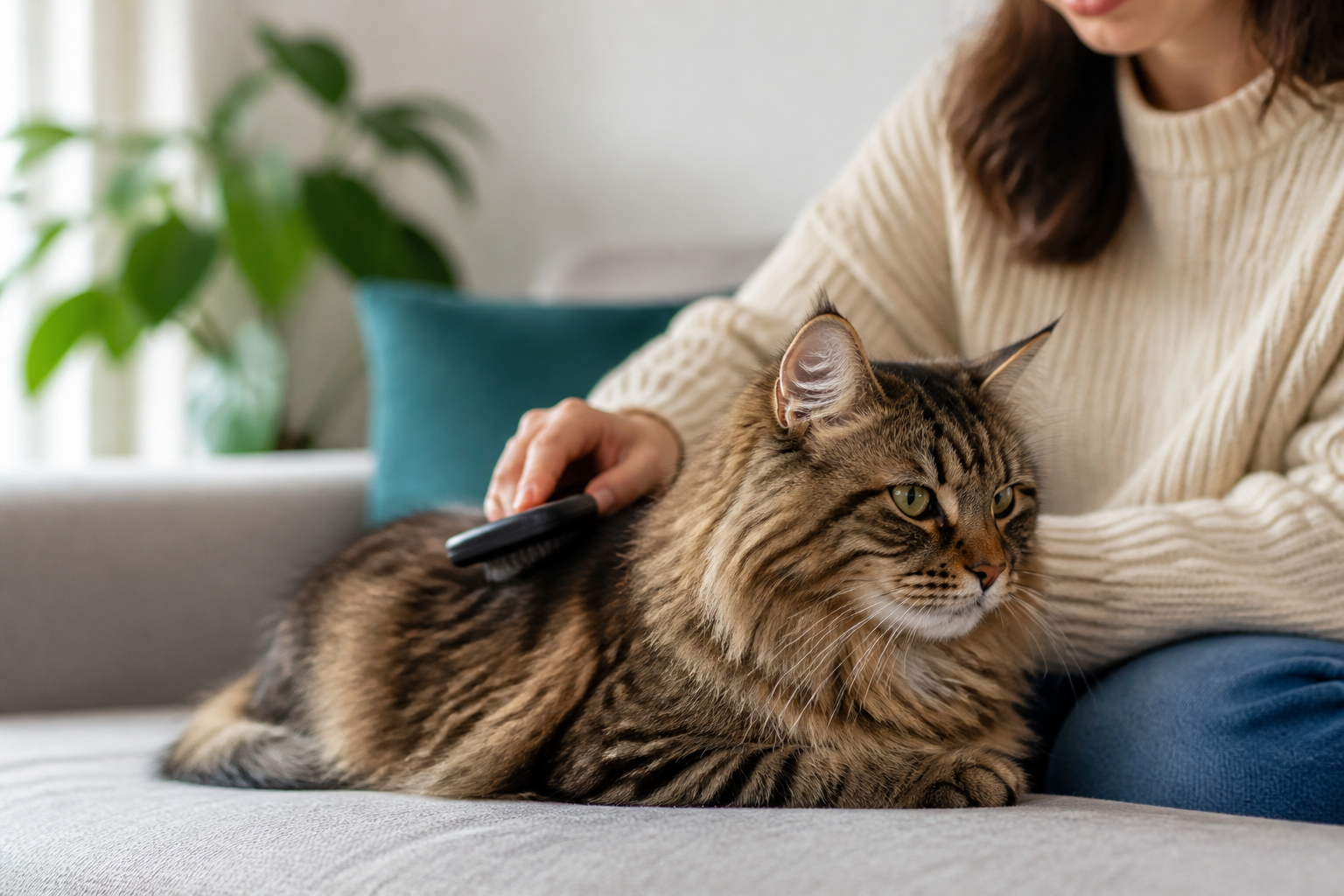
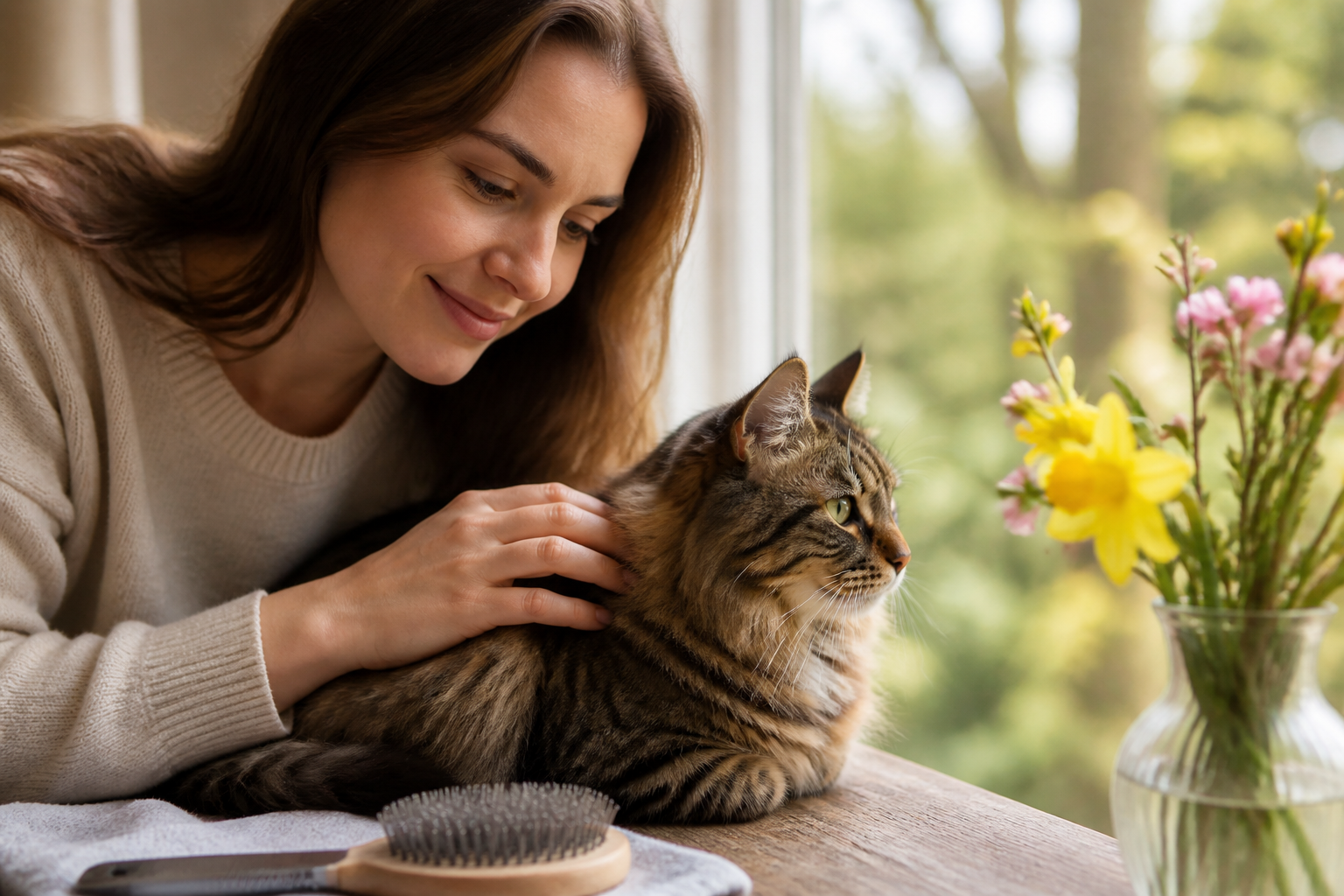
Step 1: Choose the right brush. / Use a soft-bristled brush or a grooming glove. Avoid harsh metal combs if the skin is already irritated or red.
Step 2: Establish a routine. / Brush your cat for five minutes at the same time every day. This creates a predictable habit that can actually lower their stress levels.
Step 3: Be gentle. / Use slow, rhythmic strokes. If your cat enjoys being brushed, it stimulates the release of happy hormones like oxytocin. This counteracts the stress that caused the dandruff in the first place.
Step 4: Use grooming wipes. / If your cat cannot groom themselves, use unscented, cat-specific grooming wipes. These can help remove excess oils and flakes without the stress of a full bath.
Should You Bathe Your Cat?
Most cats find baths incredibly stressful. Since stress is a primary cause of the dandruff you are trying to treat, a bath might backfire. Unless your cat is covered in something sticky or your vet has prescribed a medicated shampoo, it is usually better to stick to brushing and wipes. If you must use a shampoo, choose a moisturizing formula designed specifically for felines.
Creating a Stress-Free Environment
Since anxiety is at the root of the problem, you must address your cat's environment. A calm cat is a cat with healthier skin. There are several ways to make your home feel safer for a nervous feline. Our cat stress and anxiety products can be part of a broader comfort routine.
Routine and Predictability
Try to keep feeding and play times consistent. If you know a big change is coming, like a move or a new baby, try to introduce changes slowly. Give your cat a safe space, like a tall cat tree or a quiet closet, where they can retreat if they feel overwhelmed.
Enrichment and Play
Boredom can lead to stress. Interactive play with wand toys or food puzzles can help burn off nervous energy. We carry a variety of toys from brands like Kong and Jackson Galaxy that are designed to keep cats engaged. Play also strengthens the bond between you and your pet, which provides emotional security. If your cat shows signs of boredom through excessive grooming, our guide to walking your cat offers another enrichment idea.
Calming Aids
For cats who are naturally high-strung, calming aids can be helpful. Pheromone diffusers or sprays mimic the natural scents cats use to mark an area as safe. There are also calming supplements that use natural ingredients like L-theanine to help a cat feel more relaxed without making them drowsy.
Key Takeaway: Reducing the environmental triggers for anxiety is just as important as treating the physical flakes on the skin.
When to See the Veterinarian
While most cases of dandruff can be managed with grooming and stress reduction, some situations require professional help. Dandruff can sometimes be a sign of internal health problems.
Conditions like diabetes or hyperthyroidism change a cat's metabolism. This often results in a poor coat and excessive flaking. If your cat's dandruff is accompanied by a change in appetite, increased thirst, or lethargy, it is time for a checkup. A vet can run blood work to rule out these systemic issues.
You should also seek help if you notice:
- Red, inflamed, or bleeding skin.
- Circular patches of hair loss (which could indicate ringworm).
- A strong, unpleasant odor coming from the skin.
- Intense itching that causes the cat to scratch constantly.
- Thick, crusty patches of skin.
Our partnership with Pet's Choice ensures that once your vet provides a diagnosis, you can easily access the prescription diets and medications needed to get your kitty back on track. This includes specialized foods for allergies or metabolic support that are not available over the counter.
Managing the Cost of Care
Dealing with chronic skin issues or stress-related health problems can become expensive over time. We want to make it easier for you to provide the best care. Our MVP Rewards programme allows you to earn points on every purchase, which can be used for future savings on food, supplements, and grooming supplies.
If your cat requires a specific food or supplement to manage their skin, consider our Autoship programme. This ensures you never run out of the supplies your cat needs to stay healthy. You also get a discount on your first order and a free MVP Gold membership. Consistency is vital when treating skin issues, and recurring deliveries make that much easier to achieve.
Bottom line: Combining veterinary guidance with consistent home care and high-quality products is the most effective way to eliminate cat dandruff.
Summary of Steps for Success
Managing cat dandruff is a multi-step process. It requires patience and a look at your cat’s entire lifestyle.
- Identify the flakes to ensure they are not parasites like fleas or mites.
- Reduce household stress by maintaining a routine and providing enrichment.
- Support the skin from the inside with high-quality protein and Omega-3 supplements.
- Brush your cat daily to remove dead skin and distribute natural oils.
- Consult your vet if you see signs of infection or changes in behavior.
- Use our pharmacy for any prescription needs or specialized medical diets.
We have seen many pet owners find success by making small, consistent changes. Your cat's skin health will not change overnight, but with the right approach, you will start to see that glossy, flake-free coat return.
FAQ
Can stress really cause dandruff in cats?
Yes, stress is a major trigger for skin issues in felines. When a cat is anxious, their body releases hormones that can alter oil production. Stress also causes many cats to stop grooming themselves properly, which allows dead skin cells to build up and become visible as white flakes.
Is cat dandruff the same as dander?
No, they are different. Dander is made of microscopic skin cells that all cats shed naturally and is usually invisible. Dandruff consists of larger, visible white flakes that indicate the skin is either too dry, too oily, or that the cat is not grooming effectively.
How can I tell the difference between dandruff and flea dirt?
The easiest way to tell is by the color of the flakes. Dandruff is white or clear and looks like dry skin. Flea dirt looks like tiny black or dark brown specks of pepper. If you are unsure, place the flakes on a wet white paper towel: if they turn reddish-brown, it is flea dirt.
When should I take my cat to the vet for flaky skin?
You should see a vet if the dandruff is accompanied by red skin, hair loss, or intense itching. It is also important to seek professional help if your cat shows changes in appetite, weight, or energy levels. These symptoms can point to underlying conditions like hyperthyroidism or parasites.