Save 15% on your 1st Autoship learn more

 Email us
 Live Chat
 FAQs
FAQs





Introduction
You are relaxing on the couch with your cat when you notice small white specks scattered across their dark fur. At first, you might think it is just a bit of dust. Then you notice your cat is scratching more than usual, or perhaps their coat looks a bit duller than it did last week. This is a common moment for many pet owners, and it often leads to a pressing question: does my cat have dandruff or lice? While both can cause those tell-tale white flakes, the causes and treatments are very different. At BaxterBoo, we see these concerns often and want to help you identify what is happening with your pet's skin. This post covers the visual differences between flakes and parasites, the common causes of feline skin irritation, and the best ways to restore your cat's glossy coat. Understanding these differences is the first step toward getting your cat the relief they need.
Identifying Feline Dandruff
Cat dandruff consists of dead skin cells that have clumped together and shed from the body. It is often officially called seborrhea by veterinarians. In a healthy cat, skin cells grow, die, and shed in a cycle that is almost invisible to the naked eye. When those sebaceous glands produce too much or too little oil, the cycle is disrupted. This results in the visible white flakes you see during a grooming session.
Dandruff usually appears as flat, irregular specks. They are typically white or grayish. If you try to pick a flake out of the fur, it will usually crumble or fall away easily. You will most often find these flakes along the lower back and toward the base of the tail. This is where many cats have the hardest time reaching during their daily self-grooming routine.
Quick Answer: Cat dandruff is composed of flat, irregular dead skin flakes that crumble easily. Lice are actual parasites or their eggs (nits), which are teardrop-shaped and glued firmly to the hair shaft.
Recognizing Cat Lice and Nits
Lice are much less common in healthy, indoor cats than dandruff, but they are a distinct possibility. Cat lice are small, wingless insects that live on the skin and among the hairs. Unlike fleas, which are dark and move very fast, lice move slowly. They are also species-specific. This means you cannot catch lice from your cat, and they cannot catch them from you.
The white specks people mistake for dandruff are usually the lice eggs, known as nits. These look like tiny, pale, teardrop-shaped beads. The biggest tell is how they attach to the hair. While dandruff flakes fall off when you brush the fur, nits are glued to the hair shaft. If you try to flick them away with your finger, they will stay stuck.
Signs of a Lice Infestation
Lice do more than just leave white specks. Because they bite or suck on the skin, they cause significant irritation. If your cat has lice, you will likely notice these symptoms:
- Intense scratching or biting at the skin.
- Restlessness or irritability.
- A coat that looks matted or extremely messy.
- Small red bumps or crusts on the skin surface.
Vet Tip: If you suspect your cat has lice or any other parasite, consult your veterinarian for a definitive diagnosis. They can use a microscope to identify the specific parasite and ensure you use the correct FDA-approved treatment from our pet pharmacy.
The Mystery of Walking Dandruff
There is a third option that combines the appearance of dandruff with the movement of a parasite. It is called Cheyletiellosis, but it is better known as walking dandruff. This is caused by a specific type of mite that is large enough to see with the naked eye.
If you watch the white flakes on your cat's back very closely, you might see them shifting or crawling. This is not the skin flaking off; it is the mites moving under the fur. Walking dandruff is highly contagious between pets. If you have multiple animals in the house and one starts showing these "moving flakes," it is likely a mite infestation.
Comparing Dandruff, Lice, and Mites
| Feature | Dandruff | Lice (Nits) | Walking Dandruff (Mites) |
|---|---|---|---|
| Shape | Flat, irregular flakes | Teardrop-shaped beads | Tiny, moving specks |
| Attachment | Loose; falls off easily | Firmly glued to hair | Mobile; moves on skin |
| Movement | None | Very slow movement | Visible crawling |
| Location | Mostly lower back | Anywhere on the body | Often along the spine |
| Contagion | Not contagious | Only to other cats | Highly contagious to pets |
Why Your Cat Might Have Simple Dandruff
If you have ruled out parasites, the next step is figuring out why the skin is so dry. Cats are generally excellent at maintaining their own hygiene. When dandruff appears, it is often a signal that something in their environment or their body is out of balance.
Low Humidity in the Home
During the winter months, indoor heating can strip the moisture out of the air. This dries out your cat's skin just as it does yours. If the dandruff only appears when the heater is running, the environment is likely the culprit. Using a humidifier in the rooms where your cat spends the most time can provide significant relief.
Nutritional Deficiencies
The skin is the largest organ on a cat's body. It requires a significant amount of protein and healthy fats to stay supple. If a cat's diet is low in Omega-3 and Omega-6 fatty acids, their skin will become brittle and flaky. We carry several premium brands at BaxterBoo, such as Stella and Chewy's or Open Farm, that focus on high-quality proteins and healthy fats to support coat health. Browse our cat food collection when reviewing your cat's diet.
Difficulty with Self-Grooming
A cat who cannot groom themselves properly will quickly develop a buildup of dead skin. This is very common in two specific groups: senior cats and overweight cats. Senior cats often suffer from arthritis or joint stiffness. This makes it painful for them to twist around and reach their lower back. Overweight cats may simply be physically unable to reach certain areas.
Key Takeaway: Feline dandruff is often a secondary symptom of an environmental issue or an underlying health condition rather than a standalone skin disease.
Health Conditions That Mirror Dandruff
Sometimes, flaky skin is a window into a more serious internal health issue. If the dandruff is accompanied by other changes in behavior, it is time for a veterinary checkup.
Fungal Infections like Ringworm
Ringworm is not a worm at all; it is a fungus. It can cause scaly, flaky skin that looks very much like dandruff in the early stages. However, ringworm usually causes circular patches of hair loss. The skin in these areas may look red or inflamed. Ringworm is also zoonotic, meaning it can spread to the humans in your house.
Hormonal and Systemic Diseases
Conditions like hyperthyroidism, diabetes, and kidney disease can all affect the quality of a cat's coat. These diseases change how the body processes nutrients and maintains hydration. A cat with diabetes may have a greasy coat with heavy dandruff. A cat with hyperthyroidism might stop grooming altogether because they are feeling unwell.
Skin Allergies
Cats can be allergic to things in their environment, such as pollen or dust, or specific ingredients in their food. Allergic reactions often manifest as skin irritation. This leads to over-grooming, scratching, and eventually, flaky skin or sores. For broader feline wellness guidance, read our guide to building a strong feline immune system.
Practical Steps for Managing Cat Dandruff
Once your vet has confirmed that your cat is dealing with dry skin rather than a parasite, you can start a management routine. Consistency is the most important factor when trying to clear up skin issues.
Introduce a Regular Brushing Routine
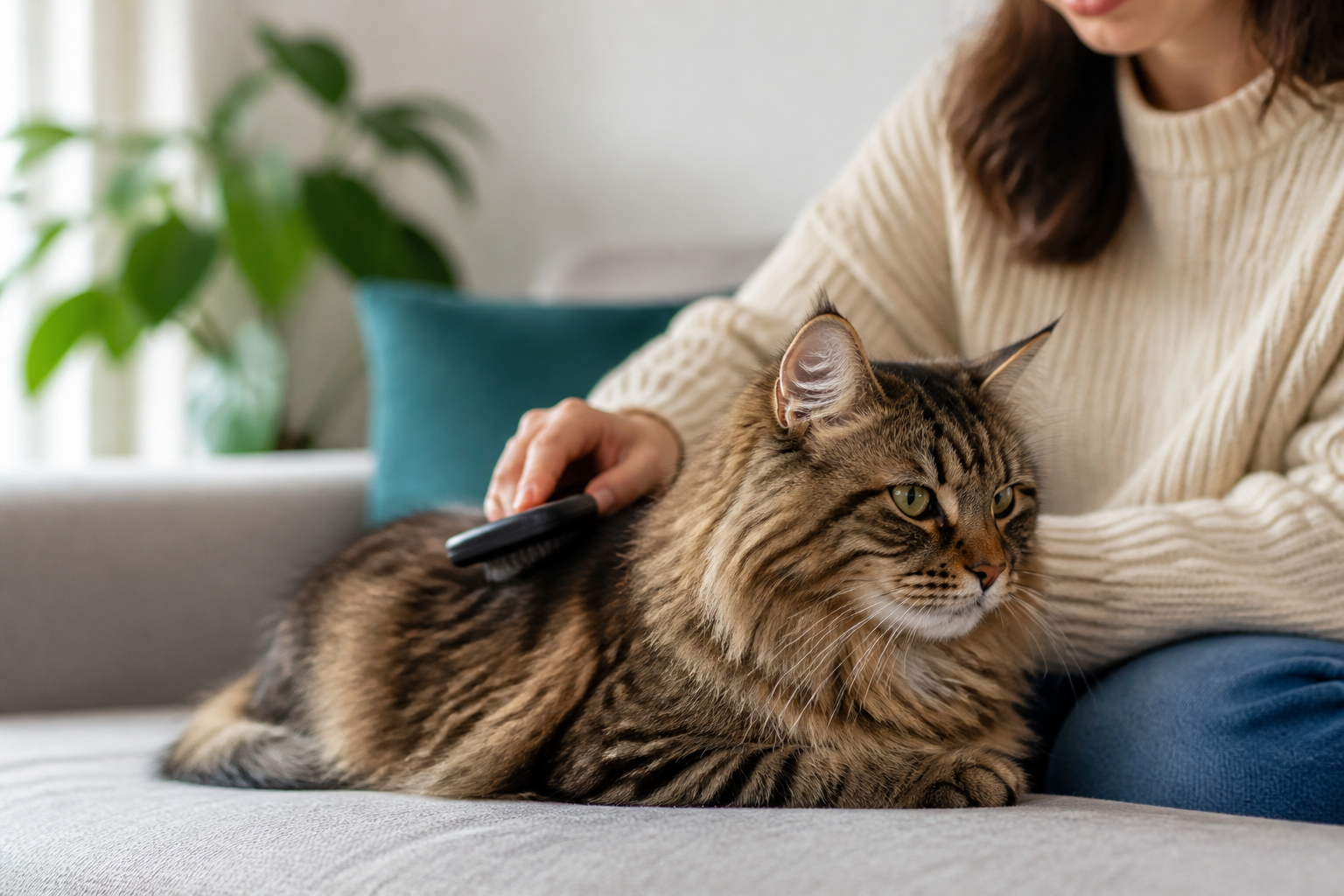
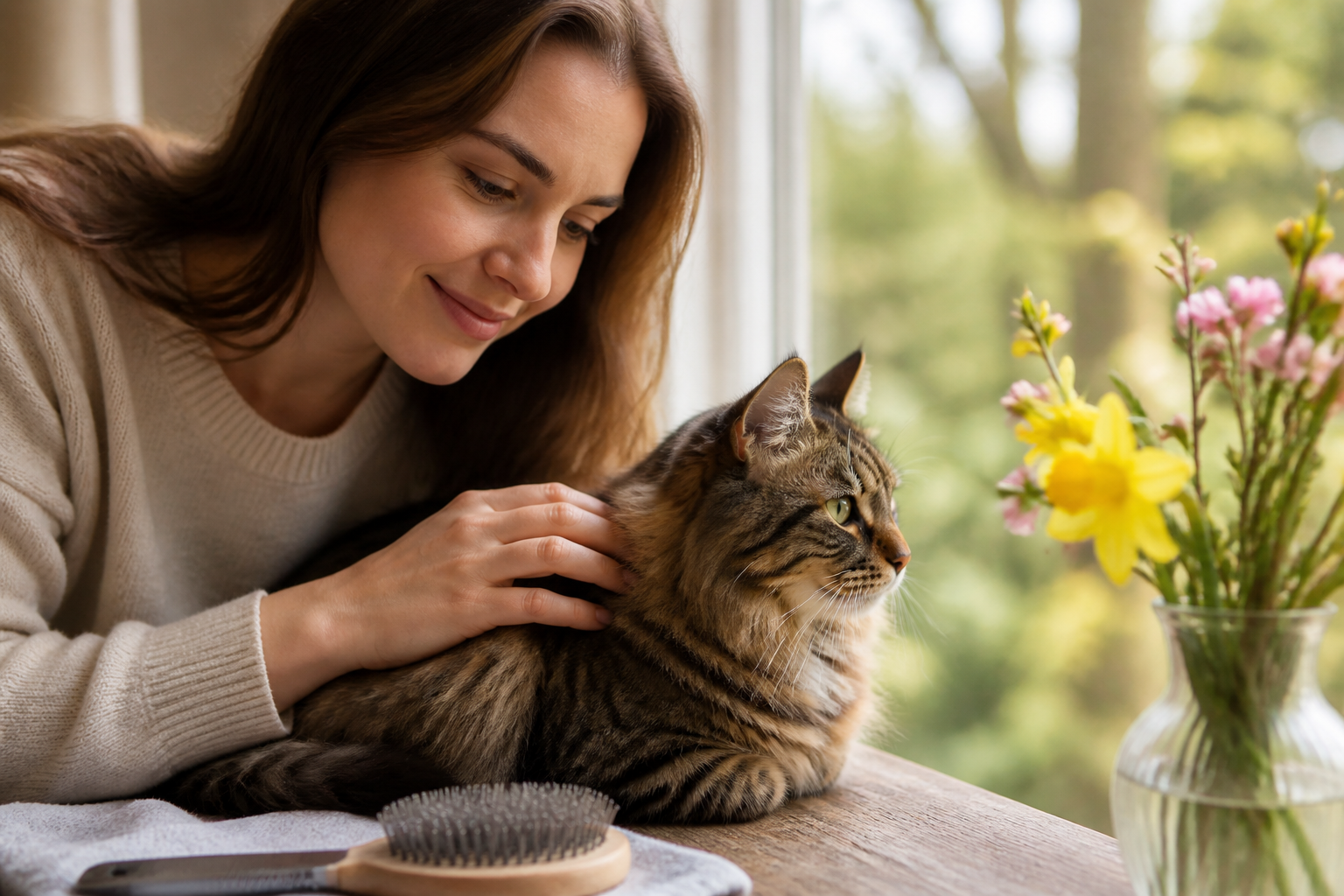
Brushing does more than just remove the visible flakes. It stimulates the skin and helps distribute the natural oils across the entire coat. For short-haired cats, a soft bristle brush or a grooming glove works well. Long-haired cats require a sturdy comb to get through the undercoat where skin cells tend to get trapped. You can find additional options in our cat skin and coat care collection.
Step 1: Choose a quiet time.
Pick a moment when your cat is relaxed. Start with just a few minutes of brushing.
Step 2: Use gentle strokes.
Do not press too hard against the skin. Focus on the areas where you see the most flakes, usually the base of the tail.
Step 3: Reward the behavior.
Give your cat a high-quality treat after the session. This helps them associate grooming with a positive experience.
Improve Hydration and Diet
Water intake is vital for skin elasticity. Cats often have a low thirst drive, so you may need to encourage them to drink. Switching to wet food or adding a bit of water to their kibble can help. You might also consider a pet water fountain, as many cats prefer running water over a still bowl.
Targeted Supplements
Skin and coat supplements can provide the extra boost your cat needs. Look for products containing fish oil or biotin. These ingredients help strengthen the skin barrier. Brands like Zesty Paws or Honest Paws offer feline-friendly options that can be easily mixed into their meals.
Bottom line: Regular grooming and a diet rich in fatty acids are the best defenses against simple cat dandruff.
When to Use the BaxterBoo Pharmacy
If your cat's skin issues are caused by lice, mites, or a medical condition like an allergy, home remedies might not be enough. This is where professional medical intervention becomes necessary. Our pharmacy for cats offers a wide range of FDA-approved medications through our partnership with Pet's Choice.
Whether your vet prescribes a specific flea and tick preventative to kill lice or a prescription diet to manage a skin allergy, we can help. Having a reliable source for these medications ensures your cat gets the exact formula they need to recover. Prescription diets from brands like Royal Canin or Farmina Vet Life are often designed specifically to manage the protein levels and nutrients required for cats with sensitive skin or systemic illnesses.
Vet Tip: Never use human dandruff shampoo on your cat. Many of these products contain ingredients that are toxic to felines if ingested during grooming. Always use products specifically formulated for cats or those prescribed by your vet.
Managing Parasites and Lice
If you find that those white specks are indeed lice or mites, you must act quickly to clean both the pet and the home. Lice are easier to get rid of than fleas because they do not live as long in the environment, but they still require a thorough approach. For additional prevention guidance, see our article about flea and tick prevention products.
- Consult your vet for a prescription treatment. This might be a topical solution or a medicated shampoo.
- Wash all bedding, blankets, and fabric toys in hot water.
- Vacuum your carpets and furniture thoroughly.
- Treat all other cats in the household. Even if they are not showing signs yet, lice can transfer between them easily.
Lice treatment usually requires two rounds. The first round kills the adult lice, and the second round, usually two weeks later, kills any lice that hatched from nits after the first treatment.
The Role of Weight and Mobility in Coat Health
If your cat has dandruff primarily on their lower back, take a look at their physical condition. Obesity is a leading cause of poor coat health in domestic cats. If a cat is too round to reach their tail, the skin in that area will inevitably become dry and flaky. For related guidance, read our article on helping indoor cats lose weight.
Arthritis is the other major factor. Many owners assume their cat is just "slowing down" due to age. In reality, the cat may be in pain. If it hurts to bend, they will skip the grooming. Managing joint health with supplements like Cosequin can actually improve their skin by allowing them to groom themselves comfortably again.
Maintaining a Healthy Coat Long-Term
Prevention is always easier than treatment. Once you get your cat's skin back to a healthy state, keep these habits in place.
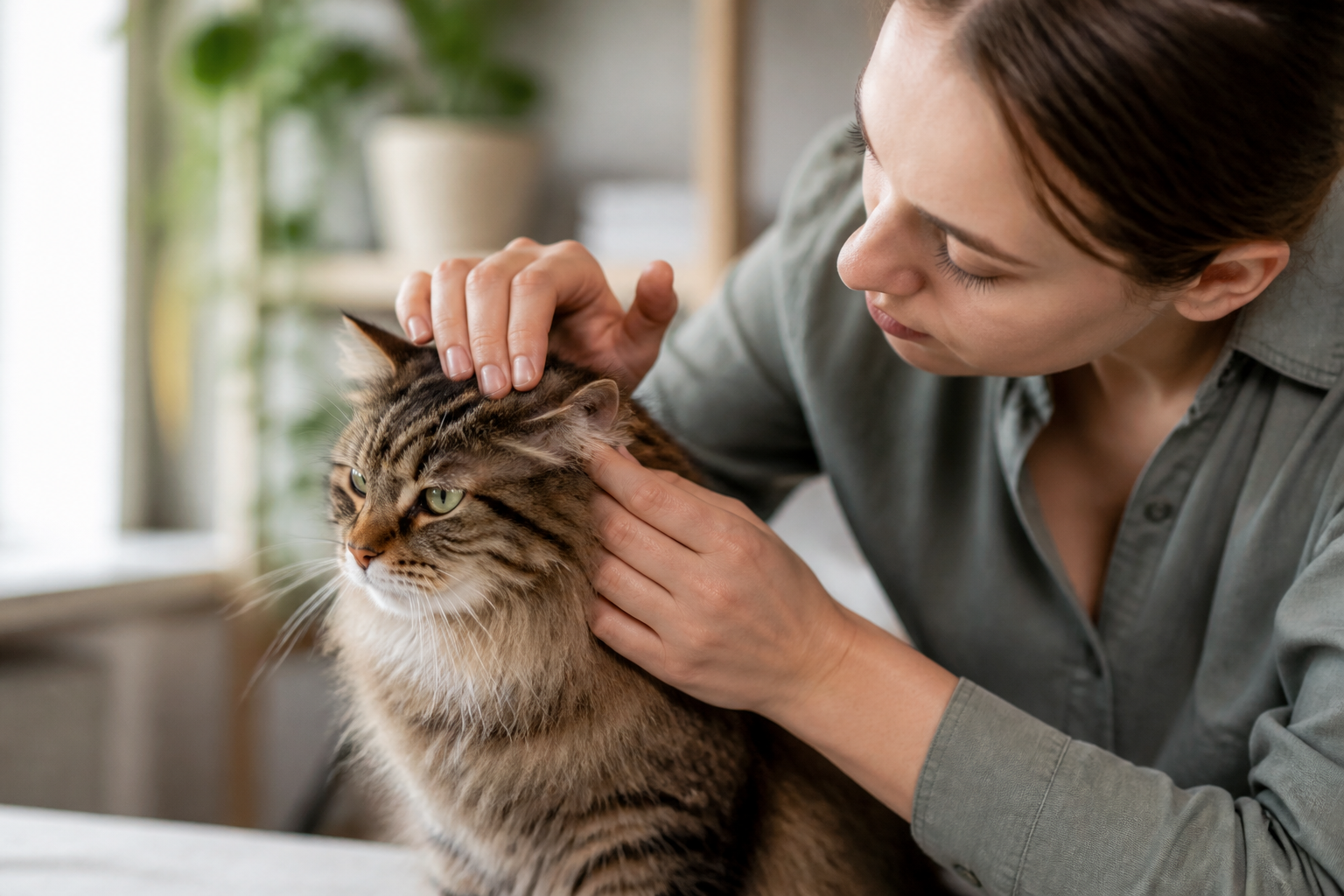
- Monitor for changes. Check your cat's skin once a week during a petting session.
- Keep up with preventatives. Use year-round flea and tick protection to guard against lice and mites.
- Maintain a healthy weight. Follow feeding guidelines and use interactive toys to keep your cat moving.
- Stay on top of vet visits. Annual exams can catch health issues like hyperthyroidism before they ruin your cat's coat.
Our warehouse in Vernon Hills is stocked with everything from specialized combs to the premium food your cat needs to stay healthy. We have been helping pet owners since 2006, and we know that a glossy, flake-free coat is one of the best signs of a happy cat.
Conclusion
Distinguishing between cat dandruff and lice is essential for your pet's comfort. Dandruff is usually a sign of dry skin or a lack of grooming, while lice are parasites that require medical treatment. By observing the shape, attachment, and movement of the white flakes, you can determine the best course of action.
- Dandruff flakes are flat and fall off easily.
- Lice nits are teardrop-shaped and stuck to the hair.
- Walking dandruff moves when you look closely.
- Health issues like arthritis or obesity often cause skin problems.
If you suspect parasites or an underlying health condition, your next step should be a visit to the veterinarian. For any prescription needs, our pet pharmacy is ready to help with a wide selection of FDA-approved medications and prescription diets. Taking care of your cat's skin today ensures they stay comfortable and purring for years to come.
FAQ
Can I catch lice from my cat?
No, you cannot catch lice from your cat. Cat lice are species-specific, meaning they only live on felines. While they may cause intense itching for your pet, they will not infest humans or other types of pets like dogs.
How can I tell if the white specks are lice or just dry skin?
The easiest way to tell is by trying to remove a speck from the hair. If it falls away easily or crumbles, it is likely dandruff. If it is firmly attached to the hair shaft and feels like it is glued on, it is most likely a nit, which is a louse egg.
Will a bath get rid of my cat's dandruff?
A bath can help remove existing flakes, but it usually does not solve the root cause. If the water is too hot or the shampoo is too harsh, a bath might actually make the skin drier. It is better to use a moisturizing cat-specific shampoo and focus on improving their diet and environment.
Why does my senior cat have so much dandruff on their lower back?
Senior cats often develop dandruff on their lower back because they have trouble reaching that area due to arthritis or general stiffness. When they cannot groom effectively, dead skin cells and natural oils build up, leading to visible flakes. Daily brushing can help manage this for them.