
 Save 15% on your 1st Autoship learn more

 Email us
 Live Chat
 FAQs
FAQs





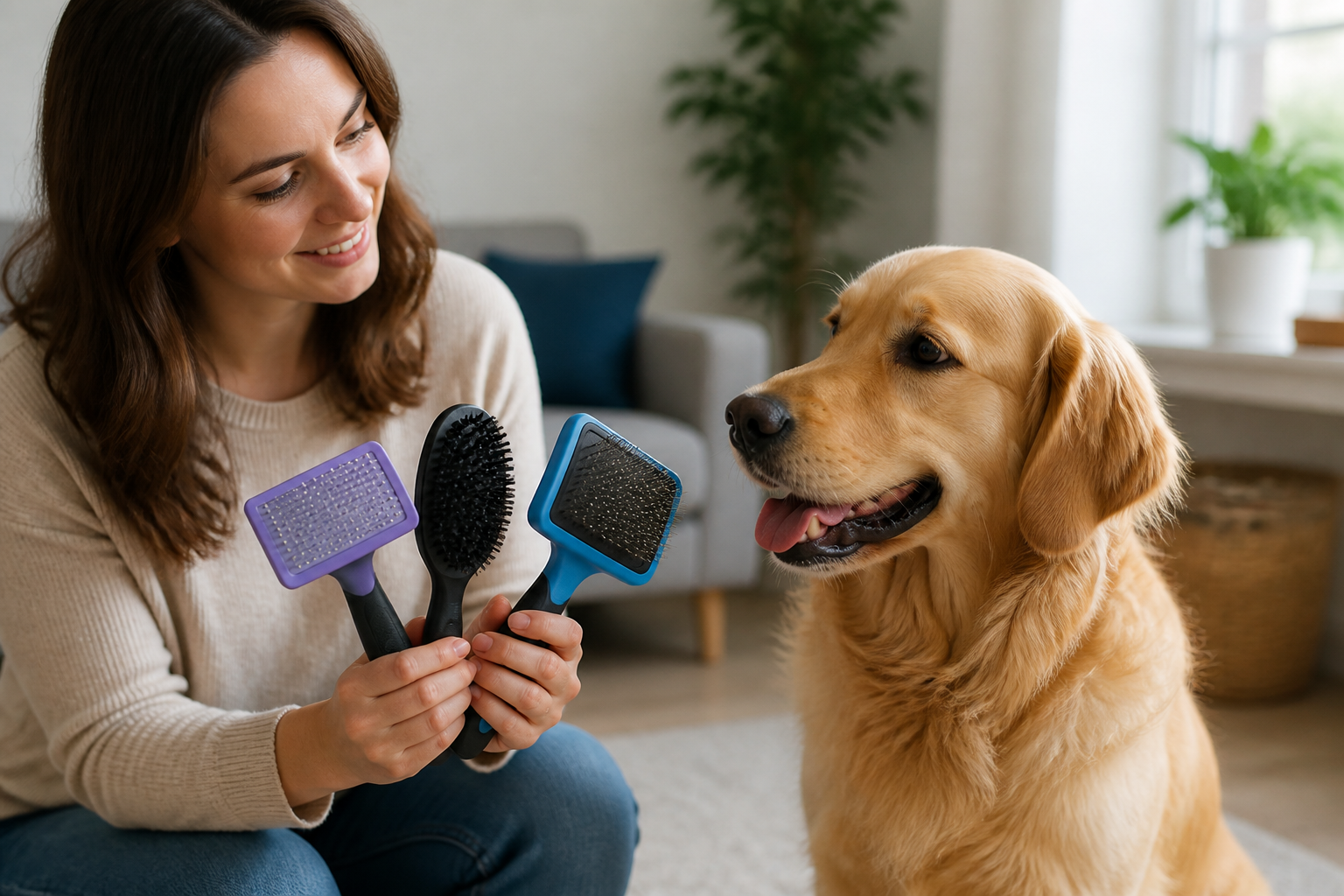
Introduction
You reach down to pet your dog and feel a solid, stubborn knot behind their ear. Or perhaps you just sat on the sofa and realized your black pants are now covered in a thick layer of white fur. These are the moments when every dog owner asks the same question: what brush should I use for my dog? At BaxterBoo, we know that the right tool does more than just make your dog look good. It prevents painful skin pulling, manages seasonal shedding, and keeps their skin healthy. Choosing a brush depends entirely on your dog’s specific coat type and their individual skin sensitivity. This guide will help you identify your dog's coat and match it with the professional-grade tools that make grooming a bonding experience rather than a chore.
Quick Answer: The best brush for your dog depends on their coat. Use a slicker brush for long or curly hair to remove mats, a bristle brush for short-haired dogs to add shine, and an undercoat rake for thick, double-coated breeds like Huskies.
Why the Right Brush Matters
Using the wrong brush is a common mistake that can lead to a few different problems. If the bristles are too stiff for a short-haired dog, you might scratch their skin. If the pins are too short for a thick-coated dog, you will only brush the top layer. This leaves the undercoat to tangle and form "pelts," which are thick mats that sit close to the skin and can cause infections or discomfort.
Regular grooming is also a health check. When you brush your dog, you are looking for lumps, bumps, or pests like fleas and ticks. It is a time to notice if their skin is red or if they have developed a new sensitivity. We carry a wide range of dog skin and coat care products to support these needs, but the brush is your first line of defense. Proper grooming stimulates the natural oils in the skin, which act as a built-in moisturizer for the fur.
Identifying Your Dog’s Coat Type
Before you grab a tool, you must know what you are working with. Most dogs fall into one of five main categories. Matching the tool to the hair is the only way to ensure you are actually removing dead fur and not just moving it around.
Short and Smooth Coats
These dogs have hair that lies close to the body. Think of Boxers, Beagles, or Great Danes. They do not get mats, but they do shed. The goal here is to remove loose hair and dander while distributing oils.
Long and Silky Coats
Breeds like Yorkies, Afghan Hounds, and Maltese have hair that is very similar to human hair. It grows continuously and can tangle easily. You need a brush that can detangle without snapping the delicate strands.
Double Coats
This is the most "high-maintenance" category for shedding. Huskies, Golden Retrievers, and German Shepherds have a tough outer coat and a soft, dense undercoat. During "blowout" season in the spring and fall, the undercoat falls out in clumps. You need a tool that reaches through the top layer to grab that loose fluff.
Curly and Wooly Coats
Poodles and Poodle-mixes (Doodles) have hair that traps shed fur instead of letting it fall to the ground. If you do not brush these dogs daily, the trapped shed hair will wrap around the living hair and create tight mats.
Wire Coats
Terriers often have a rough, wiry outer coat. These coats require a tool that can handle the coarse texture without irritating the skin underneath.
Key Takeaway: Never assume one brush fits all. A tool designed for a Husky will be far too aggressive for a Greyhound, while a Greyhound's brush will do nothing for a Husky's undercoat.
The Different Types of Dog Brushes
We stock over 500 brands at BaxterBoo, and many of them specialize in specific grooming technology. Understanding the anatomy of the brush helps you shop with confidence.
Slicker Brushes
A slicker brush has a flat or slightly curved head with rows of thin, hooked wire pins. These pins are designed to grab onto tangles and pull them apart gently. They are the "workhorse" of the grooming world.
- Best for: Curly, wire, and long-haired coats.
- Pro Tip: Use a light touch. If you press too hard, the wire pins can cause "slicker burn" on the skin.
Pin Brushes
These look very similar to the hairbrushes people use. They usually have oval heads and flexible metal pins with rounded tips. They are less aggressive than slicker brushes.
- Best for: Long, silky coats or as a finishing brush for double coats.
- Note: These are great for daily maintenance but are not the best for removing deep mats.
Bristle Brushes
These use clusters of natural or synthetic bristles. They are designed to smooth the hair and move skin oils down the hair shaft.
- Best for: Short-haired dogs or as a final shine step for any breed.
- Effect: They act like a polisher for the coat.
Undercoat Rakes and Deshedding Tools
An undercoat rake has long, sturdy metal teeth. It looks a bit like a garden tool. It is designed to dive deep into a thick coat to pull out the "dead" undercoat before it ends up on your carpet.
- Best for: Double-coated breeds like Malamutes or Shepherds.
- Warning: Only use these on dogs with an actual undercoat. Using them on single-coated dogs can damage the skin.
Rubber Curry Brushes
These are often made of soft silicone or rubber with nubby "teeth." They are fantastic for dogs who are nervous about grooming because they feel like a massage.
- Best for: Short-haired dogs and bath time.
- Benefit: They are excellent at "grabbing" short, prickly hairs that other brushes miss.
| Brush Type | Best For | Main Purpose |
|---|---|---|
| Slicker | Curly/Long Hair | Removing mats and tangles |
| Pin Brush | Silky/Long Hair | Daily fluffing and detangling |
| Bristle | Short/Smooth Hair | Adding shine and removing surface dirt |
| Rake | Double Coats | Pulling out dead undercoat |
| Rubber Curry | Short/Sensitive | Massaging skin and removing loose hair |
Specialized Tools for Specific Needs
Sometimes a standard brush isn't enough. If you are dealing with a specific issue, you might need to add a specialized tool to your kit.
Flea Combs
A flea comb has teeth that are so close together they can trap tiny parasites and their eggs. Even if your dog is on a preventive from our flea and tick collection, keeping a flea comb on hand is a great way to check for "flea dirt" after a hike.
De-matting Combs
These have sharp, serrated edges designed to cut through a mat that is too tight to brush out. Use these with extreme caution. If a mat is tight against the skin, it is often safer to see a professional groomer or use a pair of safety shears.
Grooming Gloves
If your dog runs away the moment they see a brush, grooming gloves are a great alternative. You simply wear the glove and pet your dog like normal. The rubber nubs on the palm pick up loose fur while your dog thinks they are just getting a long belly rub.
Vet Tip: If you notice your dog’s skin is red, flaky, or has an unusual odor while brushing, consult your veterinarian. These can be signs of allergies or skin infections. Our pharmacy offers FDA-approved medications and prescription diets through our partnership with Pet's Choice that can help manage these chronic skin conditions once your vet provides a prescription.
How to Brush Your Dog: A Step-by-Step Guide
Brushing should be a relaxing routine, not a wrestling match. Following a consistent process helps your dog know what to expect.
Step 1: Check for mats. / Before you start with a brush, run your fingers through the coat to find any knots. If you find a big one, hold the base of the hair near the skin so you don't pull when you work on the knot.
Step 2: Start at the front. / Work from the neck down toward the tail. Always brush in the direction the hair grows. Brushing "against the grain" can be uncomfortable for many dogs.
Step 3: Brush in sections. / For long-haired or double-coated dogs, use the "line brushing" technique. Lift the hair up and brush the layer underneath, then move up an inch and repeat. This ensures you are reaching the skin.
Step 4: Don't forget the "friction areas." / Mats usually form where things rub together: behind the ears, in the armpits, and where the collar or harness sits. Give these areas extra attention.
Step 5: Reward and praise. / Give your dog a treat halfway through and again at the end. We want them to associate the brush with something positive.
Bottom line: Consistent, sectional brushing is more effective than a quick five-minute swipe over the top of the coat.
Managing Shedding and Skin Health
While brushing is the most important external factor, coat health starts from the inside. If your dog is shedding excessively outside of the normal seasonal changes, it might be a sign of a nutritional gap. Many of the premium brands we carry, such as Zesty Paws or Honest Paws, offer supplements rich in Omega fatty acids to support skin elasticity and coat shine.
If you are dealing with a heavy shedder, consider using a deshedding tool like the FURminator once a week. These tools are designed to reach through the topcoat and remove the loose undercoat. However, do not use them every day, as they can eventually thin out the healthy topcoat if overused.
For more information about seasonal shedding and undercoats, read our guide to whether dogs shed.
For dogs with sensitive skin or allergies, the choice of brush is even more critical. A soft bristle brush or a rubber curry comb will provide the necessary stimulation without causing micro-scratches on the skin. If your dog has a prescribed medicated shampoo for allergies, using a rubber brush during the bath can help work the medicine down to the skin more effectively.
Building Your Grooming Kit at Home
You don't need a professional salon to keep your dog looking great. A basic home kit should include a few essentials tailored to your dog's breed. At our warehouse in Vernon Hills, we see owners building kits that grow with their pets.
For a new puppy, start with a soft brush regardless of their breed. This gets them used to the feeling of being handled. As they grow into their adult coat, you can transition to the more specific tools mentioned above.
A standard kit usually includes:
- The primary brush for their coat type (Slicker, Bristle, or Rake).
- A metal finishing comb to check for hidden mats.
- A set of nail clippers and styptic powder.
- Ear cleaning solution and cotton balls.
- A detangling spray to make brushing easier on long hair.
Using a detangling spray or a leave-in conditioner can significantly reduce the "pull" of the brush. This is especially helpful for Doodles and other curly-coated breeds where the hair is prone to snapping.
Key Takeaway: Investing in high-quality tools prevents "brush fatigue" for you and discomfort for your dog. Durable tools from trusted brands will last for years.
When to See a Professional
While home brushing is essential, there are times when a professional groomer is the better choice. If your dog’s coat has become "pelted" (matted to the skin), do not try to cut the mats out yourself. Dog skin is incredibly thin and easy to cut. A professional has the specialized clippers needed to remove these safely.
You should also seek professional help if your dog is extremely aggressive or fearful of the brush. A groomer can often use techniques and specialized tables to keep the dog calm and safe. However, for most dogs, a regular brushing routine at home reduces the number of professional visits they need and keeps them more comfortable between appointments.
Summary of Best Practices
To keep your dog’s coat in top shape, remember these simple rules:
- Frequency: Short-haired dogs need a weekly brush. Long-haired or double-coated dogs need a brush every two to three days.
- Direction: Always brush in the direction of hair growth.
- Dryness: Never brush a heavily matted dog while they are wet. Water can actually tighten some types of mats, making them impossible to remove.
- Technique: Use short, gentle strokes. If the brush gets stuck, stop and work the knot out with your fingers or a comb.
For additional bath and brushing guidance, see these tips for bathing your dog.
By choosing the right tool, you turn a chore into a moment of connection. Your dog will feel better, your house will be cleaner, and you will stay ahead of any potential skin or health issues.
Bottom line: Match the brush to the coat, keep the sessions short and positive, and always reward your dog for their cooperation.
FAQ
Can I use a human hairbrush on my dog?
While a human brush might work for a quick surface tidy on a long-haired dog, it is generally not recommended. Human brushes are designed for human hair density and scalp sensitivity. Dog brushes, like slicker or pin brushes, have specific angles and pin strengths designed to penetrate fur and reach the skin without causing irritation.
My dog hates being brushed. What should I do?
Start very slow. Let your dog sniff the brush and give them a treat. Brush one small area for thirty seconds, then stop and give another treat. Gradually increase the time as they become more comfortable. Using a soft rubber curry brush or a grooming mitt can also help, as these feel more like petting than traditional brushing.
How do I know if I am brushing too hard?
Check your dog’s skin frequently during the session. The skin should look pink and healthy. If you see bright red marks, scratches, or if your dog flinches away, you are likely using too much pressure or the wrong type of brush. Always use "light" strokes and let the tool do the work rather than pushing it into the coat.
How often should I clean my dog's brushes?
You should remove the hair from the bristles after every use. Once a month, it is a good idea to wash the brushes with warm water and a mild, pet-safe soap to remove skin oils and dander. Make sure the brushes are completely dry before using them again, especially those with wooden handles or cloth pads.






