
 Save 15% on your 1st Autoship learn more

 Email us
 Live Chat
 FAQs
FAQs





Introduction
You are sitting on the sofa after a long day. Your dog jumps up to give you a greeting. Suddenly, a wave of bad breath hits you. It is more than just typical dog breath. It is sharp and lingering. This is the moment most pet owners realize they need a better dental plan. At BaxterBoo, we have helped thousands of owners find the right tools for this exact problem since 2006. Dental care is not just about fresh breath. It is a vital part of your dog's overall health and longevity. This post covers the most effective tools for cleaning your dog's teeth. We will look at brushes, pastes, and alternatives for dogs who refuse to sit still. You will learn how to build a routine that actually works for your lifestyle.
Quick Answer: You can clean your dog's teeth using dog-specific toothbrushes and enzymatic toothpaste. If your dog resists brushing, use VOHC-approved dental chews, water additives, or seaweed-based powders. These alternatives provide mechanical and chemical cleaning without the stress of a toothbrush.
The Gold Standard: Dog Toothbrushes and Pastes
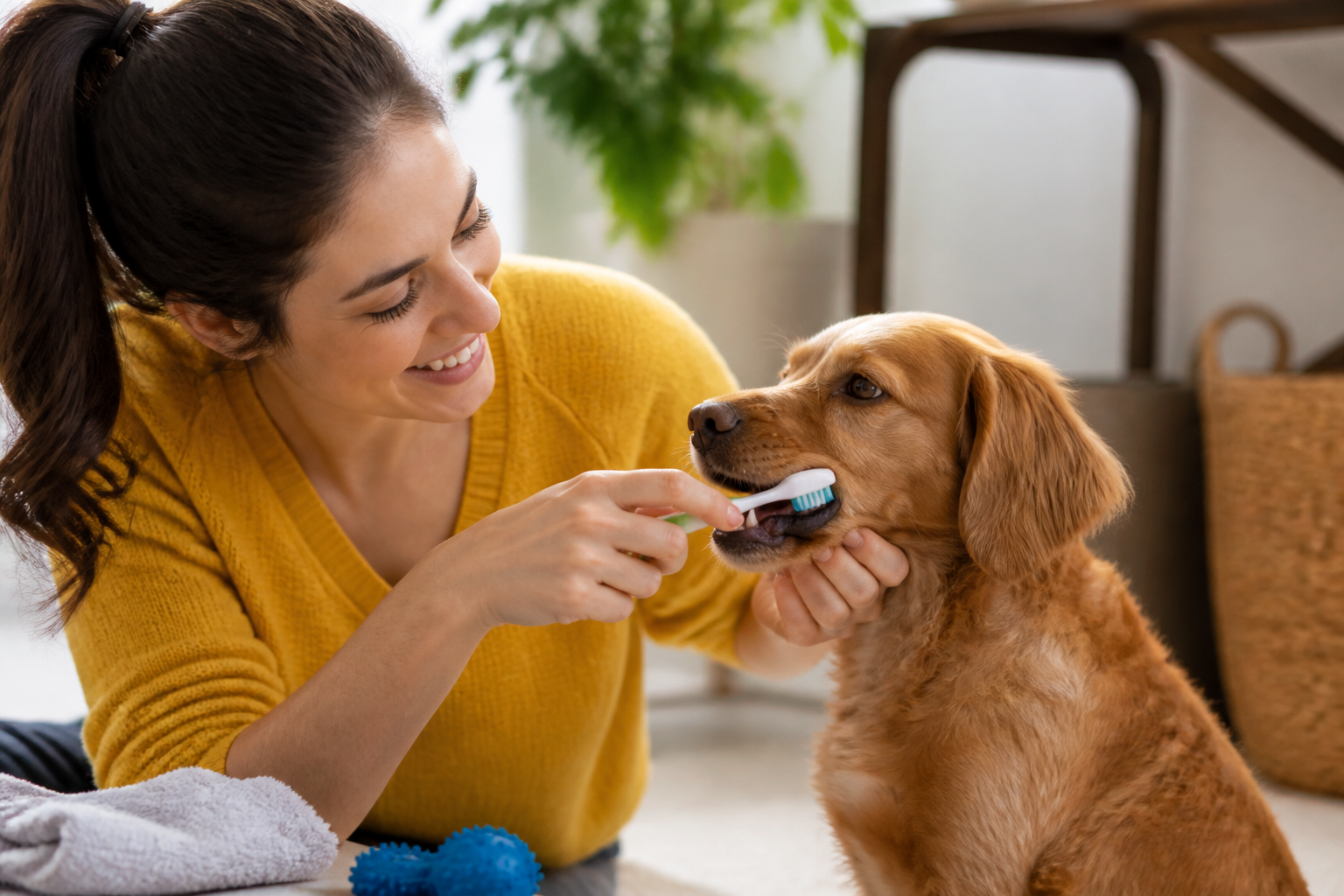
Brushing is the most effective way to remove plaque before it hardens. It provides direct mechanical action against the surfaces of the teeth. However, you cannot just grab your own toothbrush and paste from the bathroom. Human products are dangerous for dogs. You can explore our dog dental care collection for pet-specific brushes, toothpaste, and other oral-care supplies.
Why Human Toothpaste Is Dangerous
Human toothpaste often contains fluoride. This is toxic to dogs if they swallow it. Many brands also use xylitol as a sweetener. Xylitol is extremely toxic to dogs and can cause life-threatening drops in blood sugar. Dog-specific toothpaste is designed to be swallowed safely. It also comes in flavors like poultry, beef, or peanut butter. This makes the experience much more pleasant for your pet.
Choosing the Right Brush
The type of brush you choose depends on your dog's size and temperament.
- Standard Dog Toothbrushes: These have long handles and angled heads. They help you reach the back molars without putting your hand too far into the mouth.
- Finger Brushes: These are small rubber or silicone sleeves that fit over your pointer finger. They are excellent for puppies or dogs who are nervous about long objects. They give you more control and a better "feel" for the teeth.
- Dual-Headed Brushes: These have two sets of bristles. They clean the front and back of the tooth at the same time. This can cut your brushing time in half.
Key Takeaway: Always use toothpaste formulated specifically for pets. Brushing provides the best protection against tartar, but the tools must be sized correctly for your dog's mouth.
Effective Alternatives for Dogs Who Hate Brushing
Not every dog will tolerate a toothbrush. If your dog snaps their mouth shut the moment they see a brush, do not worry. You still have several effective options. Consistency is more important than the specific method you use. Our dental treats and chews offer options for dogs who prefer chewing to brushing.
Seaweed-Based Dental Powders
One of the easiest ways to clean teeth is through a supplement. Powders containing Ascophyllum nodosum are highly effective. This is a specific type of seaweed. When your dog eats it, the active compounds enter the bloodstream and the saliva. This works systemically to soften existing tartar and prevent new plaque from sticking. You simply sprinkle the recommended amount onto their food once a day.
Dental Wipes
If your dog allows you to touch their mouth but hates the texture of bristles, try dental wipes. These are pre-moistened pads treated with cleaning agents. You wrap the wipe around your finger and rub the surface of the teeth. It is less invasive than a brush but still provides mechanical cleaning.
Water Additives
Water additives are the ultimate low-effort solution. You add a small amount of the liquid to your dog's water bowl. These additives usually contain enzymes that break down the biofilm on the teeth. While they are not as powerful as brushing, they are a great supplemental tool. They are particularly helpful for multi-pet households where individual brushing is difficult.
Vet Tip: If your dog has red gums or loose teeth, do not start a new brushing routine. These are signs of pain and infection. Consult your veterinarian for a professional exam before you begin any home dental care.
For additional ideas, read our guide to the top pet dental care tips.
Mechanical Cleaning With Chews and Toys
Chewing is a natural behavior for dogs. You can use this instinct to help keep their mouth clean. The right chew acts like a squeegee against the tooth surface. It scrapes away soft plaque before it can mineralize into tartar.
Dental Chews and Treats
Many treats are specifically engineered for dental health. Look for the VOHC Seal of Acceptance on the packaging. The Veterinary Oral Health Council only gives this seal to products that have proven they reduce plaque or tartar. These treats are often porous. As the dog's tooth sinks into the treat, the edges scrub the sides of the tooth.
Safe Chew Toys
Hard rubber toys with ridges or nubs are excellent for dental health. You can even smear a little dog-safe toothpaste into the grooves of the toy. As the dog chews, they effectively brush their own teeth. Avoid extremely hard materials like elk antlers or nylon bones if your dog is an aggressive chewer. These can lead to fractured teeth, which are painful and expensive to treat.
Raw Vegetables
If you prefer a natural approach, raw carrots or apple slices can help. The firm, crunchy texture provides a mild cleaning effect. Carrots are low in calories and safe for most dogs. However, vegetables should be a supplement to a more robust dental routine, as they do not contain active cleaning enzymes.
For more chew-focused ideas, see our list of dental chews for dogs.
Understanding the VOHC Seal
When you are shopping for dental products, you will see many claims. Labels often say "veterinarian recommended" or "clinically proven." These terms are not always regulated. The most reliable indicator of quality is the VOHC Seal of Acceptance.
The VOHC is an independent organization. It does not test products itself. Instead, it requires manufacturers to submit data from clinical trials. These trials must follow strict protocols. If a product carries the seal, it means it has actually demonstrated a significant reduction in plaque or tartar. We prioritize carrying VOHC-accepted brands like Greenies and Cosequin to ensure our customers get results.
Bottom line: The VOHC seal is the gold standard for verifying that a dental product actually works.
When Home Cleaning Is Not Enough
Home care is preventative. It is designed to keep a healthy mouth healthy. It cannot fix advanced dental disease. Once plaque hardens into tartar, it is like concrete. You cannot brush it away, and no treat will dissolve it.
Signs of Periodontal Disease
You should check your dog's mouth once a week. Look for these warning signs:
- Yellow or brown buildup near the gumline
- Bleeding gums when eating or playing with toys
- Dropping food while eating
- Excessive drooling
- A "rotten" smell that does not go away
If you see these signs, your dog likely needs a professional cleaning. This is done under anesthesia. It allows the vet to clean deep under the gumline where the real damage happens. They can also take X-rays to check the health of the roots.
For more information about warning signs, read our article on bad teeth in dogs.
The Role of Our Pharmacy
Managing chronic oral health issues often requires more than just treats. Some dogs need prescription diets designed specifically for dental support. These foods have a specialized kibble structure that does not crumble immediately when bitten. Our dog pharmacy carries FDA-approved prescription diets and medications through our partnership with Pet's Choice. If your vet prescribes a dental diet from brands like Royal Canin or Farmina Vet Life, you can fulfill that order through us. We make it easy to get the professional-grade support your dog needs delivered to your door.
Step-by-Step Guide: Introducing the Toothbrush
Most dogs are not born loving the toothbrush. You have to teach them that it is a positive experience. Follow these steps to build trust.
Step 1: The Taste Test. / Put a small amount of dog toothpaste on your finger. Let your dog lick it off. Do this for several days until they get excited when they see the tube.
Step 2: The Finger Rub. / While they lick the paste, gently rub your finger along their upper gums. Keep it brief. Praise them and give a small treat afterward.
Step 3: The Brush Introduction. / Put toothpaste on the brush. Let them lick it off the bristles. Do not try to brush yet. Just let them get used to the feeling of the brush in their mouth.
Step 4: The First Brush. / Gently lift the lip. Brush one or two teeth in a circular motion. Focus on the outside surfaces where the cheek touches the teeth.
Step 5: Build Duration. / Slowly increase the number of teeth you brush. It may take weeks to reach the point where you can do the whole mouth.
Key Takeaway: Patience is the most important tool you have. It is better to brush two teeth well than to fight your dog for a full-mouth cleaning they hate.
Comparing Dental Cleaning Methods
| Method | Effort Level | Effectiveness | Best For |
|---|---|---|---|
| Brushing | High | Excellent | Cooperative dogs, maximum prevention |
| Dental Wipes | Medium | Good | Dogs sensitive to brushes |
| Dental Chews | Low | Fair/Good | Supplemental cleaning, active chewers |
| Water Additives | Very Low | Fair | Busy owners, multi-dog homes |
| Seaweed Powders | Low | Good | Dogs with existing tartar buildup |
Professional Care and Ongoing Maintenance
A good dental routine is a lifelong commitment. Just like humans, dogs benefit from a combination of daily care and professional checkups. We recommend an annual dental exam with your veterinarian. They can catch small problems before they become painful infections.
At BaxterBoo, we believe that staying consistent is easier when you have the right supplies on hand. Using a service like our Autoship programme can help you stay on track. You can schedule regular deliveries of your favorite dental chews or toothpaste. This ensures you never run out, and it often saves you money on every order. Our MVP Rewards programme also lets you earn points on every dental purchase, which you can use for future savings.
Regular dental care can add years to your dog's life. It prevents bacteria from entering the bloodstream and damaging the heart, liver, and kidneys. Whether you use a brush, a powder, or a chew, the most important step is to start today.
Bottom line: A healthy mouth is a gateway to a healthy body. Choose the method that fits your dog's personality and stick with it.
FAQ
Can I use baking soda to clean my dog's teeth?
It is not recommended to use baking soda regularly. While it is not as toxic as human toothpaste, baking soda has a high salt content. If your dog swallows too much, it can upset their stomach or cause an electrolyte imbalance. It also lacks the enzymes and flavors found in pet-specific pastes that make brushing easier.
How often do I really need to clean my dog's teeth?
Ideally, you should brush your dog's teeth every day. Plaque begins to mineralize into tartar within 24 to 48 hours. If daily brushing is not possible, aim for at least three times a week. If you use a daily supplement like a dental powder or water additive, you can be more flexible with the brushing schedule.
Do dental chews actually work?
Yes, but they are most effective as a supplement to brushing. Chews provide mechanical abrasion that helps remove soft plaque. To get the best results, look for chews that have the VOHC Seal of Acceptance. Be sure to choose the correct size for your dog so they actually chew the treat rather than swallowing it whole.
Why does my dog's breath still smell after brushing?
Persistent bad breath can indicate an issue that brushing cannot fix. It may be a sign of a deep infection, a broken tooth, or an underlying health problem like kidney disease. If your dog's breath remains foul despite a regular cleaning routine, you should schedule a visit with your veterinarian for a full exam.






