
 Save 15% on your 1st Autoship learn more

 Email us
 Live Chat
 FAQs
FAQs





Introduction
If you have ever petted your dog only to end up with a hand covered in loose fur, you know the struggle of shedding season. You might see clouds of hair drifting across your hardwood floors or stuck to your favorite sweater. Many owners reach for a standard hairbrush or a wire slicker, but these tools do not always catch the fine, loose hair hiding near the skin. This is where a curry brush becomes a vital part of your grooming kit. At BaxterBoo, we see many pet parents looking for a gentler way to manage shedding without irritating their dog's sensitive skin. This post covers exactly what a curry brush is, how it differs from other tools, and why it might be the best choice for your dog's coat. You will learn the best techniques for both wet and dry grooming.
What Exactly Is a Curry Brush?
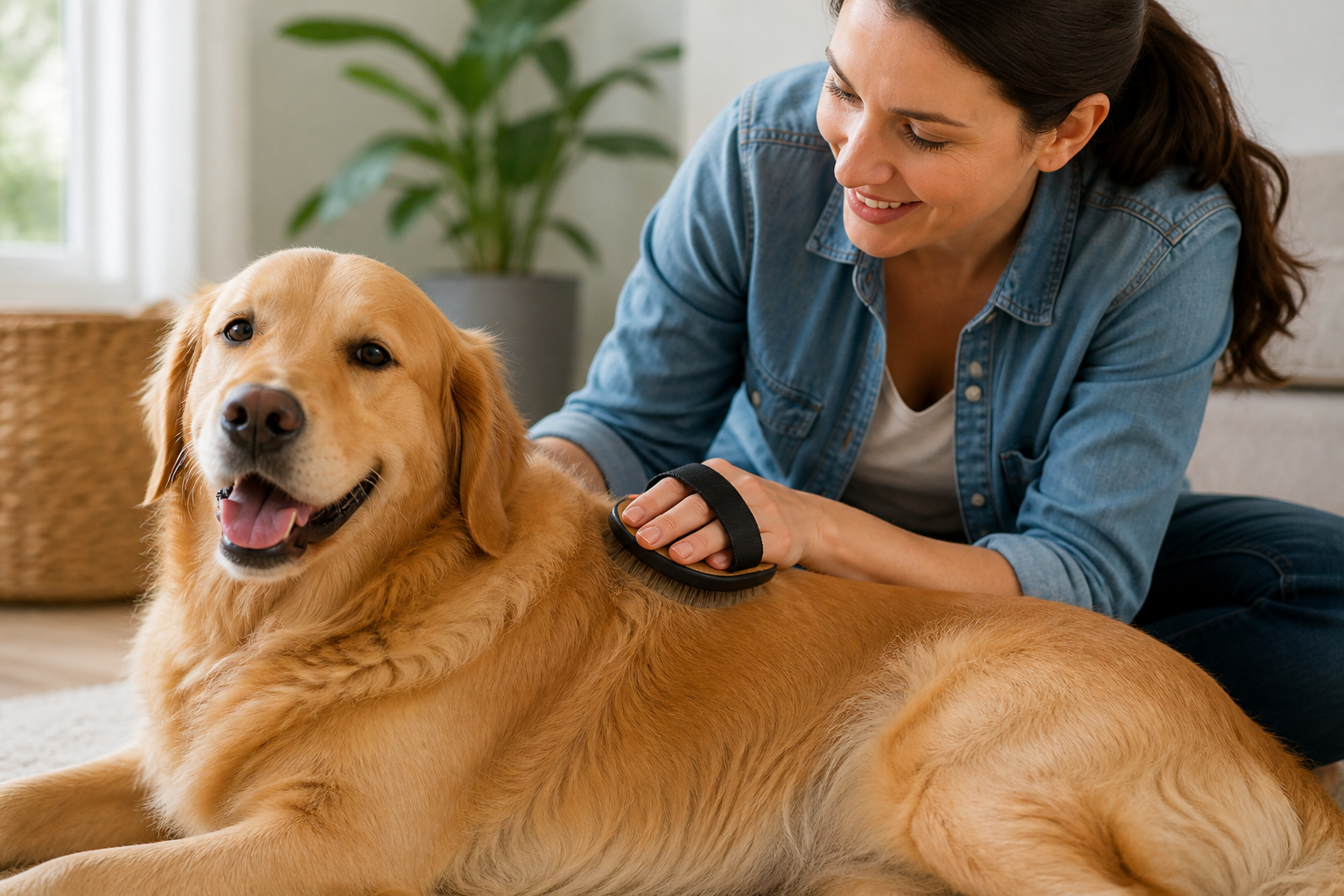
A curry brush is a grooming tool made from flexible rubber or soft silicone. Unlike traditional brushes that use long metal pins or stiff bristles, a curry brush features short, thick nubs. These nubs are molded into a solid base that often fits right into the palm of your hand. Some designs include a strap that goes over the back of your hand to give you a more secure grip.
The term actually comes from horse grooming. For centuries, riders have used metal or rubber "curry combs" to knock dirt and dried mud off a horse's thick coat. The dog version is much softer and designed for the specific needs of canine skin. Because the material is flexible, the nubs can move and bend as they glide over your dog’s body. This makes them much more comfortable than wire brushes that might scratch or poke the skin.
Quick Answer: A curry brush is a rubber or silicone grooming tool with soft nubs used to remove loose fur and massage the skin. It works by creating a light static pull on dead hair while stimulating natural skin oils.
How a Curry Brush Works
The magic of a curry brush lies in the material. Rubber and silicone naturally create a small amount of static electricity when they rub against fur. This light pull helps grab onto loose, dead hairs that are just sitting in the coat. Instead of cutting the hair or pulling at tangles, the curry brush simply lifts away what has already shed.
The short nubs also reach down through the topcoat to the skin. As you move the brush in a circular motion, the nubs gently vibrate the hair follicles. This action loosens dirt, dander, and trapped hair. It also stimulates the sebaceous glands. These glands produce the natural oils that keep a dog's coat waterproof and shiny. Regular use of a curry brush helps spread these oils evenly across the fur.
The Power of Massage
Most dogs enjoy the feeling of a curry brush more than any other grooming tool. The soft nubs provide a deep tissue massage. This can be especially helpful for older dogs with stiff joints or those who are nervous about grooming. The pressure of the rubber helps increase blood circulation to the skin surface. This can lead to a healthier coat over time.
Benefits of Using a Rubber Curry Brush
Using a rubber curry brush offers several advantages over metal-based tools. Many owners find that it simplifies their routine while keeping their pet more comfortable.
- No Scratching: There are no sharp points to hurt your dog if you press too hard.
- Easy to Clean: You can simply rinse the brush under a tap to remove hair and dirt.
- Versatile Usage: It works equally well on a dry coat or during a bath.
- Ergonomic Design: Many models, like those carried at BaxterBoo, are designed to fit comfortably in a human hand.
- Furniture Cleanup: You can even use the rubber nubs to wipe pet hair off your sofa or car seats.
Key Takeaway: Curry brushes are the safest option for dogs with sensitive skin because they use soft rubber nubs instead of sharp metal pins.
Wet Grooming and Bath Time
One of the best ways to use a curry brush is in the tub. If you have ever tried to get a thick-coated dog truly clean, you know that water often just sits on top of the fur. A curry brush helps solve this problem.
When you apply shampoo to your dog, use the curry brush to scrub it in. The nubs help the soap reach all the way down to the skin. This ensures you are cleaning away the oils and dander that cause "doggy odor." The scrubbing action also helps to lift away massive amounts of shedding hair that usually ends up clogging your drain. For more bath-time guidance, read our tips on bathing your dog.
Step 1: Wet your dog's coat thoroughly. / Use warm water to ensure the hair is saturated.
Step 2: Apply a small amount of shampoo. / Pour it directly onto the curry brush or the dog's back.
Step 3: Scrub in circular motions. / Move from the neck down toward the tail, avoiding the face.
Step 4: Rinse and repeat if necessary. / Use the brush again during the final rinse to ensure all soap is gone.
Vet Tip: If your dog has a history of skin allergies or persistent itching, consult your veterinarian. Our pet pharmacy offers a range of prescription medicated shampoos that work best when massaged in with a soft brush.
Choosing the Best Coat Type for a Curry Brush
While many dogs can benefit from a curry brush, it is more effective for some coat types than others. Because the nubs are short, they cannot always reach through very long, thick fur like that of a Pomeranian or a Malamute.
Short and Smooth Coats
This is the "gold standard" for curry brushes. Dogs like Labradors, Beagles, Boxers, and Pit Bulls have short hair that sheds constantly. A curry brush is perfect for these breeds because it grabs the short, stiff hairs that other brushes miss. It also highlights the natural shine of these smooth coats.
Curly and Wiry Coats
Breeds like Poodles or Terriers can also benefit. For curly coats, the rubber nubs help define the curls and remove surface debris without creating a "frizzy" look. For wiry coats, it helps pull out the dead outer layer of hair.
Double Coats
If you have a German Shepherd or a Golden Retriever, a curry brush is a great secondary tool. While you might need an undercoat rake for the heavy lifting, a curry brush is excellent for finishing the job. It picks up the fine "fluff" that the rake leaves behind and keeps the skin healthy. For more shedding-related grooming ideas, see our guide to managing seasonal dog shedding.
Comparing Grooming Tools
It is easy to get overwhelmed by the wall of brushes at the pet store. Understanding the differences helps you choose the right tool for your specific dog. Browse our dog brushes and combs to compare tools for different coat types.
| Tool Type | Material | Primary Use | Best For |
|---|---|---|---|
| Curry Brush | Rubber/Silicone | Deshedding & Massage | Short coats & Bathing |
| Slicker Brush | Fine Wire | Removing tangles | Long or curly hair |
| Undercoat Rake | Metal Blades/Pins | Removing dead undercoat | Double-coated breeds |
| Bristle Brush | Synthetic/Natural | Smoothing & Shine | All coat types |
| Flea Comb | Fine Metal Teeth | Removing parasites | All coat types |
Bottom line: A curry brush is a specialized tool for skin health and surface deshedding, whereas slicker brushes are for detangling long fur.
Popular Curry Brush Models
When you look at the selection we carry at BaxterBoo, you will see a few standout options. Different shapes and sizes cater to different dog sizes and owner preferences.
KONG ZoomGroom
This is one of the most recognizable curry brushes on the market. It features long, flexible rubber fingers. It is excellent for both deshedding and bath time. The large size makes it easy to hold, even when your hands are covered in soapy water. The KONG Zoom Groom Natural Rubber Dog Grooming Brush is designed for wet or dry grooming.
Safari Rubber Curry Brush
This model often features a more traditional oval shape with a hand strap. The nubs are usually a bit shorter and more densely packed. This makes it a great choice for dogs with very short, sleek fur who need a more polished look.
Magic Coat Dual-Sided Brush
Some brushes offer two different nub lengths. One side might have longer fingers for deep cleaning, while the other side has tiny nubs for sensitive areas like the legs or face. This versatility makes it a great all-in-one option for many households.
Step-by-Step: How to Use a Curry Brush Dry
Using a curry brush on a dry coat is the most common way to manage daily shedding. It is a quick process that you can do while watching television or sitting in the backyard.
Step 1: Start at the neck. / Work your way down the dog's back toward the tail.
Step 2: Use circular motions. / This helps the nubs grab hair from multiple angles.
Step 3: Move to the sides and belly. / Use lighter pressure on the sensitive skin of the stomach.
Step 4: Wipe away the loose hair. / Use a damp cloth or your hand to clear the "piles" of hair the brush has lifted.
Maintenance and Cleaning
One of the reasons we love rubber brushes at BaxterBoo is how easy they are to maintain. Unlike bristle brushes that trap dust and oils in the fibers, rubber is non-porous.
To clean your brush, simply peel the collected hair off the nubs. If the brush looks greasy or dirty, soak it in a bowl of warm water with a drop of mild dish soap. Use an old toothbrush to scrub between the nubs if necessary. Rinse it thoroughly and let it air dry. Because there are no wooden handles or metal parts, you do not have to worry about rot or rust.
- Peel hair after every use.
- Deep clean once a month.
- Inspect for cracks or missing nubs.
- Store in a dry place away from direct sunlight.
When to See a Professional
While home grooming is important, it does not replace the need for professional care or veterinary checkups. If you notice that your dog is shedding excessively in patches, or if their skin looks red and inflamed, a brush will not solve the underlying issue.
Extreme shedding can sometimes be a sign of nutritional deficiencies or hormonal imbalances. Similarly, if your dog flinches when you use even a soft rubber brush, they may have skin sensitivity that requires medical attention. Always consult your vet if you notice changes in skin texture or hair loss patterns. Our pharmacy can help with prescription diets or medications if your vet finds an underlying health condition.
Conclusion
A curry brush is a simple, affordable, and highly effective tool that every dog owner should consider. It bridges the gap between basic cleaning and therapeutic massage, making grooming a bonding experience rather than a chore. Whether you are scrubbing away dirt in the bathtub or managing a shedding Labrador in the living room, the soft rubber nubs provide results without the risk of skin irritation. At BaxterBoo, we recommend starting with a versatile model like the KONG ZoomGroom for most short to medium-haired dogs. Keeping your dog’s coat healthy is a major part of their overall wellness.
- Rubber curry brushes are safe for all skin types.
- They are excellent for both wet and dry grooming.
- Regular use promotes a shiny, healthy coat through oil distribution.
Key Takeaway: For a happier dog and a cleaner home, incorporate a curry brush into your weekly routine to tackle shedding at the source.
Check out our full range of dog grooming supplies and consider adding a curry brush to our Autoship programme to keep your grooming kit fully stocked.
FAQ
Can I use a curry brush on a long-haired dog?
You can use a curry brush on a long-haired dog, but it will not be your primary tool. It is excellent for massaging the skin and stimulating blood flow, but it will not remove deep tangles or mats. For long-haired breeds, use a curry brush as a final step after you have already used a slicker brush or comb to remove knots.
Is a curry brush better than a slicker brush?
Neither is strictly better; they serve different purposes. A slicker brush is designed to pull out tangles and smooth long fur, while a curry brush is designed to remove loose surface hair and massage the skin. If your dog has very short hair, a curry brush is usually the better and safer choice.
How often should I use a curry brush on my dog?
For most short-haired dogs, using a curry brush two to three times a week is ideal. Because the rubber nubs are so gentle, you can technically use it every day without harming the skin. Daily use during peak shedding seasons, like spring and autumn, can significantly reduce the amount of hair found around your home.
Can a curry brush help with my dog's skin allergies?
A curry brush can help by removing environmental allergens like pollen or dust that get trapped in the fur. However, it cannot cure the allergy itself. If your dog is scratching or has red skin, use the brush gently to apply medicated shampoos recommended by your vet, and check our pharmacy for support.






