
 Save 15% on your 1st Autoship learn more

 Email us
 Live Chat
 FAQs
FAQs





Introduction
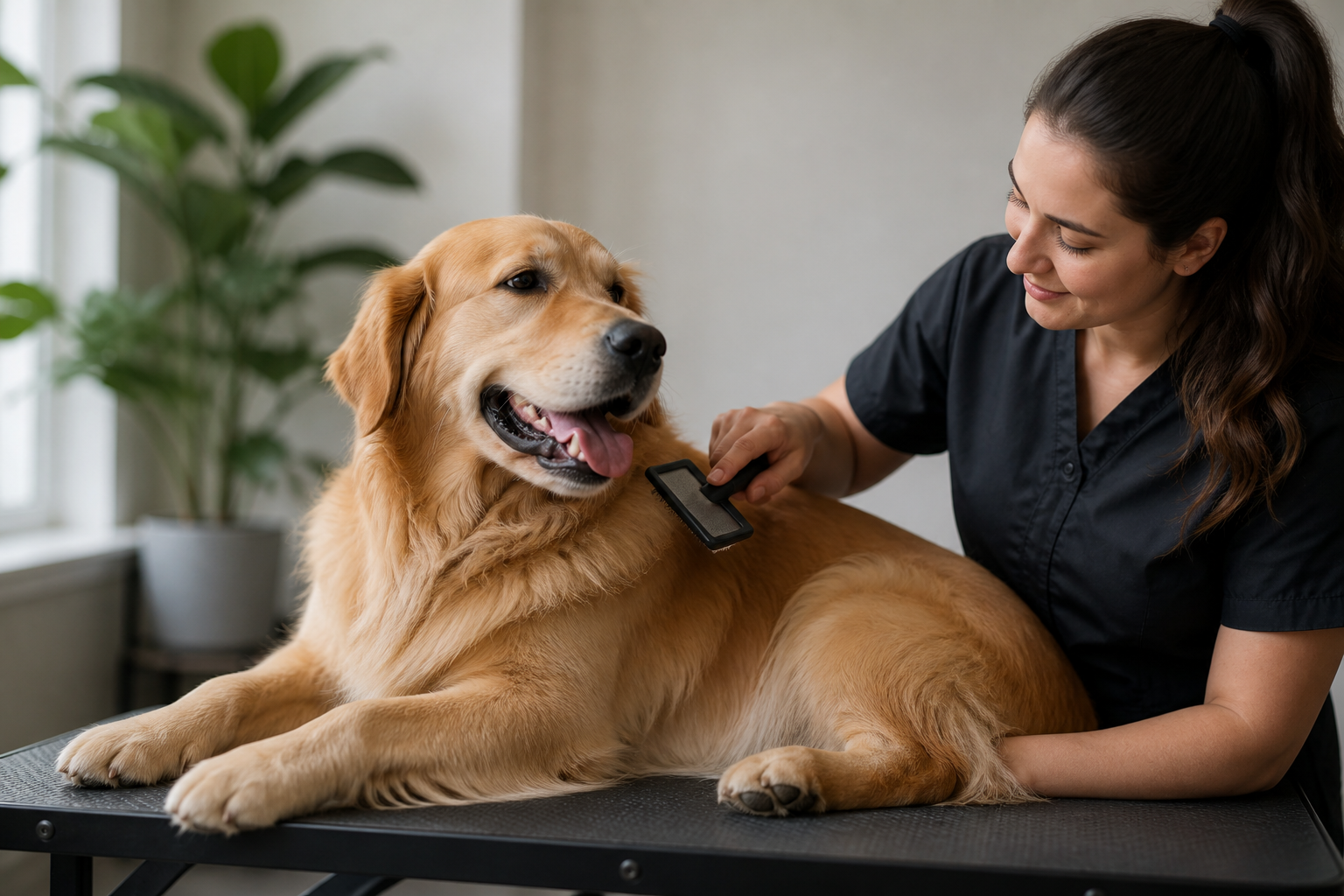
You spend twenty minutes brushing your dog until their coat looks fluffy and perfect. Then, you run your fingers through the fur and feel a hard knot right against the skin. It is a frustrating moment that most owners of long-haired or curly-coated dogs know well. This happens because standard brushing often only reaches the top layer of the fur. At BaxterBoo, we see this often with breeds like Doodles, Poodles, and Golden Retrievers. The solution is a technique professionals call line brushing. This method ensures you reach every layer of the coat from the skin to the tips. This guide will explain exactly what line brushing is and why it is the most effective way to keep your dog comfortable and mat-free.
The Basics of Line Brushing
Line brushing is a systematic way of grooming your dog. Instead of sweeping a brush over the surface of the coat, you work in small sections. You pull the hair up with one hand to reveal a line of skin. Then, you brush the hair down from that line. This ensures that no part of the hair is left untouched. It is a deep cleaning for the coat that prevents the most common grooming problems.
Most owners focus on the parts of the dog that are easy to see. They brush the back and the sides. However, mats usually form in high-friction areas. These include the armpits, behind the ears, and the base of the tail. Line brushing forces you to pay attention to these hidden spots. It turns a chore into a thorough health check for your pet.
When you do this correctly, you will see a literal line of skin. It looks much like the part in a person's hair. This is why the technique is so effective. If you cannot see the skin, you are likely only grooming the top half of the hair shaft. This leaves the hair near the skin to tangle and eventually felt into a mat.
Quick Answer: Line brushing is a grooming technique where you brush a dog's coat in small, organized sections to ensure you reach the skin. By exposing a line of skin and brushing from the root outward, you prevent mats that form deep within the fur.
Why Surface Brushing Fails
Surface brushing is what most pet owners do instinctively. You take a brush and move it over the dog's body while they sit or stand. While this makes the dog look good for a few minutes, it can actually hide serious problems. This is often called "skimming." It removes loose hair on the surface but pushes tangles down closer to the skin.
Over time, those hidden tangles tighten. They trap moisture, dirt, and dander against the skin. This can lead to "pelting," where the entire coat becomes a solid sheet of matted fur. Once a coat is pelted, it is usually impossible to brush out without causing the dog immense pain. In these cases, a professional groomer often has to shave the dog completely to provide relief.
Line brushing stops this cycle before it starts. It breaks up the small knots that form at the base of the hair. It also allows the skin to breathe. Proper airflow is essential for preventing hot spots and bacterial infections. By reaching the skin, you also distribute the natural oils that keep the coat shiny and healthy.
Essential Tools for the Job
You do not need a professional grooming salon to line brush. You do, however, need the right tools. Using the wrong brush can make the process painful for your dog or ineffective for their coat type. We recommend keeping a small kit ready for your weekly grooming sessions. You can find suitable options in our dog brushes and combs collection.
The Slicker Brush
The slicker brush is the most important tool for this job. It has a flat or slightly curved head with rows of thin wire pins. These pins are usually bent at a slight angle. This design allows the brush to grab loose hair and pull apart small tangles without scratching the skin.
The Metal Comb
A high-quality metal comb is your best friend. Many groomers call these "Greyhound combs." One side usually has wider teeth, while the other has fine teeth. You use the comb to check your work. If the comb cannot glide from the skin to the ends of the hair, there is still a knot that needs attention.
Detangling Spray or Coat Conditioner
Brushing dry hair can cause breakage and static. It can also be uncomfortable for the dog. A light mist of detangling spray helps the brush glide through the coat. It also strengthens the hair to prevent future tangles.
Tool Checklist
- A slicker brush appropriate for your dog's size
- A stainless steel finishing comb
- A spray bottle with water or a conditioning mist
- Healthy treats to keep your dog's attention
Key Takeaway: Success in line brushing depends on using a slicker brush to clear the hair and a metal comb to verify that every knot is gone.
Step-by-Step Guide to Line Brushing
Line brushing takes more time than a quick surface brush. It is best to do this when you and your dog are both relaxed. Many owners find it easiest to have the dog lie on their side. This gives you easy access to the legs and belly. For additional at-home supplies, explore our dog grooming collection.
Step 1: Prepare the Coat
Lightly mist a section of the coat with your conditioning spray. Do not soak the fur. You just want enough moisture to reduce friction. Start at the bottom of a leg or the base of the tail. It is always easier to work from the bottom up.
Step 2: Create Your Line
Use your non-brushing hand to push the hair upward. Hold it firmly so you can see a clear line of skin. This is the "line" in line brushing. You are now looking at the very base of the hair follicles.
Step 3: The Pat and Pull Method
Take your slicker brush and place it at the line of skin. Do not scrape the skin. Instead, use a "pat and pull" motion. Pat the brush down gently and pull it away from the skin through the hair. Repeat this until the brush moves through that small section of hair with no resistance.
Step 4: Check with the Comb
Once the slicker brush moves easily, take your metal comb. Insert it all the way to the skin. Gently pull it through the hair. If it catches on anything, go back to the slicker brush. Never try to force a comb through a knot. This pulls on the skin and will make your dog hate grooming.
Step 5: Move to the Next Line
Drop a small amount of hair from your non-brushing hand. This should be about a half-inch of new fur. It will lay over the section you just finished. You will see a new line of skin. Repeat the process until you have covered the entire area.
Managing Different Coat Types
Not every dog needs line brushing. If you have a Beagle or a Boxer, a simple rubber curry brush is enough. However, for certain breeds, this technique is mandatory for their health and comfort.
Doodles and Poodles
Curly coats are the most difficult to maintain. The hair does not fall out when it dies. Instead, it gets trapped in the curls. This creates mats almost instantly. For these dogs, line brushing should happen at least three times a week. Focus heavily on the ears and the "trousers" on the back legs.
Double-Coated Breeds
Huskies, Shepherds, and Golden Retrievers have a soft undercoat and a tougher outer coat. Line brushing is the best way to manage "blowing coat" during the spring and fall. It helps remove the dead undercoat before it can tangle with the guard hairs. This significantly reduces the amount of fur you find on your furniture.
Long, Silky Coats
Yorkshire Terriers and Maltese have hair that is very similar to human hair. It is prone to static and split ends. For these breeds, be very gentle with the slicker brush. Use plenty of conditioning spray to keep the hair shaft lubricated.
Vet Tip: If you discover red, irritated skin or a foul odor while brushing, consult your veterinarian. These can be signs of a skin infection or "hot spot" caused by trapped moisture under a mat. Our pharmacy at BaxterBoo offers medicated topicals and treatments if your vet identifies a condition requiring prescription care.
Common Mistakes to Avoid
Even with good intentions, it is easy to make mistakes that can hurt your dog or damage their coat. One of the most common errors is using too much pressure. Slicker brushes have wire pins. If you press them into the skin and drag them, you can cause "slicker burn." This is a painful scrape that can become infected. Always use a light touch.
Another mistake is skipping the comb check. A slicker brush can glide over the top of a deep mat without you realizing it. The comb is the only way to be 100 percent sure that the coat is clear. If you find a mat that is too tight for the slicker brush, do not keep pulling at it.
If a mat is tight against the skin, it may be time to see a professional. Trying to cut a mat out with scissors is very dangerous. Dog skin is very thin and can easily be caught in the blades. If the matting is severe, your vet can recommend the safest way to remove it without causing trauma.
Turning Grooming into a Positive Experience
Many dogs are wary of brushes. If your dog has had a painful experience with mats in the past, they might try to hide when they see the grooming kit. You can change this by making line brushing a rewarding time for them.
Start with very short sessions. Spend just two minutes brushing one leg, then give them a high-value treat. Gradually increase the time as they become more comfortable. Using the MVP Rewards program can help you save on the treats and high-quality brushes you need for these regular sessions.
Talk to your dog in a calm, soothing voice. If they seem stressed, stop and try again later. It is better to do a little bit every day than to have one long, stressful session once a month. Consistency is the secret to a happy, well-groomed dog.
The Connection Between Grooming and Health
Line brushing is not just about looks. It is a vital part of preventative health care. When you are deep in the coat, you are more likely to notice things that would otherwise go unseen. This includes fleas, ticks, or unusual lumps and bumps.
Mats are not just ugly. They are painful. As a mat tightens, it pulls the skin tight. This can restrict a dog's movement and make it painful for them to walk or lie down. In extreme cases, mats can even cut off circulation to a dog's tail or ears. By committing to a line brushing routine, you are protecting your dog from these avoidable injuries.
If your dog suffers from skin allergies, line brushing is even more important. It removes the environmental allergens like pollen and dust that get trapped in the fur. This can reduce itching and the need for frequent medicated baths. You can also explore our dog skin and coat care selection for additional grooming-related products.
Bottom line: Line brushing is a preventative health measure that keeps your dog comfortable, identifies skin issues early, and ensures their coat remains manageable.
Frequently Asked Questions
How often should I line brush my dog?
For dogs with long or curly hair, we recommend line brushing at least two to three times a week. If you keep your dog's hair very long, you may need to do it daily to prevent tiny tangles from becoming large mats. Short-haired dogs do not typically require this specific technique.
Can I line brush a dog with a wet coat?
No, you should always brush your dog before a bath, not after. Water can cause existing mats to tighten and "set," making them nearly impossible to remove. Ensure the coat is completely dry and brushed through before you start the washing process. For more bath-time guidance, read these dos and don'ts for bathing your dog.
Does line brushing hurt the dog?
When done correctly with a "pat and pull" motion, line brushing should not be painful. In fact, many dogs find the massage-like sensation very relaxing. It only becomes painful if you try to pull through a mat or use too much pressure with the wire pins against the skin.
What should I do if the comb gets stuck?
If the comb catches on a knot, stop immediately. Switch back to your slicker brush and work on that specific spot using small, gentle strokes. If the knot will not budge, apply a bit more detangling spray and try to gently tease it apart with your fingers before brushing again.
Conclusion
Line brushing is more than just a grooming tip. It is the most reliable way to ensure your dog’s coat stays healthy and their skin remains irritation-free. By taking the time to work through the fur in organized lines, you prevent the painful matting that often leads to emergency shaves at the groomer. It allows you to bond with your pet while performing a thorough health check of their skin and coat.
At BaxterBoo, we want to help you make grooming a simple part of your routine. We carry a wide range of slicker brushes, metal combs, and conditioning sprays to get you started. If you find that your dog’s skin needs extra attention due to mats or irritation, our pharmacy is available for your prescription needs. You can also save on your regular grooming supplies by signing up for Autoship, ensuring you never run out of the tools that keep your dog looking and feeling their best.
Key Takeaway: Committing to a regular line brushing routine saves you money on professional grooming and protects your dog from the pain of matted fur.
FAQ
Does line brushing work on short-haired dogs?
Line brushing is specifically designed for dogs with enough hair length to create a "part" or a "line." For short-haired breeds like Labradors or Pugs, a rubber curry brush or a de-shedding tool is much more effective. These tools focus on removing loose fur from the surface rather than untangling layers.
What is the difference between line brushing and de-shedding?
De-shedding focuses on removing dead hair from the undercoat, often using a tool with a serrated blade. Line brushing is a technique to ensure the entire length of the hair is tangle-free from the skin out. While line brushing does remove some loose hair, its primary goal is mat prevention in long or curly coats.
My dog hates being brushed; how can I start line brushing?
Start by letting your dog sniff the tools and giving them a treat. Brush for only thirty seconds at a time while feeding them something delicious, like peanut butter on a silicone mat. Focus on one small area per day rather than trying to do the whole dog at once until they are comfortable.
Can I use a human hairbrush for line brushing?
Human brushes are generally not effective for line brushing because the bristles are not designed to penetrate thick pet fur. A professional slicker brush has the specific pin density and angle needed to reach the skin and pull through tangles without breaking the hair. Investing in the right pet-specific tools will make the process much faster and easier.






