
 Save 15% on your 1st Autoship learn more

 Email us
 Live Chat
 FAQs
FAQs





Introduction
If you share your home with a Bernese Mountain Dog, you know that their beautiful tri-colored coat is both a point of pride and a full-time job. These gentle giants were bred for the Swiss Alps. Their thick double coats kept them warm in the snow, but in a modern home, that same fur ends up on your rugs, your clothes, and your furniture. Finding the right tools to manage this mountain of hair can feel overwhelming.
At BaxterBoo, we know that grooming a Berner is about more than just looking good. It is about keeping their skin healthy and preventing painful mats that can hide in that dense undercoat. This guide covers the essential tools you need to maintain a healthy coat and which brushes work best for their specific hair type. The right toolkit will make your weekly grooming sessions faster and much more effective for both you and your dog.
Quick Answer: The best brush for a Bernese Mountain Dog is a long-pinned slicker brush paired with a high-quality stainless steel comb. You also need an undercoat rake to manage heavy shedding during the spring and autumn seasons.
Understanding the Bernese Mountain Dog Double Coat
The Bernese Mountain Dog has what we call a double coat. This consists of two distinct layers that serve different purposes. The outer coat is long, weather-resistant, and slightly wavy or straight. It works to repel dirt and moisture. Underneath this sits the undercoat, which is soft, thick, and woolly. This layer provides insulation against both heat and cold.
Because they have so much hair, Berners are known as heavy shedders. They shed a moderate amount all year long. Twice a year, they experience a blowout. This is when the undercoat sheds in large clumps to make room for a new seasonal layer. If you do not brush out this dead hair, it gets trapped against the skin. This leads to tangling and eventually solid mats.
Key Takeaway: Regular brushing is non-negotiable for double-coated breeds to ensure air can reach the skin and prevent painful matting.
The Essential Slicker Brush
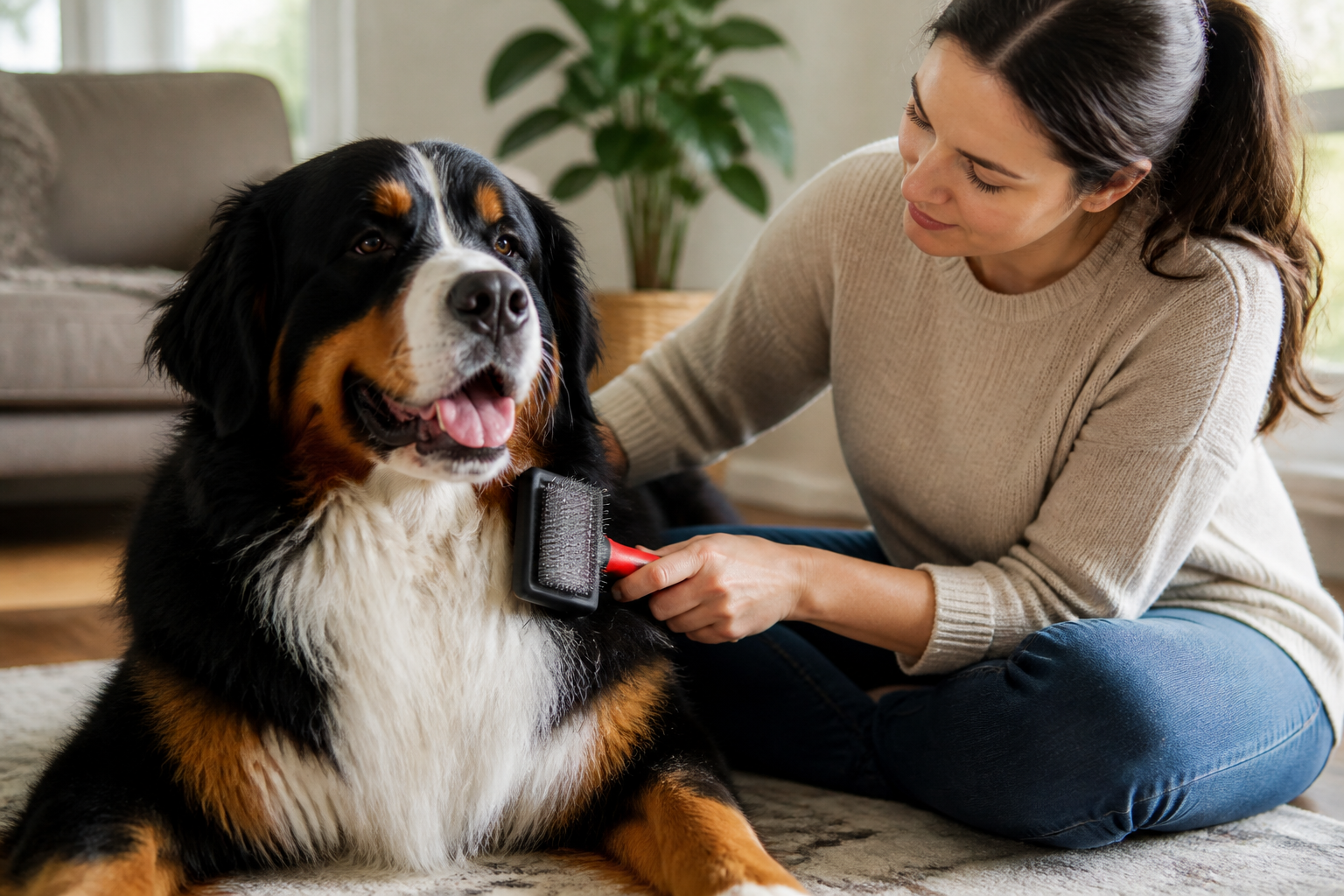
A slicker brush is often the first tool professional groomers reach for when working with a Berner. These brushes have a flat or slightly curved head with rows of thin wire pins. These pins are usually angled to help grab loose hair and debris without scratching the skin.
For a Bernese Mountain Dog, you cannot use just any slicker brush. You need one with long pins. Standard slicker brushes often have pins that are too short to reach through the thick outer layer. A long-pin slicker can penetrate deep into the coat to pull out the loose undercoat before it creates a problem. Our dog brushes and combs include tools for different coat types and grooming needs.
How to Use a Slicker Brush Effectively
When using a slicker brush, work in sections. Start at the bottom of the leg or the base of the tail and work your way up. This is often called line brushing. You pull the hair up with one hand and brush the hair downward with the other. This ensures you are reaching the skin and not just gliding over the top of the fur.
- Brush in the direction of hair growth.
- Use light pressure to avoid "brush burn" on the skin.
- Pay close attention to the friction areas like behind the ears and under the legs.
The Undercoat Rake for Heavy Shedding
When your Berner starts shedding in earnest during the spring or autumn, a slicker brush might not be enough. This is where the undercoat rake becomes your best friend. This tool looks like a small garden rake with a single or double row of metal tines.
The rake is designed to go past the guard hairs and pull out the dead, fuzzy undercoat. It is incredibly satisfying to see how much hair a rake can remove in a single session. Using this tool once or twice a week during shedding season can drastically reduce the amount of fur you find on your floors. For additional grooming guidance, read our post on dos and don'ts for bathing your dog.
Choosing the Right Rake
Look for a rake with rounded tips on the metal tines. This protects your dog's skin from scratches. Some rakes have rotating teeth, which can help prevent pulling if you hit a small knot. We carry several types of grooming rakes at BaxterBoo that are designed specifically for heavy-coated breeds.
Vet Tip: If your dog's skin looks red or irritated after using a rake, you may be using too much pressure. Always check the skin for signs of irritation, and consult your vet if you notice persistent rashes or hot spots.
The Stainless Steel Comb
A sturdy metal comb is the ultimate finishing tool. While brushes are great for removing bulk hair, a comb tells you if you missed anything. After you finish brushing a section with your slicker or rake, run a medium or coarse-toothed comb through the hair. Our long-hair shedding dog comb can help with finishing work on longer coats.
If the comb glides through from the skin to the tips, you are done with that section. If it catches, there is still a small mat or a clump of loose undercoat that needs attention. Stainless steel is the preferred material because it is durable and does not create as much static as plastic combs.
- Use the wide-toothed side for general combing.
- Use the fine-toothed side for areas with thinner hair, like the face or ears.
- Never pull hard with a comb if you hit a knot.
The Pin Brush for Daily Maintenance
For days when your dog does not need a deep de-shedding session, a pin brush is a great choice. These look similar to human hairbrushes but have longer, widely spaced metal pins. They are excellent for a quick "once over" to remove surface dirt and keep the coat looking neat.
A pin brush is also helpful when you are blow-drying your dog after a bath. It helps separate the hairs so the air can reach the undercoat faster. However, a pin brush alone is not enough to manage a Berner coat. It should be used as a supplement to your slicker and rake.
Managing Mats and Tangles
Even with the best brushing routine, mats can happen. They often form in high-friction areas like the armpits, the "pants" on the hind legs, and behind the ears. When you find a mat, do not reach for the scissors immediately. Cutting a mat out can leave a hole in the coat and carries a risk of cutting the skin.
Instead, try to break the mat apart using your fingers or the end of a comb. You can also use a detangling spray to help the hair slide apart more easily. If a mat is too tight to pull apart, a specialized coat mat and tangle splitter with shielded blades can help.
When to See a Professional
If your Berner has become severely matted down to the skin, it is safest to visit a professional groomer. Mats that are tight against the skin can cause circulation issues and skin infections. A professional can safely shave the mats away without injuring the dog.
Bottom line: Prevention is much easier than removal, so focus on the high-friction areas during every grooming session.
Bathing and Coat Health
A clean coat is easier to brush. Dirt and oils can act like glue, sticking loose hairs together and forming mats. Most Bernese Mountain Dogs benefit from a bath every four to eight weeks. Our dog grooming supplies include shampoos, conditioners, brushes, and other bathing essentials.
Before you put your dog in the tub, make sure you have brushed them thoroughly. If you get a mat wet, it will tighten up as it dries, making it nearly impossible to remove. Use a high-quality shampoo and consider a conditioner to keep the hair hydrated.
Drying the Berner Coat
Drying a Bernese Mountain Dog is a major undertaking. Their thick coats hold a lot of water. If you leave them to air dry, they may stay damp for hours or even a full day. This trapped moisture can lead to hot spots or a musty smell.
Using a high-velocity dryer is the best way to get the water out of the undercoat. It also helps blow out any remaining loose hair that your brushes might have missed.
Nutrition and the Pharmacy Connection
A healthy coat starts from the inside. If your dog is not getting the right balance of omega fatty acids and proteins, their fur may become brittle and prone to tangling. We carry several premium food brands like Acana, Orijen, and Stella and Chewy's that focus on high-quality ingredients for skin and coat health. Explore our dog food selection when reviewing your dog's daily nutrition.
Sometimes, coat issues are caused by underlying health conditions or allergies. If your Berner is constantly itching, losing hair in patches, or has very dry skin, it is important to talk to your veterinarian. They can help determine if a prescription diet or medication is necessary.
Our pharmacy at BaxterBoo offers a convenient way to manage these health needs. Through our partnership with Pet's Choice, we provide access to FDA-approved medications and prescription pet foods. Whether your dog needs allergy relief or a specific medicated shampoo, we can help you get the right products with a valid prescription from your vet. Visit our pet pharmacy for prescription options.
Creating a Grooming Routine
Consistency is the secret to a well-groomed Bernese Mountain Dog. If you wait a month between sessions, you will be faced with a massive task. If you break it down into smaller, frequent sessions, it becomes a bonding experience.
Step 1: Perform a quick daily check. / Run your hands over your dog's body to feel for burrs, ticks, or new tangles.
Step 2: Schedule a full-body brush twice a week. / Use your slicker brush and undercoat rake to thoroughly clear out the undercoat.
Step 3: Check the paws and ears weekly. / Use thinning shears to trim the hair between the paw pads to prevent them from tracking in mud and debris.
Step 4: Monthly bath and deep clean. / Give your dog a full bath and use a high-velocity dryer to ensure they are dry all the way to the skin.
Grooming Safety Tips
Grooming a large dog requires patience. Since Bernese Mountain Dogs are so big, it is important that they learn to stand or lie still for grooming from a young age.
- Keep sessions short and positive.
- Use high-value treats like those from Greenies or Zesty Paws to reward good behavior.
- Be careful around sensitive areas like the belly and the "quick" of the nails.
- If you use scissors or shears, always keep your fingers between the blade and the dog's skin.
Key Takeaway: Proper grooming is a skill that takes time to master, but it is one of the best ways to monitor your dog's overall physical health.
The BaxterBoo Difference
When you shop for grooming supplies, you want to know the products have been vetted by people who understand pets. At BaxterBoo, we handpick the brands we carry to ensure they meet our standards for quality and durability. From sturdy stainless steel combs to professional-grade slicker brushes, we have the gear you need to keep your Berner looking their best.
We also want to make it easy for you to stay stocked on the essentials. Our Autoship programme allows you to set up recurring deliveries for shampoo, treats, and food so you never run out. Plus, our MVP Rewards programme lets you earn points on every purchase, which you can use for future savings.
Conclusion
Managing a Bernese Mountain Dog's coat is a big commitment, but the right brushes make all the difference. By using a long-pin slicker brush for daily work, an undercoat rake for shedding season, and a steel comb for finishing, you can keep your dog comfortable and your home cleaner. Remember that grooming is also a vital time to check for skin issues or lumps.
- Invest in a high-quality slicker brush and metal comb.
- Brush at least twice a week to prevent mats.
- Focus on nutrition and skin health to maintain a glossy coat.
- Utilize our pharmacy and Pet's Choice partnership for any prescription grooming or health needs.
Bottom line: A well-groomed Berner is a happy, healthy Berner, and the right tools are the foundation of that care.
FAQ
How often should I brush my Bernese Mountain Dog?
You should aim to brush your Bernese Mountain Dog at least two to three times per week. During the heavy shedding seasons in the spring and autumn, daily brushing is recommended to manage the large volume of loose undercoat. Frequent sessions prevent mats from forming and reduce the amount of hair shed around your home.
Can I shave my Bernese Mountain Dog to stop shedding?
You should never shave a Bernese Mountain Dog unless it is medically necessary for surgery or due to severe matting. Their double coat acts as insulation against both heat and cold. Shaving them can damage the coat permanently, lead to skin cancer from sun exposure, and actually make it harder for the dog to stay cool.
What should I do if my Berner has a very tight mat?
If you find a tight mat, first apply a detangling spray or a small amount of conditioner to the area. Try to gently tease the hairs apart with your fingers or a single tooth of a metal comb. If the mat is too close to the skin to safely remove at home, it is best to have a professional groomer handle it to avoid cutting the dog's skin.
Why does my Bernese Mountain Dog have a "musty" smell?
A musty smell often occurs when moisture is trapped in the dense undercoat. This can happen if the dog gets wet in the rain or is not dried thoroughly after a bath. To prevent this, always use a high-velocity dryer to ensure the coat is dry all the way to the skin, and use a deodorizing spray or bath wipes between full grooming sessions.






