
 Save 15% on your 1st Autoship learn more

 Email us
 Live Chat
 FAQs
FAQs





Introduction
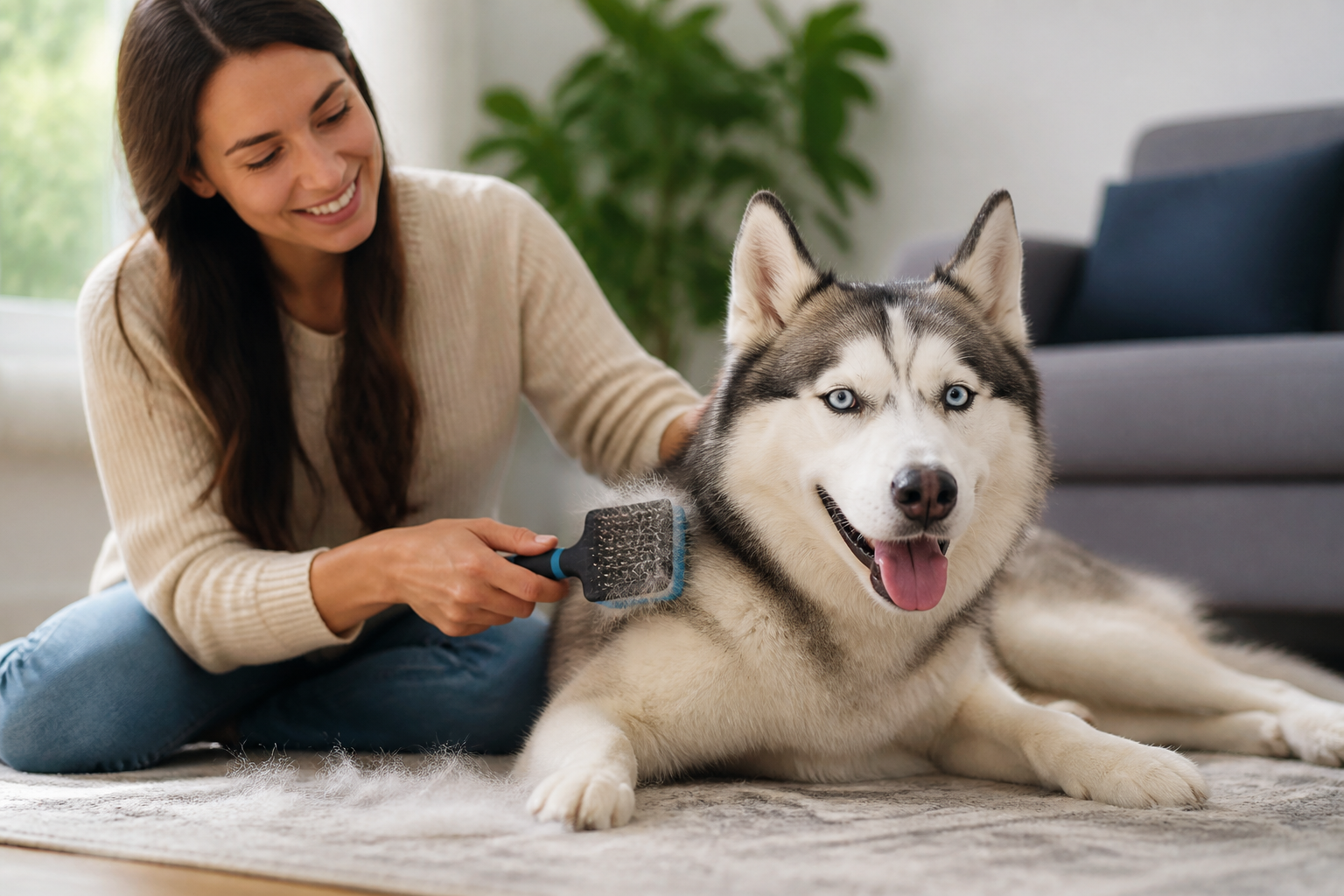
If you have ever woken up to find what looks like a second dog made of loose fur on your living room rug, you are likely a Husky owner. These beautiful dogs are famous for their thick double coats and their ability to "blow" that coat twice a year. Managing that much hair requires more than just a standard brush from the grocery store aisle. At BaxterBoo, we have spent years helping pet parents navigate the specific needs of double-coated breeds. This guide covers the essential tools you need to manage shedding and maintain skin health. We will explain why specific rakes and slickers are necessary for this breed. Choosing the right brush will save your vacuum cleaner and keep your dog much more comfortable throughout the seasons.
Understanding the Siberian Husky Double Coat
A Husky does not have a typical dog coat. They possess a sophisticated double layer designed for extreme weather. The bottom layer is a soft, dense undercoat that traps heat. The top layer consists of longer guard hairs that repel water and dirt. Because this coat is so thick, a standard pin brush often fails to reach the skin. It simply glides over the top without removing the dead hair underneath.
When a Husky sheds, it is usually the undercoat that comes out in large clumps. This is particularly intense during the spring and fall. If you do not remove this dead hair, it can become trapped against the skin. This leads to painful mats and can even cause skin infections. Proper grooming is not just about looks. It is a vital part of your dog's physical health.
Quick Answer: The best brush for a Husky is an undercoat rake with long, rounded metal teeth. You should also use a high quality slicker brush for surface smoothing and a stainless steel comb for detail work around the ears and legs.
The Undercoat Rake: Your Primary Tool
The undercoat rake is the most important tool in your grooming kit. Unlike a flat brush, a rake has a single or double row of long metal pins. These pins are designed to pass through the top layer of guard hairs. They reach deep into the thick undercoat to pull out loose fur. This tool is the only way to effectively manage a "blown" coat during shedding season.
When shopping for a rake, look for one with rounded tips. Husky skin is surprisingly sensitive despite all that fur. Sharp metal points can cause "brush burn" or scratches. A rake with rotating pins can also be helpful. The rotation helps the teeth glide through tangles instead of pulling on the hair.
How to Use a Rake Effectively
- Start at the rear of the dog and work your way forward.
- Brush in the direction of hair growth.
- Use short, gentle strokes rather than long, sweeping pulls.
- Clear the fur from the rake frequently to keep the teeth effective.
Key Takeaway: An undercoat rake is the only tool that can reach the dense "wool" layer near the skin to prevent matting and manage heavy shedding.
For more options, browse our dog brushes and combs.
The Slicker Brush for Surface Smoothing
While the rake does the heavy lifting, a slicker brush handles the finishing touches. Slicker brushes have fine, short wires packed closely together. They are excellent for removing loose hair from the topcoat and smoothing out the fur. After you have used the rake to clear the undercoat, the slicker brush helps give the coat a polished, fluffy appearance.
Slicker brushes are also useful for daily maintenance between heavy grooming sessions. If you spend five minutes a day with a slicker brush, you can significantly reduce the amount of fur that ends up on your furniture. We carry several durable options that can handle the volume of hair a Husky produces.
Vet Tip: While brushing, always part the hair to look at the skin. Huskies can be prone to hot spots or zinc-responsive dermatosis. If you notice red patches, sores, or excessive flaking, consult your veterinarian to rule out underlying health issues.
A rubber grooming brush can also be useful during routine care, such as the KONG Zoom Groom Natural Rubber Dog Grooming Brush.
Stainless Steel Combs for Detail Work
A Husky has several "high friction" areas where mats like to hide. These include the fur behind the ears, the "trousers" on the back legs, and the base of the tail. A large rake is often too bulky for these spots. A simple stainless steel comb is the best solution here.
Combs allow for precision. You can feel exactly where a small knot is starting and gently work it out before it becomes a massive mat. We recommend a "greyhound style" comb with two different tooth spacings. Use the wider side to find tangles and the finer side for a smooth finish.
Managing the "Fluffocalypse"
Twice a year, your Husky will undergo a massive shed often called a coat blowout. During this time, you might need to brush your dog every single day. This is a natural process as they transition between their winter and summer coats. If you find the shedding is causing skin irritation or if your dog is scratching excessively, it might be time to check for allergies. For another perspective on seasonal shedding, read about how double-coated dogs shed.
Our pharmacy offers FDA-approved allergy medications and skin treatments through our partnership with Pet's Choice. If your vet prescribes a specific medicated shampoo or a prescription diet to support skin health, we can help fulfill those needs. Managing the coat from the inside out with proper nutrition and medication is just as important as the brushes you use.
Bottom line: Consistent daily grooming during shedding season prevents the undercoat from compacting and causing skin distress.
Why You Should Never Shave a Husky
It is a common mistake to think that shaving a Husky will help them stay cool in the summer. This is actually dangerous. The double coat acts as insulation against both cold and heat. Shaving the coat removes their natural cooling system and exposes their pale skin to the sun.
Risks of Shaving
- Sunburn: Their skin has no natural protection against UV rays.
- Heatstroke: They lose the insulating layer that keeps their body temperature regulated.
- Permanent Coat Damage: The undercoat often grows back faster than the guard hairs. This can result in a patchy, fuzzy texture that mats even more easily.
- Insect Bites: A thick coat protects them from mosquitoes and flies.
Instead of shaving, focus on thorough brushing to remove the dead undercoat. This allows air to circulate through the guard hairs and reach the skin, which is how they naturally stay cool.
Choosing Quality Grooming Supplies
When you are dealing with a breed that requires this much maintenance, the quality of your tools matters. Cheap plastic brushes often snap under the pressure of a thick Husky coat. Look for tools with ergonomic rubber handles. Your hands will get tired during a long grooming session, and a good grip makes a big difference.
We offer a wide selection of professional grade tools from brands like Kong and Furminator. Using the right equipment makes the process faster and more enjoyable for your dog. You can also earn rewards on these essentials through the MVP Rewards program. This allows you to earn points toward future purchases of grooming sprays, treats, or even FIGO pet insurance.
Bathing and the Blow-Dry Technique
Bathing a Husky is a major project. Their coat is water-resistant, so it takes a long time to get them truly wet. Once they are clean, getting them dry is even harder. Many professional groomers use a high-velocity dryer to literally blow the water and loose undercoat out of the fur.
If you are bathing at home, make sure you use a shampoo designed for double coats. Avoid human shampoos as they can disrupt the pH balance of the skin. After the bath, use your undercoat rake while the fur is damp but not soaking wet. This is often the best time to remove large amounts of loose fur. For additional bathing guidance, see these dog bathing tips.
Step 1: Thoroughly brush the dog to remove as much loose hair as possible before getting them wet. Step 2: Use a spray nozzle to saturate the coat down to the skin. This takes time. Step 3: Apply shampoo and scrub well. Focus on the belly and legs. Step 4: Rinse until the water runs completely clear. Soap residue causes itching. Step 5: Blow dry while brushing. This helps separate the hairs and prevents mats from forming as the coat dries.
The BASS Bathing Dog Brush is another option for wet or dry grooming and blow-drying.
Nutrition for a Healthy Coat
The quality of your Husky’s fur starts with what they eat. A coat that is brittle, dry, or excessively shedding might be a sign of nutritional gaps. Look for foods rich in Omega-3 and Omega-6 fatty acids. Brands like Zesty Paws and Honest Paws offer supplements that support skin and coat health.
If your dog has persistent skin issues, your vet might recommend a prescription diet. Through our partnership with Pet's Choice, we carry prescription brands like Farmina Vet Life and Royal Canin. These diets are formulated to support the skin barrier. For your convenience, you can set these items on our Autoship programme so you never run out of the food your dog needs to look their best.
Key Takeaway: Healthy fur starts with high quality nutrition and can be supported by prescription diets if your vet identifies a specific skin condition.
Creating a Positive Grooming Routine
Huskies are known for being vocal and sometimes dramatic. If they are not used to being brushed, they might "woo woo" or try to escape. It is important to make grooming a positive experience from a young age.
- Keep sessions short at first.
- Use high-value treats like Greenies or Real Meat Co treats to reward them for staying still.
- Start with the areas they enjoy being touched, like the chest.
- Avoid pulling on tangles. Use your fingers to loosen a knot before bringing the comb through.
If your dog is particularly anxious during grooming, you might consider calming aids. We carry a variety of supplements in our Anxiety and Calming section that can help take the edge off.
Final Thoughts on Husky Brushing
Maintaining a Husky coat is a commitment of time and effort. By using an undercoat rake for the deep layers and a slicker brush for the surface, you can keep the "fluffocalypse" under control. Remember to never shave your dog and to keep an eye on their skin health beneath all that fur. Regular grooming is a great way to bond with your dog while ensuring they stay healthy and comfortable year-round.
Bottom line: Investing in a high quality undercoat rake and a consistent grooming routine is the only way to effectively manage the unique double coat of a Siberian Husky.
FAQ
How often should I brush my Husky?
During normal times of the year, brushing once or twice a week is usually sufficient to manage the coat. However, during the semi-annual blowout seasons in spring and fall, you should aim to brush your dog every day. Frequent brushing during these peaks prevents the undercoat from matting and keeps your home cleaner.
Can I use a human hairbrush on my Husky?
No, human brushes are not designed to penetrate the thick layers of a dog's double coat. The bristles are typically too short or too flexible to reach the undercoat where the shedding occurs. Using a human brush will only smooth the top layer and leave the dead fur trapped underneath.
My Husky hates being brushed, what should I do?
Start by keeping grooming sessions very short, perhaps only two or three minutes at a time. Pair the brushing with a high-value treat that they only get during grooming. Gradually increase the time as they become more comfortable, and always remain calm and patient.
Is it okay to use a de-shedding tool like a Furminator?
Yes, many Husky owners find these tools very helpful for removing the loose undercoat. However, you must use them with a light touch and avoid going over the same area too many times. These tools have a small blade that can cut the guard hairs if used too aggressively, so follow the manufacturer's instructions carefully.






