
 Save 15% on your 1st Autoship learn more

 Email us
 Live Chat
 FAQs
FAQs





Introduction
If you have ever watched a yellow or chocolate Labrador shake after a nap, you have likely seen a literal cloud of fur drift across your living room. Labradors are famous for many things. They are friendly, athletic, and always ready for a snack. They are also world-class shedders. Their thick double coats serve as perfect insulation in cold water, but they can create a constant cleaning battle for owners.
At BaxterBoo, we spend our days helping pet parents navigate the challenges of high-shedding breeds. Choosing the right tool depends on your dog's specific coat type and the time of year. This guide covers the most effective brushes for managing a Lab's dense fur and keeping their skin healthy. We will look at undercoat rakes, rubber curry brushes, and daily maintenance tools. Finding the right combination of gear will help you reclaim your carpets and keep your dog comfortable.
Quick Answer: The best overall tool for a Labrador is often a rubber curry brush for daily use combined with an undercoat rake for heavy shedding seasons. Rubber brushes like the Kong ZoomGroom remove loose hair while massaging the skin. Undercoat rakes or deshedding tools are necessary to pull out the dense, dead fur from the bottom layer during seasonal coat changes.
Understanding the Labrador Double Coat
To pick the right brush, you must understand what you are working with. Labradors have a "double coat." This means they have two distinct layers of fur that serve different purposes. The top layer is known as the guard hair. It is slightly coarse and oily. This oil helps repel water, which is why a Lab can emerge from a lake and be relatively dry after one good shake.
The bottom layer is the undercoat. It is soft, dense, and downy. This layer acts like a thermal base layer. It keeps the dog warm in winter and insulated from heat in summer. When people talk about "Labs shedding," they are usually talking about this undercoat. This layer dies and falls out constantly. During the spring and fall, Labs "blow" their coats. This is a period of intense shedding where the entire undercoat seems to fall out at once.
Why Brushing Matters for Skin Health
Brushing is about more than just house cleaning. It is a vital part of your dog's health. Labradors are prone to skin issues and allergies. Regular brushing distributes the natural oils produced by the skin. This keeps the coat shiny and prevents the skin from becoming too dry or flaky.
It also gives you a chance to check for lumps, bumps, or parasites. If your Lab spends a lot of time outdoors, they can easily pick up ticks or develop small hot spots. A daily brushing session ensures you spot these issues early.
Vet Tip: If you notice your Labrador is scratching excessively or has bald patches, consult your veterinarian. While Labs shed a lot, sudden hair loss or red skin can indicate allergies, flea infestations, or thyroid issues. Our pharmacy at BaxterBoo offers prescription treatments and medicated shampoos through our partnership with Pet's Choice if your vet recommends a specific clinical solution.
The Rubber Curry Brush: The Daily Essential
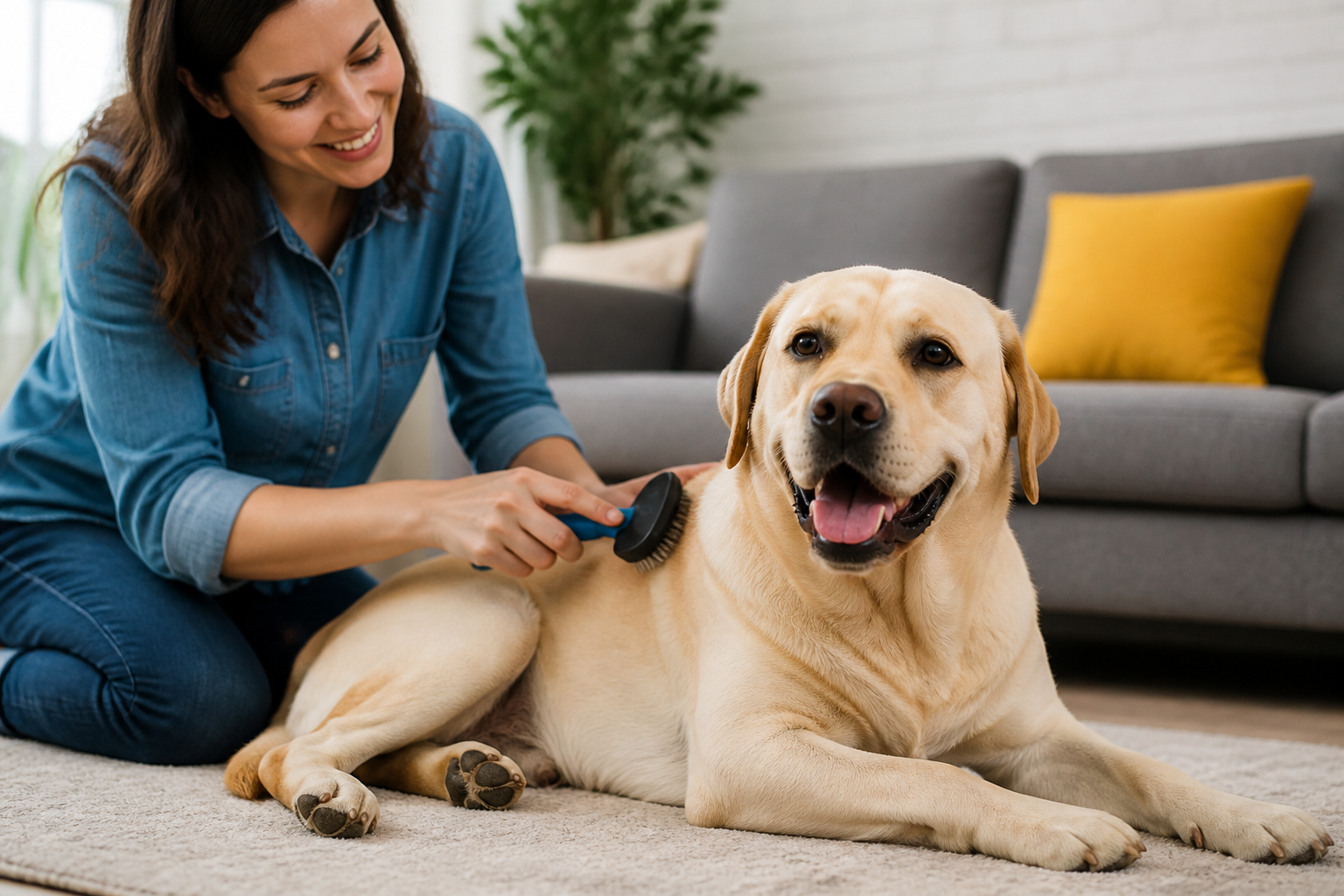
Many owners think they need a sharp metal tool for a short-haired dog. For a Labrador, a rubber curry brush is actually one of the most effective daily tools. These brushes are made of soft, flexible rubber with thick "fingers" or nubs.
The rubber creates a light static charge that attracts loose hair like a magnet. Because the nubs are soft, you can use this brush every day without worrying about irritating the skin. It is also an excellent tool for dogs that are nervous about grooming. Most Labs enjoy the sensation because it feels like a firm massage.
How to Use a Rubber Brush Effectively
Using a rubber brush is different than using a traditional bristled brush. You should use firm, circular motions against the direction of hair growth first. This loosens the dead fur from the undercoat. Then, brush in long strokes in the direction of growth to sweep the hair away.
- Use it during bath time to work shampoo deep into the coat.
- Use it dry for a five-minute daily "de-fuzzing" session.
- Focus on the areas around the neck and the base of the tail where fur is densest.
For additional grooming ideas, see these tips on how to groom a dog with curly hair.
Key Takeaway: A rubber curry brush is the best choice for year-round maintenance and skin stimulation. It is gentle enough for daily use and highly effective at removing surface-level loose hair before it hits your floor.
The Undercoat Rake for Heavy Shedding
When the seasons change, the rubber brush might not be enough. This is when you need an undercoat rake. These tools have a single or double row of long, metal tines. They are designed to pass through the topcoat without cutting it. Instead, they reach deep into the undercoat to pull out dead fur that is trapped underneath.
An undercoat rake is the secret to surviving "shedding season." It can remove more hair in ten minutes than a standard brush can in an hour. You will be amazed at how much fur a Lab can hide in their coat.
Selecting the Right Rake
Look for a rake with "spinning" or "rotating" teeth. These help the tool glide through the coat without pulling on the dog's skin. Since Labs have relatively short hair compared to a Husky, you do not need the longest tines available. A medium-length rake works perfectly.
Bottom line: An undercoat rake is a seasonal necessity that prevents the dense undercoat from matting or causing skin irritation during major shedding periods.
Slicker Brushes and Their Place in Lab Grooming
Slicker brushes have fine, short wires located close together on a flat or curved base. While these are often associated with long-haired breeds, they are very useful for Labradors with particularly thick coats. They are excellent at grabbing "tumbleweed" fur that is sitting on top of the coat.
Be careful when using a slicker brush on a Lab. Because their fur is relatively short, it is easy to accidentally scrape the skin with the metal pins. Always use a light touch. Look for slicker brushes that have tiny protective balls on the ends of the pins to prevent "brush burn."
You can compare different options in our dog brushes, combs, and clippers collection.
The Professional Deshedding Tool
Brands like Furminator make specialized deshedding tools that many Lab owners swear by. These tools have a very fine, comb-like edge that reaches through the topcoat. They are designed to grab and remove the loose, dead undercoat very efficiently.
These tools are incredibly effective, but they must be used with caution. If you press too hard or stay in one spot for too long, you can damage the topcoat or irritate the skin. They are best used once every week or two during the height of shedding season, rather than as a daily brush.
Tips for Using Deshedding Tools
- Ensure the coat is completely dry before starting.
- Use very light pressure; let the tool do the work.
- Avoid sensitive areas like the belly, ears, and paws.
- Limit sessions to 10 or 15 minutes to prevent skin irritation.
For another perspective on seasonal coat changes, read how regular grooming helps manage heavy shedding.
How to Set Up a Grooming Routine
Consistency is the most important factor in managing Labrador shedding. If you only brush your dog once a month, you will be overwhelmed by the amount of fur. A frequent, short routine is much easier for both you and your dog.
Step 1: Start with a rubber curry brush. / Spend three to five minutes using circular motions to loosen the undercoat. This also helps the dog relax and enjoy the session.
Step 2: Follow up with an undercoat rake. / Do this once or twice a week. Focus on the "trousers" (the back of the thighs) and the thick fur around the neck.
Step 3: Finish with a bristle brush or a damp cloth. / This removes any remaining surface dust and helps lay the hair flat. It also brings out the natural shine in their coat.
Step 4: Check the ears and paws. / Labs are prone to ear infections because of their floppy ears. While you have the brush out, take a quick peek inside the ears for redness or a bad smell.
Key Takeaway: A multi-tool approach is better than relying on a single brush. Use rubber for daily care and a rake for deep shedding to keep the coat in top condition.
Bathing Your Lab to Reduce Shedding
Bathing is a powerful tool in your grooming arsenal. A warm bath helps loosen the undercoat so it can be brushed out more easily. However, you should not bathe a Lab too frequently. Over-bathing can strip the natural oils from their skin, leading to dryness and more shedding.
Once every four to six weeks is usually plenty for most Labradors. When you do bathe them, use a deshedding shampoo or a high-quality moisturizing formula. We carry a wide selection of premium shampoos from brands like Earthbath and TropiClean that are formulated specifically for dogs with thick double coats.
Explore our dog grooming products for brushes, shampoos, conditioners, and bath supplies.
The "Blow Dry" Trick
If your Lab is not afraid of the noise, using a high-velocity dryer after a bath is a "pro secret" for shedding management. These dryers do not use high heat. Instead, they use a powerful stream of air to literally "blow" the loose undercoat out of the skin. It is best to do this outside, as it will create a massive cloud of fur.
For more bath-time guidance, read these dos and don'ts for bathing your dog.
Managing Lab Skin and Coat Health from Within
No matter how much you brush, a healthy coat starts on the inside. If a Lab is missing key nutrients, their skin can become dry and their hair follicles weak. This leads to excessive, year-round shedding.
Look for foods and supplements rich in Omega-3 and Omega-6 fatty acids. Ingredients like salmon oil or flaxseed are excellent for skin health. Many of the premium brands we carry, such as Zesty Paws or Stella and Chewy's, offer supplements designed to support a shiny, healthy coat.
Browse our skin and coat health selection when looking for grooming-related supplements and care products.
If your Lab has persistent skin issues, your vet might recommend a prescription diet. Our pharmacy and Pet's Choice partnership make it easy to have these specialized foods delivered right to your door via our Autoship program. This ensures you never run out of the nutrition your dog needs to look their best.
You can review the benefits and ordering details of our Autoship programme for repeat-purchase essentials.
Common Grooming Mistakes to Avoid
Even the most well-meaning owners can make mistakes when grooming a Labrador. One common error is shaving the dog in the summer. Many owners think they are helping the dog stay cool. In reality, shaving a double-coated dog ruins their natural insulation system.
The undercoat actually protects the dog from the heat. Shaving also exposes their pale skin to the sun, which can lead to sunburn. Furthermore, the coat may never grow back the same way. It often comes back patchier or more prone to matting.
Another mistake is using human hairbrushes. Human brushes are not designed to penetrate the dense double coat of a dog. They usually just slide over the top, leaving the dead undercoat to sit against the skin and cause itching. Stick to tools designed for pets.
Next Steps for Your Lab’s Grooming Kit
Building a great grooming kit does not have to be expensive. You can start with a basic rubber brush and a quality rake. These two items alone will handle 90 percent of your Lab's shedding needs.
At BaxterBoo, we have been helping pet owners since 2006. We handpick every grooming tool we sell to ensure it meets our standards for quality and comfort. Whether you visit our warehouse in Vernon Hills or order online, we want you to feel confident in the gear you choose.
If you are just starting your grooming journey, consider joining our MVP Rewards program. You can earn points on every brush, shampoo, and treat you buy. This makes it easier to keep your Lab looking like a show dog without breaking the bank.
Conclusion
Managing a Labrador's coat is a labor of love. While the shedding can feel constant, the right tools make a world of difference. A daily session with a rubber curry brush keeps the coat shiny and the house cleaner. When the heavy shedding seasons arrive, an undercoat rake becomes your best friend.
Remember that grooming is about health as much as appearance. Consistent brushing prevents skin irritation and lets you bond with your dog. If you ever notice unusual skin changes, always check with your vet for professional guidance.
- Invest in a rubber curry brush for daily massage and hair removal.
- Keep an undercoat rake for seasonal "coat blowing" periods.
- Maintain skin health with quality nutrition and supplements.
- Use a deshedding shampoo every few weeks to loosen dead fur.
Bottom line: The best brush for a Lab is the one you will use consistently. Start with a rubber curry brush and add a rake for the heavy shedding months to keep your home fur-free and your dog happy.
FAQ
How often should I brush my Labrador?
You should aim to brush your Labrador at least two to three times a week. During the heavy shedding seasons of spring and fall, daily brushing is recommended to keep up with the volume of falling fur. Short, frequent sessions are usually more effective than one long session per month.
Will a slicker brush work for a Lab?
Yes, a slicker brush can be very effective for removing surface debris and loose hair. However, because Labradors have shorter fur than some other breeds, you must be careful not to press too hard against the skin. Look for a slicker brush with coated tips to prevent any discomfort.
Can I use a deshedding tool like the Furminator every day?
It is generally not recommended to use a heavy-duty deshedding tool every day. These tools have fine edges that can eventually irritate the skin or damage the topcoat if overused. Using them once a week or once every two weeks is usually sufficient, while using a rubber brush for daily maintenance.
Why is my Lab shedding so much even with regular brushing?
Labradors are natural heavy shedders due to their double coat. If the shedding seems excessive even with frequent grooming, it could be related to diet, stress, or an underlying health issue. Ensure they are on a high-quality food with plenty of Omega fatty acids, and consult your vet if you see skin redness or bald spots.






