
 Save 15% on your 1st Autoship learn more

 Email us
 Live Chat
 FAQs
FAQs





Introduction
You have just returned from a long walk, and your dog looks more like a walking burr bush than a pet. For owners of long-haired breeds, this is a daily reality. Those beautiful, flowing locks are magnets for tangles, twigs, and loose undercoat. At BaxterBoo, we know that managing a long coat can feel like a full-time job without the right equipment. Choosing the wrong tool can lead to painful pulling, skin irritation, or even missed mats that eventually require a trip to the groomer for a total shave. This guide covers the specific tools and techniques needed to maintain long fur effectively. Finding the best dog brush for long hair depends entirely on your dog's coat texture and the presence of a thick undercoat.
Understanding the Long-Haired Coat
Not all long hair is created equal. Before you select a brush, you must understand what is happening beneath the surface of your dog's fur. Some long-haired dogs have a single coat, while others have a dense undercoat that sheds seasonally.
Silky Single Coats
Breeds like the Maltese or Yorkie have hair that is very similar to human hair. It grows continuously and does not have a thick, fuzzy layer underneath. These coats are prone to tangles but do not require heavy de-shedding tools.
Double Coats
Golden Retrievers, Collies, and Newfoundlands have a long outer coat and a soft, dense undercoat. This undercoat is what usually causes the most trouble. When it sheds, it gets trapped by the long outer guard hairs. If it is not brushed out, it forms thick mats close to the skin. For more on seasonal shedding and double coats, read our guide to Golden Retriever shedding and coat care.
Curly or Woolly Coats
Poodles and Doodles have hair that keeps growing and traps shed fur within the curls. This coat type is the most demanding. It requires frequent brushing to prevent the entire coat from felting into one solid mass. Our guide to grooming curly-haired dogs covers brushing, combing, and mat prevention for these coats.
Quick Answer: The best brush for most long-haired dogs is a high-quality slicker brush combined with a stainless steel greyhound comb. The slicker brush breaks up tangles and removes loose hair, while the comb ensures you have reached all the way to the skin.
The Slicker Brush: The Primary Tool
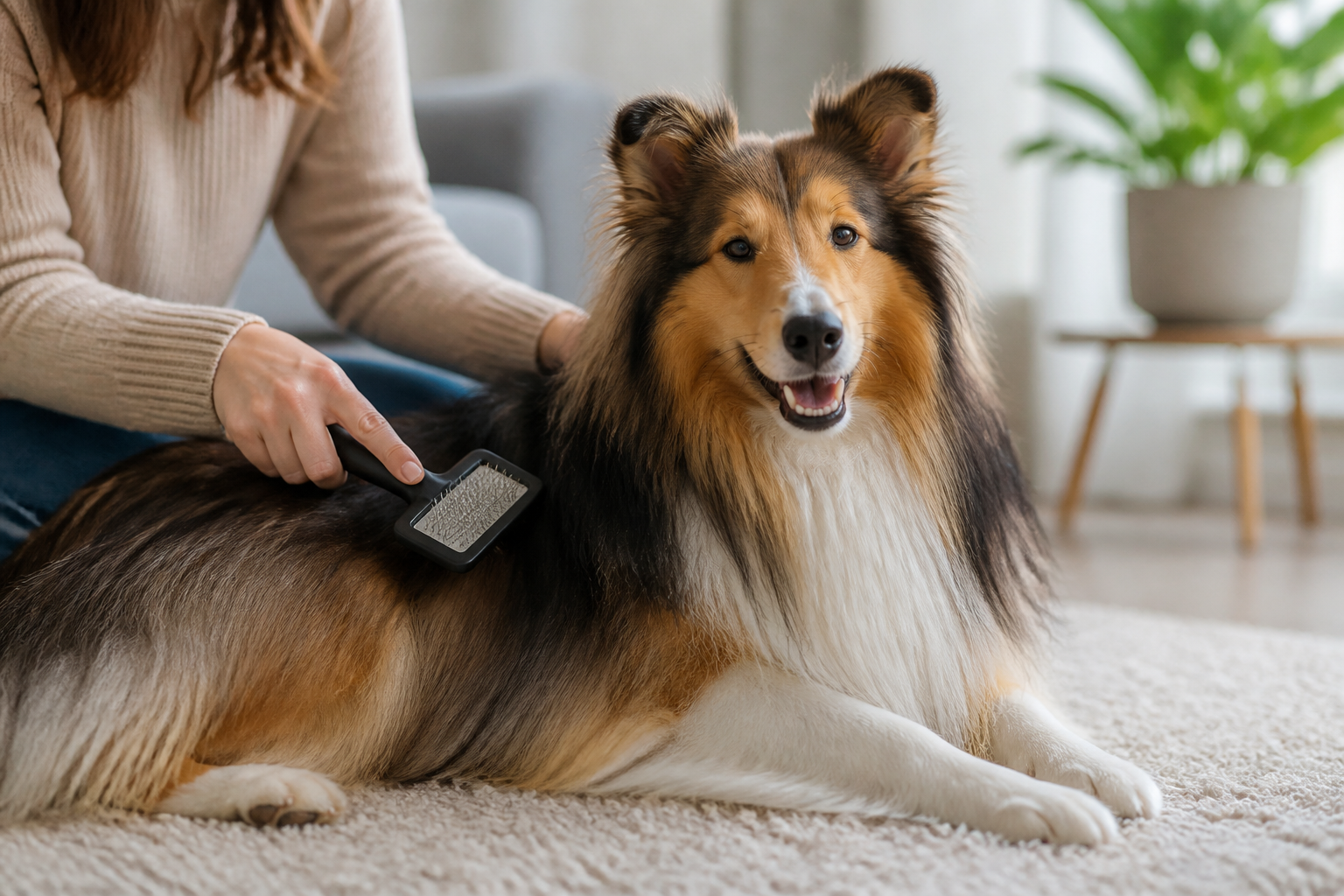
The slicker brush is the workhorse of the grooming world. It features a flat or slightly curved head with rows of thin, hooked wire pins. These pins are designed to grab onto loose hair and pull it away from the coat.
For long-haired dogs, the slicker brush is essential because it can penetrate deep into the fur. You should look for a brush with pins that are long enough to reach the base of the hair. If the pins are too short, you will only be brushing the top layer. This leaves the undercoat to mat and tangle. You can compare options in our dog brushes and combs collection.
Choosing Firmness
Slicker brushes come in different levels of firmness. A soft slicker is better for dogs with sensitive skin or finer hair. A firm slicker is necessary for dense, thick coats where you need more tension to pull through the fur.
The Self-Cleaning Feature
Many modern slicker brushes include a button that retracts the pins. This allows the collected fur to fall off easily. While this is convenient, ensure the mechanism does not make the brush too heavy or clunky for long sessions.
Key Takeaway: A slicker brush should be used with a light touch. The goal is to move the pins through the hair, not to scrape the skin.
The Role of the Pin Brush
A pin brush looks very similar to a standard human hairbrush. It has straight pins, often with rounded tips, set into a flexible rubber base. While it is not as effective at removing mats as a slicker brush, it has a specific place in a long-hair grooming routine.
When to Use a Pin Brush
This brush is ideal for the final stages of grooming. It helps to smooth the coat and distribute natural oils. For dogs with very fine, silky hair, a pin brush is often gentler and less likely to cause breakage than a slicker brush.
Quality Matters
Look for a pin brush where the pins are polished and firmly set. Cheaper versions often have pins that push back into the rubber base or have sharp edges that can scratch the skin. Brands like Chris Christensen are often cited by professionals for their high-quality pin construction. For another grooming-focused option, explore our selection of BASS Brushes products.
Undercoat Rakes and De-Shedding Tools
If your long-haired dog is a heavy shedder, a standard brush might not be enough. This is where undercoat rakes and tools like the Furminator come into play.
Undercoat Rakes
An undercoat rake has one or two rows of blunt metal tines. It is designed to go deep into the coat to pull out the "dead" undercoat before it can cause mats. It is a vital tool for breeds like the Siberian Husky or Great Pyrenees.
De-Shedding Blades
Tools like the Furminator use a fine-toothed blade to reach through the topcoat and grab loose undercoat. These are highly effective but must be used with caution. If you use too much pressure or stay in one spot too long, you can cause "brush burn" or accidentally cut the healthy guard hairs.
How to Use De-Shedding Tools Safely:
- Use only on a completely dry coat.
- Follow the direction of hair growth.
- Use long, gentle strokes.
- Avoid sensitive areas like the belly, ears, and tail.
Vet Tip: If you notice your dog is losing hair in patches or has very dry, flaky skin during grooming, consult your veterinarian. These can be signs of underlying health issues or allergies rather than normal shedding.
The Stainless Steel Comb: The Final Check
No grooming session for a long-haired dog is complete without a comb. Often called a "greyhound comb," these have two different spacing widths for the teeth.
You should use the comb after you think you are finished brushing. Run the comb through the fur from the skin outward. If the comb catches on a knot, you know there is a mat starting to form. Brushes often glide over the top of mats, but a comb will always find them. For additional seasonal coat-care guidance, see our article about Australian Shepherd shedding.
Why the Skin-Level Check Matters
Many owners are surprised when their vet or groomer tells them their dog is matted. This usually happens because the owner only brushed the top layer of fur. The hair feels soft on top, but a "carpet" of mats is forming against the skin. This can trap moisture and lead to painful skin infections.
Managing Mats and Tangles
Even with regular brushing, mats can happen. Dealing with them early is the key to avoiding a painful experience for your dog.
The Line Brushing Technique
Line brushing is the most effective way to ensure a long coat is tangle-free. This technique involves working in small sections.
Step 1: Lift the hair upward. / Hold the bulk of the coat up with one hand so you can see the skin. Step 2: Brush a small line of hair downward. / Use your slicker brush to brush a small amount of hair down from the section you are holding. Step 3: Repeat the process. / Move up the dog's body, section by section, until the entire coat has been brushed from the skin out.
Using a Mat Breaker
For stubborn knots, a mat breaker or de-matting tool can help. These tools have sharp, curved blades designed to saw through the knot. Always place your fingers between the tool and the dog's skin to prevent accidental cuts.
Skin Health and the BaxterBoo Pharmacy
Grooming is the best time to check your dog's skin for lumps, bumps, or irritations. Long hair can easily hide fleas, ticks, or hotspots. If you find signs of a skin condition or a heavy flea infestation, specialized products may be necessary.
Our dog pharmacy offers FDA-approved medications and prescription pet foods through our partnership with Pet's Choice. If your veterinarian identifies a skin allergy or a chronic condition that affects coat health, we can help fulfill those prescriptions. We carry a variety of medicated shampoos and topicals that can soothe irritated skin discovered during your grooming sessions.
Key Takeaway: Regular grooming is about more than just looks. It is a health check that helps you spot issues before they become serious problems.
Comparing Tools for Different Needs
| Tool Type | Best For | Main Benefit |
|---|---|---|
| Slicker Brush | All long-haired breeds | Removes tangles and loose undercoat |
| Pin Brush | Silky coats / Finishing | Gentle on skin and adds shine |
| Undercoat Rake | Heavy double coats | Pulls out dense shed before it mats |
| Steel Comb | All long-haired breeds | Finds hidden mats at the skin level |
| Rubber Brush | Bath time / Short areas | Massages skin and removes surface hair |
Essential Grooming Supplies for Long Hair
Beyond the brushes, several other items will make your grooming routine easier. Keeping these on hand ensures you are prepared for any mess your dog finds. Browse our dog grooming supplies to find brushes, bathing products, wipes, and other coat-care essentials.
- Detangling Spray: These sprays provide "slip" to the hair, making it easier to work through knots without breaking the fur.
- Grooming Wipes: Great for cleaning paws or long "furnishings" on the legs after a muddy walk.
- High-Quality Scissors: Blunt-tipped safety scissors are useful for trimming hair around the paw pads or sanitary areas.
- Styptic Powder: Essential to have on hand in case you accidentally nick the skin or a nail.
We carry over 500 trusted brands at BaxterBoo, including grooming experts like Safari and Coastal Pet. Having the right selection of tools means you can tailor your approach to your dog's changing needs throughout the seasons.
Training Your Dog to Enjoy Brushing
If your dog hides when they see the brush, the process will be stressful for both of you. It is important to build a positive association with grooming from a young age.
Start Small
Do not try to brush the whole dog at once. Start with just one leg or the back for five minutes. Use high-value treats to reward your dog for staying calm.
Watch Body Language
If your dog starts to growl, pull away, or show signs of extreme stress, stop. You want to stay below their "threshold." Over time, they will learn that brushing results in treats and attention.
Consistency Is Key
Brushing a long-haired dog once a month will always be a struggle. Brushing them for ten minutes every other day keeps the coat manageable and keeps the dog used to the sensation.
Bottom line: A consistent, short grooming routine is much better for your dog's coat and temperament than one long, exhausting session.
Seasonal Changes in Grooming
Most long-haired dogs go through a "blow out" twice a year. This is when the undercoat sheds in massive quantities to prepare for the change in temperature.
During the spring and fall, you may need to increase your brushing frequency. Using an undercoat rake during these times can significantly reduce the amount of fur that ends up on your furniture. If you find the volume of hair overwhelming, our Autoship program can ensure you never run out of grooming sprays or cleaning supplies during peak shedding season.
When to See a Professional
Even the most dedicated owner may occasionally need professional help. If your dog becomes severely matted, do not try to cut the mats out with kitchen scissors. A dog's skin is very thin and can easily be pulled into a knot.
A professional groomer has the equipment and experience to shave a matted dog safely. Once the coat is cleared, you can start fresh with a new daily brushing routine.
Vet Tip: If your dog has severe matting down to the skin, it can cause "hematomas" when the mats are finally removed. This happens because the tight mats restrict blood flow. Always consult a vet if your dog’s skin looks bruised or swollen after a major de-matting.
Maintaining Your Grooming Tools
Your brushes will last longer and work better if you take care of them. Clogged brushes cannot effectively remove more hair.
- Remove hair after every use: Use a comb or your fingers to pull the fur out of the pins.
- Wash periodically: Use a mild soap and warm water to remove oils and dander from the brush. Ensure the brush is completely dry before storing it to prevent rust.
- Check for damage: Bent or broken pins can scratch your dog. If a brush starts to lose its pins or the rubber base cracks, it is time for a replacement.
FAQ
How often should I brush my long-haired dog?
For most long-haired breeds, you should aim for a thorough brushing at least three times a week. However, high-maintenance coats like Poodles or Doodles often require daily attention to prevent small tangles from turning into large mats. Frequent, short sessions are usually more effective than one long session per week.
Can I use a human hairbrush on my dog?
While a human pin brush might look similar to a dog brush, it is usually not the best choice. Human brushes are not designed to penetrate the thick undercoat or handle the density of canine fur. Dog-specific brushes have pin angles and tensions specifically engineered for pet hair. Using a human brush often results in only surface-level grooming.
What should I do if I find a flea during grooming?
If you find a flea, you should immediately use a flea comb to remove as many as possible and dip them in soapy water. You will then need to treat your dog with a flea preventive. Our flea and tick collection carries FDA-approved flea and tick medications, and we can help you coordinate with your vet to get the right prescription for your dog's needs.
Does the Furminator work on all long-haired dogs?
The Furminator is best for dogs with an undercoat. It is not recommended for "non-shedding" breeds like Poodles or dogs with single, silky coats like a Maltese. On those breeds, the tool can damage the hair and will not find much undercoat to remove. Always check your dog's coat type before using a de-shedding blade.
Conclusion
Finding the best dog brush for long hair is about building a toolkit that addresses both the topcoat and the undercoat. A slicker brush and a stainless steel comb are the two most important items for any long-haired pet owner. Regular grooming prevents painful mats, keeps your home cleaner, and allows you to monitor your dog's skin health. We have been helping pet owners since 2006, and our selection at BaxterBoo is handpicked by people who understand the challenges of a shaggy coat. Whether you are managing a Golden Retriever’s spring shed or a Yorkie’s silky tangles, we have the expert-vetted gear you need.
Key Takeaway: Successful long-hair maintenance requires a two-step approach: use a slicker brush to remove loose hair and a comb to verify you reached the skin.
For all your grooming needs, from brushes and detanglers to medicated shampoos from our pharmacy, visit our dog grooming category to keep your dog's coat and skin in peak condition.






