
 Save 15% on your 1st Autoship learn more

 Email us
 Live Chat
 FAQs
FAQs





Introduction
You just finished a deep clean of your living room. Five minutes later, a fresh tuft of tan fur drifts across the hardwood floor like a lonely tumbleweed. If you find yourself vacuuming daily or noticing your dog’s coat looks a bit dull, the culprit is likely sitting in your grooming drawer. Many owners struggle because they are using a tool designed for a different hair texture. At BaxterBoo, we believe that grooming should be a bonding experience rather than a battle against shedding. We have spent years helping pet parents navigate the overwhelming world of pet supplies to find what actually works. This guide will help you identify your dog's specific coat type and match it to the professional-grade tools used by the experts. The best dog grooming brush is not a single product, but the specific tool built for your dog's unique fur and skin.
Identifying Your Dog’s Coat Type
Before you can choose a tool, you must understand what you are brushing. Dogs have incredibly diverse fur structures. Some have a single layer of hair that grows constantly. Others have a dense, fuzzy undercoat protected by a weather-resistant outer layer. If you use a brush meant for a smooth-coated Boxer on a thick-coated Husky, you will barely scratch the surface of the problem.
Most dogs fall into one of five categories: smooth, double, wiry, curly, or long. Smooth coats are short and lie close to the body. Double coats have a soft underlayer and a coarser top layer. Wiry coats feel rough to the touch and are common in many terrier breeds. Curly coats, like those on Poodles or Bichons, often do not shed much but are highly prone to painful mats. Long coats can be silky or thick and require the most frequent maintenance.
Matching the tool to the coat is about more than just aesthetics. Proper grooming helps distribute natural skin oils. These oils keep the skin hydrated and the fur shiny. Brushing also removes dead skin cells and debris that can cause irritation if left against the skin.
Quick Answer: The best brush depends on coat type: use a slicker brush for long or curly hair, a bristle brush for short coats, and an undercoat rake for heavy shedders. Always choose a tool that reaches the skin without scratching it.
The Versatile Slicker Brush
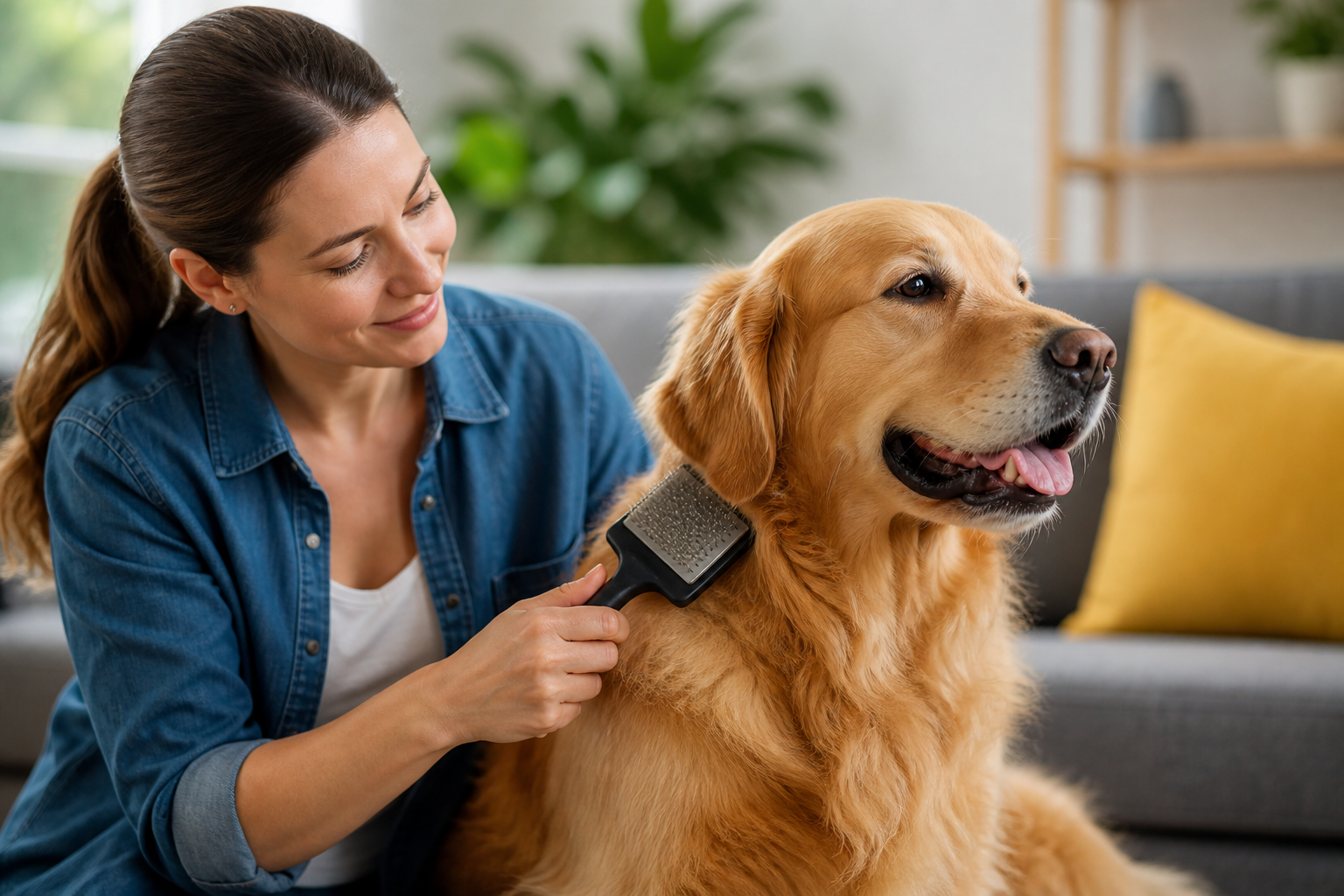
If you have a dog with medium to long hair, our dog brushes and combs are likely to include your most important tool: a slicker brush. These brushes feature a flat or slightly curved head covered in tiny, fine wire pins. These pins are usually angled slightly to help them grab loose hair and debris without poking the skin.
Slicker brushes are the gold standard for removing mats and tangles. They are ideal for breeds like Golden Retrievers, Cocker Spaniels, and Poodles. When you use a slicker brush, you are essentially detangling the fur while pulling out the loose dead hair that would otherwise end up on your furniture.
Be careful with the amount of pressure you apply. Because the pins are made of wire, pressing too hard can cause "brush burn" on the skin. Always use a light touch and let the pins do the work. If you encounter a tough mat, hold the base of the hair near the skin with your fingers. This prevents the brush from pulling on the skin while you work through the knot.
Benefits of Slicker Brushes
- Effectively breaks up tangles and small mats.
- Removes loose undercoat hair before it sheds.
- Stimulates the skin to produce healthy oils.
- Works well for fluffing the coat after a bath.
Key Takeaway: Slicker brushes are the best choice for medium to long-coated dogs prone to matting, but they require a gentle hand to avoid skin irritation.
Bristle Brushes for Smooth Coats
For dogs with short, sleek hair like Beagles, Pugs, or Greyhounds, a heavy-duty wire brush is usually unnecessary. Instead, a bristle brush is the best option. These brushes use natural or synthetic bristles that are packed tightly together.
The main goal for a smooth-coated dog is to remove surface dust and loose hair while polishing the coat. Bristle brushes excel at this. They act like a soft buffer for the fur. As you brush, the bristles move skin oils from the base of the hair down the entire shaft. This results in that healthy, mirror-like shine often seen in show dogs.
Bristle brushes come in different levels of firmness. If your dog has very short hair, look for soft bristles. For dogs with slightly longer or thicker short hair, a firm bristle brush will penetrate more effectively. Since these brushes are very gentle, most dogs find the sensation quite relaxing.
Undercoat Rakes and Deshedding Tools
If your dog "blows" their coat twice a year, you know the struggle of a double-coated breed. Huskies, German Shepherds, and Labs have a dense undercoat that requires specialized equipment. An undercoat rake is designed to go through the top coat and pull out the dead, fuzzy hair underneath.
These tools look a bit like a garden rake but with rounded metal teeth. The spacing of the teeth is critical. Wider spacing is better for thick, long fur, while tighter spacing works for shorter double coats. Using a rake regularly during shedding season can reduce the amount of fur in your home by up to 90 percent.
We often recommend these tools for owners who feel overwhelmed by seasonal shedding. When the undercoat becomes trapped, it can form large, hard mats that are difficult to remove. A rake prevents this by keeping the undercoat thin and manageable.
Vet Tip: If your dog's skin appears red, flaky, or has an unusual odor during grooming, consult your veterinarian. These can be signs of underlying allergies or infections that may require prescription care from our pet pharmacy.
The Role of Pin Brushes
Pin brushes look very similar to the brushes people use. They have wire pins with rounded plastic or rubber tips. While they are common in many household grooming kits, they are not the best for heavy detangling. Instead, they are excellent finishing brushes.
A pin brush is perfect for dogs with long, silky hair like Yorkshire Terriers or Setters. The rounded tips ensure that the brush glides through the hair without snagging or breaking the delicate strands. They are also great for daily maintenance to keep the coat looking neat between more intensive grooming sessions.
If you are a new puppy owner, a pin brush is a great "starter" tool. It is gentle enough that it won't scare the puppy. It helps them get used to the feeling of being handled and groomed from a young age.
Rubber Brushes and Grooming Mitts
Rubber brushes, often called curry combs, are a favorite for both dogs and owners. They are usually made of soft, flexible rubber with thick, nubby "teeth." These are the best dog grooming brushes for bath time.
When the coat is wet, the rubber teeth grab onto loose hair and pull it away effortlessly. They also massage the skin, which helps improve circulation. Many owners use these in a circular motion to work shampoo deep into the coat. For dogs that are fearful of traditional brushes, a rubber grooming mitt that fits over your hand can be a great alternative. It feels like you are just petting them, but you are actually removing a significant amount of loose hair.
When to Use a Rubber Brush
- During a bath to scrub the skin and remove shed hair.
- On very short-haired breeds to add shine.
- For sensitive dogs that dislike the feeling of metal pins.
- To remove hair from upholstery or car seats.
Specialized Tools for Tough Mats
Sometimes, regular brushing isn't enough. If your dog has developed thick mats, especially behind the ears or in the armpits, you may need a de-matting tool. These tools feature sharpened blades that are curved to safely cut through the knot without touching the skin.
You should use these with extreme caution. Never pull or yank a mat tool through the fur. Instead, use a "picking" motion to saw through the mat slowly. If a mat is too close to the skin or covers a large area, it is always safer to visit a professional groomer or your veterinarian. Cutting skin is a common accident when owners try to remove deep mats at home.
For dogs with chronic skin issues that lead to matting, your vet might recommend a specific prescription shampoo or topical treatment. Our pharmacy partnership with Pet's Choice allows you to easily source these FDA-approved medications when a professional diagnosis is made.
How to Establish a Grooming Routine
Consistency is more important than the length of the grooming session. Brushing your dog for five minutes every day is much more effective than a marathon session once a month. Daily brushing prevents mats from ever forming and keeps shedding under control.
Step 1: Choose a quiet time. / Pick a moment when your dog is relaxed, such as after a long walk.
Step 2: Start with a light touch. / Begin at the head and move toward the tail, following the direction of hair growth.
Step 3: Check for "hot spots." / While brushing, look for lumps, bumps, or red areas on the skin.
Step 4: Reward your dog. / Use high-quality treats to ensure your pet associates the brush with a positive experience.
Bottom line: A consistent, short daily grooming session is the most effective way to manage shedding and maintain coat health.
Grooming and Your Dog's Health
Grooming is not just about looks. It is a vital part of preventative healthcare. When you brush your dog, you are performing a mini-physical exam. You will notice new growths, skin irritations, or the presence of pests like fleas and ticks much earlier than you would otherwise.
If you discover fleas or ticks during your grooming session, it is important to act quickly. We carry a variety of flea and tick preventatives, including NexGard and Frontline. For stronger, prescription-strength options, our pharmacy can fulfill orders from your vet to help clear up infestations and prevent future ones.
Maintaining a healthy coat also starts from the inside. High-quality nutrition is essential. Brands like Stella and Chewy's or The Honest Kitchen provide the essential fatty acids needed for a glossy coat. If your dog has persistent dry skin despite regular brushing and good food, you might consider adding a supplement like Zesty Paws or Honest Paws to their diet.
For more help managing seasonal shedding, read our guide to dog shedding and undercoat care.
Maintaining Your Grooming Tools
The best dog grooming brush will only perform well if it is clean. Hair and skin oils build up on the bristles over time. This can trap bacteria and redeposit dirt back onto your dog.
After every session, remove the hair from the pins or bristles. Once a month, you should wash your brushes with warm water and a mild soap. For slicker brushes and rakes, ensure they are dried thoroughly to prevent the metal pins from rusting. If the pins on a slicker brush become bent or the tips of a pin brush fall off, replace the tool immediately. Damaged tools can scratch the skin and make grooming painful for your dog.
Conclusion
Finding the right tool for your dog’s coat is the first step toward a cleaner home and a happier pet. Whether you need a slicker brush for a fluffy Poodle or a rubber curry comb for a sleek Lab, the goal is the same: healthy skin and a manageable coat. At BaxterBoo, we have been helping pet owners find these essential tools since 2006. We pride ourselves on carrying trusted brands like Kong and providing expert advice that makes pet parenting easier.
Remember that grooming is a lifelong commitment. If you find your dog is struggling with skin allergies or needs prescription-strength flea protection, our flea and tick collection is here to help. You can even set up an Autoship programme for your favorite grooming wipes and treats to ensure you never run out of the essentials. Plus, as an MVP Rewards member, you can earn points on every brush and comb you purchase to keep your pup looking their best.
Key Takeaway: Proper tool selection and a consistent routine will transform grooming from a chore into a beneficial health habit for your dog.
FAQ
How often should I brush my dog to reduce shedding?
For most dogs, brushing two to three times a week is sufficient to significantly reduce shedding. However, double-coated breeds may require daily brushing during their heavy shedding seasons in the spring and fall. Consistent sessions prevent the undercoat from becoming trapped and forming mats.
Can I use a human hairbrush on my dog?
It is not recommended to use human brushes on pets because the bristles are not designed for the density of dog fur. Human brushes often fail to reach the undercoat and can cause static or snagging. Purpose-built dog brushes are shaped to follow a dog's anatomy and use materials that are safer for their skin.
What should I do if my dog hates being brushed?
Start with very short sessions and use plenty of high-value treats to create a positive association. You might also try a grooming mitt, which feels more like petting than brushing. Always go slowly and stop if your dog shows signs of significant stress or discomfort.
How do I know if a brush is too sharp for my dog’s skin?
Test the brush on the inside of your own forearm first. If it feels scratchy or leaves red marks on your skin with light pressure, it is likely too harsh for your dog. Always look for brushes with rounded tips or "comfort" pins to ensure the grooming experience is painless.






