
 Save 15% on your 1st Autoship learn more

 Email us
 Live Chat
 FAQs
FAQs





Introduction
You lean in for a pup kiss and realize your dog’s breath has become quite a bit stronger lately. When you lift their lip, you might notice a yellow or brown film near the gumline. This is a common moment for many pet owners. It usually leads to a search for the best way to handle dental hygiene without a stressful trip to the clinic. At BaxterBoo, we believe that dental care should be a manageable part of your daily routine rather than a chore. This post covers the specific tools, pastes, and alternatives you can use to keep your dog's mouth healthy and their breath fresh. Whether your dog is a cooperative patient or a wiggly protester, there is a solution that works for your household.
Quick Answer: The most effective tool for home dental care is a soft-bristled dog toothbrush paired with enzymatic toothpaste. If your dog resists brushing, you can use VOHC-approved dental chews, water additives, or dental wipes to help reduce plaque buildup.
The Best Toothbrushes for Dogs
A standard human toothbrush is rarely the right choice for a dog. The bristles are often too stiff. The head shape is not designed for a dog's unique jaw structure. You need a brush that can reach the back molars where most tartar accumulates.
There are three main types of brushes to consider:
- Long-handled dog toothbrushes: These usually have a small head at one end and a larger head at the other. This design allows you to reach deep into the mouth while keeping your fingers clear of the teeth.
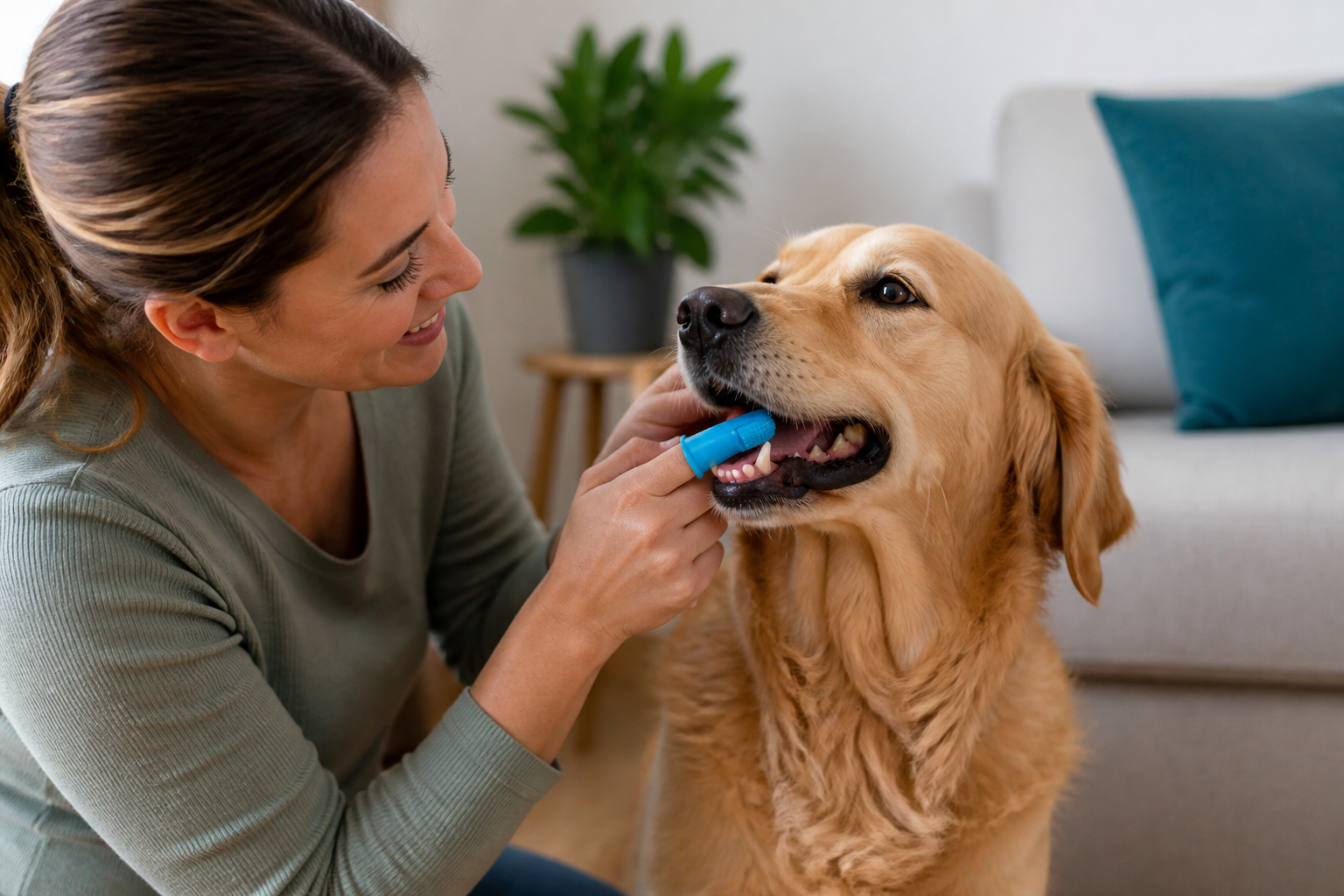
- Finger brushes: These are small silicone or plastic caps that fit over your index finger. They have soft bristles on one side. They are excellent for puppies or dogs who are nervous about long objects being put in their mouths.
- Double-headed brushes: These brushes clean the top and sides of the teeth at the same time. They can cut your brushing time in half. This is helpful for dogs that only give you a few seconds of cooperation.
Whichever style you choose, ensure the bristles are soft. Hard bristles can irritate sensitive gums and cause bleeding. This makes the dog associate brushing with pain. We want this to be a positive experience for everyone involved. Explore our dog dental care selection for toothbrushes, toothpaste, and other oral-care supplies.
Choosing a Safe Dog Toothpaste
You should never use human toothpaste for your dog. Most human brands contain fluoride and foaming agents like sodium lauryl sulfate. These are not meant to be swallowed. Many also contain xylitol, which is a sweetener that is highly toxic to dogs.
Dog-specific toothpaste is designed to be swallowed safely. It is also flavored to appeal to a dog's palate. Common flavors include poultry, beef, peanut butter, and vanilla mint. Using a flavor your dog loves can make the process feel more like a treat than a cleaning.
Look for enzymatic toothpaste. These formulas contain enzymes that help break down food particles and plaque even after you stop brushing. The enzymes continue to work in the saliva. This provides an extra layer of protection against tartar formation. You can compare enzymatic dog toothpaste options when choosing a formula.
Vet Tip: If you notice red, swollen gums or your dog winces when you touch their mouth, stop brushing and call your veterinarian. These are signs of active dental disease or infection. Brushing at this stage can be painful and may spread bacteria into the bloodstream.
Step-By-Step Guide to Brushing at Home
Consistency is more important than perfection. If you can only brush for thirty seconds, that is still better than not brushing at all. Aim for a daily routine to prevent plaque from hardening into tartar.
Step 1: Let them taste the paste. / Put a small dab of dog toothpaste on your finger. Let your dog lick it off so they get used to the flavor and texture.
Step 2: Massage the gums. / Use your finger to gently rub the outside of your dog's teeth and gums. This gets them used to having their mouth handled.
Step 3: Introduce the brush. / Put some paste on the brush. Lift the lip and brush the large canine teeth in a circular motion. Reward them with a small treat immediately after.
Step 4: Reach the back molars. / Once they are comfortable, move to the back of the mouth. This is where the most buildup occurs. You do not need to worry about the inside surface of the teeth. The tongue usually keeps that area relatively clean.
Key Takeaway: Start slowly and use positive reinforcement. The goal is to make dental care a predictable and stress-free part of your dog’s day.
Using Dental Wipes and Pads
Some dogs simply will not tolerate a toothbrush. If your dog snaps at the brush or hides when it comes out, dental wipes are a great middle ground. These are pre-moistened pads that you wrap around your finger.
Wipes work by physically rubbing away the sticky film of plaque before it hardens. They are much less invasive than a brush. You can quickly swipe the outer surfaces of the teeth during a cuddle session. While they do not reach deep into the crevices like bristles do, they are significantly more effective than doing nothing. Dental wipes and pads for dogs offer an alternative for dogs that resist brushing.
Wipes are also useful for senior dogs with sensitive or receding gums. The soft fabric is gentle on the tissue. Many wipes also contain ingredients like chlorhexidine or baking soda to help kill bacteria and neutralize odors.
Water Additives and Oral Sprays
For the most hands-off approach, you can look into water additives. These are liquid solutions that you pour into your dog's daily water bowl. They are designed to be tasteless and odorless so your dog will not notice them.
Water additives work by changing the chemistry of the saliva. They help prevent bacteria from sticking to the surface of the teeth. This slows down the rate of plaque accumulation. They are especially helpful for freshening "stinky" breath.
Oral sprays work in a similar way but are applied directly to the teeth and gums. You just lift the lip and spritz. If your dog is startled by the spray sound, you can spray it onto a cloth and rub it on their teeth instead. These are great supplements but work best when used alongside a mechanical cleaning method like brushing or chewing. Browse water additives and oral-care supplements for additional options.
The Role of Dental Chews and Treats
Dogs have a natural instinct to chew. You can use this to your advantage by providing dental chews that do the work for you. These treats are designed with a specific texture that scrapes the teeth as the dog chews.
When shopping for chews, look for the VOHC Seal of Acceptance. The Veterinary Oral Health Council only gives this seal to products that have been scientifically proven to reduce plaque or tartar. Brands like Greenies and certain Cosequin products carry this distinction. You can explore our selection of Greenies products for dental chew options.
It is important to match the size of the chew to your dog. If the chew is too small, your dog might swallow it whole. This eliminates the cleaning benefit and creates a choking hazard. If it is too large, they may lose interest or struggle to chew it properly.
Bottom line: Dental chews are a highly effective way to provide mechanical cleaning, but they should be used as a supplement to other methods, not a total replacement.
Comparing Home Dental Cleaning Methods
| Method | Effort Level | Effectiveness | Best For |
|---|---|---|---|
| Brushing | High | Excellent | Preventing tartar and gum disease |
| Dental Wipes | Moderate | Good | Dogs who dislike brushes |
| Dental Chews | Low | Good | Daily maintenance and reward |
| Water Additives | Very Low | Fair | Freshening breath and supplemental care |
Dental Toys and Enrichment
Not all cleaning has to happen with a tool you hold. Certain rubber toys are designed with nubs and ridges that clean teeth during playtime. Some even have a space where you can smear dog-safe toothpaste or peanut butter. Dental chews and treats can also support your dog’s natural chewing routine.
As your dog chews and licks the toy, the nubs rub against the teeth. This helps dislodge food particles. Toys made by brands like Kong are durable and provide great mechanical action. Avoid toys that are too hard, such as those made of heavy plastic or nylon. If you cannot indent the toy with your thumbnail, it might be hard enough to fracture a tooth.
Raw vegetables can also act as natural toothbrushes. Many dogs enjoy the crunch of a raw carrot or a slice of apple. These provide a mild abrasive action. They are also low in calories, making them a healthy alternative to processed treats.
When Home Care Isn't Enough: The Pharmacy and Vet Care
Home care is about prevention. It cannot remove tartar once it has hardened into a cement-like substance. If you see thick brown buildup or your dog has persistent bad breath, they likely need a professional cleaning. For additional warning signs, read how to recognize hidden dental problems in dogs.
Our pharmacy offers a range of prescription dental products for dogs with advanced needs. We can help you access FDA-approved medications and prescription diets. Some dogs benefit from therapeutic dental diets like Farmina Vet Life. These kibbles are larger and have a specific fiber structure that does not crumble immediately. This forces the dog to chew more, which cleans the teeth more thoroughly. Visit our dog pharmacy to explore available products.
If your vet prescribes an oral antibiotic or a specialized rinse for a mouth infection, we can fulfill those needs too. Remember that professional cleanings under anesthesia are the only way to clean beneath the gumline. This is where the most serious damage from periodontal disease occurs.
Safety Precautions and Things to Avoid
While many household items seem like good chew options, some can be dangerous. Avoid giving your dog cooked bones of any kind. Cooked bones become brittle and can splinter. These splinters can puncture the mouth, throat, or intestines.
Hard items like cow hooves, deer antlers, and large marrow bones are also risky. While they do scrape away plaque, they are often harder than the tooth enamel itself. We see many fractured carnassial teeth caused by these items. A fractured tooth is painful and often requires an expensive extraction.
Always supervise your dog when they are using a new dental chew or toy. Make sure they are actually chewing the product rather than trying to swallow large chunks. This ensures they get the dental benefit and stay safe from digestive blockages. For more ideas about selecting appropriate dental chews, read our guide to dental chews for dogs.
Managing Dental Health for Senior Dogs
As dogs age, their dental needs change. Senior dogs are more prone to gum recession and tooth loss. They may also have systemic health issues like heart or kidney disease that can be worsened by oral bacteria.
For older dogs, focus on gentle methods. If brushing is too much, stick to wipes and water additives. You should also be more vigilant about checking their mouth. Look for any new lumps, bumps, or changes in gum color.
If your senior dog has lost several teeth, they may need to transition to a softer diet. You can still use dental powders mixed into their wet food. These powders often contain kelp or enzymes that work systemically to keep the remaining teeth healthy. Consider dental supplements for dogs as another option for your routine.
Summary of At-Home Dental Care
Keeping your dog's mouth clean is one of the best things you can do for their long-term health. It prevents pain, saves money on veterinary bills, and adds years to their life. At BaxterBoo, we want to help you find the products that fit your lifestyle.
- Use a soft brush and enzymatic toothpaste for the best results.
- Incorporate dental chews with the VOHC seal for daily maintenance.
- Consider water additives for dogs that resist handling.
- Monitor your dog's mouth for signs of redness or heavy tartar.
Key Takeaway: A combination of mechanical cleaning and chemical prevention is the most effective way to manage your dog's oral health at home.
The best time to start a dental routine is today. Whether you choose a new toothbrush or a bag of dental chews, your dog will benefit from the extra attention. You can also join our MVP Rewards program to earn points on all your dental care supplies. This makes it easier to stay consistent with the products your dog needs to stay healthy and happy.
FAQ
Can I use baking soda to clean my dog's teeth?
While baking soda is not toxic in small amounts, most dogs hate the taste. It is also quite abrasive and can damage the enamel if used too frequently. It is much better to use a flavored enzymatic toothpaste designed specifically for dogs.
How often should I clean my dog's teeth at home?
Daily cleaning is the gold standard because plaque can turn into tartar in as little as 24 to 48 hours. If you cannot manage every day, aim for at least three times a week. Consistency is the key to preventing long-term dental issues.
Is "dog breath" normal?
While a slight odor is normal, very foul or "rotten" breath is usually a sign of dental disease or another health issue. If the smell is strong enough to notice from a distance, it is time to schedule a checkup with your veterinarian.
My dog's gums bleed a little when I brush. Is this okay?
A tiny bit of spotting can happen if you are just starting a routine or if the gums are slightly inflamed. However, if the bleeding is persistent or heavy, it indicates gingivitis. You should consult your vet to ensure there isn't a deeper infection that needs treatment.






