Save 15% on your 1st Autoship learn more

 Email us
 Live Chat
 FAQs
FAQs





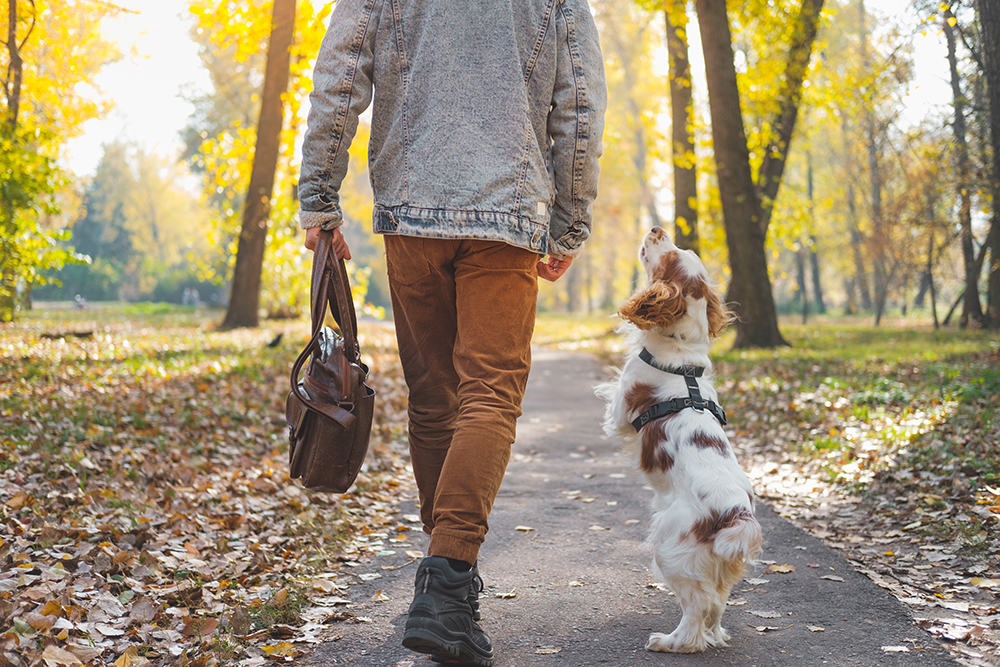
Letting your dog walk or play off-leash can be a good way to help your dog get some exercise and have some fun. It is also necessary for some types of dog sports. However, there are risks associated with allowing your dog to be off-leash.
How To Know When Your Dog Is Ready To Be Off-Leash
There are several factors to consider when deciding whether it is safe to allow your dog to be off-leash. First, has your dog been spayed or neutered? Intact dogs are more likely to wander off because of their drive to seek out a mate. This not only presents a risk of losing your dog, but of creating an unwanted litter of puppies.
The next thing to consider is whether your dog is up to date on vaccinations and flea preventatives. If your dog encounters another dog, wildlife or parasites while roaming off-leash, your dog needs to be protected. Next, make sure it is legal to allow your dog off-leash. Many local governments have leash laws that forbid pet owners from allowing their dog to be off-leash unless the animal is on the owner's property or in a designated area, such as a dog park. Additionally, parks, national parks and other public places may have rules against off-leash dogs.
Does your dog have an up-to-date microchip and ID tag? Before you allow your pet off-leash, it is a good idea to make sure it has a microchip and an ID tag with your current contact information in case it gets lost and someone finds it. You should also consider the environment. A busy city street poses risks from other dogs, people and cars. Rural areas usually have less traffic, but may pose risks from wildlife or livestock. Finally, consider how your dog behaves when it has more freedom. You can test this by putting your dog on a long leash. If you have access to a fully enclosed area to allow your dog to run in, watch how your dog behaves. Make sure your dog will come back to you when you call.
Tips for Training Your Dog To Be Off-Leash
One of the first skills your dog needs to be able to go safely off-leash is a reliable recall. Your dog needs to be at a level where it will come to you whenever you call, even if there are more interesting distractions around, such as other dogs, cats, squirrels or people. Begin your recall training inside and slowly ramp up the difficulty. Once your dog is coming to you reliably in the house, move your training to a fenced-in yard. You can also practice while you are walking your dog on a leash. This skill takes time to build, so don't get in too big of a hurry.
You also need to teach your dog to not pick up objects on the ground and to drop anything it does pick up. This protects your dog from chewing on or eating dangerous objects it may find while roaming off-leash. Next, your dog needs to be trained to stay close to you and to periodically check in when it is off-leash. Other helpful skills include teaching your dog to sit, down, stay and heel from a distance.
Benefits of Letting Your Dog Walk Off-Leash
With the potential risks involved, you may wonder why to bother allowing your dog off-leash at all. Being off-leash helps your dog exercise in a way that is difficult on a leash. It also engages your dog's mind as it explores the environment. Off-leash interactions with other dogs can be done in a way that is more natural for your dog. Sometimes, introducing dogs when they are on a leash can create anxiety because the dogs feel like they can not escape. However, you should not allow your off-leash dog to approach a dog that is on a leash. Being able to trust your dog off-leash also makes mundane tasks, such as opening the door to accept a package, less stressful because there is less risk that your dog will bolt out the door.
Risks of Letting Your Dog Walk Off-Leash
There are some serious risks involved with allowing your dog off-leash, particularly if your dog has not been adequately trained. First, there is a risk that your dog could bite a person or another pet. There is also the risk that your dog could get attacked by an animal or a property owner who doesn't like dogs. Your dog may be a risk to wildlife, such as birds and squirrels. Your dog could also be injured by wildlife, such as raccoons, snakes, coyotes, wolves or even bears in some areas. Your dog could run off and get hit by a car or be unable to find its way home.
Some dogs will attack livestock which could result in you having to pay for dead or injured farm animals or the property owner shooting your dog. Your dog may suffer a fall that could injure or kill it or drown in a river, lake or the neighbor's pool. Your dog may ingest toxic substances, such as antifreeze, pesticides, rat poison or poisonous plants. If your dog is not spayed or neutered, it could get pregnant or impregnate someone else's dog.
Being off-leash can be an enriching experience for your dog. However, to safely have your dog off-leash, you must first train it and then be prepared to monitor your dog and take actions to keep your dog and the people and other animals around your dog safe.