
 Save 15% on your 1st Autoship learn more

 Email us
 Live Chat
 FAQs
FAQs





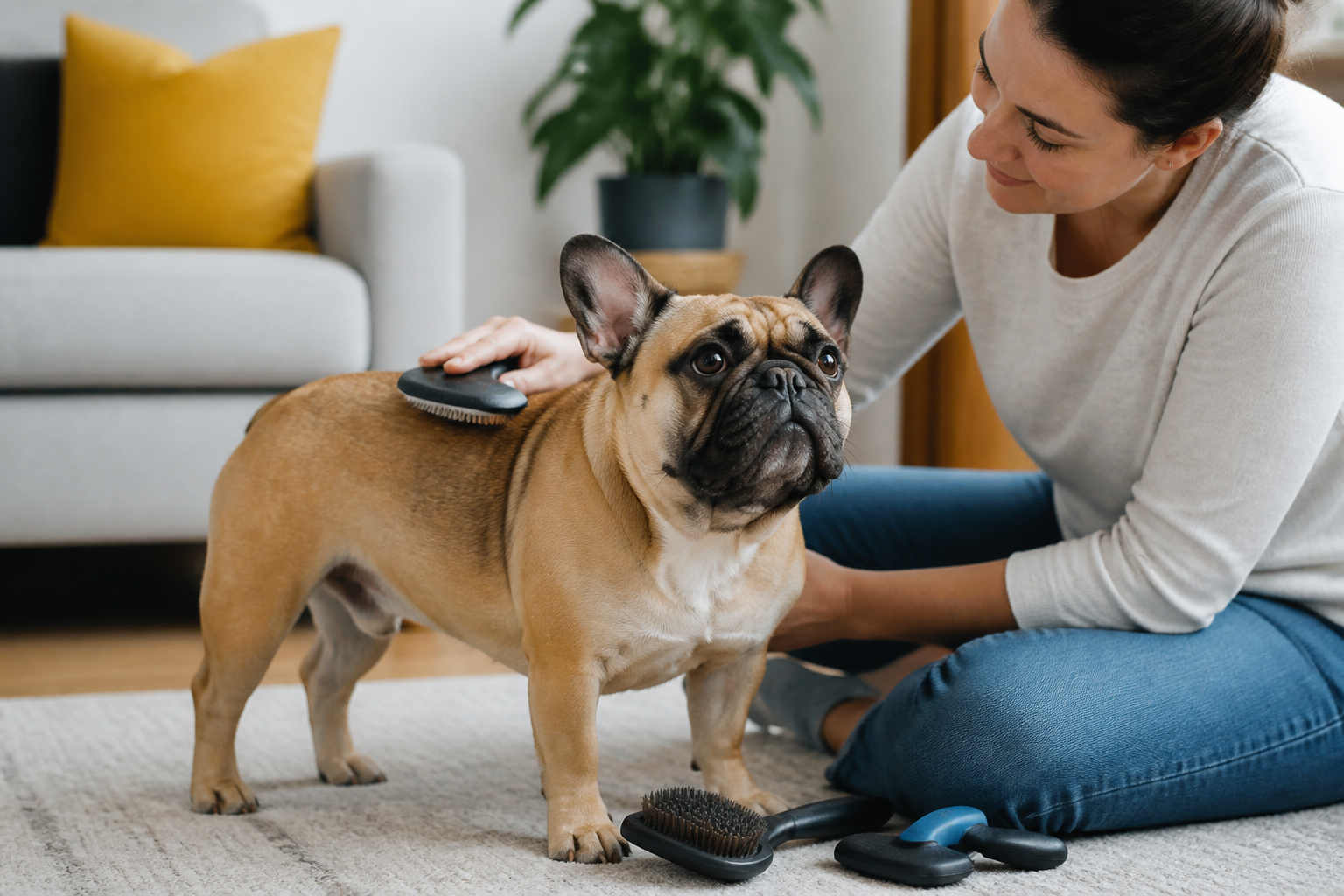
Table of Contents
- Introduction
- Understanding Your Dog's Short Coat Type
- The Rubber Curry Brush: A Short Hair Essential
- Bristle Brushes for Polishing and Oil Distribution
- Grooming Mitts for Nervous Dogs and Puppies
- De-shedding Tools for Heavy-Shedding Short Coats
- The Role of Slicker Brushes in Dense Short Hair
- Step-by-Step: Brushing Your Short-Haired Dog Properly
- Managing Seasonal Shedding and Coat Health
- Building Your Home Grooming Kit
- Professional Care and When to Seek Help
- Conclusion
- FAQ
Introduction
You might think that having a short-haired dog means you can skip the grooming aisle entirely. Then you sit on your velvet sofa or put on a black fleece jacket and realize your Beagle or Lab has left a thousand tiny needle-like hairs behind. Short-haired dogs may not get the dramatic mats that a Poodle does, but they certainly shed. They also need help moving natural oils from their skin down the hair shaft to stay shiny and healthy.
At BaxterBoo, we have spent years helping pet parents in our Vernon Hills warehouse and across the country find the exact right tools for every coat type. Whether you have a smooth-coated Boxer or a dense, double-coated Corgi, the right brush makes the job faster and more effective. This guide covers the specific brushes that actually work for short coats and how to use them to keep your home fur-free.
Quick Answer: The best brush for most short-haired dogs is a rubber curry brush or a natural bristle brush. These tools effectively lift loose hair and distribute oils without scratching sensitive skin.
Understanding Your Dog's Short Coat Type
Before you grab a tool, you need to know what kind of short hair you are dealing with. Not all short coats are created equal. Some dogs have a single layer of smooth hair, while others have a thick, protective undercoat. For more options, browse our dog grooming supplies.
Smooth Single Coats
Breeds like Boxers, Greyhounds, and Doberman Pinschers have very short, sleek hair with no undercoat. Their skin is often more exposed and sensitive. For these dogs, you want a tool that focuses on skin massage and oil distribution. Rigid metal teeth can be too harsh for these breeds because there is no thick fur to act as a cushion.
Dense Short Double Coats
Labrador Retrievers, Corgis, and German Shorthaired Pointers have a "short" coat that is actually quite thick. They have a soft, fuzzy undercoat beneath a tougher outer layer. These dogs are the heavy shedders. They need tools that can reach through the top layer to pull out the dead undercoat before it ends up on your carpet.
Wire-Haired Short Coats
Some terriers have short but wiry hair. This texture is coarser and can sometimes trap dirt more easily than smooth coats. While they do not mat like long hair, they benefit from brushes that can flick away surface debris and handle the rougher texture without pulling.
Key Takeaway: Identify if your dog has a smooth single coat or a dense double coat. Single coats need gentle massage, while double coats require tools that reach the undercoat.
The Rubber Curry Brush: A Short Hair Essential
If we could only recommend one tool for short-haired dogs, it would be the rubber curry brush. Many owners recognize the Kong ZoomGroom, which is a classic version of this tool. You can compare similar options in our dog brushes and combs collection.
The rubber acts like a magnet for loose hair. As you move the brush in a circular motion, the friction pulls dead fur out of the coat. Because the nubs are soft, you can use a bit more pressure to give your dog a deep massage. Most dogs find this incredibly relaxing. It feels like a spa day rather than a chore.
Rubber brushes are also the best tool for bath time. You can use them to work shampoo deep into the coat, ensuring you reach the skin. This helps break up dander and loosen even more hair while the coat is wet. Our customers often tell us that using a rubber brush during a bath reduces the amount of post-bath shedding by half.
Bottom line: A rubber curry brush is a versatile, gentle tool that effectively removes loose hair while providing a massage.
Bristle Brushes for Polishing and Oil Distribution
A bristle brush is the traditional choice for short-haired breeds. These brushes feature clusters of natural or synthetic bristles packed tightly together. They do not reach deep into a thick undercoat, but they are unmatched for finishing and polishing. For wire-and-boar options, explore our selection of BASS Brushes products.
Short-haired dogs rely on natural oils to keep their skin from becoming dry and itchy. These oils tend to sit at the base of the hair. A bristle brush picks up those oils and spreads them along the hair shaft. This creates that high-gloss shine you see on show dogs.
When shopping for a bristle brush, look for the following:
- Natural bristles (like boar hair) for the best oil distribution.
- Synthetic bristles for a more budget-friendly, durable option.
- A handle that fits comfortably in your palm to reduce wrist strain.
- Firmness levels that match your dog's skin sensitivity.
For dogs with very fine, smooth hair like a Miniature Pinscher, a soft bristle brush is best. For a dog with a tougher coat like a Labrador, you can use a firmer bristle to get through the hair.
Grooming Mitts for Nervous Dogs and Puppies
Some dogs are "brush shy." They see a plastic or wood tool and immediately hide under the dining room table. This is where grooming mitts or gloves become a lifesaver. These are essentially rubber curry brushes that you wear like a glove. Our grooming tools collection includes mitts and other options for at-home care.
Because you are using your hand, the dog feels like they are just being petted. This is a fantastic way to introduce puppies to grooming. It builds a positive association with being handled and groomed. It also allows you to feel for lumps, bumps, or ticks that a standard brush might skip over.
Mitts are especially effective for the legs, face, and tail. These are areas where a standard brush can be clunky or difficult to maneuver. You can gently wrap your gloved hand around the dog's leg to pull away loose hair from every angle.
Benefits of Grooming Mitts:
- Reduces anxiety for nervous pets.
- Allows for precise grooming on legs and undercarriages.
- Easy to clean (most can be tossed in the wash).
- Great for sensitive skin that cannot handle metal pins.
De-shedding Tools for Heavy-Shedding Short Coats
When a Labrador or a Corgi starts "blowing their coat" during seasonal changes, a soft bristle brush will not be enough. You will need a dedicated de-shedding tool. Brands like FURminator make versions specifically for short hair. For a tool designed for short coats, consider the Warren London Short Hair De-Shedding Pet Brush.
These tools have a fine-toothed metal edge that reaches beneath the topcoat. It gently grabs the loose, dead undercoat and pulls it out. You will be shocked at the amount of hair these tools can remove in a single session. We often see piles of fur larger than the dog itself after a good de-shedding session.
However, you must use these with care. Because they have a metal edge, you should never press down hard. Use short, gentle strokes. If you over-brush one spot, you can cause "brush burn," which is skin irritation. Limit the use of these heavy-duty tools to once or twice a week during heavy shedding seasons.
Vet Tip: If your short-haired dog is shedding excessively, losing hair in patches, or has red, itchy skin, it may be more than a grooming issue. Consult your veterinarian to rule out allergies or thyroid concerns. Our pet pharmacy for dogs carries a variety of FDA-approved allergy and skin medications through our partnership with Pet's Choice if your vet provides a prescription.
The Role of Slicker Brushes in Dense Short Hair
Wait, aren't slicker brushes for long-haired dogs? Usually, yes. But for certain short-haired breeds with very dense fur, like the Shiba Inu or the Pug, a slicker brush can be very effective. Soft options are available in our dog brushes and combs category.
A slicker brush has fine, angled wire pins. For short hair, you want a "soft" slicker brush with pins that are not too sharp. These are great for grabbing the fuzzy undercoat that a rubber brush might miss. It is also excellent for removing dried mud or debris if your dog likes to roll in the yard.
If you choose a slicker brush, always test it on your own arm first. If it feels scratchy or sharp, it is too much for a short-haired dog. The goal is to grab the hair, not the skin.
Step-by-Step: Brushing Your Short-Haired Dog Properly
Brushing seems simple, but a little technique goes a long way in making it effective and enjoyable for your pup.
Step 1: Inspect the skin. / Before you start, run your hands over your dog. Look for any cuts, hot spots, or ticks. Avoid brushing directly over any irritated areas.
Step 2: Start with the rubber curry brush. / Use circular motions starting at the neck and moving toward the tail. This lifts the hair and loosens the "dead" fur from the skin.
Step 3: Follow with a de-shedding tool (if needed). / For double-coated breeds, use the de-shedding tool in the direction of hair growth. Use long, smooth strokes and very light pressure.
Step 4: Finish with the bristle brush. / This is the polishing phase. Use long strokes in the direction of the hair to smooth everything down and distribute those healthy oils.
Step 5: Reward and praise. / Give your dog a treat during and after the session. We want them to look forward to the brush coming out of the drawer.
Key Takeaway: Layering your tools—starting with a rubber brush to loosen and ending with a bristle brush to polish—is the most effective way to groom a short-haired dog.
Managing Seasonal Shedding and Coat Health
Short-haired dogs often shed most in the spring and fall. This is when their bodies respond to changes in daylight and temperature by swapping their coat. During these times, you may need to increase your brushing frequency from once a week to daily.
Diet also plays a massive role in coat quality. If the hair is dull or brittle, no amount of brushing will create a perfect shine. We carry premium brands like Farmina, Zesty Paws, and Stella and Chewy's that focus on high-quality proteins and omega fatty acids. For related products, browse our dog skin and coat care selection.
If you notice your dog's skin is flaky or dry, you might consider adding a fish oil supplement to their routine. This helps keep the skin barrier strong, which can actually reduce the amount of "dander" shedding in your home.
Bottom line: Brushing is only half the battle. Good nutrition and regular health checks are essential for a truly healthy short coat.
Building Your Home Grooming Kit
You do not need a professional grooming table to keep your short-haired dog looking great. A few well-chosen items kept in a dedicated bin will make the job easy.
- Primary Brush: A rubber curry brush (like the Kong ZoomGroom) for daily/weekly use.
- Finishing Brush: A soft or medium bristle brush for shine.
- Shedding Tool: A de-shedding edge for those twice-a-year heavy sheds.
- Wipes: Grooming wipes are perfect for short-haired dogs to remove surface dust between baths.
- Healthy Treats: Small training treats to keep them focused while you brush.
Having these tools ready means you can do a quick five-minute "touch-up" brush while you are watching TV. Frequent, short sessions are often better than one long, stressful session.
Professional Care and When to Seek Help
Even with the best tools at home, some short-haired dogs benefit from a trip to the groomer. Professionals have high-velocity dryers that can blow out massive amounts of loose undercoat that a hand brush simply cannot reach. This is especially helpful for breeds like Labradors and Huskies.
If your dog has persistent skin issues, remember that our pet pharmacy is a great resource. We work with Pet's Choice to provide prescription shampoos and medications that can help with chronic conditions like atopy or fungal infections. These products often work better than over-the-counter options for dogs with serious skin struggles.
Always keep an eye on your dog's behavior during grooming. If they suddenly start snapping or pulling away when you touch a certain area, they might be in pain. A quick vet visit can ensure there are no underlying issues like joint pain or hidden skin infections.
Conclusion
Finding the right brush for a short-haired dog changes grooming from a chore into a bonding ritual. By using a rubber curry brush for deep cleaning and a bristle brush for that final shine, you can keep your dog comfortable and your home much cleaner. We have seen how the right tools can transform a dull, shedding coat into a glossy, healthy one.
Remember that a healthy coat starts with great nutrition and regular care. You can earn points on all your grooming supplies and food by joining our MVP Rewards programme. For those essentials you use every month, like grooming wipes or supplements, our Autoship program offers extra savings and ensures you never run out. Your dog's coat is a reflection of their overall health, and with a little bit of weekly effort, you can keep them looking their absolute best.
FAQ
How often should I brush my short-haired dog?
Most short-haired dogs benefit from a thorough brushing one to two times per week. However, if your dog is a heavy shedder like a Lab or a Pug, you may want to do a quick five-minute session every other day. During the peak shedding seasons in spring and fall, daily brushing is the best way to keep hair off your furniture.
Can I use a human brush on my dog?
It is not recommended to use human brushes on dogs. Human hair brushes are designed for much thinner hair and different skin pH levels. The pins on human brushes can be too sharp for a dog's skin or too weak to actually pull out a dog's dense undercoat. Investing in a tool specifically designed for pets ensures you won't cause accidental skin irritation.
My dog hates being brushed. What should I do?
Start very slowly with a soft grooming mitt or a rubber brush. Let them sniff the tool and give them a high-value treat before you even touch them with it. Brush for only thirty seconds at a time, followed by lots of praise. Over time, they will associate the brush with treats and attention, making the process much easier for both of you.
Does brushing actually help with dog allergies?
Yes, regular brushing can significantly help people with mild pet allergies. Brushing removes loose fur, dander, and dried saliva before they can float through the air or settle on your bedding. For the best results, brush your dog outside so the allergens stay out of your living space, and follow up with a damp grooming wipe to catch any remaining loose particles.






