
 Save 15% on your 1st Autoship learn more

 Email us
 Live Chat
 FAQs
FAQs





Introduction
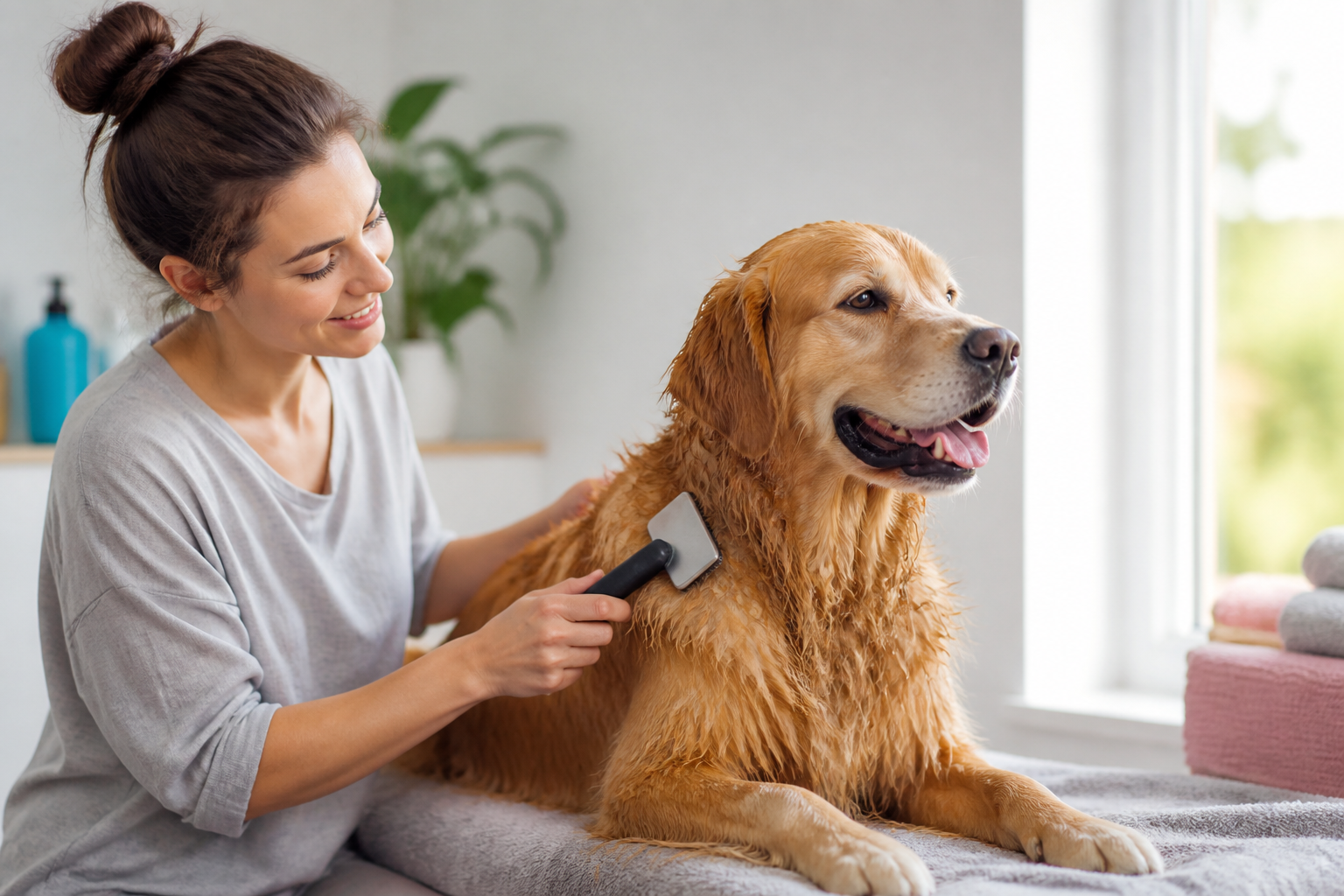
The bath is finished, and your dog has just completed the ritualistic "zoomies" around the living room. They are damp, fluffy, and finally starting to settle down. You have the brush in hand, but you might hesitate. Should you start working through the coat now, or wait until the fur is bone-dry? Getting the timing right is one of the most common questions we hear at BaxterBoo. Brushing at the wrong moment can lead to broken hair, skin irritation, or even tighter mats that become impossible to remove. This guide will walk you through the essential timeline for grooming your dog around bath time. We will cover why the pre-bath brush is the most important step, when it is safe to brush wet hair, and how to finish the coat properly once it is dry.
Quick Answer: You should brush your dog before the bath to remove mats and again after the coat is 100 percent dry. Brushing a soaking wet coat can stretch and break the hair, while water often causes existing tangles to tighten into permanent mats.
The Importance of the Pre-Bath Brush
The most critical part of bath day happens before the water ever touches your dog. Many owners assume that shampoo and water will help loosen up tangles. This is a common misconception that often leads to more work. When hair gets wet, the strands expand and then contract as they dry. If there is a knot in the coat, the water acts like a lubricant that allows the knot to slide into a tighter, denser ball. Once that knot dries, it often becomes a solid mat that must be cut out.
Brushing a dry coat allows you to identify problem areas like the armpits, behind the ears, and the base of the tail. These high-friction spots are magnets for tangles. By clearing these out first, you ensure the shampoo can actually reach the skin. If you wash a matted dog, the soap and dirt get trapped inside the mat. This leads to skin irritation and a dog that still smells like a wet coat even after a deep scrub.
Key Takeaway: Never bathe a dog with existing mats. Always perform a thorough "comb-check" to ensure the coat is completely clear before getting your dog wet.
Checklist for Pre-Bath Preparation
- Use a slicker brush to loosen the undercoat and surface debris.
- Run a stainless steel comb through the fur to catch hidden knots.
- Check high-friction areas like the belly and neck.
- Trim any mats that are too tight to be brushed out safely.
- Remove loose shedding hair to make the washing process faster.
Brushing During the Bath: The Conditioner Exception
There is one specific time when brushing a wet dog is actually helpful. This occurs during the conditioning phase. If your dog has a very long, curly, or dense coat, a high-quality conditioner provides the "slip" needed to work through minor surface tangles. This is not the time for heavy de-matting. Instead, it is a chance to distribute product evenly.
Use a wide-toothed comb or a rubber curry brush during this stage. The rubber bristles are gentle on the skin, which becomes more sensitive when it is wet and warm. This technique helps the conditioner penetrate the hair shaft, which makes the post-bath brush much easier. You can find conditioners and detangling products in our dog shampoo and conditioner category. If your dog has sensitive skin or chronic allergies, this is also the best time to apply medicated treatments. Our pharmacy at BaxterBoo offers a variety of FDA-approved prescription shampoos through our partnership with Pet's Choice. These products often require a specific "soak time" to work effectively. Using a gentle brush during this window can help ensure the medication reaches the skin where it is needed most.
Vet Tip: If your dog has red, itchy, or flaky skin, consult your veterinarian before using a grooming brush in the tub. Vigorous brushing on irritated wet skin can cause "brush burn" or secondary infections.
Drying Your Dog the Right Way
How you dry your dog determines how much brushing you will have to do later. Most people instinctively grab a towel and start rubbing in vigorous circles. This is the fastest way to create new tangles. When you rub the hair in every direction, you are essentially "felting" the fur.
Instead, use a patting or squeezing motion with the towel. Press the towel into the coat to absorb the moisture without shifting the hair. If you use a hair dryer, keep it on a cool or low-heat setting. High heat can damage the hair cuticles and dry out the skin. For double-coated breeds like Huskies or Golden Retrievers, a high-velocity dryer is a great tool. It blows the water out of the coat and helps separate the hair strands, which does a lot of the de-shedding work for you.
For additional bath preparation ideas, read these tips for bathing your dog.
The Post-Bath Finishing Brush
Once the dog is completely dry, it is time for the final brush. This is where you get that professional, fluffy finish. Even if you brushed before the bath, the washing process often loosens up more of the undercoat. This "dead hair" will sit in the coat and can cause itching if it is not removed.
Step 1: Wait for total dryness. / Touch the base of the hair near the skin to ensure no dampness remains. Step 2: Use a slicker brush. / Work in small sections, brushing in the direction of hair growth. Step 3: Perform the line-brushing technique. / Lift the hair with one hand and brush the layer underneath to ensure you are reaching the skin. Step 4: The final comb-through. / Run a metal comb from head to tail as a final check for any new knots created during the drying process.
Bottom line: The post-bath brush is for fluffing and removing hair loosened by the washing process, but only once the coat is dry.
Understanding Coat Types and Timing
Not every dog requires the same grooming schedule. The "when" and "how" of brushing depends heavily on the texture of the fur and the type of skin your dog has. We carry products for over 500 brands to help you find the specific tool for these different needs.
| Coat Type | Pre-Bath Needs | During Bath | Post-Bath Timing |
|---|---|---|---|
| Short/Smooth | Minimal (1-2 mins) | Rubber brush for deshedding | Brush once dry to add shine |
| Double Coat | Heavy deshedding rake | Not recommended | Brush after full blow-dry |
| Curly/Wavy | Complete mat removal | Wide-tooth comb with conditioner | Brush when damp or fully dry |
| Long/Silky | Detailed comb-check | Only if using heavy conditioner | Brush when 90% dry with detangler |
Short-Haired Dogs
For breeds like Labradors or Boxers, the timing is less sensitive. You can brush them while they are damp with a rubber curry brush to help remove loose hair. Since they do not have a long coat that can mat, the risk of "setting" a knot is very low. However, you should still avoid metal-bristled brushes on wet skin, as short-haired dogs have less protection against the sharp pins.
Double-Coated Dogs
Breeds like Shepherds and Pomeranians require a very specific approach. If you get a double coat wet before removing the loose undercoat, the hair can become "compacted." This feels like a thick, hard layer of felt near the skin. It traps heat and moisture, which can lead to hot spots. For these dogs, the pre-bath brush is the most labor-intensive part of the day.
Curly and Wavy Coats
Doodles, Poodles, and Bichons have hair that grows continuously. This hair is very prone to matting when wet. If you use a towel to rub a wet Poodle, you will likely have to shave them later. For these breeds, you must be extremely diligent about the pre-bath brush. If you find a knot after the bath, do not pull at it while the hair is wet. Use a leave-in detangling spray and wait for the hair to dry before attempting to separate the knot.
Choosing the Right Tools for the Job
Using the wrong brush at the wrong time can be painful for your dog. A metal slicker brush is excellent on a dry coat, but if the skin is softened by warm bath water, those same metal pins can feel much sharper.
- Slicker Brushes: Best for dry coats and removing the undercoat.
- Rubber Curry Brushes: Perfect for use in the tub or on short-haired dogs.
- Undercoat Rakes: Use only on dry, double-coated dogs.
- Stainless Steel Combs: The "truth detector" for finding knots before and after the bath.
- Detangling Sprays: Useful for post-bath brushing to reduce static and help the brush glide.
Browse our dog brushes and combs to find tools suited to your dog's coat.
Note: If you find yourself struggling with a specific mat, do not keep pulling. Use a small amount of cornstarch or a professional detangler to help the hair strands slide apart.
Managing Skin Health and Medications
Sometimes, the reason you are bathing your dog is to treat a health condition. If your dog is dealing with fungal infections, mange, or severe flea dermatitis, the bathing routine changes. In these cases, the skin is often very fragile.
When using medicated shampoos, you might be instructed by your vet to leave the lather on for ten minutes. During this time, you should avoid any heavy brushing. Instead, use your fingers to gently massage the skin. This ensures the active ingredients are absorbed without causing micro-tears in the skin. If your dog requires long-term medication for skin health, our Autoship program can help ensure you never run out of the necessary supplies while saving you money on every order.
For prescription and medicated product options, explore our pet pharmacy.
Vet Tip: For dogs with active skin infections, wash your brushes in a pet-safe disinfectant after every use. This prevents you from re-introducing bacteria or fungus to the skin during the next grooming session.
Common Mistakes to Avoid
Even experienced pet owners can fall into bad habits. Avoiding these simple mistakes will make the grooming process much more enjoyable for your dog.
Mistake 1: Brushing a "Bone-Dry" Long Coat For dogs with very long, silky hair, brushing the coat when it is completely dry and static-filled can cause the hair to snap. A light mist of water or grooming spray helps protect the hair shaft.
Mistake 2: Circular Scrubbing As mentioned earlier, scrubbing in circles during the bath is the fastest way to create mats. Always move your hands in the direction the hair grows.
Mistake 3: Skipping the Undercoat Many owners only brush the top layer of fur. The "topcoat" might look great, but the mats are usually hiding in the undercoat near the skin. Always use the line-brushing method to check the base of the hair.
Mistake 4: Not Rinsing Enough If you don't rinse out all the shampoo, the residue will dry and make the coat feel sticky or "tacky." This attracts dirt and makes the post-bath brush much more difficult.
Step-by-Step Summary for Bath Day
Following a consistent routine helps your dog know what to expect, which reduces anxiety.
- De-matting: Use a comb and slicker brush on the dry dog.
- The Bath: Use warm water and a gentle massaging motion.
- Conditioning: Apply conditioner and use a wide-tooth comb for distribution.
- Rinsing: Rinse until the water runs clear and the coat feels "squeaky."
- Drying: Pat dry with a towel, then use a low-heat or high-velocity dryer.
- Finishing: Once 100 percent dry, perform a final brush and comb-out.
Key Takeaway: Proper timing prevents the "wet-dog matting" effect. Brushing before for safety and after for beauty is the most effective system.
Conclusion
Brushing your dog at the right time is the secret to a professional-looking coat and a happy pet. By focusing your efforts on a thorough pre-bath brush, you prevent the painful mats that water can cause. Remember to be gentle during the bath, and always wait until the coat is fully dry before performing your final finishing brush. If you notice any unusual lumps, persistent redness, or skin issues during your grooming routine, it is always best to consult your veterinarian for a professional opinion.
- Always brush before the bath to prevent mats from tightening.
- Only use a wide-tooth comb or rubber brush on wet hair with conditioner.
- Wait for the coat to be fully dry before the final slicker brush session.
- Use the right tools for your dog's specific coat type.
To keep your grooming kit fully stocked, you can browse our wide selection of brushes and combs in our Dog Grooming category. If your dog needs specific medicated support, visit our pharmacy selection to see how our partnership with Pet's Choice can help fulfill your pet's prescription needs.
FAQ
Can I brush my dog while they are still wet from the bath?
It is generally better to wait until the coat is dry. Wet hair is more elastic and prone to stretching or breaking. If you must brush while wet, only do so when the coat is saturated with conditioner and use a very wide-toothed comb to avoid pulling on the hair.
Why did my dog get mats right after a bath?
Mats often form after a bath because the dog was not brushed thoroughly beforehand. Water causes existing loose hair and small tangles to shrink and tighten as they dry. Additionally, rubbing a dog vigorously with a towel can twist the hair fibers together, creating new knots.
How do I dry a double-coated dog so I can brush them?
The best way to dry a double-coated dog is with a high-velocity pet dryer. This blows the moisture out from the skin upward, which helps separate the dense undercoat. If you are using towels, pat the hair dry rather than rubbing it, and ensure the coat is bone-dry before doing your final brush-out.
What should I do if I find a mat after the bath is done?
Do not pull on the mat while the hair is wet. Wait for the dog to dry completely, then apply a small amount of detangling spray or grooming oil to the knot. Gently use the end of a metal comb to pick the knot apart starting from the tips of the hair and working toward the skin.






