
 Save 15% on your 1st Autoship learn more

 Email us
 Live Chat
 FAQs
FAQs





Introduction
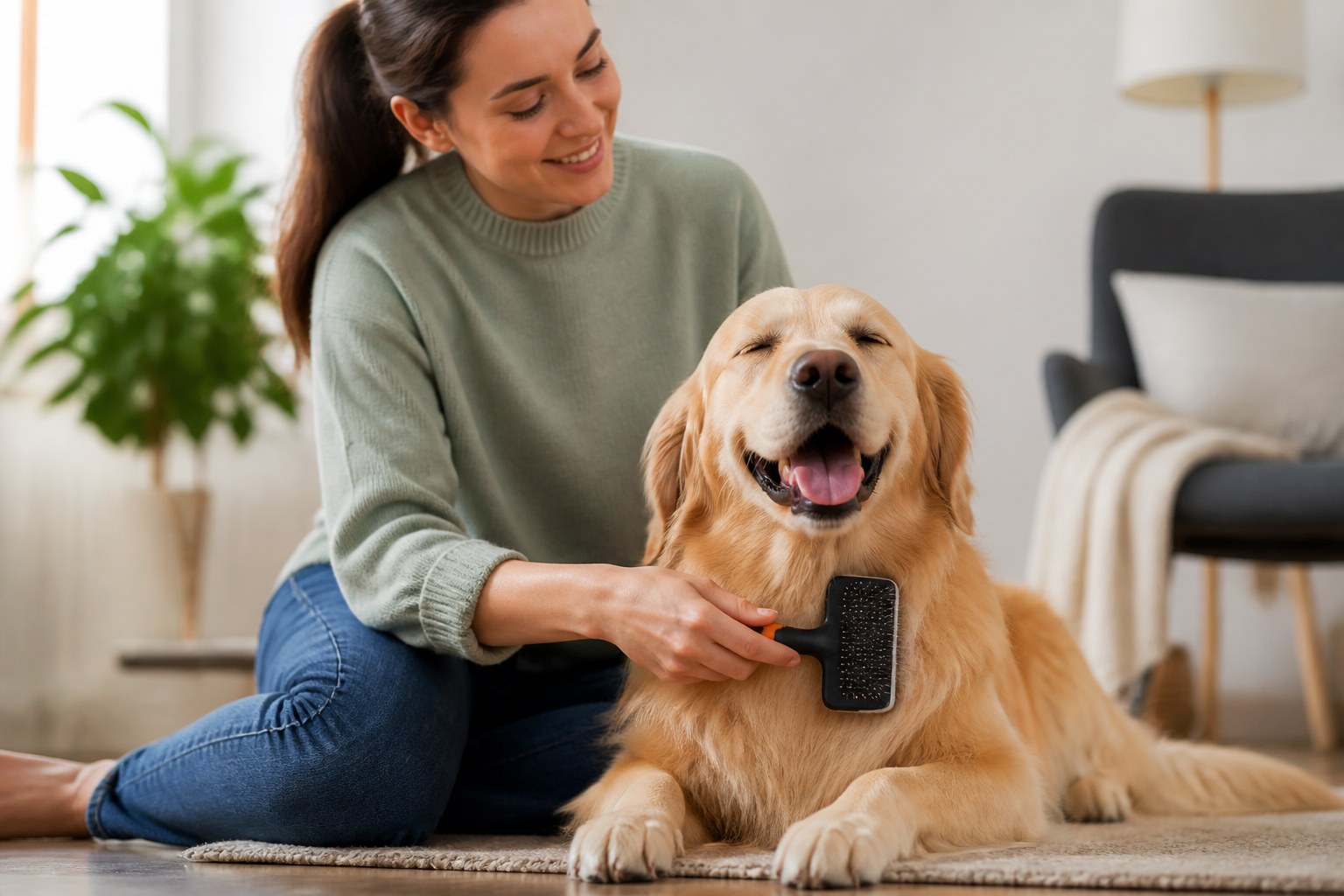
You are sitting on the floor with a brush in one hand and a mountain of fur beside you. You have been at it for twenty minutes. Every time you pull the brush through your dog’s coat, more hair appears. It feels like a never-ending task. Many owners find themselves in this exact spot, wondering if they should keep going until the hair stops or if they are doing more harm than good. At BaxterBoo, we know that grooming is about more than just a clean house. It is a vital part of your pet’s skin health and comfort. This post covers the physical signs that tell you when to put the brush away and how to avoid the common mistake of over-grooming. Understanding these limits will keep your dog’s coat shiny and their skin irritation-free.
Quick Answer: Stop brushing your dog when you no longer see large clumps of loose fur or when the skin starts to look pink. For most dogs, a productive grooming session lasts 15 to 20 minutes before the skin needs a break.
The Signs of Over-Brushing
It is possible to have too much of a good thing. Brushing helps move natural oils across the skin. It removes dead hair that would otherwise end up on your rug. However, if you continue brushing the same spot for too long, you risk causing brush burn. This is a form of skin irritation caused by the constant friction of bristles or pins against the surface of the skin.
You should stop immediately if you notice the skin turning a bright pink or red color. This is the first sign of irritation. If your dog starts to flinch or pulls away when you reach for a specific area, they are likely feeling discomfort. A healthy grooming session should be relaxing for the pet. If it becomes a struggle, it is time to take a break.
The hair itself also gives you clues. If you are using a de-shedding tool and the hair seems to be coming out in consistent, heavy amounts without slowing down, you might be cutting the healthy topcoat. This happens often with tools that use a blade. Stop when the volume of hair decreases significantly. You do not need to remove every single loose hair in one sitting.
Understanding the Shedding Cycle
Dogs do not shed at a constant rate all year. Most breeds go through a period twice a year known as "blowing coat." During these weeks, the amount of hair coming off your dog will be much higher than usual. You might feel like you could brush for hours and still see more fur.
During these heavy shedding seasons, it is better to do several short sessions rather than one marathon session. Brushing for ten minutes three times a day is much safer for the skin than one thirty-minute session. This approach allows the skin to recover from the friction.
Key Takeaway: Quality is better than quantity. Short, frequent sessions prevent skin irritation and keep your dog from becoming frustrated with the grooming process.
The Impact of Coat Type
The "stop" point depends heavily on what kind of coat your dog has. A short-haired dog like a Beagle has a different limit than a double-coated dog like a Siberian Husky.
- Short Coats: These dogs have sensitive skin because there is less hair to act as a cushion. Stop after 5 to 10 minutes. Use a soft bristle brush or a rubber curry comb.
- Double Coats: These dogs have a dense undercoat. You can brush longer here. Stop when the undercoat rake moves through the fur without catching on thick clumps.
- Wire Coats: These coats require a firmer touch but can still suffer from irritation. Stop once you have cleared the loose, dead "blown" hairs.
- Curly or Silky Coats: These dogs do not shed much but they do mat. Stop once a metal comb can slide from the skin to the tips of the hair without snagging.
For additional guidance on curly coats and detangling, see our guide to grooming a curly-haired dog.
When the Tool Dictates the Time
The tool you choose will determine how long you can safely brush. Some tools are more aggressive than others. Using a soft bristle brush is like a massage. Using a de-shedding tool with a stainless steel edge is more like a medical treatment. It requires precision and limits.
If you are using a slicker brush, watch the pins. These fine wire bristles are excellent for removing tangles. But they can scratch the skin if you press too hard. Always use a light hand. If you see "red streaks" on the skin, you have gone too far and stayed in one spot too long.
Rubber brushes are much more forgiving. These are great for short-haired breeds. You can often use these longer because they massage the skin and stimulate blood flow. However, even with rubber, stop if the dog shows signs of restlessness. We carry a wide variety of these tools in our dog grooming collection to help you find the right match for your dog’s specific sensitivity level.
For a brush designed for careful detangling, consider the Master Grooming Tools Ergonomic Slicker Dog and Cat Brush.
The Comb Test for Success
Professional groomers use the "comb test" to know when they are finished. After you have used your main brush, take a medium-to-fine-toothed metal comb. Run it gently through the coat from the skin outward.
If the comb glides through without hitting any resistance, you are done. If the comb catches on a small knot or a clump of loose hair, you have a little more work to do. This test is the most accurate way to ensure you have reached the "stop" point without over-working the skin.
Vet Tip: If you notice your dog is shedding excessively in patches or has scaly skin, it may not be a grooming issue. Consult your veterinarian to rule out thyroid issues, allergies, or parasites.
Steps for a Safe Brushing Session
- Check the skin first. Look for existing red spots, hot spots, or ticks before you start.
- Apply a grooming spray. A light mist of a leave-in conditioner helps the brush glide and prevents hair breakage.
- Work in sections. Start at the head and move toward the tail. This prevents you from over-brushing one spot while ignoring another.
- Set a timer. If you tend to lose track of time, set a timer for 15 minutes.
- Finish with the comb test. Use the metal comb to verify that the coat is clear of mats.
For more advice on avoiding painful tangles during bathing and grooming, read these dog bathing dos and don’ts.
Skin Health and the Role of the Pharmacy
Sometimes, the reason a dog seems to shed "forever" is related to skin health. Dry, flaky skin can cause hair to become brittle and fall out more easily. If your dog has itchy skin or persistent redness that does not go away after you stop brushing, they may need medical support.
Our pharmacy provides access to FDA-approved medications for various skin conditions. This includes treatments for flea allergies, environmental allergies, and fungal infections. When brushing becomes a chore because of the state of the skin, a vet-prescribed shampoo or medication can make the process much more comfortable for your pet.
Healthy hair starts with healthy skin. If you are managing a chronic condition, our dog pharmacy can help with the ongoing supplies needed to keep your dog's coat in top shape. Always work with your vet to find the underlying cause of sudden changes in shedding patterns.
Creating a Positive Ending
How you stop is just as important as when you stop. You want your dog to have a positive association with the brush. If you only stop when the dog is growling or crying, they will learn to hate grooming.
Try to stop while your dog is still calm. Give them a high-value treat as soon as you put the brush down. This reinforces that grooming is a rewarding experience. Over time, your dog will look forward to these sessions.
Bottom line: Stopping before your dog becomes stressed ensures they will be willing to participate in the next session.
Summary of the Brushing Process
Managing your dog’s coat is a balance between hygiene and comfort. You do not need to achieve perfection in one day.
- Keep sessions short (15-20 minutes).
- Watch for skin redness as a primary "stop" signal.
- Use the metal comb test to check your progress.
- Vary your tools based on the coat type and sensitivity.
- Consult a vet if shedding is accompanied by skin lesions or extreme itching.
We are here to support your grooming journey with expert-curated products. Whether you need a new slicker brush or a specialized skin supplement, you can find it in our dog brushes and combs collection. For those who want to ensure they never run out of grooming sprays or skin support, our Autoship programme offers a convenient way to stay prepared. It also includes a free MVP Gold membership to help you save on future purchases. Taking care of your dog’s coat is one of the best ways to show them you care.
FAQ
Why does hair keep coming out no matter how much I brush?
Most dogs have thousands of hairs per square inch. During shedding season, the old hair detaches from the follicle but stays trapped in the coat. If you use a de-shedding tool, you might also be pulling out hair that was not quite ready to fall. It is better to remove the bulk of the loose hair and then stop to avoid irritating the skin.
Can I brush my dog too much?
Yes, you can. Over-brushing leads to brush burn, which is a painful skin irritation. It can also damage the protective topcoat of your dog's fur, making it more prone to tangles and environmental damage. Limit your sessions to 15 or 20 minutes to keep the skin safe.
Is it okay to brush my dog every day?
For many long-haired or curly-haired breeds, daily brushing is actually recommended to prevent mats. However, "daily brushing" should be a quick pass-through to check for tangles rather than a deep, intensive session. For short-haired dogs, once or twice a week is usually enough.
What should I do if I see red spots on the skin while brushing?
Stop immediately. Red spots or "streaks" indicate that the brush is too harsh or you have stayed in one area for too long. Apply a soothing, pet-safe aloe or conditioning spray and let the skin rest for several days. If the redness does not fade or looks like an open sore, contact your veterinarian.






