
 Save 15% on your 1st Autoship learn more

 Email us
 Live Chat
 FAQs
FAQs





Introduction
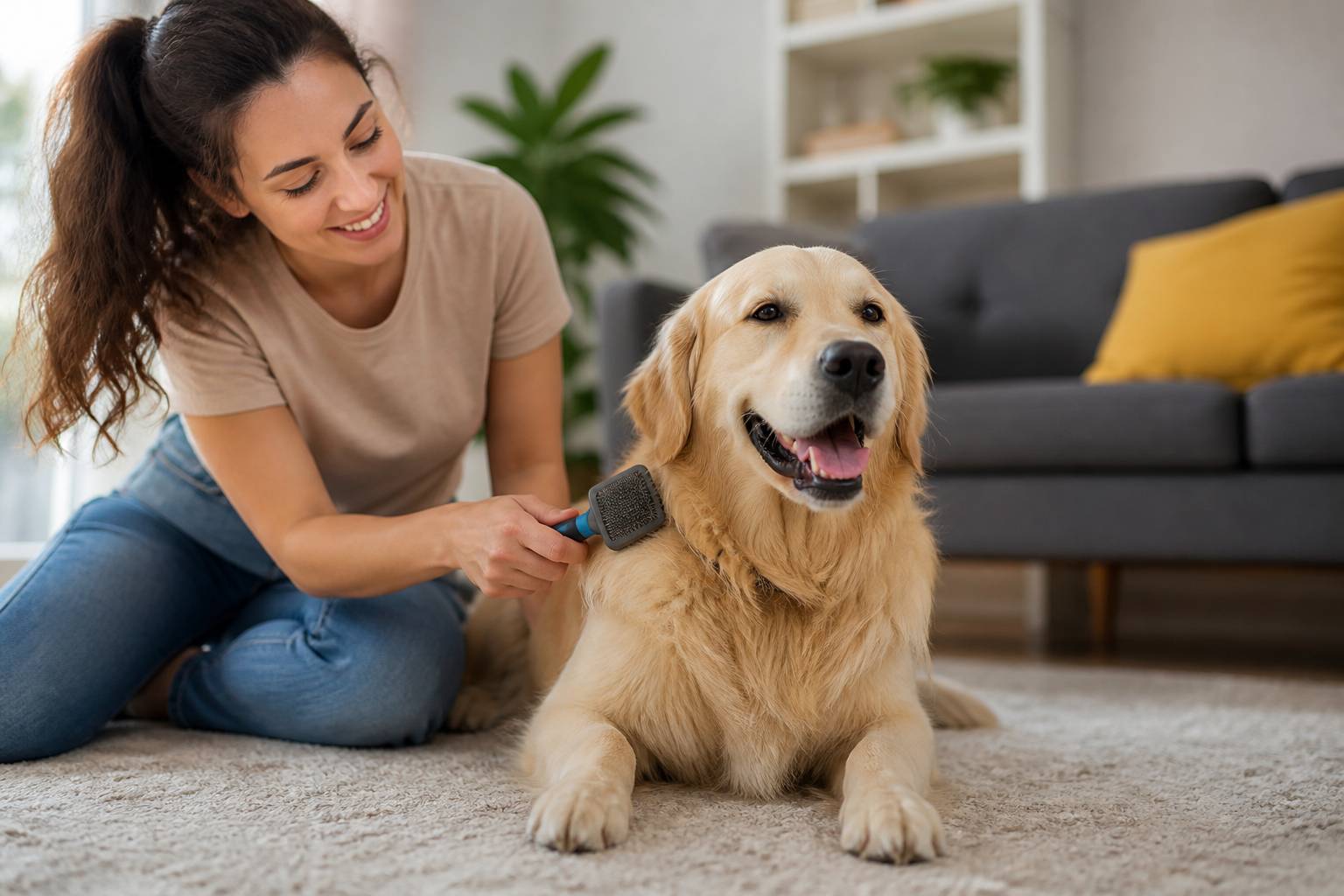
You are sitting on your sofa when a stray tumbleweed of fur drifts past your feet. Or perhaps you reach down to scratch your dog behind the ears and your fingers snag on a painful, tight knot in their coat. At BaxterBoo, we know that grooming often feels like a task that can wait until next weekend. However, regular brushing is one of the most important things you can do for your pet's health and comfort. It is about more than just appearances or keeping hair off your rugs. This post covers the health benefits of grooming, the specific tools needed for different coat types, and how to handle common challenges like matting. Brushing your dog is a fundamental health requirement that supports their skin, circulation, and overall well-being.
Quick Answer: You should brush your dog at least once or twice a week to remove dead hair and distribute natural oils. Long-haired or double-coated breeds often require daily brushing to prevent painful matting and manage heavy shedding.
The Physical Health Benefits of Regular Brushing
Brushing is essentially a massage that promotes better health for your dog. When you run a brush through their fur, you are doing more than just moving hair. You are stimulating the skin and increasing blood flow to the hair follicles. This process encourages the production of natural oils that keep the coat shiny and the skin hydrated. Without regular brushing, these oils can sit on the skin and cause irritation or lead to a dull, brittle coat.
Another major benefit is temperature regulation. Many owners believe that a thick coat makes a dog hot in the summer, but the coat actually acts as insulation. When dead hair gets trapped in the coat, it prevents air from reaching the skin. This trapped fur acts like a heavy wool sweater that the dog cannot take off. By removing that dead undercoat, you allow the skin to breathe and help your dog stay cool in the heat and warm in the cold.
Key Takeaway: Brushing is a functional health task that regulates body temperature and promotes the production of protective skin oils.
Early Detection of Health Issues
Brushing is your best opportunity to perform a mini physical exam at home. Because you are touching almost every inch of your dog's body, you will notice things that might otherwise go unseen. This is the time when most owners find small lumps, cysts, or skin tags. Early detection of these growths is vital for successful veterinary treatment.
You will also be the first to know if your dog has picked up any unwanted guests. Fleas and ticks love to hide in the thickest parts of a dog's fur, especially around the neck, armpits, and the base of the tail. Using a fine-toothed comb during your grooming session can help you spot these pests before they turn into a full-blown infestation. Explore the flea and tick collection for additional grooming and parasite-control supplies.
Vet Tip: Use your grooming time to check for redness, unusual odors, or sensitive spots on the skin. If you find a persistent hot spot or signs of parasites, consult your veterinarian and check the BaxterBoo pharmacy for FDA-approved treatments through our partnership with Pet's Choice.
Managing Shedding and Household Hygiene
If you have a breed like a Labrador or a German Shepherd, you know that shedding is a year-round reality. While no brush can stop shedding entirely, it can control where that hair ends up. A single grooming session can remove a massive amount of loose fur that would otherwise end up on your clothes, furniture, and flooring.
For many owners, this is the primary motivation for brushing. It significantly reduces the allergens in the home. Loose hair often carries dander and outdoor pollen. By capturing this debris in a brush and disposing of it, you keep your living environment cleaner. Regular maintenance also prevents the "doggy smell" that occurs when dead hair and skin cells accumulate and begin to trap moisture and bacteria. For more guidance on seasonal coat maintenance, read how Australian Shepherds shed.
Understanding Different Coat Types
Not every dog needs the same kind of care. The "should you brush your dog" question is always followed by "how often," and the answer depends entirely on their coat type. Using the wrong technique for a specific coat can be ineffective or even cause skin irritation known as brush burn. You can compare options in our dog brushes and combs collection.
Smooth and Short Coats
Dogs with smooth coats, such as Boxers, Pointers, or Great Danes, are the easiest to maintain. They still shed, but their hair is short and does not tangle easily. For these breeds, a rubber curry brush or a soft bristle brush is ideal. This helps lift the short, dead hairs and massages the skin. You only need to do this once or twice a week to keep them looking sleek.
Double Coats
Double-coated breeds like Siberian Huskies, Golden Retrievers, and Border Collies have a soft undercoat and a tougher outer coat. These dogs "blow" their coats twice a year, resulting in extreme shedding. They require a specialized tool called an undercoat rake. This tool reaches through the top layer to pull out the loose fluff underneath. During shedding season, these dogs may need daily attention to prevent the undercoat from matting against the skin.
Curly and Wire Coats
Poodles, Bichons, and many Terrier breeds have hair that grows continuously rather than shedding out. While they are often called "hypoallergenic," they are actually high-maintenance. Because the dead hair does not fall out, it gets trapped in the curls and creates knots almost instantly. These dogs require frequent brushing with a slicker brush and regular professional haircuts to prevent their fur from becoming a solid mass of mats.
Silky and Drop Coats
Yorkshire Terriers and Maltese have fine, hair-like coats that can grow to the floor. These coats are very prone to tangles and breakage. You must use a pin brush or a wide-toothed comb to gently work through the strands. Because this hair is so similar to human hair, many owners find that a conditioning spray is necessary to prevent the brush from pulling or damaging the coat.
Bottom line: Identify your dog's specific coat type to choose the correct tool and frequency for their needs.
Essential Tools for Your Grooming Kit
To do the job right, you need the right equipment. You do not need a professional salon setup, but a few key items will make the process much easier for you and more comfortable for your dog. Browse our grooming tools to build a practical at-home kit.
- Slicker Brush: This has fine, short wires close together on a flat surface. It is the best all-around brush for removing tangles and surface debris.
- Bristle Brush: Best for short-haired dogs or as a finishing tool to add shine to any coat.
- Metal Comb: A sturdy metal comb is essential for checking your work. If the comb cannot pass through the fur after brushing, a mat is forming.
- Undercoat Rake: A must-have for any dog with a thick, shedding undercoat.
- Rubber Curry Brush: Perfect for short-haired breeds and for use during baths to scrub the skin.
- Conditioning Spray: Helps soften the hair and allows the brush to glide through tangles without causing pain.
How to Brush Your Dog Without the Stress
Many dogs view the brush as a scary object or a toy to be chewed. If your dog runs away when they see the grooming kit, you need to change their perspective. Start by letting them sniff the tools and giving them a high-value treat. Do this several times without actually brushing them.
When you begin, keep the sessions very short. Focus on one small area, like the back, where most dogs are less sensitive. Avoid the "scary" areas like the paws, tail, and face until the dog is relaxed. Always brush in the direction of hair growth. Going against the grain can be uncomfortable and may cause the hair to break.
Step 1: Create a calm environment. / Find a quiet spot without distractions where your dog feels secure. Step 2: Introduce the tools. / Let your dog sniff the brush and offer a small treat to build a positive association. Step 3: Start with easy areas. / Begin brushing the shoulders or back using long, gentle strokes in the direction of hair growth. Step 4: Check for mats. / Use your fingers or a wide-toothed comb to feel for any knots or tangles near the skin. Step 5: Reward and end. / Give your dog plenty of praise and a final treat so they look forward to the next session.
The Danger of Mats and Pelting
Matting is more than just a cosmetic issue. It is a serious health hazard. When hair tangles and is not brushed out, it begins to wind around itself, getting tighter and closer to the skin. These mats trap moisture against the skin, which can lead to fungal or bacterial infections. In severe cases, the mats can become so tight that they restrict blood flow to the limbs or ears.
If you find a mat, do not try to cut it out with scissors. It is very easy to accidentally snip the dog's skin because the mat pulls the skin up into the knot. Instead, apply a detangling spray and try to work the mat apart with your fingers or the end of a comb. If the mat is solid and hard, like felt, this is called "pelting." At this stage, it is too painful to brush out, and the dog will likely need to be shaved by a professional groomer or a veterinarian.
Brushing and the Bathing Routine
A common mistake is giving a matted dog a bath thinking it will help loosen the knots. Water actually makes mats tighter. When the hair gets wet and then dries, the knots shrink and become almost impossible to remove. You should always thoroughly brush your dog before they get in the tub.
Once the dog is clean and dry, a second light brushing helps remove any hair that was loosened during the washing process. At BaxterBoo, we recommend using a high-quality dog shampoo that matches your pet's skin needs. If your dog has itchy skin or allergies, your vet might recommend a prescription shampoo, which you can find through the BaxterBoo pharmacy. For more bath-time guidance, read these dos and don'ts for bathing your dog.
Grooming as a Bonding Experience
Beyond the health and hygiene benefits, brushing is a time for you to connect with your pet. In a busy household, twenty minutes of quiet, focused attention can be the highlight of your dog's day. It builds trust and helps your dog become more comfortable with being handled. This is especially helpful for vet visits, as your dog will be used to having their ears, paws, and belly touched.
If you have a new puppy, start this routine immediately. Even if they do not have much hair yet, getting them used to the sensation of a brush is vital. A dog that enjoys being groomed is much easier to care for throughout their life. It turns a potential struggle into a relaxing ritual for both of you.
When to Call a Professional
While most brushing can be done at home, some situations require an expert. If your dog has severe pelting, extreme anxiety about grooming, or skin conditions that make touching painful, a professional groomer is the safest choice. They have the specialized tables, dryers, and clippers to handle difficult cases without causing injury.
Additionally, if you notice signs of a skin infection, such as oozing, a strong foul odor, or extreme redness, a trip to the vet is necessary. They can diagnose the underlying cause, whether it is allergies, parasites, or a thyroid issue. They may prescribe medicated wipes or oral medications to clear up the irritation.
Summary of Brushing Best Practices
To keep your dog's coat in top shape, consistency is key. A quick five-minute brush every other day is often more effective than a grueling hour-long session once a month. It keeps the hair manageable and prevents the small tangles from turning into major problems.
- Brush before every bath to prevent tightening mats.
- Always brush in the direction of hair growth.
- Use treats and praise to keep the experience positive.
- Pay extra attention to high-friction areas like under the collar and behind the ears.
- Keep your tools clean by removing the hair after every session.
Bottom line: A consistent brushing routine prevents pain, identifies health issues early, and keeps your home cleaner.
Conclusion
Brushing your dog is a simple but powerful way to support their long-term health. It regulates their temperature, protects their skin, and provides a valuable opportunity to check for lumps or pests. Whether you have a short-haired Beagle or a fluffy Poodle, the time you spend grooming is an investment in their comfort and your bond. By choosing the right tools and keeping sessions positive, you can turn grooming from a chore into a beneficial habit. For all your grooming needs, from slicker brushes to conditioning sprays, we invite you to explore our dog grooming collection. Our MVP Rewards program also helps you save on these essential supplies so you can keep your dog feeling their best year-round.
FAQ
Is it possible to brush a dog too much?
While most dogs benefit from frequent brushing, you can cause skin irritation if you use too much pressure or the wrong type of brush. This is often called brush burn, and it appears as red, scraped, or sensitive skin. Always use a gentle hand and ensure the tool you are using is appropriate for your dog's specific coat length and texture.
Should I brush my dog's hair when it is wet or dry?
It is almost always better to brush your dog's hair when it is completely dry. Wet hair is more elastic and prone to breakage, and water causes existing mats to tighten significantly. The only exception is when using a specialized leave-in conditioning spray designed to help slide through tangles, but the coat should still be mostly dry.
What should I do if my dog hates being brushed?
If your dog is fearful, you must go back to basics and use positive reinforcement. Start by just placing the brush on the floor and putting treats around it. Gradually move to touching them with the back of the brush while feeding them. Keep sessions under two minutes and always end on a positive note with a high-value reward.
How do I get rid of the "doggy smell" through brushing?
The smell is often caused by a buildup of old oils, trapped moisture, and dead skin cells in the undercoat. Regular brushing removes this debris and allows the skin to breathe. Using a deodorizing grooming spray or a dry shampoo between sessions can also help neutralize odors without the need for a full bath.






