
 Save 15% on your 1st Autoship learn more

 Email us
 Live Chat
 FAQs
FAQs





Introduction
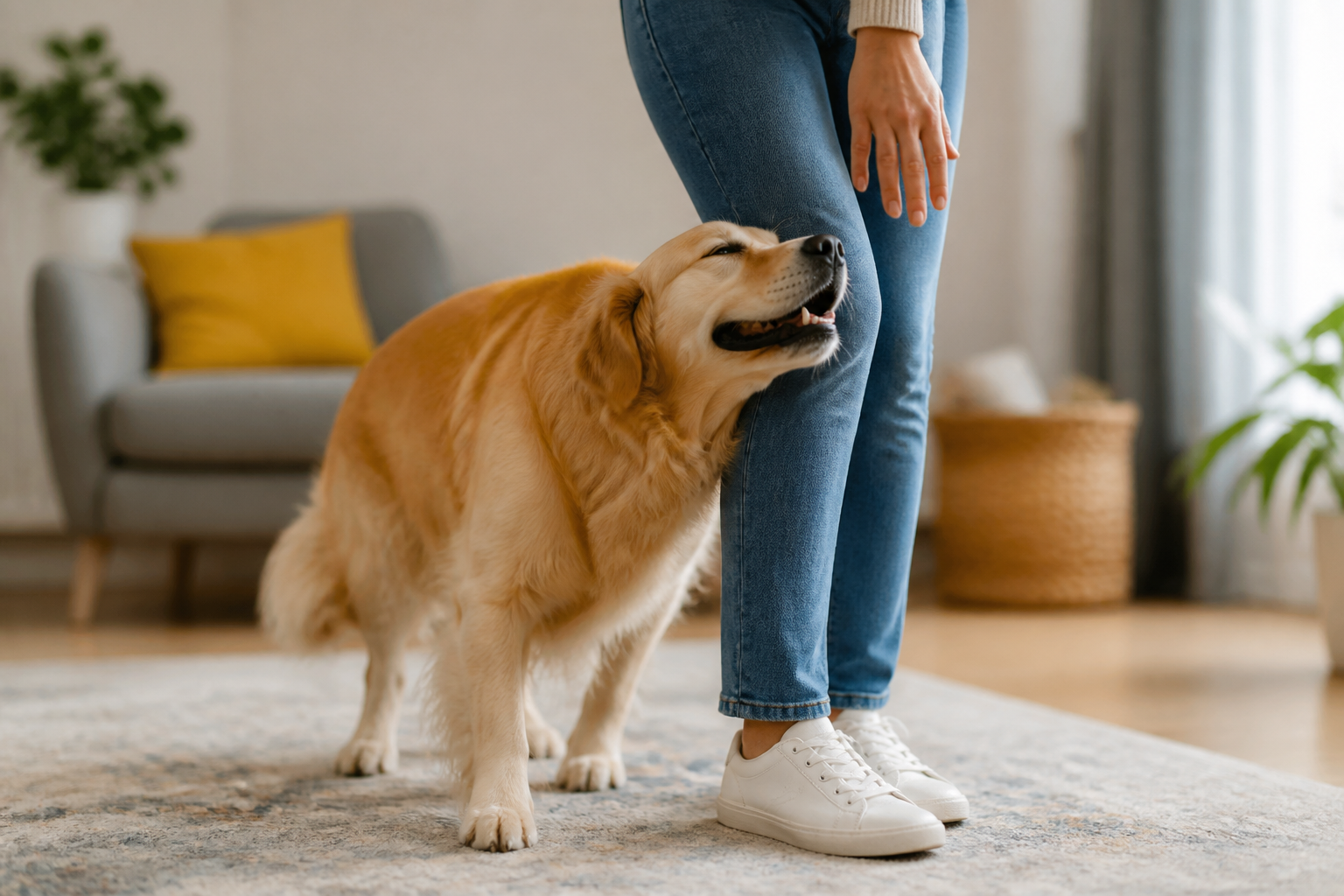
You are sitting on your sofa when your dog walks past and firmly presses their entire side against your legs. Perhaps they linger there for a moment or do a slow lap around your chair while maintaining constant contact with your shins. If you have ever felt this sudden weight against your legs, you might wonder why your dog acts more like a cat than a canine. At BaxterBoo, we see this behavior often and know it is one of the most common ways dogs communicate without making a sound.
This behavior is rarely random. From expressing deep affection to signaling physical discomfort, your dog uses their body to tell a story. We will explore the common reasons for this "lean" or "brush" and help you identify when it is a sweet gesture and when it might require a call to your veterinarian. Understanding these subtle cues helps you provide the best possible care for your companion.
The Canine Version of a Hug
Dogs do not have arms to wrap around us. Instead, they use their entire bodies to show closeness. When your dog brushes against you, they are often performing the canine version of a hug. This physical contact releases oxytocin in both you and your dog. Oxytocin is often called the love hormone. It strengthens the bond between you and creates a sense of peace.
Many dogs choose to brush against your legs while you are standing still or walking. This is a sign of high trust. By leaning their weight onto you, they are essentially saying they feel safe enough to give up some of their own balance. It is a vulnerable position for a dog. If they do this frequently, it means they view you as their primary source of security.
Quick Answer: Dogs brush against you primarily to show affection, seek security, or mark you with their scent. It is a social behavior rooted in their pack instincts that reinforces the bond between a dog and its owner.
Marking You as Part of the Pack
Dogs experience the world through their noses. They have scent glands located in various spots on their bodies, including their faces and along their sides. When your dog rubs their body against your legs, they are engaging in scent marking. This is not the same as the territorial marking you see outdoors. Instead, it is a social marking behavior.
By brushing against you, your dog is depositing their unique scent onto your clothes. At the same time, they are picking up your scent. This creates a shared pack odor. To a dog, smelling like their human is incredibly comforting. It signals to any other animals that you belong to them and they belong to you. This behavior often intensifies after you have been away from home or around other dogs.
Seeking Comfort and Reassurance
If your dog suddenly starts brushing against you during a thunderstorm or while fireworks are going off, they are likely seeking security. This is often called "velcro dog" behavior. In moments of fear or anxiety, your dog views you as their safe harbor. Applying physical pressure against your body helps them regulate their nervous system.
You might notice this behavior in new environments, such as a busy park or a waiting room at the clinic. If your dog stays glued to your side and brushes against your knees, they are looking for a confidence boost.
- Watch for tucked tails or pinned ears.
- Check if their breathing is faster than normal.
- Look for "whale eye," where you can see the whites of their eyes.
- Notice if they are trembling while leaning.
If your dog frequently struggles with environmental stress, we carry a wide variety of calming aids in our dog anxiety and calming section. Options like ThunderShirts or Zesty Paws calming chews can help manage these moments.
Key Takeaway: Brushing against you is a multi-functional tool for dogs. It serves as an emotional connection, a way to establish a shared scent, and a physical grounding technique during stressful events.
For more ideas about helping dogs through stressful situations, read our guide to choosing a calming vest for your dog.
A Call Back to Puppyhood
The instinct to press against a warm body starts the moment a dog is born. Puppies are born with their eyes and ears closed. They rely entirely on touch and scent to find their mother and siblings. They huddle together for warmth and protection.
As dogs mature, many retain this "denning" instinct. When your dog brushes against you or curls up against your feet, they are reverting to that primal need for the safety of the pack. This is especially common in breeds that are known for being particularly social or family-oriented, such as Golden Retrievers or Vizslas.
Seeking Your Attention
Sometimes the reason is much simpler. Your dog has learned that brushing against you is a highly effective way to get what they want. If you usually reach down to pet them or offer a treat when they rub against your leg, you have reinforced the behavior.
They may use this move as a gentle nudge to remind you it is dinner time. Or, they might want to go for a walk. Unlike a bark, which can be startling, a brush against the leg is a polite way to ask for engagement. If your dog brushes against you and then moves toward the door or their food bowl, they are clearly communicating a specific need.
Identifying Physical Discomfort
While most brushing is social or emotional, it can sometimes indicate a health issue. If the behavior seems obsessive or if your dog is rubbing their face or body against furniture and your legs repeatedly, they might be itchy.
Skin Irritations and Allergies
Environmental allergies are a common culprit. Pollen, dust, and grass can cause intense itching on a dog's belly, chest, and face. Your dog may use your legs as a convenient scratching post. Look for redness on their skin or thinning hair in the areas they are rubbing.
For additional guidance, see our article about sensitive skin dog shampoos.
Ear Infections
If your dog is specifically brushing their head and ears against your legs, they might be dealing with an ear infection. These are often painful or incredibly itchy. You might notice a dark discharge or a yeasty smell coming from the ear canal.
Dental Pain
A dog with a toothache or gum disease may rub the side of their face against you. They are trying to relieve the pressure and discomfort in their mouth. If your dog has bad breath or is dropping food while eating, dental issues are likely the cause.
Learn more about warning signs in our guide to recognizing dental problems in dogs.
Vet Tip: If your dog's rubbing behavior changes from a gentle lean to aggressive or frantic scratching against surfaces, schedule a veterinary exam. Chronic itching or head shaking often requires professional diagnosis to rule out infections or severe allergies.
Managing Health-Related Rubbing
When physical discomfort is the cause, simply petting your dog will not solve the problem. If your dog is struggling with persistent skin issues or allergies, our pet pharmacy can help. Through our partnership with Pet's Choice, we offer FDA-approved medications and prescription diets that address chronic health concerns.
Step 1: Observe the patterns. Note if the rubbing happens after meals or after going outside. Step 2: Inspect the area. Look for fleas, ticks, redness, or bumps on the skin. Step 3: Consult your veterinarian. They can provide a prescription for allergy relief or ear treatments. Step 4: Visit the BaxterBoo pharmacy section. You can easily upload your prescription to get the medications your dog needs delivered to your door.
How to Respond to Your Dog
For most owners, a dog brushing against them is a welcome sign of love. You can reinforce this bond by talking softly to your dog or giving them a gentle scratch behind the ears. If the behavior is purely for affection, there is no reason to discourage it.
However, if your dog is brushing against you because they are anxious, try to identify the trigger. Providing a safe space like a crate with a favorite toy can help. If they are brushing against you to demand treats, try to wait until they sit quietly before offering the reward. This teaches them that while you love the closeness, you are still the one who decides when it is treat time.
Bottom line: Brushing against you is usually a sign of a healthy, happy bond, but always monitor for secondary symptoms like itching or restlessness that could point to a medical need.
The Role of Grooming and Skin Care
Sometimes a dog brushes against you because their coat is dirty or full of loose fur. This is especially common during shedding season. Regular grooming can reduce the "itch factor" that leads to excessive rubbing.
- Use a de-shedding tool like those from Kong to remove loose undercoat.
- Bathe your dog with soothing oatmeal shampoos if they have sensitive skin.
- Check for mats behind the ears and in the armpits, as these can pull on the skin and cause discomfort.
- Keep their bedding clean to reduce allergens in their environment.
We carry a full range of dog grooming supplies to keep your dog's skin healthy. If you find yourself buying these essentials often, our Autoship program is a great way to save. You get a discount on your first order and a free MVP Gold membership, which helps you earn rewards on every purchase.
You can also explore our MVP Rewards programme to learn more about available membership benefits.
Summary of Reasons Dogs Brush Against You
To help you keep track of what your dog might be saying, consider this quick reference for their behavior:
| Behavior Type | Likely Reason | What to Look For |
|---|---|---|
| Slow, rhythmic brush | Affection | Relaxed tail, soft eyes |
| Firm lean and staying put | Seeking security | Tucked tail, looking for reassurance |
| Quick rub while walking | Scent marking | Dog moving between you and furniture |
| Frantic rubbing or scratching | Physical itch | Red skin, hair loss, ear odor |
| Nudging your hand with the head | Attention seeking | Dog looking directly at you or a toy |
Conclusion
Whether your dog is a dedicated "leaner" or just gives you a quick brush on their way to the backyard, this behavior is a fundamental part of how they relate to you. It is a sign that you are their pack, their protector, and their best friend. By paying attention to the context of the behavior, you can better understand their emotional and physical needs.
If the brushing is about love, enjoy the moment. If it is about an itch or an ear ache, take the necessary steps to get them relief. Our pharmacy and wide selection of wellness products are here to support you in every stage of your pet's life. Keeping your dog comfortable is the best way to ensure those "doggy hugs" continue for years to come.
Key Takeaway: A dog's brush is a silent conversation about trust and belonging. Use these moments to check in on their well-being and reinforce your unique bond.
FAQ
Why does my dog rub their face on me after eating?
Many dogs rub their faces on their owners or the furniture after a meal to clean off food residue. This is often a functional behavior, but it can also be a sign of satisfaction and happiness after a good meal. If the rubbing is accompanied by pawing at the mouth, check for food stuck in their teeth or signs of gum irritation.
Is it normal for a dog to brush against strangers?
Some social dogs will brush against anyone they meet to gather information through scent. However, it can also be a way for the dog to claim the new person into their extended social circle. While usually friendly, always monitor your dog's other body language to ensure they are not actually feeling overwhelmed by the new person.
Can brushing against my legs be a sign of dominance?
Most modern animal behaviorists agree that leaning or brushing is rarely about dominance. It is almost always a sign of affiliation, affection, or a search for security. Dogs are social creatures that value physical closeness. Thinking of it as a "hug" is much more accurate than viewing it as a power move.
What should I do if my dog won't stop rubbing their ears against me?
If your dog is constantly rubbing their ears against your legs, floor, or furniture, they likely have an ear infection or ear mites. Look for redness, swelling, or a strong odor inside the ear. You should consult your veterinarian for a proper diagnosis and then check our pharmacy for the necessary prescription treatments.






