
 Save 15% on your 1st Autoship learn more

 Email us
 Live Chat
 FAQs
FAQs





Introduction
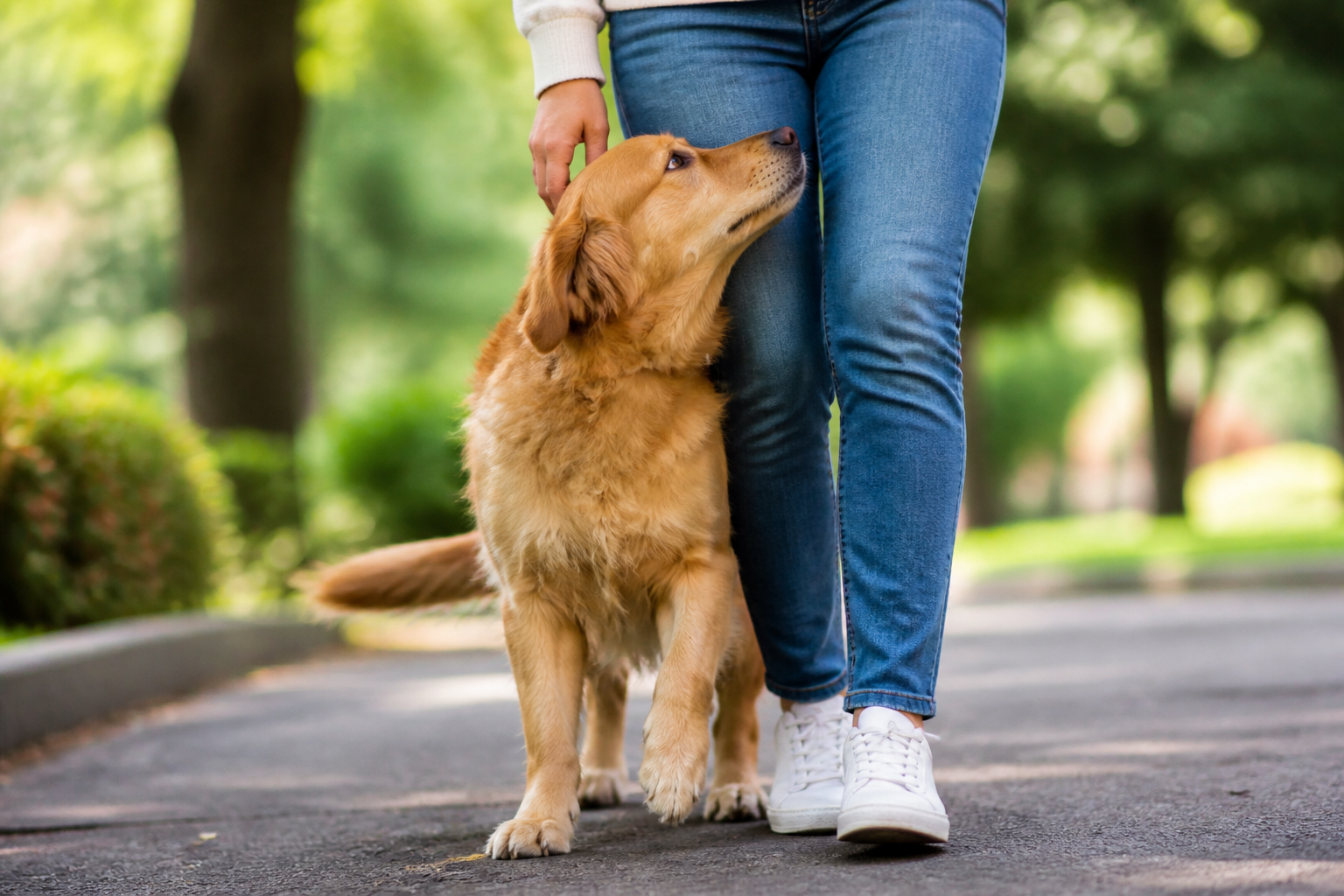
You are sitting on the sofa or standing in the kitchen when your dog suddenly walks past and presses their entire body against your legs. Sometimes it feels like a feline rub, and other times it is a heavy lean that almost knocks you off balance. This physical contact is one of the most common ways dogs interact with their favorite humans. At BaxterBoo, we know that every nudge and lean is a form of communication. While it is usually a sign of deep affection, this behavior can also signal anxiety, a desire for resources, or even a hidden medical issue like skin irritation. This article will explain exactly why your dog chooses to brush up against you and how to tell if they are asking for a cuddle or a trip to the vet.
Quick Answer: Dogs brush up against you primarily to show affection and strengthen their bond through the release of oxytocin. They also do this to mark you with their scent, seek security when feeling anxious, or alert you to an itch or skin discomfort.
1. Showing Affection and Strengthening Bonds
The most common reason for a dog to brush against your legs is pure affection. Unlike humans, dogs cannot tell you they love you with words. They use their bodies to express closeness. When a dog makes physical contact with your skin or clothing, their brain releases oxytocin. This is often called the love hormone. It helps reduce stress and creates a sense of well-being for both you and your pet.
This behavior is similar to how puppies huddle together in a litter. It provides a sense of warmth and belonging. If your dog walks past you and does a slow, full-body rub from head to tail, they are likely just saying hello. This is a relaxed behavior. You will notice their body is loose and their tail might be wagging slowly. It is a sign that they feel completely safe in your presence.
2. Marking Their Territory with Scent
Dogs experience the world through their noses. They have scent glands located around their face, paws, and the base of their tail. When a dog brushes their face or body against your legs, they are depositing pheromones onto you. This is a subtle way of claiming you as part of their pack. It creates a communal scent that helps the dog feel secure.
You might notice this behavior more often after you have been out of the house. When you return, you carry the smells of the outside world. Your dog may want to re-establish their scent on you to mask those foreign odors. It is a social ritual that says you belong to them. This type of scent marking is a normal, healthy part of canine social structure.
Key Takeaway: Brushing against you is a social "handshake" that uses scent to reinforce your dog’s place in the family pack.
3. Seeking Security and Reassurance
If your dog leans their weight against you or huddles close to your legs, they might be looking for protection. This is known as the canine lean. For many dogs, physical contact acts as a grounding force. If they are startled by a loud noise or feel uneasy in a new environment, they look to their leader for support.
Anxious dogs often use their owners as a physical shield. You may see this during thunderstorms or fireworks. If the brushing behavior is accompanied by pinned-back ears, a tucked tail, or panting, your dog is likely feeling stressed. Providing a calm environment and consistent routine can help. For dogs with chronic anxiety, we offer various calming aids and supplements in our dog healthcare category.
4. Communication and Requesting Attention
Dogs are masters of manipulation when it comes to getting what they want. They quickly learn which behaviors earn them a head scratch or a treat. If your dog brushes against you while you are busy, they might be reminding you that it is dinner time. Or perhaps they simply want to play.
Observe the timing of the behavior. Does it happen right before their scheduled walk? Do they rub against you and then look toward the cupboard where the treats are kept? This is an intentional form of communication. They are using physical touch to break your focus and redirect it toward their needs.
Step 1: Observe the context. / Note if the behavior happens at specific times of day, such as mealtime or when you grab your keys.
Step 2: Check for cues. / Look for other signs like sitting by the door, staring at a toy, or "talking" with small whines.
Step 3: Respond appropriately. / If they are asking for attention, a quick play session with a Kong toy can satisfy their need for engagement.
5. Regulating Body Temperature
Sometimes the reason is purely practical. Dogs may brush against you to steal some of your body heat. This is very common in smaller breeds or dogs with thin coats during the winter months. If your dog is leaning against you while you are both relaxing, they might just be using you as a living heater.
Conversely, some dogs might press against your legs because you are sitting on a cool floor or near an air vent. They want to be in that same comfortable spot. While this is less about deep psychological needs, it still demonstrates that they view you as a source of comfort and luxury.
6. Identifying Medical Concerns and Itching
While most rubbing is social, it can sometimes be a sign of physical discomfort. If your dog is obsessively rubbing their face, ears, or sides against you, they might be trying to scratch an itch they cannot reach. This is often the first sign of environmental or food allergies.
Dogs with skin conditions may use your legs like a scratching post. You should inspect their skin for redness, hair loss, or small bumps. If the rubbing is focused on the head and ears, it could indicate an ear infection or mites.
Vet Tip: If your dog begins rubbing their face or body against furniture and people with sudden intensity, consult your veterinarian. They can help diagnose allergies or skin infections before they become severe.
Our pharmacy carries a wide range of allergy relief products and prescription medications. We can help you manage chronic skin conditions with professional guidance and appropriate treatments. Frequent bathing with soothing shampoos from brands like Zesty Paws can also help manage seasonal irritants that cause your dog to itch. You can also browse our pet pharmacy for available options.
7. Post-Meal and Post-Grooming Rituals
Have you ever noticed your dog go for a "victory lap" after they finish their dinner? Many dogs will immediately find a person or a piece of furniture to rub their face against after eating. This helps them clean food particles from their muzzle. It is a natural grooming instinct.
Similarly, many dogs engage in frantic rubbing right after a bath. They are often trying to remove the scent of the shampoo and replace it with their own natural odor. They might also be trying to dry their ears and face. If your dog does this, it is usually a high-energy, happy behavior. They might even have a case of the zoomies right afterward.
Understanding Breed-Specific Rubbing
Some breeds are naturally more prone to physical contact than others. We often see this in "velcro" breeds like Vizslas, Golden Retrievers, and Great Danes. These dogs were bred to work closely with humans and feel a biological need to be in constant contact.
Flat-faced breeds, such as Pugs and French Bulldogs, often rub their faces against people because of the folds in their skin. These folds can trap moisture and debris, leading to irritation. If you own a brachycephalic breed, regular cleaning of their facial folds is essential. This can reduce the urge for them to rub against you to find relief from hidden dampness or bacteria.
How to Manage Excessive Brushing
If your dog’s habit of brushing against you becomes overwhelming or disruptive, you can use training to set boundaries. While you never want to punish a dog for showing affection, you can teach them a "place" command. This gives them a designated spot to relax when you need space.
- Reward calm behavior when they are near you but not touching.
- Increase mental stimulation with interactive toys to tire them out.
- Ensure they have a comfortable, supportive bed nearby.
- Address any underlying medical itches with the help of a vet.
For more ideas, read about dog boredom busters and enrichment activities.
Bottom line: Most dogs brush against you to express love, but always rule out itchy skin or anxiety if the behavior changes suddenly.
When to Seek Veterinary Advice
It is important to differentiate between a "love rub" and a "medical rub." You should contact your veterinarian if you notice any of the following symptoms accompanying the physical contact:
- Red, inflamed skin or open sores.
- A strong, unpleasant odor coming from the ears or skin.
- Constant head shaking or pawing at the face.
- Hair loss in patches or along the spine.
- Signs of pain, such as flinching or whining when they touch you.
These symptoms often point to issues like flea infestations, yeast infections, or severe allergies. At BaxterBoo, we stock various flea and tick preventives to keep these pests away. For more complex issues, your vet may provide a prescription for a specialized diet or medication through our pharmacy service.
Conclusion
A dog brushing up against you is one of the most rewarding parts of being a pet owner. It signifies trust, a shared bond, and a clear line of communication. Whether they are seeking a warm spot, claiming you as their own, or simply asking for a belly rub, it is a sign that you are their world. We are here to help you support that bond with the best gear, food, and health supplies. From calming supplements for the anxious leaners to allergy medications for the itchy ones, our selection is curated by people who love pets as much as you do. Consider joining the MVP Rewards programme to earn points on every purchase as you care for your loyal companion.
FAQ
Why does my dog rub their face on me specifically after they eat?
This is usually a grooming behavior. Your dog is likely trying to wipe away food residue or moisture from their muzzle. It can also be a sign of satisfaction and "celebrating" a good meal.
Is it a sign of dominance when my dog leans against my legs?
No, the idea that leaning is a dominance move has been largely debunked by modern animal behaviorists. In most cases, it is a sign of affection, a search for security, or a way to get your attention for pets and treats.
Why does my dog brush against me when we are at the dog park?
When in a high-stimulation environment, your dog may brush against you for a "check-in." They are looking for reassurance and making sure their pack leader is still close by and attentive to their safety.
Can allergies make my dog brush up against me more often?
Yes, if your dog has itchy skin or ears, they will use any available surface to find relief. If the rubbing seems frantic or is focused on specific itchy spots, consult your vet about potential environmental or food sensitivities.






