
 Save 15% on your 1st Autoship learn more

 Email us
 Live Chat
 FAQs
FAQs





Introduction
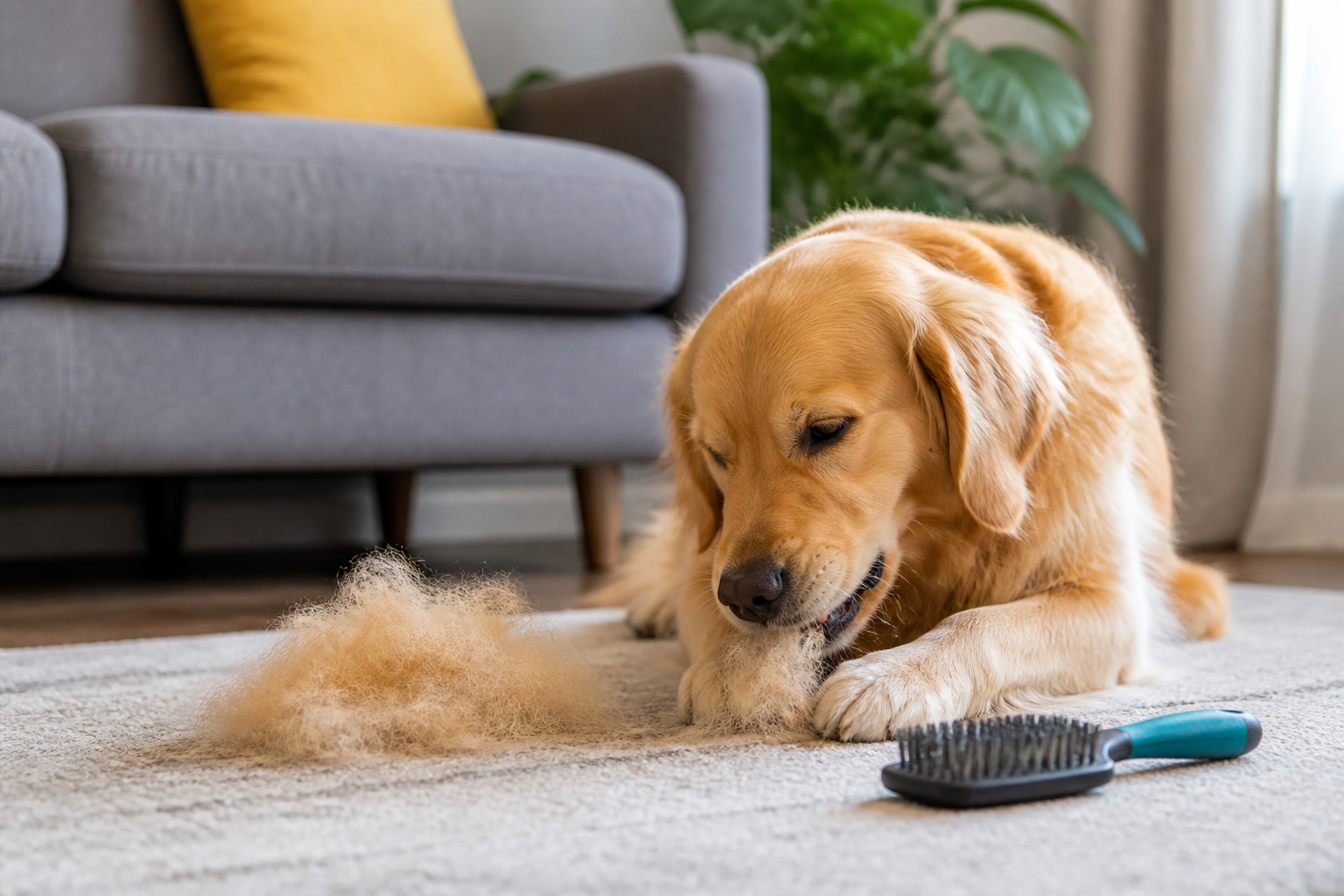
You just finished a long grooming session and your dog looks sleek and shiny. As you go to throw away the pile of loose fur, your dog suddenly lunges forward and starts eating it. This is a common but confusing sight for many pet owners. It can feel like a strange setback after all your hard work. At BaxterBoo, we know that these peculiar behaviors often stem from a mix of natural instincts and specific health needs. This post covers the psychological and physical reasons dogs ingest their own fur, the potential health risks involved, and how to stop the habit. Understanding this behavior is the first step toward ensuring your dog stays healthy and comfortable.
Quick Answer: Dogs often eat their hair after brushing due to curiosity, boredom, or a natural grooming instinct. In some cases, it signals a nutritional deficiency or a compulsive behavior known as pica that requires veterinary attention.
The Instinctive Drive to Groom
Dogs have a natural urge to keep themselves clean. While they are not as fastidious as cats, they still engage in self-grooming. When you brush your dog, you are mimicking a social behavior that occurs in packs. Some dogs see the loose fur as something that needs to be "processed" or cleaned up. They might feel the need to ingest the hair to tidy up their space or their own body. This is especially true for breeds with a high prey drive or those that are very task-oriented.
In the wild, leaving piles of fur behind could alert predators or prey to a dog's presence. Eating the hair is a way to remove evidence of their location. While your pampered pet does not have to worry about mountain lions in the living room, these ancient instincts can still influence their actions. They see the hair as a part of themselves that should not be left lying around.
Boredom and Environmental Curiosity
Puppies and young dogs explore the world with their mouths. A fluffy tuft of hair is an interesting texture that smells exactly like them. If your dog is feeling bored during a grooming session, they might turn to the hair as a temporary toy. It is a "self-scented" object that provides immediate sensory feedback.
Boredom often leads to destructive or odd behaviors. If your dog does not have enough mental stimulation, they will find ways to entertain themselves. Eating hair can become a game of "catch it before the human takes it away." This often happens if the owner reacts strongly. If you jump or shout when they grab the hair, your dog might think you are playing. They may eat the hair simply to keep the "game" going.
Key Takeaway: Much of this behavior is rooted in ancient survival instincts or simple puppy curiosity, but it can quickly turn into a habit if your dog receives extra attention for doing it.
Nutritional Deficiencies and Pica
If the behavior is persistent, it might not be a game. Pica is a condition where animals crave and eat non-food items. This can include dirt, rocks, or their own fur. Often, pica is a sign that a dog is missing something vital in their diet. They are searching for minerals or fiber that their current food is not providing.
A lack of dietary fiber can make a dog feel constantly hungry or lead to an upset stomach. They may eat hair to try and add bulk to their digestive tract. Similarly, if their food is low in essential fatty acids, their skin might be itchy and their coat dull. This discomfort can lead to "over-grooming" where they pull out and eat their own hair directly from the skin.
Anxiety and Compulsive Behaviors
Stress is a major factor in many unusual dog behaviors. Grooming sessions can be stressful for some pets, especially if they have had bad experiences in the past. If a dog feels anxious, they may develop a "displacement behavior." This is an action performed to relieve tension. For some dogs, this means licking their paws or eating loose fur.
Over time, this can turn into an obsessive-compulsive disorder. The dog begins to rely on the act of eating hair to calm their nerves. This is often seen in dogs with separation anxiety or those who have undergone major life changes. If your dog seems frantic or tense while eating the hair, it is likely a stress response rather than curiosity. For additional ways to make grooming feel less stressful, explore The Anxiety Wrap.
Vet Tip: If your dog is pulling hair directly from their skin or eating large amounts of loose fur compulsively, consult your veterinarian. They can help determine if the cause is medical, such as an allergy, or behavioral, like an anxiety disorder.
Potential Health Risks of Ingesting Hair
While a tiny bit of hair usually passes through the system without trouble, regular ingestion is dangerous. Dogs are not like cats. Their digestive systems are not as efficient at processing or hacking up hairballs. When a dog eats a large amount of fur, it can clump together in the stomach or intestines.
| Risk Factor | Potential Impact | Signs to Watch For |
|---|---|---|
| Intestinal Blockage | Hair clumps (trichobezoars) can stop the flow of food. | Vomiting, straining, or a painful abdomen. |
| Gastric Irritation | Hair is difficult to digest and can irritate the stomach lining. | Frequent gagging or a loss of appetite. |
| Bacterial Growth | Hair can trap bacteria and food particles in the gut. | Lethargy and foul-smelling breath or stool. |
| Skin Infections | Eating hair often follows "lick granulomas" or skin chewing. | Red, raw spots on the legs or flanks. |
If a blockage becomes total, it is a life-threatening emergency. The hair can become a solid mass that requires surgical removal. This is why it is so important to stop the behavior before it becomes a health crisis.
How to Stop the Behavior During Grooming
The best way to manage hair eating is to prevent access to the fur in the first place. You need to change the routine so the hair never stays within your dog's reach. Our dog grooming collection includes tools and supplies to help make that routine easier to manage.
Step 1: Prepare your environment.
Use a grooming table or a specific spot where you can easily sweep or vacuum as you go. Keeping the hair off the floor is the easiest way to stop the snacking.
Step 2: Use high-value distractions.
Give your dog something better to do with their mouth. A lick mat covered in peanut butter or a stuffed Kong toy can keep them occupied while you brush. This creates a positive association with grooming and keeps their focus away from the loose fur.
Step 3: Clear the brush frequently.
Do not let a large amount of hair build up in the bristles. Remove the hair and place it immediately into a closed container or a trash can that your dog cannot reach.
Step 4: Teach the "Leave It" command.
This is one of the most important skills for any dog. Practice "leave it" with low-value items first. Eventually, use it during grooming if they show interest in a tuft of hair. Reward them with a treat when they look away from the fur.
Bottom line: Consistent environmental management and positive reinforcement are the most effective ways to break the habit of eating hair during grooming.
Choosing the Right Grooming Tools
Sometimes the brush itself is part of the problem. If a brush is too scratchy or pulls the skin, it can cause micro-irritations. Your dog might then try to "soothe" the area by licking it and eating any loose hair left behind. Using high-quality tools like those from Kong or RC Pets can make the experience more comfortable.
For dogs that shed heavily, a rubber curry brush is often better than a metal slicker brush. It massages the skin and stimulates natural oils without being abrasive. When the skin feels good, the dog is less likely to engage in frantic grooming behaviors. You can compare options in our dog brushes and combs category.
For more guidance on brushing, combing, and managing mats, read how to groom a dog with curly hair.
Nutritional Support for Skin and Coat
If you suspect a nutritional deficiency is behind the hair eating, look at your dog's food. High-quality brands like Farmina, Royal Canin, or The Honest Kitchen focus on balanced nutrition that supports skin health. Look for ingredients rich in Omega-3 and Omega-6 fatty acids. These help reduce the itchiness that often leads to hair pulling.
In some cases, a standard diet is not enough. Your vet might recommend a prescription diet for skin sensitivities or digestive health. Our pharmacy at BaxterBoo offers a wide selection of these specialized foods through our partnership with Pet's Choice. Whether it is a prescription kibble or a specific supplement like Cosequin or Zesty Paws, getting the right nutrients can often stop the "hunger" for non-food items.
For more ideas related to coat nutrition and supplements, read this guide to supplements for happy dogs.
Addressing Underlying Medical Issues
If your dog's hair eating is accompanied by bald spots, red skin, or constant licking, there may be an underlying medical issue. Allergies are a frequent culprit. Dogs can be allergic to environmental factors like pollen or specific proteins in their food. This discomfort causes them to chew at their fur, leading to accidental or intentional ingestion.
Parasites like fleas and ticks can also cause enough irritation to trigger hair eating. Even one or two bites can send an allergic dog into a grooming frenzy. Using regular preventives like Frontline or NexGard is essential. Our pharmacy can help you stay on top of these needs with FDA-approved medications that require a veterinarian's prescription.
For related skin and coat products, visit our dog skin and coat care category.
Vet Tip: Never attempt to treat a suspected skin infection or severe allergy at home without a diagnosis. Your vet can perform skin scrapings or blood tests to find the exact cause of the irritation.
Managing Compulsive Behavior and Anxiety
For dogs that eat hair due to anxiety, you may need a multi-faceted approach. Increasing physical exercise is often the first step. A tired dog is generally a calmer dog. If they have spent their energy on a long walk or a game of fetch, they are less likely to obsess over hair during grooming.
Calming supplements can also be helpful. Brands like Honest Paws or Zesty Paws offer options with ingredients like hemp, chamomile, or L-theanine. These can help take the edge off a dog's nerves. For more severe cases of canine compulsive disorder, your veterinarian may prescribe anxiety medication. These are available through the BaxterBoo pharmacy and can be a vital tool in improving your dog's quality of life.
- Increase daily exercise to reduce pent-up energy.
- Introduce puzzle toys to provide mental stimulation.
- Keep grooming sessions short and positive.
- Consult a professional trainer if the behavior is deeply ingrained.
For more on how major life changes can affect a dog's stress levels, read this guide to helping your dog transition during a move.
The Importance of Professional Grooming
If grooming at home has become a battle or a "fur-eating buffet," it might be time to see a professional. Professional groomers have the equipment and experience to manage dogs that are obsessed with their own hair. They use high-velocity dryers that blow the hair away instantly, preventing the dog from ever getting a chance to eat it.
Watching a professional can also give you tips on how to handle your dog. You might notice they use a specific type of restraint or a specific order of operations that keeps the dog calm. Taking a break from home grooming can also help "reset" your dog's associations with the process.
For additional bathing and handling tips, see these dos and don'ts for bathing your dog.
Key Takeaway: Sometimes a professional reset is exactly what a dog needs to break a stressful or compulsive home grooming habit.
Monitoring Digestive Health
If your dog has already eaten a significant amount of hair, you must monitor them closely for several days. Watch their bathroom habits. If they are passing hair in their stool, that is a good sign that things are moving. However, if they stop having bowel movements or if they begin to vomit, you need to act quickly.
Keep an eye on their energy levels as well. A dog with an intestinal blockage will often become lethargic and refuse food. They may also "sploot" or stretch in unusual ways to try and relieve the pressure in their abdomen. These are all signs that require an immediate visit to an emergency vet.
Creating a Positive Grooming Routine
To prevent future hair eating, work on making grooming a low-stress event. Start by just showing the brush and giving a treat. Gradually move to one or two strokes, then reward again. The goal is to make the dog look forward to the rewards rather than focusing on the loose fur.
Using a consistent location also helps. If your dog knows that grooming only happens on a specific mat or table, they will learn the "rules" of that space more easily. One of those rules should be that hair on the floor is off-limits. With patience and the right tools, you can transform grooming from a chore into a peaceful bonding session.
Conclusion
Seeing your dog eat their hair after a brushing session can be alarming, but it is a behavior you can manage. Whether it is driven by instinct, boredom, or a nutritional gap, the key is to stay proactive. Keep your grooming area clean, provide plenty of distractions, and ensure your dog is getting the high-quality nutrition they need to thrive. At BaxterBoo, we are here to support you with everything from calming supplements to the best grooming tools on the market. If you suspect the behavior is tied to a health issue, remember to consult your vet. You can then fulfill any prescription needs or specialized diets through our pharmacy partnership with Pet's Choice. Keeping your dog's digestive system clear of fur will help them stay happy and active for years to come.
Bottom line: Prevent access to loose hair and address any underlying health or stress issues to keep your dog's "grooming cleanup" habit under control. For repeat purchases of eligible grooming and care supplies, explore our Autoship programme.
FAQ
Is it dangerous if my dog eats a small amount of hair?
A small amount of hair usually passes through a dog's digestive tract without causing any problems. However, if your dog does this every time you brush them, the hair can accumulate and form a blockage. It is best to discourage the behavior entirely to avoid the risk of a future medical emergency.
Why does my dog seem obsessed with the hair I just brushed off?
This obsession is often a combination of the hair's familiar scent and the dog's natural curiosity. For some dogs, the loose fur represents a "resource" they want to claim, while for others, it is simply a fun, textured item to chew on. High prey drive breeds may be more prone to this type of focus.
Can a change in diet stop my dog from eating their fur?
If the behavior is caused by a nutritional deficiency or pica, a more balanced diet can certainly help. Switching to a premium food with higher fiber and essential fatty acids can reduce the urge to eat non-food items. Always talk to your vet before making major dietary changes, especially if you are considering a prescription diet.
When should I worry about my dog's hair eating habit?
You should be concerned if the behavior is compulsive, if they are pulling hair directly out of their skin, or if they show signs of digestive distress. Symptoms like vomiting, a hard abdomen, or a loss of appetite are serious red flags. In these cases, a veterinary visit is necessary to rule out blockages or underlying skin conditions.






