
 Save 15% on your 1st Autoship learn more

 Email us
 Live Chat
 FAQs
FAQs





Introduction
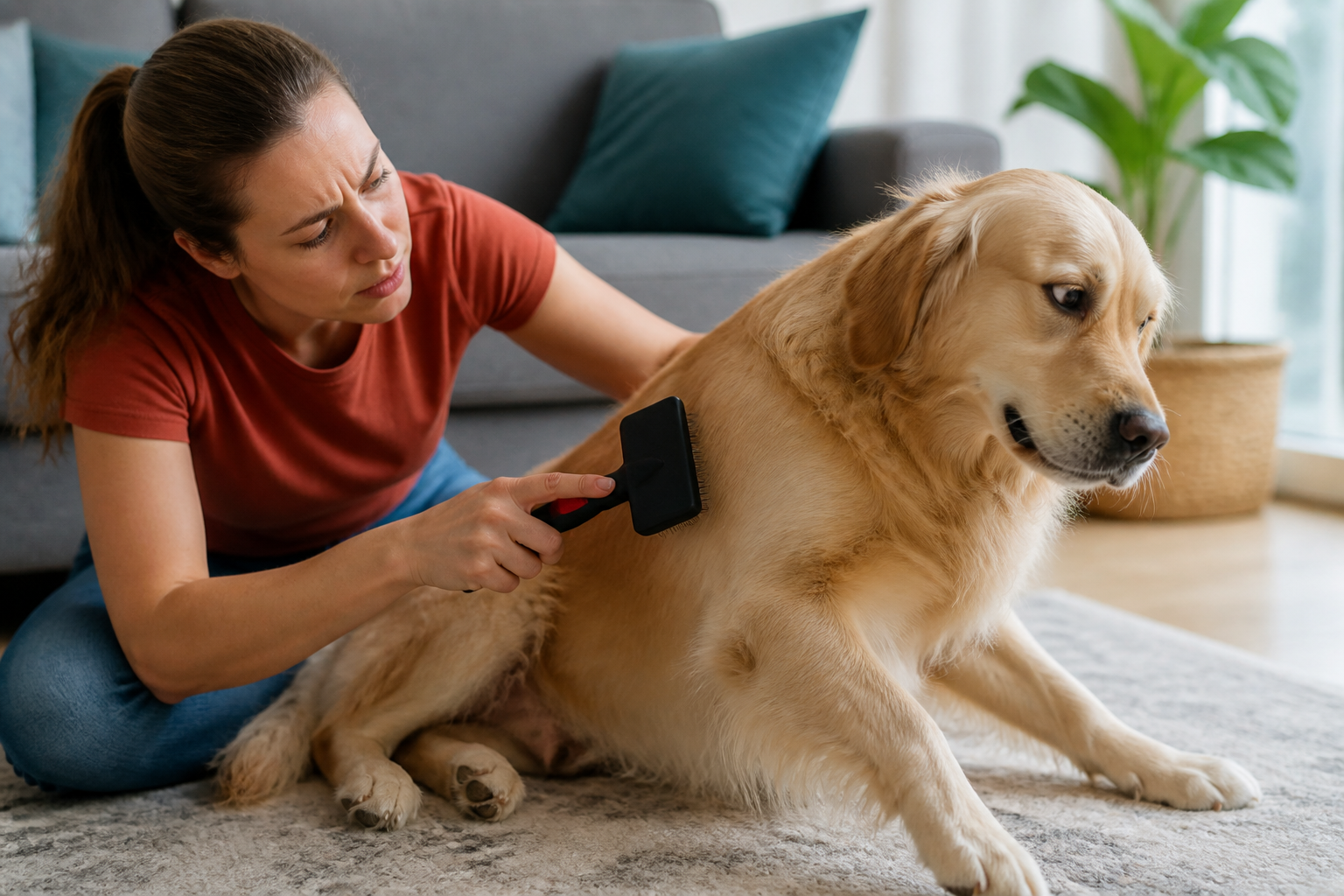
You pull the slicker brush out of the drawer and your dog is already halfway under the couch. Perhaps they growl when you touch their hindquarters, or maybe they treat the grooming glove like a chew toy. This daily battle is frustrating for you and stressful for your pet. At BaxterBoo, we know that grooming is about more than just looking good. It is a vital part of keeping your dog healthy and comfortable. This post covers why dogs develop a distaste for the brush and how you can rebuild that trust. We will look at physical causes, behavioral triggers, and practical training steps. Understanding the root of the problem is the first step toward a relaxing grooming routine.
Quick Answer: Dogs usually hate being brushed due to past painful experiences, sensitive skin, or undiagnosed physical discomfort like arthritis. You can resolve this by using high-value treats, shorter sessions, and the correct grooming tools for their specific coat type.
Sensory Overload and Sensitive Skin
For many dogs, the sensation of a brush is simply too much. Their skin is thinner than ours in many places. If you are using a stiff wire brush on a dog with a single coat or very short hair, it can feel like scratching a sunburn. This sensory sensitivity often leads to a flight or fight response.
Some breeds are more prone to skin sensitivity than others. Puppies are also particularly sensitive because they are still learning how to process new physical sensations. If their first few experiences with a brush involve pulling or scratching, they quickly learn that the brush equals discomfort.
Think about the environment where you brush your dog. Is it a slippery kitchen floor? Is it a high counter where they feel unstable? These environmental stressors add to the physical discomfort of the brush itself. A dog who feels physically insecure will be much more reactive to being touched in sensitive areas like the belly or paws.
The Role of Past Trauma and Negative Associations
Dogs have excellent memories for things that cause them fear. If a previous owner or a distracted groomer once pulled a mat too hard, your dog remembers that sharp pain. They do not see the brush as a tool for health. They see it as a weapon that causes a pinch.
Negative associations can also build up over time. If you only bring the brush out when your dog is already dirty, tired, or cranky, they start to associate the tool with a bad mood. Many owners also hold their dogs in a tight "hug" or restraint to get the job done. While you are just trying to keep them still, your dog feels trapped. This feeling of being trapped can trigger a panic response.
Reversing these associations takes time and a lot of patience. You are not just brushing fur. You are rewriting a memory. Every successful session where nothing bad happens is a deposit into a bank of trust.
Key Takeaway: Dogs associate the sight of grooming tools with past pain or the feeling of being restrained. To fix this, you must change the "story" of the brush from a source of pain to a source of rewards.
Physical Pain and Underlying Health Issues
If your dog used to love being brushed but suddenly started snapping or hiding, the issue might be internal. As dogs age, they develop conditions that make certain positions or pressures painful.
- Arthritis: Pressure on joints while you move their limbs to reach the belly or legs can be agonizing.
- Skin Infections: Hot spots, fungal infections, or dermatitis make the skin tender to the touch.
- Ear Infections: If your dog hates having their head brushed, they might have a hidden ear infection that makes the whole area sensitive.
- Matted Fur: Mats pull on the skin constantly. When you brush over a mat, it is like someone pulling a single strand of your hair very hard.
If you suspect your dog is in pain, it is time for a veterinary visit. Our pet pharmacy carries a wide range of FDA-approved medications through our partnership with Pet's Choice. This includes treatments for chronic conditions like arthritis and skin allergies that might be making grooming a miserable experience.
Vet Tip: If your dog shows sudden aggression or yelps during grooming, consult your veterinarian to rule out joint pain or skin conditions. Managing underlying health issues is often the only way to make grooming comfortable again.
Choosing the Right Tools for the Job
Using the wrong brush is a common reason for grooming struggles. A brush designed for a thick-coated Husky will be far too abrasive for a thin-haired Greyhound. We carry over 500 brands, and we see many owners who simply need a tool swap to see a massive difference in their dog's behavior.
For more options suited to different coats and sensitivities, browse our dog brushes and combs.
| Brush Type | Best For | Why Dogs Might Hate It |
|---|---|---|
| Slicker Brush | Long hair, thick coats, removing mats | Wire pins can scratch the skin if pressed too hard. |
| Bristle Brush | Short hair, smooth coats, finishing | Generally well-tolerated, but does not remove deep tangles. |
| Grooming Glove | Sensitive dogs, short to medium hair | Feels like petting, though some dogs dislike the rubber smell. |
| Pin Brush | Medium to long hair, curly coats | Can pull on tangles if used without a detangling spray. |
| Undercoat Rake | Double-coated breeds like Labs or Goldens | Can be heavy and intimidating to smaller dogs. |
If your dog is terrified of traditional brushes, try a grooming glove first. It allows you to use the natural motion of petting to remove loose fur. This is often the least threatening way to start a grooming routine for a fearful dog.
The "Brush, Treat, Brush" Method
The goal is to convince your dog that the brush is actually a "treat wand." You want them to see the brush and think about snacks, not pain. This process should be broken down into very small steps.
Step 1: Introduction without touch.
Place the brush on the floor. Every time your dog sniffs it or looks at it, give them a high-value treat. Do this for several days until they wag their tail when the brush comes out.
Step 2: The gentle touch.
Pick up the brush and touch your dog with the back of it (the smooth side). Immediately follow with a treat. You are not brushing yet. You are just getting them used to the tool touching their body.
Step 3: One single stroke.
Run the brush through their fur exactly one time in an area they like being touched, such as their shoulder. Give a treat immediately. Stop the session there.
Step 4: Gradually increasing.
Slowly increase to two strokes, then three. Always stop before your dog shows signs of stress like lip licking or turning their head away.
Bottom line: Desensitization works by moving at the dog's pace and ending every session on a high note before the dog becomes uncomfortable.
Managing Mats and Tangles Safely
Mats are the primary source of pain during grooming. A mat is a clump of dead hair that has tangled with live hair. It sits close to the skin and can cut off airflow, leading to sores. When you try to brush through a mat, you are essentially pulling on the dog's skin.
For additional guidance, read how to avoid painful pulling when brushing out mats and tangles.
If your dog has severe matting, do not try to brush it out in one sitting. This will only reinforce their hatred of the brush. Instead, use a pair of safety shears or grooming clippers to carefully remove the mat. If the mat is tight against the skin, it is often safer to have a professional groomer or a vet handle it to avoid cutting the skin.
Once the mats are gone, the focus shifts to prevention. Daily, short sessions of 30 seconds are better than one long, painful hour once a week. Frequent brushing prevents the tangles from ever turning into painful mats.
Creating a Stress-Free Environment
Where you brush matters just as much as how you brush. If you are stressed and rushing, your dog will pick up on that energy. Set yourself up for success by creating a "grooming zone" that feels safe.
- Non-slip surfaces: Put a yoga mat or a heavy towel on the floor. Dogs feel vulnerable when their feet are sliding.
- Distractions: Use a silicone lick mat with some dog-safe peanut butter. This keeps their head occupied while you work on their back or legs.
- Timing: Brush your dog after a long walk or a vigorous play session. A tired dog is a much more cooperative dog.
- Consistency: Use the same spot and the same routine every time. Predictability lowers anxiety in dogs.
We often recommend products like the Kong ZoomGroom for dogs who are particularly anxious. The soft rubber teeth massage the skin rather than scraping it. This turns a grooming session into a spa treatment.
When to Seek Professional Help
Sometimes, the fear is too deep for a pet owner to handle alone. If your dog nips, bites, or goes into a full panic, it is okay to call in the experts. Professional groomers have specialized tables and restraints that keep the dog safe and secure.
You might also consider a "fear-free" certified groomer. These professionals are trained specifically to handle anxious pets without using force. They use many of the same positive reinforcement techniques we have discussed here but have the experience to move faster and more safely.
In cases of extreme anxiety, your veterinarian may suggest a mild sedative for grooming sessions. This is not a failure on your part. It is a way to prevent the dog from further traumatizing themselves while you work on long-term training. Our pharmacy through Pet's Choice can help fulfill these prescriptions once your vet provides them.
For coat-specific grooming ideas, see this guide to grooming curly-haired dogs.
Key Takeaway: Professional help is a valid tool in your grooming kit. A single professional "reset" can sometimes make your at-home training much easier.
Transitioning to a Lifetime of Better Grooming
Changing a dog's mind about the brush does not happen overnight. It is a process of small wins. One day they might let you brush their back. The next week, they might let you touch their tail.
Keep your sessions short. If you only get three strokes in before the dog gets wiggly, that is fine. End it there with a big reward. You want the dog to walk away feeling like they "won" the interaction. Over time, their threshold will increase.
Using our Autoship programme can help ensure you never run out of the high-value treats or detangling sprays that make these sessions possible. When the supplies just show up at your door, it is one less thing for you to worry about, allowing you to focus entirely on your dog’s comfort.
- Keep treats within arm's reach at all times.
- Watch for early signs of stress: yawning, looking away, or stiffening.
- Always reward the dog for staying still, even for a second.
- Use a "release" word like "All done!" so they know when the pressure is off.
Conclusion
Helping a dog who hates being brushed requires a mix of the right tools, plenty of patience, and a bit of detective work. By ruling out physical pain and using positive reinforcement, you can turn a stressful chore into a bonding moment. Remember that every dog is different. What works for a Golden Retriever might not work for a Poodle. At BaxterBoo, we are here to support you with the expert-curated gear and pharmacy services you need to keep your pet healthy from head to tail. Start small, stay consistent, and watch your dog's confidence grow.
Bottom line: Patience and high-value rewards are the keys to overcoming grooming aversions and building a lasting bond with your dog.
FAQ
Why does my dog suddenly hate being brushed?
A sudden change in behavior often points to physical discomfort or pain. Your dog may have developed arthritis, a skin infection, or have a hidden mat that is pulling on their skin. It is best to consult your veterinarian to rule out medical issues before continuing with a training routine.
What is the best brush for a dog with sensitive skin?
For dogs who find traditional brushes painful, a grooming glove or a soft bristle brush is usually the best choice. These tools provide a massage-like sensation and are less likely to scratch the skin. Rubber curry brushes, like the Kong ZoomGroom, are also excellent for sensitive dogs as they lack sharp metal pins.
How can I get my dog to sit still for grooming?
The best way to keep a dog still is to provide a high-value distraction, such as a lick mat covered in peanut butter or wet food. Pair this with very short sessions, lasting only a minute or two at first. Gradually increase the time as your dog becomes more comfortable with the process and the rewards.
Is it okay to cut mats out with scissors?
You should only use safety shears or clippers and exercise extreme caution when removing mats. Since mats often pull the skin up into the tangle, it is very easy to accidentally cut your dog's skin with standard scissors. If a mat is tight against the skin, seeking help from a professional groomer is the safest option.






