
 Save 15% on your 1st Autoship learn more

 Email us
 Live Chat
 FAQs
FAQs





Introduction
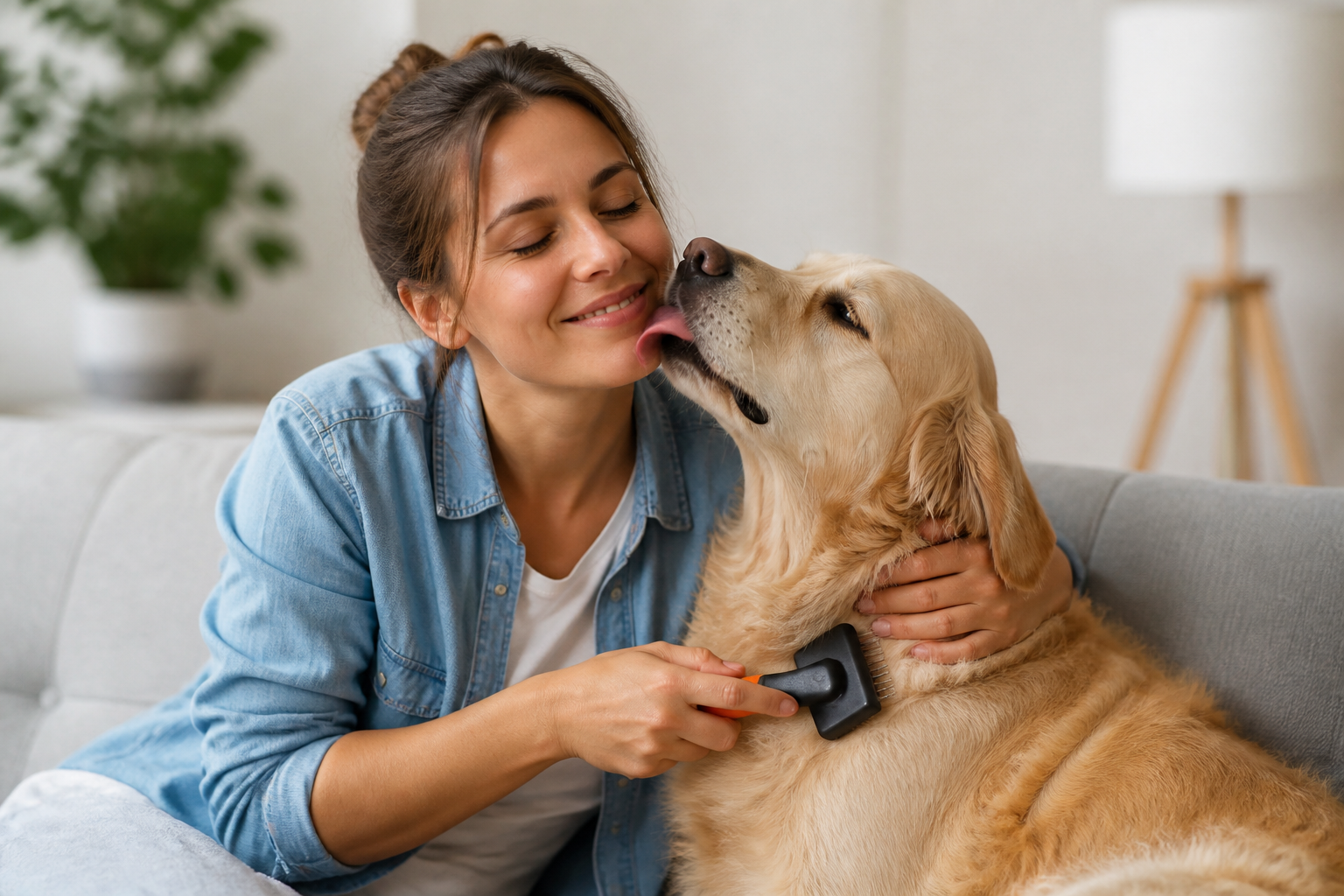
You are sitting on the floor with your dog and a slicker brush. As you pull the brush through their coat, your dog turns around and begins licking your hand or arm with steady persistence. This moment can feel like a sweet thank you for the spa treatment. However, it can also be a bit distracting when you are trying to reach a difficult tangle. At BaxterBoo, we see this behavior often. It is one of the most common questions pet owners ask during grooming sessions. This post explains why dogs use their tongues during brushing and how to tell if those licks are kisses or a request to stop. Understanding these cues helps you build a better bond with your pet during their regular care routine.
The Instinctive Root of Grooming Licks
Licking is one of the first ways a dog experiences the world. Mothers lick their puppies to clean them, stimulate breathing, and provide comfort. As puppies grow, they lick back to show submission and affection. This behavior is deeply rooted in their DNA. When you brush your dog, you are performing a task that looks and feels like social grooming. In the wild, members of a pack groom each other to remove debris and reinforce social bonds.
Allelogrooming and Social Bonding
The technical term for animals grooming each other is allelogrooming. When you pick up a brush, you are participating in this social ritual. Your dog recognizes the care you are providing. Licking your hand is their way of participating in the process. It is a reciprocal gesture. You are cleaning them, so they feel the instinct to "clean" you back. This exchange releases oxytocin in both you and your dog. This hormone helps lower stress and increases feelings of trust.
Sensory Exploration
Dogs also use their tongues to gather information. Your skin contains a wealth of data for your dog. They can taste your sweat, which contains salts and unique chemical signals. They might also be interested in the scent of your soap or lotion. During a grooming session, your dog is focused on you. Licking is a way for them to stay connected and process what is happening through their sense of taste and smell.
Key Takeaway: Licking during brushing is usually a form of mutual grooming. It shows that your dog views you as a member of their pack and wants to return the favor.
Distinguishing Affection From Communication
While many licks are "kisses," some are actually a form of polite communication. It is vital to distinguish between a happy, relaxed lick and a "please stop" lick. Reading your dog's body language is the best way to tell the difference. A dog that is enjoying the brush will have a relaxed body. Their eyes will be soft, and their tail might wag slowly. The licks will usually be gentle and occasional.
The "Please Stop" Lick
If your dog finds brushing uncomfortable or scary, they might use their tongue to tell you. This is often a slow, deliberate lick directed at your hand. They are not trying to be affectionate. Instead, they are trying to move the tool away from their body. This is a "de-escalation" signal. They are choosing a polite way to ask for space before they feel the need to growl or snap.
Look for these signs of a "please stop" lick:
- The dog’s body is stiff or frozen.
- They are showing the whites of their eyes (whale eye).
- The licks are focused specifically on the hand holding the brush.
- The dog pulls their ears back or tucks their tail.
Respecting the Warning
Ignoring a communication lick can lead to trouble. If a dog feels their polite request is ignored, they may feel forced to use a louder signal. This might include a lip curl or a low growl. We always recommend pausing the session if the licks feel frantic or forced. Give your dog a break and try a softer brush or a different area of the body.
Vet Tip: If your dog licks your hand and then moves away or hides, they are likely stressed. Never force a dog to stay for grooming if they are showing signs of fear. This can create a long-term phobia of the brush.
Why Texture and Taste Matter
Sometimes the reason for the licking is purely physical. Your dog may simply like how you taste in that moment. Brushing often happens after a walk or a play session. If you have been active, your skin may be saltier than usual.
Lotions and Products
Dogs have a much stronger sense of smell than humans. If you just applied hand cream, your dog might find the scent irresistible. However, be careful with the products you use. Some ingredients in human lotions, such as xylitol or certain essential oils, can be toxic to dogs. If your dog is a frequent licker, stick to pet-safe balms or plain coconut oil.
The Feel of the Tongue
Licking also feels good to the dog. The act of licking releases endorphins in a dog's brain. It is a self-soothing mechanism. If the brushing is slightly overstimulating, the dog might lick your hand to stay calm. It helps them regulate their emotions while they sit still for the grooming process.
How to Improve the Grooming Experience
If the licking is making it hard to finish the job, you can adjust your technique. The goal is to make the dog so relaxed that they do not feel the need to communicate through licking. Using the right tools is the first step. At BaxterBoo, we carry a wide variety of brushes from trusted brands like Kong and RC Pets to suit every coat type. Explore our dog grooming collection to find tools for your routine.
Choosing the Right Brush
Using the wrong brush can cause "brush burn" or pulling. This discomfort is a common trigger for communication licking. Our dog brushes and combs include options for different coat types.
- Slicker Brushes: Best for removing mats in long-haired breeds. Use a light touch.
- Bristle Brushes: Great for short-haired dogs to remove surface dirt and shine the coat.
- Rubber Curry Brushes: These are excellent for sensitive dogs. They provide a massage-like feel while removing loose fur.
- De-shedding Tools: Use these sparingly to remove undercoat without irritating the skin.
Positive Reinforcement
You can redirect the licking by giving your dog something else to do. Using a lick mat with a bit of peanut butter can keep their mouth busy. This allows you to focus on the brushing while they enjoy a treat. We recommend using high-quality treats from brands like Stella and Chewy's or The Honest Kitchen to keep them motivated.
Step 1: Introduce the brush. Let your dog sniff the brush without moving it.
Step 2: Touch the brush to their side. Do not brush yet. Give a treat.
Step 3: Perform one gentle stroke. Follow immediately with praise and a treat.
Step 4: Gradually increase the number of strokes. If the dog starts "please stop" licking, go back to step 2.
Bottom line: Matching the brush to your dog's coat type and using positive reinforcement can turn a stressful grooming session into a bonding experience.
When Licking Indicates a Health Concern
In some cases, the licking might not be about you or the brush. It could be about their own skin. If a dog has itchy skin or allergies, being brushed can feel like "scratching the itch." This can cause them to lick themselves or you more intensely.
Skin Irritations and Allergies
If you notice your dog licking their paws or belly excessively during or after grooming, check for redness. Allergies to pollen, dust, or food are common. When you brush over an itchy area, it can trigger a licking reflex. You might also notice "hot spots" or thinning hair. See our healthy dog paw pads guide for related signs of irritation and excessive licking.
The Role of Our Pharmacy
Managing chronic skin conditions often requires more than just a good brush. Our dog pharmacy offers FDA-approved medications and prescription diets to help manage allergies and skin infections. Through our partnership with Pet's Choice, we can help you get the specific treatments your veterinarian prescribes. This includes flea and tick preventives like Frontline or NexGard, which are essential because flea saliva is a major cause of itchy skin and obsessive licking.
Supplements for Coat Health
Providing internal support can also reduce the urge to lick. Supplements containing Omega-3 fatty acids can strengthen the skin barrier. Brands like Zesty Paws or Cosequin offer options that support both joint health and skin integrity. Browse our dog skin and coat care selection for products that fit into your pet’s routine. A healthy coat is less likely to tangle, which makes brushing easier for both of you.
| Feature | Affection Lick | Communication Lick | Health-Related Lick |
|---|---|---|---|
| Body Language | Relaxed, "wiggly" | Stiff, frozen | Restless, biting at skin |
| Lick Speed | Varied, often fast | Slow, methodical | Frantic or obsessive |
| Target | Face, hands, arms | Specifically the hand with the brush | Paws, joints, or belly |
| Response to Stop | Dog stays near you | Dog moves away or sighs | Dog continues licking themselves |
Managing the Habit
If you find the licking unpleasant, you can train your dog to stop without hurting their feelings. Consistency is the key to changing any canine behavior.
Neutral Responses
If your dog licks and you laugh or talk to them, you are rewarding the behavior. Even saying "no" can be seen as attention. To stop the licking, simply stop the brushing and move your hand away. Wait for a few seconds of calm, then resume. This teaches the dog that licking causes the interaction to pause.
Regular Schedule
A dog that is brushed daily is less likely to have mats. Mats pull on the skin and cause pain. By keeping a regular schedule, you ensure that the grooming session is always a pleasant massage rather than a painful chore. This reduces the likelihood of "please stop" licks and keeps the focus on bonding.
Professional Guidance
If your dog becomes aggressive or extremely fearful during grooming, consult a professional trainer or behaviorist. They can help you identify if the licking has transitioned into a compulsive behavior. Sometimes, anxiety is the root cause. We offer calming aids and anxiety wraps that can help take the edge off for nervous pets.
Conclusion
Licking during a grooming session is a window into your dog's mind. Most of the time, it is a sign of love and a desire to participate in your "pack" rituals. However, paying attention to the context and your dog's body language is essential for their well-being. By using the right tools and staying patient, you can make brushing a highlight of their day. At BaxterBoo, we are committed to providing the gear and expertise you need for every stage of pet ownership. Whether you need a new brush, a bag of high-reward treats, or prescription skin support through our pharmacy, we are here to help.
Bottom line: Treat your dog's licks as a conversation. Listen to what they are saying, and you will both enjoy the grooming process much more.
FAQ
Is it okay to let my dog lick me while I brush him?
Yes, it is generally safe and a normal sign of affection. However, make sure your skin is free of toxic lotions or chemicals. If the licking becomes obsessive or prevents you from grooming them properly, you should use treats or toys to redirect their attention.
How can I tell if my dog is licking because they are in pain?
A pain-related lick is usually focused on a specific spot, like a joint or a paw. The dog may also whimpering, flinching, or panting. If you notice these signs, or if the licking is accompanied by limping, you should consult your veterinarian for a physical exam.
What should I do if my dog licks the brush itself?
Many dogs lick the brush because they are curious about the texture or the smell of the hair being removed. It is usually harmless, but be careful they do not bite the bristles, as this could hurt their mouth. Redirecting them to a chew toy or a lick mat is a good way to keep them safe.
Can brushing trigger a "lick fit" in some dogs?
Some dogs have a strong neurological reflex where scratching or brushing certain spots triggers an uncontrollable licking motion. This is common on the back near the tail or on the chest. If your dog seems to be licking the air frantically, you may be overstimulating a nerve ending and should move to a different area.






