
 Save 15% on your 1st Autoship learn more

 Email us
 Live Chat
 FAQs
FAQs





Introduction
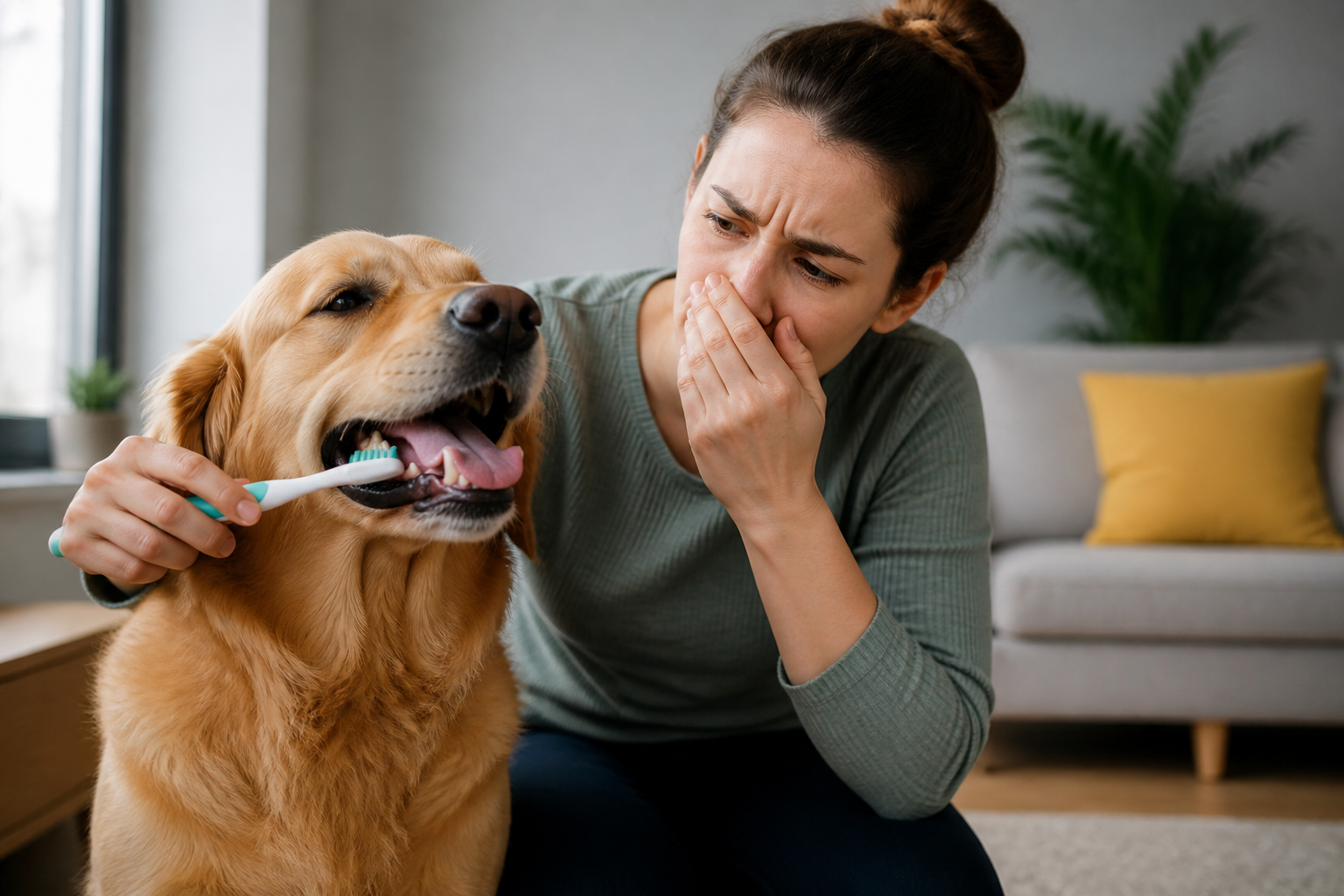
You lean in for a happy morning nuzzle, but instead of warmth, you are hit with a scent that smells like a wet sock or old garbage. You have been diligent with the toothbrush and dog-safe paste, yet the odor remains just as strong. At BaxterBoo, we know how frustrating it is when your grooming efforts do not seem to pay off. This persistent smell usually means the issue is deeper than just surface-level plaque. While routine brushing is vital for prevention, it often cannot reach the bacteria hiding under the gumline or address internal health concerns. Understanding the specific causes of lingering halitosis is the first step toward getting your dog's oral health back on track. This guide covers why brushing might not be enough and when a trip to the vet is necessary.
Quick Answer: Persistent bad breath after brushing usually indicates hardened tartar that a toothbrush cannot remove, or an underlying systemic health issue like kidney or liver disease. Professional dental cleaning and a veterinary exam are often required to address the root cause.
The Difference Between Plaque and Tartar
Many owners believe that a good scrubbing will fix any oral odor. However, there is a major difference between plaque and tartar. Plaque is a soft, sticky film of bacteria that forms on the teeth after eating. You can easily remove this with a toothbrush or dental wipes. If plaque stays on the teeth for more than 48 hours, it begins to mix with minerals in your dog’s saliva. This process causes the plaque to harden into tartar, also known as calculus.
Once tartar has formed, a toothbrush is no longer effective. Tartar is like concrete on the teeth. It provides a rough surface where even more bacteria can grow and thrive. This bacteria produces foul-smelling sulfur compounds. Because the tartar is porous, it holds onto these smells right against the gumline. This is why your dog's breath can still smell terrible even if you just brushed the surface of the teeth.
Brushing a mouth full of tartar is like trying to clean a shag carpet with a leaf blower. You might move some surface debris, but the deep-seated dirt remains. To truly fix the smell, that tartar needs to be removed by a professional using specialized equipment.
Key Takeaway: Brushing is a preventative measure designed to stop plaque from becoming tartar. It cannot remove existing tartar that has already hardened on the tooth surface.
Periodontal Disease Below the Gumline
The most common reason for a "stink" that survives brushing is periodontal disease. This condition does not just affect the visible part of the tooth. It happens deep in the pocket between the tooth and the gum. When bacteria and tartar move under the gumline, they cause inflammation and infection. This area is impossible to reach with a standard toothbrush at home.
As the infection progresses, the gums may pull away from the tooth. This creates "pockets" where food and bacteria get trapped. This trapped material rots and produces an intense, foul odor. You might notice your dog's gums look red or swollen. They might even bleed slightly when you try to brush. If the breath still smells like rotting eggs or garbage after a cleaning, the infection is likely active under the gums.
For a closer look at warning signs, read about hidden dental disease in dogs.
Signs of Advanced Periodontal Disease
- Gums that bleed during play or brushing.
- Yellow or brown crust near the gumline.
- Loose or missing teeth.
- Pawing at the mouth or face.
- Dropping food while eating.
Vet Tip: If you notice your dog's gums are bright red or bleeding, stop brushing and call your veterinarian. Brushing inflamed gums can be painful and may push bacteria into the bloodstream. A professional dental exam is needed to check for deep pockets of infection.
When the Smell Signals a Health Condition
Sometimes the mouth is not the source of the problem at all. The lungs, stomach, kidneys, and liver can all influence how a dog’s breath smells. If you have been brushing and the vet says the teeth look clean, the odor might be a symptom of a systemic issue. These smells are often very distinct and do not smell like typical "dog breath."
Sweet or Fruity Breath
If your dog’s breath smells strangely sweet or like artificial fruit, this can be a sign of diabetes. When a dog cannot process sugar correctly, their body starts to break down fat for fuel. This produces ketones, which have a very specific sugary or acetone-like scent. This is a serious medical situation that requires immediate veterinary attention.
Ammonia or Urine Scent
Breath that smells like a cleaning product or a litter box is a major red flag for kidney issues. When the kidneys are not filtering waste properly, urea builds up in the blood. This waste can eventually be smelled on the breath. This is often accompanied by increased thirst and more frequent urination.
Musty or Fecal Odors
A musty smell can sometimes point to liver disease. The liver is responsible for filtering toxins. When it fails, those toxins can create a distinctively unpleasant odor. Additionally, a fecal smell might suggest a gastrointestinal blockage or even a behavior called coprophagia, where the dog eats stools.
Our pet pharmacy services can help you find prescription products when your veterinarian recommends them for a diagnosed health condition.
Hidden Physical Causes in the Mouth
Not every smell is caused by disease. Sometimes, the cause is a physical object or growth that is hiding in plain sight. Dogs use their mouths to explore the world, and things can easily get stuck.
Stuck Objects and Foreign Bodies
If your dog loves chewing on sticks, tennis balls, or rawhides, a piece might be wedged in their mouth. Common hiding spots include the roof of the mouth between the molars or under the tongue. A piece of wood or fabric that stays in the mouth will start to decay quickly. This creates a localized infection and a very sharp, putrid smell.
Oral Tumors and Growths
In older dogs, bad breath can sometimes be caused by oral tumors. These growths can be cancerous or benign, but they often have a poor blood supply. As parts of the tissue die off, they produce a strong, rotting odor. These tumors can hide behind the back molars or under the tongue where they are difficult to see during a quick home brushing session.
Behavioral Factors and Diet
Sometimes the reason the breath stinks even after brushing is simply what the dog is putting in their mouth between cleanings. Certain behaviors can lead to a breath odor that no amount of peppermint-flavored paste can fix.
Step 1: Observe their outdoor habits. / Check if your dog is raiding the cat's litter box or eating wildlife droppings in the yard.
Step 2: Inspect their water bowl. / Slimy biofilm in a water bowl can harbor bacteria that stick to your dog's tongue and cheeks.
Step 3: Review their diet. / Low-quality foods or diets very high in fish oils can leave a lingering scent that seeps from the digestive tract.
If your dog is a "poop eater," the fecal smell on their breath will be unmistakable. This habit, known as coprophagia, often stems from boredom, nutritional gaps, or simple curiosity. While not always a medical emergency, it does introduce harmful bacteria and parasites into their system.
Key Takeaway: Environmental factors like dirty water bowls or "snacking" in the yard can ruin your brushing efforts instantly. Keep the environment clean to help keep the breath fresh.
Why Home Cleaning Is Only Half the Battle
Brushing is a vital part of a daily routine, but it is not a substitute for professional care. Think of it like your own dental habits. You brush and floss every day, but you still go to the dentist for a professional cleaning. A vet can perform a "scale and polish," which removes the tartar above and below the gumline.
Most veterinary clinics also take dental X-rays. This is crucial because a tooth can look perfectly healthy on the outside while the root is rotting underneath. An infected root will cause persistent bad breath that brushing will never touch. These infections can be painful and lead to more serious health problems if the bacteria enters the bloodstream and travels to the heart or kidneys.
For more general guidance, explore these pet dental care tips.
- Professional cleaning removes tartar that brushing cannot.
- X-rays find hidden infections in the roots.
- Polishing smooths the tooth so plaque cannot stick as easily.
- Vets can identify and remove "pockets" of bacteria.
Practical Steps for Fresher Breath
If you are dealing with a stinky situation, do not give up on brushing. Instead, adjust your strategy to be more effective. Combining brushing with other oral health tools can help manage the odor between vet visits.
Use the Right Tools
Never use human toothpaste on a dog. It often contains Xylitol, which is toxic, or foaming agents that can upset their stomach. Use a dog-specific enzymatic toothpaste. These pastes contain enzymes that continue to break down plaque even after you stop scrubbing. We carry several trusted brands like Virbac or Zymox that are formulated specifically for canine mouths.
Our dog dental and breath care category includes toothpaste, toothbrushes, dental gels, and other oral-care products.
Incorporate Dental Chews
Dental chews are designed to mechanically scrape the teeth as the dog chews. Look for products with the VOHC (Veterinary Oral Health Council) seal. Brands like Greenies or Barkworthies can be helpful additions to your routine. However, remember that chews add calories, so you may need to adjust your dog's meal portions to prevent weight gain.
Try Water Additives
If your dog absolutely hates the toothbrush, a water additive can be a helpful bridge. These are usually tasteless liquids you add to the water bowl. They contain ingredients that help reduce the bacterial load in the mouth. While they do not replace the physical action of brushing, they can help lower the "stink" factor by keeping bacterial growth in check.
Vet Tip: Always introduce new dental treats or water additives gradually. Some dogs with sensitive stomachs may experience digestive upset from the ingredients used to fight oral bacteria.
How BaxterBoo Can Help
At BaxterBoo, we have seen thousands of pet owners struggle with "the stink." We focus on providing high-quality solutions that actually work. From the best enzymatic toothpastes to durable chew toys from Kong that help scrape teeth during play, we curate our selection to ensure your dog gets the best care.
Our MVP Rewards program is a great way to save on the dental supplies you need every month. Since consistency is the most important part of oral care, many of our customers use the Autoship program to ensure they never run out of toothpaste or dental treats. This also saves you money on every order and gives you peace of mind that your dog's health is a priority.
If the bad breath persists despite using top-tier products, it is time to look at the bigger picture. Our pharmacy makes it easy to get the specialized care your dog needs if their bad breath is tied to a more complex health condition.
Conclusion
Lingering bad breath after brushing is a signal that your dog needs a closer look. Whether it is hardened tartar, a hidden infection, or a sign of an internal health issue, the smell is a tool for diagnosis. By combining daily brushing with professional veterinary cleanings and high-quality dental products, you can protect your dog from pain and keep your snuggle time pleasant.
- Brush daily to prevent new plaque from hardening.
- Schedule a professional cleaning once a year.
- Watch for "red flag" smells like ammonia or fruit.
- Check for stuck objects if the smell appears suddenly.
Bottom line: Brushing is for prevention, but a vet is for a cure; if the smell stays, the vet is your best next step.
FAQ
Can I use human mouthwash for my dog's bad breath?
No, you should never use human mouthwash for a dog. Many contain alcohol or Xylitol, both of which are highly toxic to dogs. Use only water additives or rinses specifically labeled for canine use.
How often should I really be brushing my dog's teeth?
Ideally, you should brush your dog's teeth every single day. Plaque can harden into tartar in as little as 48 hours, so skipping just a few days allows the "stink" to start building up again.
Will dry kibble keep my dog's teeth clean?
While some kibble is specifically shaped to help clean teeth, standard dry food does not effectively prevent dental disease. Most dogs swallow kibble whole or it crumbles too quickly to provide enough friction to remove plaque.
Why does my dog's breath smell like fish?
A fishy smell can sometimes be related to oral bacteria, but it is more commonly a sign of impacted anal glands. Dogs often lick that area when they are uncomfortable, transferring the scent to their mouth and breath.






