
 Save 15% on your 1st Autoship learn more

 Email us
 Live Chat
 FAQs





Introduction
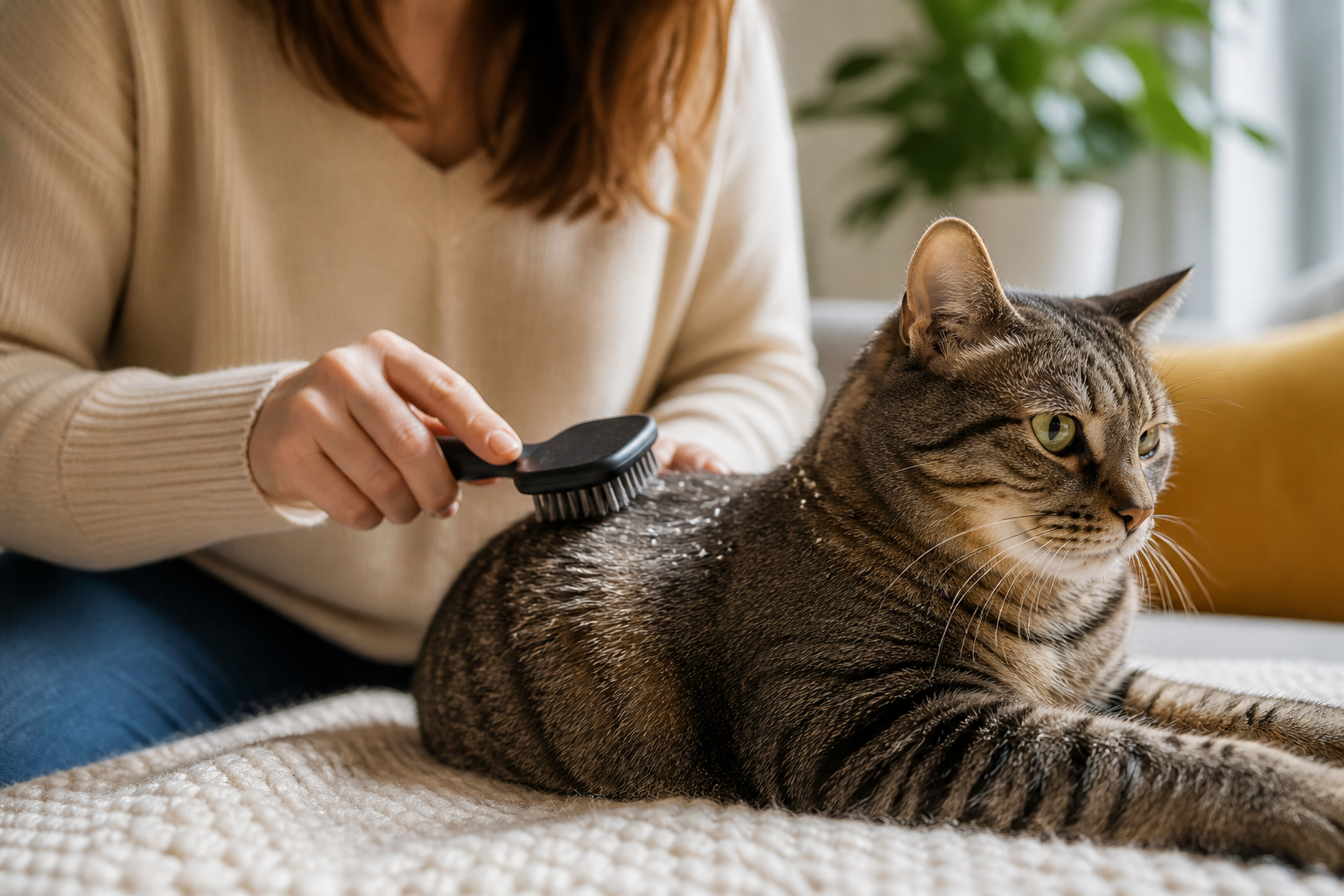
You are relaxing on the sofa with your cat when you notice a scattering of white flakes along their spine. You pet them from head to tail and even more flakes appear near the base of the tail. It is a common sight for many pet owners. While a few flakes might seem like a small cosmetic issue, they often signal that something in your cat's routine or health needs attention. At BaxterBoo, we see many cat owners searching for ways to restore their pet's glossy, healthy coat. This post covers the most frequent causes of feline dandruff, from grooming struggles to nutritional gaps and environmental triggers. We will also help you understand when those flakes mean it is time for a veterinary visit. Understanding the root cause of skin scaling is the first step toward a comfortable, flake-free cat.
Quick Answer: Cat dandruff on the back is often caused by a lack of grooming, which happens if a cat is overweight or has joint stiffness. Other common causes include low humidity, poor nutrition, or skin parasites like mites.
What Exactly Is Feline Dandruff?
Feline dandruff consists of dead skin cells that have clumped together and become visible to the naked eye. In a healthy cat, skin cells regenerate constantly. These cells usually shed individually and are microscopic. Your cat typically grooms these tiny cells away before you ever see them. When the skin becomes irritated, dry, or oily, the rate of cell turnover speeds up. This creates the larger white flakes that settle in the fur.
It is helpful to distinguish between dandruff and dander. Dander is a normal, healthy part of owning a pet. It consists of microscopic skin cells and proteins from saliva that naturally shed. Dander is what typically triggers human allergies. Dandruff, however, is a visible sign of an imbalance. It means the skin is shedding faster than the cat can keep up with.
Cat Skin & Coat Care












Why Is the Dandruff Mostly on the Back?
The location of the dandruff provides a major clue about the cause. When you see flakes concentrated on the lower back and the base of the tail, it usually points to a grooming issue. Cats are incredibly flexible, but the lower back is one of the hardest places for them to reach. If a cat is unable to groom that area effectively, dead skin and natural oils build up.
The upper back and spine are also prime spots for dandruff because that is where the coat is often thickest. In cats with a heavy undercoat, dead skin can get trapped beneath the top layer of fur. Without regular brushing to lift that debris, the flakes become trapped and then rise to the surface as the cat moves.
Key Takeaway: Dandruff on the lower back and tail base is a "red flag" for mobility or weight issues that prevent a cat from reaching those specific spots during daily grooming.
Common Causes of Cat Dandruff
Obesity and Physical Limitations
The most frequent reason for dandruff on a cat's back is simply that they cannot reach it. Overweight cats often have difficulty twisting their bodies to clean their hindquarters. If a cat carries extra weight around their middle, they lose the flexibility needed for a full-body deep clean.
Senior cats often face a similar struggle due to arthritis. If your cat has stiff joints or spinal discomfort, the act of reaching back to groom becomes painful. They may stop trying altogether. This leads to a buildup of flakes and even matting in that specific area.
For additional guidance on feline weight management, read how to help your indoor cat lose weight.
Nutritional Gaps
Your cat's skin is their largest organ. It requires a significant amount of protein and specific fats to remain healthy. If their diet is lacking in Omega-3 fatty acids like EPA and DHA, the skin barrier weakens. This results in moisture loss and dry, flaky skin.
Many high-quality brands we carry, such as Farmina or Stella and Chewy's, prioritize these essential fatty acids. If your cat is eating a diet that is low in high-quality animal fats, their coat will likely be the first thing to show signs of trouble. A dull, brittle coat often goes hand-in-hand with dandruff.
Explore our cat skin and coat health selection for food, supplements, and other wellness products.
Parasites and "Walking Dandruff"
Not all flakes are just skin. A specific type of mite called Cheyletiella can cause a condition known as walking dandruff. These mites are large enough to be seen with the naked eye. When they move under the skin scales, it looks like the dandruff is crawling.
Traditional fleas can also cause dandruff. Flea bites lead to inflammation and itching. If your cat is allergic to flea saliva, they may develop crusty sores and heavy flaking along their back. Even if you do not see a flea, the presence of dandruff and intense itching warrants a check for parasites.
Environmental Dryness
Just like humans, cats suffer from dry skin when the air loses its moisture. This is most common in the winter months when heaters are running constantly. Forced-air heating strips moisture from the environment and your cat's skin. If you notice the dandruff only appears when the temperature drops, the environment is likely a factor.
Underlying Medical Conditions
Sometimes, skin flakes are a symptom of an internal health struggle. Conditions like hyperthyroidism, diabetes, or kidney disease can change the quality of a cat's skin and coat. These illnesses often change how much a cat drinks, how they process nutrients, or how much energy they have for grooming.
Vet Tip: If your cat has dandruff along with changes in thirst, appetite, or litter box habits, schedule a veterinary exam. These can be early signs of systemic issues like diabetes or hyperthyroidism that require professional diagnosis and management.
How to Manage Cat Dandruff at Home
Improve Your Grooming Routine
If your cat cannot reach their back, you must step in and help. Regular brushing is the most effective way to remove dead skin cells and distribute natural oils. For short-haired cats, a soft bristle brush or a grooming glove works well. For long-haired cats, a stainless steel comb is better for reaching the undercoat where flakes are trapped.
Step 1: Choose a quiet time when your cat is relaxed.
Step 2: Start at the head and work your way toward the tail.
Step 3: Pay extra attention to the lower back and tail base.
Step 4: Use gentle, short strokes to lift the debris without irritating the skin.
Shop our cat grooming supplies for brushes, combs, wipes, and shampoos.
Boost Their Nutrition
Adding a skin and coat supplement can make a visible difference in a few weeks. Look for products containing wild-caught fish oil. These supplements provide the Omega-3s necessary to repair the skin barrier. We carry several trusted supplement brands like Zesty Paws and Honest Paws that offer targeted support for feline skin health.
For a targeted option, consider Pet Honesty Skin & Coat Health Dual Texture Cat Supplement.
Ensure your cat is also staying hydrated. Cats have a low thirst drive. If they are slightly dehydrated, their skin will be dry. Switching to a wet food diet or adding a water fountain can encourage more drinking. Brands like Tiki Cat or Fussie Cat offer high-moisture options that support overall hydration.
Address the Environment
If the air in your home is dry, a humidifier can help both you and your cat. Placing a small humidifier in the room where your cat sleeps most often can prevent their skin from drying out during the night. Also, try to keep your cat away from direct heat vents, as the concentrated hot air can quickly parch their coat.
Bottom line: A combination of daily brushing and increased Omega-3 intake solves the majority of mild feline dandruff cases.
Utilizing the BaxterBoo Pharmacy for Skin Health
When home remedies are not enough, your veterinarian may prescribe specific treatments. Our pharmacy provides a convenient way to access FDA-approved medications and prescription diets through our partnership with Pet's Choice. If your cat's dandruff is caused by an underlying condition, a prescription-strength solution is often the only way to find relief.
The pharmacy carries a variety of products that address the root causes of dandruff:
- Prescription Diets: For cats with severe food allergies or metabolic issues like diabetes, a specialized diet may be necessary. We carry options from Farmina Vet Life and Royal Canin that are formulated for these specific needs.
- Flea and Tick Prevention: If parasites are the culprit, year-round prevention is vital. We stock trusted brands like NexGard and Frontline to keep your cat protected from the bites that lead to skin irritation.
- Medicated Shampoos: In cases of fungal or bacterial infections, your vet might prescribe a medicated wash. While most cats do not enjoy baths, these targeted treatments can clear up scaling quickly.
- Allergy Medications: For cats suffering from environmental allergies, prescription medications can help calm the immune response and stop the cycle of itching and flaking.
Browse our cat pharmacy for prescription diets and other veterinary products.
By using our pharmacy, you can have these essential items delivered directly to your door. This saves you a trip to the clinic and ensures you never run out of the maintenance medications your cat needs to stay comfortable.
When Is Dandruff a Veterinary Emergency?
While most dandruff is a minor issue, it can sometimes indicate a more serious problem. You should not ignore skin changes if they occur alongside other symptoms. If your cat's skin appears red, inflamed, or has open sores, they need professional help.
Watch for these warning signs:
- Intense Itching: If your cat is scratching or biting at their back constantly, they are in distress.
- Hair Loss: Thinning patches or bald spots (alopecia) suggest more than just dry skin.
- Odor: A strong or musty smell from the skin can indicate a yeast or bacterial infection.
- Changes in Behavior: If your cat becomes lethargic or stops eating, the skin issue may be part of a larger systemic illness.
- Visible Parasites: If you see fleas or mites, you need a targeted treatment plan from a vet.
Vet Tip: Never use human dandruff shampoos on your cat. Many of these products contain zinc or coal tar, which are toxic to cats. Always use products specifically formulated for felines and approved by your veterinarian.
Products to Support a Healthy Coat
At BaxterBoo, we carefully select every product to ensure it meets our standards for quality and safety. If you are looking to improve your cat's coat, we have several categories that can help. Our selection includes everything from specialized grooming tools to premium nutrition.
Explore our cat food selection for skin and coat support when reviewing your cat's daily nutrition.
If you are a new customer, you can take advantage of our $10 reward on your first order of $39 or more when you sign in at checkout. For ongoing needs like food and supplements, our Autoship program offers savings on your first order and a free MVP Gold membership. This makes it easy to keep your cat's skin health a priority without overpaying.
We also offer MVP Rewards, where you can earn up to 5% back on your purchases. This is a great way to save on those premium brands like Acana and Orijen that provide the high-quality proteins your cat needs for a shiny, flake-free coat.
Conclusion
Cat dandruff on the back is a common issue, but it is one that you can usually manage with a few simple changes. Whether it is helping an older cat with their grooming or upgrading their diet to include more healthy fats, your intervention makes a huge difference. Remember to watch for signs of discomfort or underlying illness, and do not hesitate to consult your veterinarian for a professional diagnosis. By staying proactive with grooming and nutrition, you can keep your cat's coat looking its best.
- Help overweight or senior cats by brushing the hard-to-reach areas of their back daily.
- Switch to a high-quality food rich in animal-based Omega-3 fatty acids to support the skin barrier.
- Maintain year-round flea and tick prevention to avoid parasitic skin irritation.
- Use a humidifier during winter months to prevent environmental skin dryness.
Bottom line: Healthy skin starts from the inside out, so focus on high-quality nutrition and consistent grooming to eliminate flakes.
FAQ
Why does my cat only have dandruff on the base of their tail?
The base of the tail is a difficult spot for many cats to reach, especially if they are carrying extra weight or have stiff joints. When a cat cannot groom that area, dead skin cells and oils accumulate, leading to visible flakes. Regular brushing in this specific area can usually clear up the problem.
Can I get rid of my cat's dandruff by bathing them?
Bathing a cat too frequently can actually make dandruff worse by stripping the skin of its natural, protective oils. Unless your veterinarian has prescribed a specific medicated shampoo for an infection, it is usually better to use a grooming wipe or a high-quality brush. If you must bathe them, use a soap-free shampoo designed specifically for cats.
Is cat dandruff contagious to humans or other pets?
Standard dandruff caused by dry skin or poor grooming is not contagious. However, if the "dandruff" is actually caused by Cheyletiella mites (walking dandruff) or a fungal infection like ringworm, it can spread to other pets and even humans. If you suspect an infection or parasites, keep your pets separated and see a vet immediately.
Does changing my cat's food help with skin flakes?
Yes, diet plays a massive role in skin health. Cats require specific levels of protein and essential fatty acids to maintain their skin's moisture barrier. If their current food is low in these nutrients, switching to a premium brand with high Omega-3 content can significantly improve their coat quality over several weeks.






- Site & Contents BaxterBoo.com. BaxterBoo is located in the United States.
- Privacy & Security
- Terms of Use
- Accessibility Statement
