
 Save 15% on your 1st Autoship learn more

 Email us
 Live Chat
 FAQs





Introduction
You are petting your cat and suddenly notice a dusting of white flakes concentrated near the base of their spine. It is a common discovery for many owners, especially as cats move into their senior years or struggle with their weight. At BaxterBoo, we understand that changes in your pet’s coat are often the first sign that something else is going on. This article explores why the lower back is a hotspot for skin issues, the difference between normal shedding and medical concerns, and how you can restore your cat's skin health. We will cover environmental triggers, nutritional needs, and the specific grooming challenges that lead to cat dandruff by tail. Our goal is to help you identify whether those flakes are a simple grooming fix or a reason to visit the vet.
Quick Answer: Cat dandruff by the tail is usually caused by a cat’s inability to reach that area for grooming, often due to obesity or arthritis. Other common causes include dry air, nutritional deficiencies, or external parasites like fleas and mites.
Understanding Feline Dandruff and Dander
It is important to distinguish between dander and dandruff. Every cat produces dander. These are microscopic skin cells that shed naturally as part of the skin’s renewal process. Dander is generally invisible to the naked eye. Dandruff, however, consists of larger, visible white flakes. When skin cells die and clump together prematurely, they become trapped in the fur.
Dandruff is not a disease itself but a symptom of an underlying imbalance. The skin is the largest organ of the body. When a cat is dehydrated, stressed, or poorly nourished, the skin is often the first place to show signs of trouble. While a few occasional flakes may not be a cause for alarm, a persistent accumulation indicates that the skin’s natural oil production is off.
Key Takeaway: While dander is a normal part of feline biology, visible dandruff is a sign that the skin barrier is compromised or the grooming cycle is interrupted.
Cat Skin & Coat Care












Why the Tail Base is a Trouble Spot
Many owners notice that dandruff is most prominent along the lower back and the base of the tail. This is rarely a coincidence. This specific area is the most difficult part of the body for a cat to reach. A healthy, flexible cat uses their tongue to spread natural oils and remove dead skin cells. If they cannot reach the tail base, those cells build up and the fur becomes greasy or flaky.
The Role of Obesity
If a cat is carrying extra weight, they lose the flexibility required to groom their rear end. You might notice that the fur on their shoulders looks pristine, while the lower back looks dull and flaky. Helping your cat reach a healthy weight is often the most effective way to eliminate tail-end dandruff. We carry weight management formulas from brands like Farmina Vet Life to support these health goals. For additional guidance, read about helping an indoor cat lose weight.
Arthritis and Mobility Issues
In senior cats, joint pain or arthritis often prevents them from twisting around to clean their lower back. This is why dandruff is so common in older felines. If you notice your cat seems stiff when jumping or walking, the flakes by their tail might be a secondary sign of chronic discomfort.
Vet Tip: If your cat has stopped grooming their lower back, consult your veterinarian to check for arthritis or dental pain. Addressing mobility or oral health issues can often resolve coat problems naturally.
Environmental and Seasonal Triggers
The air inside your home plays a massive role in your cat's skin health. During the winter months, central heating systems strip moisture from the air. This dry environment can cause a cat’s skin to become brittle and itchy.
Low humidity causes the sebaceous glands to struggle. These glands produce the oils that keep the coat waterproof and soft. When the air is too dry, the skin dries out faster than the glands can lubricate it. You may notice more flakes during the months when your heater is running constantly. Using a humidifier in the rooms where your cat spends the most time can significantly improve their skin condition.
Parasites and "Walking Dandruff"
Not all white flakes are dead skin. Some are actually living organisms. Cheyletiella mites are a specific type of parasite often called walking dandruff. If you look closely at the flakes and see them moving, your cat likely has a mite infestation. These mites are highly contagious between pets and can cause intense itching and irritation.
Fleas can also contribute to dandruff. Flea bite hypersensitivity causes the skin to become inflamed and crusty. Even if you do not see live fleas, your cat may be reacting to flea saliva. This inflammation leads to rapid skin cell turnover and visible flaking. Browse our cat flea and tick collection for preventive care options.
Our pharmacy offers FDA-approved flea and tick preventives through our partnership with Pet's Choice. Many effective treatments require a prescription from your veterinarian. Regular preventives from brands like NexGard or Frontline are essential, even for indoor cats, to keep the skin barrier healthy and free from parasitic irritation. For more information, see how flea collars work.
Bottom line: Persistent dandruff accompanied by intense itching or visible movement in the fur requires a veterinary exam to rule out mites or fleas.
The Importance of Nutrition and Hydration
What goes into your cat’s body eventually shows up on their coat. Skin requires a high amount of protein and specific fats to remain healthy. If a diet is low in essential fatty acids, the skin barrier weakens. This leads to moisture loss and the characteristic white flakes of dandruff. Explore our cat food selection when reviewing your cat’s everyday nutrition.
Omega-3 and Omega-6 Fatty Acids
Omega fatty acids are the building blocks of healthy skin. They help regulate oil production and reduce inflammation. If your cat’s food is lacking these nutrients, their skin will likely be dry. Brands like Stella and Chewy's or Open Farm often include high-quality animal fats and added oils to support coat health. You can also read our pet supplement guide for more information about nutritional support.
Hydration and Skin Elasticity
Cats have a low thirst drive. If they only eat dry kibble, they may live in a state of mild, chronic dehydration. Dehydrated skin loses its elasticity and flakes more easily. To improve hydration, consider the following:
- Switching some meals to wet food or broth-based toppers from Tiki Cat or Weruva.
- Providing a pet fountain to encourage more frequent drinking.
- Adding a small amount of water to their dry food.
Grooming Support for Flaky Cats
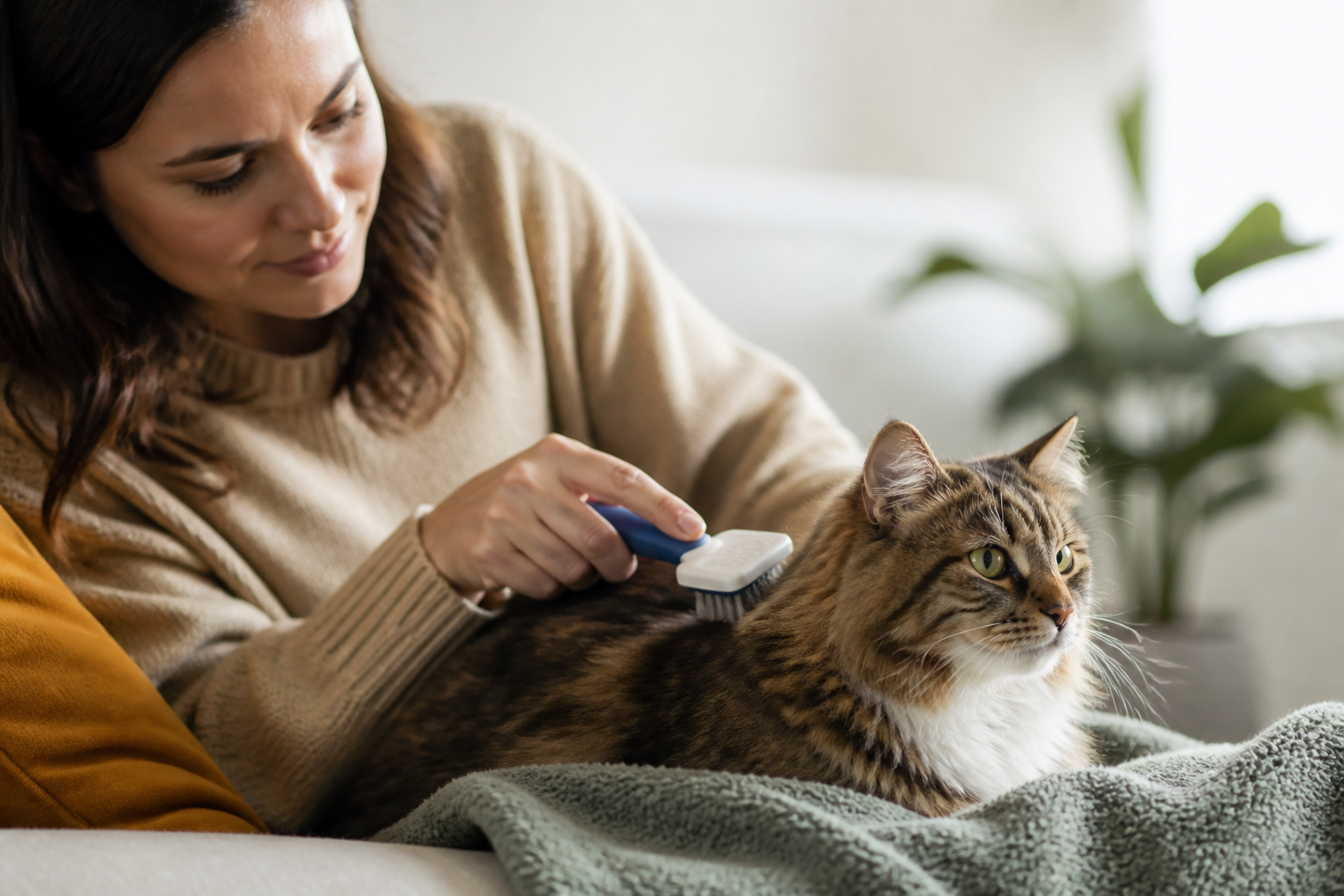
When your cat cannot manage their own coat, you must step in. Regular brushing is the most effective way to manage cat dandruff by tail. Brushing mimics the action of a cat’s tongue, distributing natural oils across the hair shaft and lifting away dead cells before they can clump. Find our cat grooming supplies for brushes, combs, wipes, and other helpful tools.
Choosing the Right Tools
Not all brushes are created equal. For a cat with dandruff, you want a tool that reaches the skin without being abrasive.
- Slicker Brushes: These are great for removing loose undercoat and dander.
- Rubber Curry Brushes: These are gentle on the skin and excellent for stimulating oil production. Kong makes several options that cats find very soothing.
- Fine-Toothed Combs: These are useful for checking for flea dirt or mites near the tail.
How to Groom the Tail Area
Step 1: Start at the shoulders where the cat is most comfortable.
Step 2: Slowly move toward the lower back, using short, gentle strokes.
Step 3: Pay extra attention to the base of the tail, as this is where the flakes concentrate.
Step 4: Use a damp cloth or a cat-specific grooming wipe to remove any lingering flakes from the surface of the fur.
Step 5: Reward your cat with a high-quality treat from brands like Real Meat Co to make the experience positive.
Key Takeaway: Daily brushing is a simple, effective way to assist a cat that can no longer groom their lower back due to age or weight.
When to Consult the BaxterBoo Pharmacy
Sometimes, dandruff is a sign of a medical condition that requires more than just a brush. Conditions like hyperthyroidism or diabetes can change the way a cat’s body processes nutrients, leading to a dull, flaky coat. In these cases, your veterinarian may prescribe a therapeutic diet.
Our pharmacy carries prescription pet foods through Pet's Choice, including options from Royal Canin and Farmina Vet Life. These diets are formulated to manage specific internal health issues that manifest as skin problems. If your vet determines that the dandruff is caused by a fungal infection like ringworm or a bacterial skin infection, our cat pharmacy is your source for the necessary medications to clear up the issue.
Vet Tip: Always consult your veterinarian before starting new supplements or medications, especially if your cat shows other signs of illness like weight loss or increased thirst.
At-Home Remedies and Supplements
If your cat has a clean bill of health from the vet, you can focus on wellness-based solutions. Supplements are a fantastic way to bolster skin health from the inside out. Look for products containing wild-caught fish oil or biotin.
Brands like Zesty Paws or Honest Paws offer supplements specifically designed for skin and coat support. These can be easily added to your cat’s daily meal. It may take three to four weeks to see a visible difference in the coat, as it takes time for the new, healthier skin cells to reach the surface.
Bottom line: Improving a cat's coat is a slow process that requires a combination of better nutrition, increased hydration, and consistent grooming.
Summary of Care for Tail Dandruff
Managing cat dandruff by tail requires a multi-step approach. You cannot simply wash the flakes away; you must address why they are forming.
- Assess Mobility: Determine if weight or joint pain is preventing your cat from reaching their tail.
- Check for Pests: Use a flea comb to rule out parasites or mites.
- Boost Nutrition: Ensure their diet is rich in Omega-3 fatty acids.
- Increase Humidity: Add moisture to your home during dry months.
- Assist with Grooming: Use a soft brush daily to help your cat manage their coat.
Conclusion
Finding dandruff on your cat can be frustrating, but it is a manageable issue. Most cases of cat dandruff by tail are linked to simple factors like dry air or the physical limitations of an aging pet. By stepping in to help with grooming and ensuring your cat has the right nutritional support, you can help them feel much more comfortable. Whether you need a new grooming tool, a skin-supporting supplement, or a prescription diet through our pharmacy, we are here to help. Visit the BaxterBoo pharmacy section or browse our premium cat foods to find exactly what your cat needs to stay flake-free.
FAQ
Why is my cat only getting dandruff near the base of their tail?
The base of the tail is the hardest area for a cat to reach during their normal grooming routine. If a cat is slightly overweight, has stiff joints, or is simply feeling lazy, this is the first area where dead skin cells and natural oils will accumulate. It does not necessarily mean the skin is only dry there, but rather that it is the only place where the flakes are not being cleaned away by the cat's tongue.
Can I use human dandruff shampoo on my cat?
No, you should never use human dandruff shampoo on a cat. Human skin has a different pH balance than feline skin, and many human shampoos contain ingredients that are toxic to cats if ingested during grooming. Always use a shampoo specifically formulated for cats, or better yet, use a waterless foam cleanser if your cat finds baths stressful. Stress can actually worsen skin conditions.
Is cat dandruff contagious to humans or other pets?
Standard dandruff caused by dry skin or poor grooming is not contagious. However, if the "dandruff" is actually caused by Cheyletiella mites (walking dandruff) or a fungal infection like ringworm, it can absolutely spread to other pets and even to humans. If you notice other pets itching or if you develop skin redness yourself, see a veterinarian and a doctor immediately.
How long does it take for a cat's dandruff to go away?
Skin cells take time to regenerate, so you should not expect an overnight fix. If you improve your cat's diet and begin a daily grooming routine, you will likely start to see a difference in about two to four weeks. If the dandruff is caused by a medical issue like a thyroid imbalance, it may take longer as the internal health of the cat stabilizes under veterinary care.






- Site & Contents BaxterBoo.com. BaxterBoo is located in the United States.
- Privacy & Security
- Terms of Use
- Accessibility Statement
