Save 15% on your 1st Autoship learn more

 Email us
 Live Chat
 FAQs
FAQs





Introduction
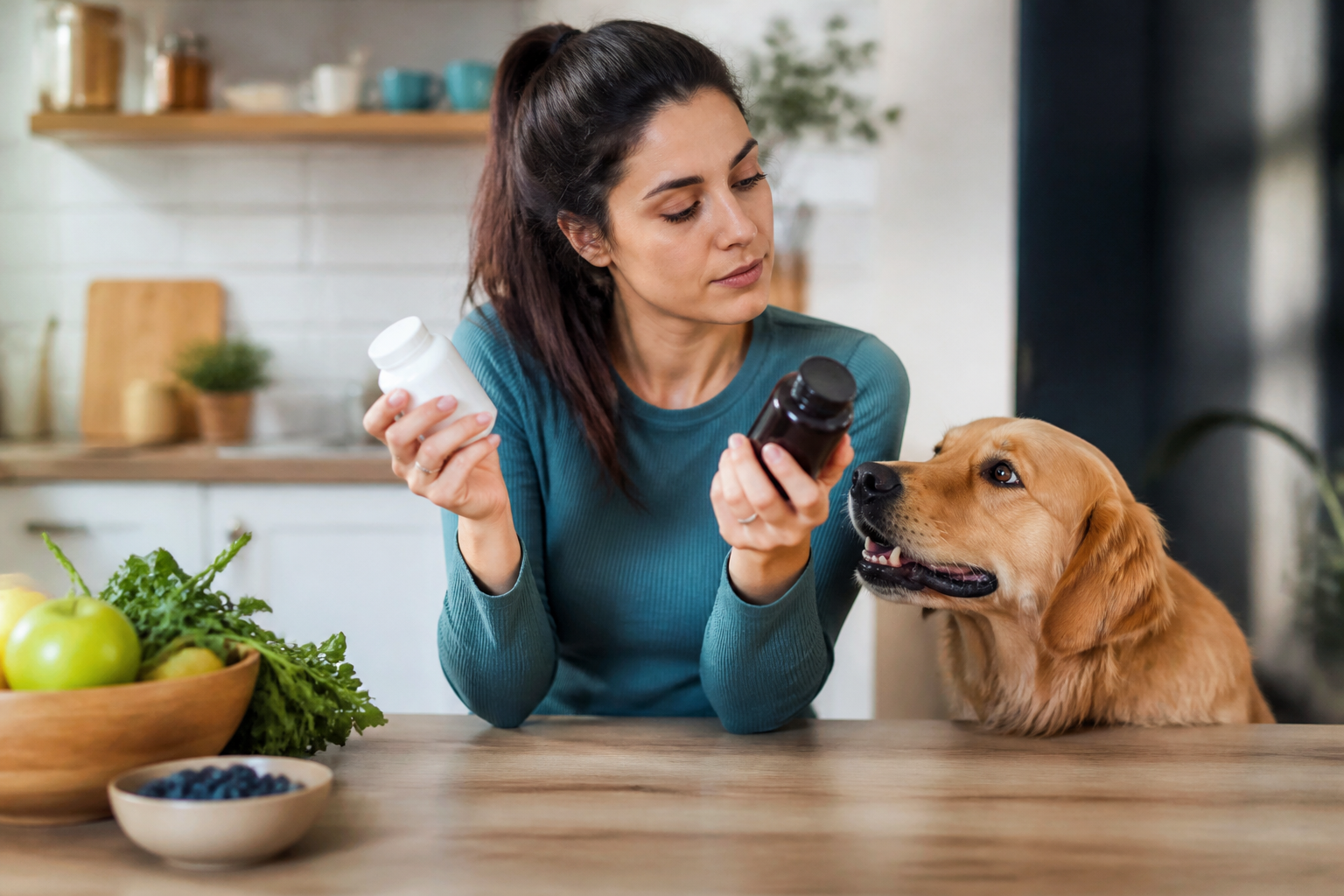
You are standing in your kitchen with a bottle of probiotics in your hand. You know they help your own digestion, and you wonder if they could help your dog’s frequent gas or soft stools. It is a common question for many pet owners who want to support their furry friend’s wellness. While humans and dogs both have complex digestive systems, their internal biological environments are quite different. At BaxterBoo, we want to help you understand what makes a probiotic effective for your specific pet. This article covers the key differences between human and canine supplements, the risks of sharing your own vitamins, and how to choose the right strains for your dog. While some ingredients overlap, dog-specific probiotics are formulated to handle a dog’s unique biology and stomach acidity.
Quick Answer: No, dog probiotics are not exactly the same as human probiotics. While some bacterial strains are shared, dog supplements use specific concentrations and strains that survive a dog’s highly acidic stomach. Human versions may also contain ingredients like xylitol that are toxic to dogs.
The Canine Microbiome vs. the Human Microbiome
Every living creature has a microbiome. This is a massive community of bacteria, fungi, and viruses living in the digestive tract. In dogs, this system is responsible for breaking down food, producing vitamins, and supporting the immune system. In fact, about 70 percent of a dog’s immune system is located in their gut. This makes digestive health a primary factor in their overall physical well-being. You can explore our dog digestive health collection for supplements designed around canine wellness.
Humans and dogs share some types of gut bacteria, but the ratios and dominant species are different. A human’s gut is designed to process an omnivorous diet rich in fiber and various carbohydrates. A dog’s gut is shorter and more acidic. It is built to process proteins and fats quickly. Because the environments are different, the bacteria that thrive in a human may not be the same ones that thrive in a dog.
Using a human probiotic for a dog is often inefficient. The bacteria in a human supplement are selected because they can survive the human digestive process. When these same bacteria enter a dog’s system, they encounter a much more hostile environment. They often fail to colonize the gut, meaning your dog does not get the health benefits you are paying for.
Why Stomach Acidity Matters
One of the biggest differences between you and your dog is the pH level of the stomach. A dog’s stomach is significantly more acidic than a human’s stomach. This high acidity is a natural defense mechanism. It allows dogs to eat things that would make a human very sick, such as raw meat or items found in the yard. The acid kills off many harmful pathogens before they can reach the intestines.
This same acid also kills many probiotic bacteria. Human probiotics are often not hardy enough to survive a dog’s gastric juices. Canine-specific supplements are formulated with this in mind. They often use encapsulated strains or specific bacteria like Enterococcus faecium that are naturally more resistant to acid. This ensures the beneficial microbes actually reach the lower digestive tract where they can do their work.
Key Takeaway: A dog’s stomach is far more acidic than a human’s. Most human probiotics will be destroyed by a dog’s stomach acid before they ever reach the intestines.
Common Bacterial Strains for Dogs
When you look at a label for a dog probiotic, you will see a list of scientific names. These are the specific strains included in the formula. Some of the most effective strains for dogs include:
- Lactobacillus acidophilus: This is a staple in many probiotics. It helps with nutrient absorption and can support the immune system. It is also known to help with stool quality.
- Enterococcus faecium: This strain is particularly good at surviving the trip through the stomach. It is frequently used to help manage stress-related diarrhea or issues caused by sudden diet changes.
- Bifidobacterium animalis: This is often used to help shorten the duration of diarrhea. It supports the overall balance of the gut flora.
- Bacillus coagulans: This is a spore-forming bacterium. It is very tough and can help with inflammatory issues in the digestive tract.
- Saccharomyces boulardii: This is actually a beneficial yeast. It is very helpful for dogs who are taking antibiotics, as it is not killed by the medication.
Each of these serves a slightly different purpose. Some focus on the immune system, while others focus on firming up stools. A high-quality supplement will often include a blend of several strains to provide broad support.
The Danger of Human Ingredients
The biggest risk of giving human probiotics to dogs is not the bacteria itself. It is the inactive ingredients. Human supplements are often flavored or sweetened to make them easier to take. One common sweetener is xylitol. This is also known as birch sugar or wood sugar.
Xylitol is extremely toxic to dogs. Even a small amount can cause a life-threatening drop in blood sugar and liver failure. Many human chewable probiotics or powders contain this ingredient. Other human supplements may contain chocolate flavoring, raisins, or certain types of fiber that can cause severe bloating in dogs.
Additionally, human probiotics often have much higher Colony Forming Unit (CFU) counts than what a dog needs. While a high count sounds good, an overwhelming amount of foreign bacteria can actually cause an imbalance. This might lead to vomiting, diarrhea, or painful gas.
Vet Tip: Always check the inactive ingredients list on any supplement for xylitol. If your dog accidentally consumes a human supplement with this ingredient, contact an emergency veterinarian immediately.
When Should You Use a Probiotic for Your Dog?
Healthy dogs can often maintain their own gut balance. However, certain life events can throw that balance off. This is called dysbiosis. When bad bacteria outnumber the good, your dog might show signs of illness.
After a Course of Antibiotics
Antibiotics are life-saving medications. They kill harmful bacteria that cause infections. Unfortunately, they do not distinguish between good and bad bacteria. They often wipe out the beneficial microbes in the gut as well. This is why many dogs get diarrhea while taking antibiotics. A probiotic can help replenish those good bacteria during or after treatment.
During Times of Stress
Dogs are sensitive to changes in their environment. Boarding, moving to a new home, or adding a new family member can cause stress. This stress affects the digestive system. Many owners find that starting a probiotic a few days before a known stressful event can prevent "stress colitis" or loose stools. For additional support, read about how holistic ingredients can support puppy digestion.
Chronic Digestive Issues
Some dogs simply have sensitive stomachs. They may deal with frequent gas, bloating, or intermittent soft stools. A daily probiotic can help stabilize their system over time. It may also help with issues like bad breath, which often starts in the gut.
Allergies and Skin Health
There is a strong link between gut health and skin health. Dogs with environmental or food allergies often have an imbalanced microbiome. Supporting the gut can sometimes reduce the severity of itchy skin and hotspots. Brands such as Honest Paws offer pet-focused wellness products.
How to Choose a Quality Supplement
Not all pet supplements are created equal. Because the industry is not as strictly regulated as the pharmaceutical industry, quality can vary. You want to look for brands that are transparent about their sourcing and testing.
Check the label for a "Guaranteed Analysis." This tells you exactly how many live bacteria are in the product at the time of manufacture. Look for the NASC (National Animal Supplement Council) seal. This indicates that the company meets specific standards for quality and labeling. For more general guidance, see our pet supplement guide.
At BaxterBoo, we carry trusted brands like Zesty Paws, Honest Paws, and NutriSource. These companies focus on pet-specific biology. We also offer more specialized options through our pet pharmacy. Through our partnership with Pet's Choice, we can provide FDA-approved medications and prescription diets. If your vet has recommended a specific prescription probiotic like Purina Pro Plan FortiFlora, our pharmacy can help fulfill that need with a valid prescription.
Key Takeaway: Look for a "Guaranteed Analysis" and the NASC seal on pet probiotics to ensure you are getting a high-quality, safe product.
Understanding Prebiotics vs. Probiotics
You might see the word "prebiotic" on a label as well. It is easy to confuse the two, but they serve different roles. Think of probiotics as the "seeds" you plant in a garden. Prebiotics are the "fertilizer."
Prebiotics are types of fiber that humans and dogs cannot digest. Instead, they pass through the small intestine and into the colon. There, they serve as food for the probiotic bacteria. Common prebiotics include chicory root, inulin, and fructooligosaccharides (FOS). A supplement that contains both prebiotics and probiotics is called a "synbiotic." These are often more effective because they provide the bacteria with the food they need to survive and multiply.
The Gut-Brain Connection in Dogs
Recent research has highlighted the "gut-brain axis" in pets. This is a communication line between the digestive tract and the central nervous system. The bacteria in the gut produce neurotransmitters like serotonin and dopamine. These chemicals play a huge role in mood and behavior.
Some specific strains, like Bifidobacterium longum (BL999), have been shown to help dogs stay calm in stressful situations. Dogs taking these specific probiotics may show less barking, spinning, or pacing. If your dog suffers from separation anxiety or noise phobias, a probiotic might be a useful tool alongside behavioral training.
How to Introduce Probiotics to Your Dog
If you are ready to start your dog on a supplement, it is best to go slowly. Introducing too many new bacteria at once can actually cause the stomach upset you are trying to prevent.
Step 1: Consult your veterinarian. / Ensure the symptoms you are seeing aren't caused by a more serious underlying infection or parasite.
Step 2: Choose the right format. / Dog probiotics come in powders, chews, and capsules. Powders are great for mixing into wet food, while chews are easy to give as a treat.
Step 3: Start with a half dose. / Give your dog a smaller amount for the first three to five days to let their system adjust.
Step 4: Monitor for side effects. / Watch for increased gas or a change in appetite. If these persist for more than a few days, stop the supplement and talk to your vet.
Step 5: Move to a full dose. / Once your dog is comfortable, move to the recommended daily amount.
Comparing Probiotic Delivery Methods
| Format | Pros | Cons |
|---|---|---|
| Powders | Easy to mix with food; often highly concentrated. | Can be messy; some dogs don't like the texture. |
| Chews | Very palatable; convenient for travel. | May contain more calories and binders. |
| Capsules | Protects bacteria from air and light; no taste. | Difficult to give to dogs who don't like pills. |
| Fortified Food | Convenient; no extra steps for the owner. | Bacteria may be killed during the cooking process. |
Why Your Dog Needs Canine-Specific CFUs
CFU stands for Colony Forming Units. This is a measurement of how many live, active microbes are in each dose. For humans, these numbers can be in the tens of billions. For dogs, the required amount is usually lower, typically between 1 billion and 10 billion CFUs per day, depending on the dog's size.
Giving a small dog a human-sized dose of 50 billion CFUs can cause significant bloating. It is much safer to use a product designed for their weight class. Most dog probiotics provide clear dosing instructions based on your dog's weight. This takes the guesswork out of the process and reduces the risk of side effects.
Safety and Storage
Probiotics are living organisms. They are sensitive to heat, light, and moisture. If you store them improperly, the bacteria will die, and the supplement will become useless. Always check the packaging for storage instructions.
Some probiotics are "shelf-stable," meaning they can stay in the cupboard. Others require refrigeration. If you buy a refrigerated probiotic, make sure it stays cold during the trip home. When ordering online from us, check the product description to see if special shipping or handling is required for that specific brand.
Supporting Your Senior Dog’s Gut
As dogs age, their digestive efficiency often decreases. Senior dogs may have a harder time absorbing nutrients from their food. Their immune systems also become less robust. Adding a probiotic to a senior dog's routine can provide much-needed support for their aging system.
Many senior-specific probiotics also include other helpful ingredients. You might find formulas that combine gut support with joint supplements like glucosamine or antioxidants for cognitive health. This can be a great way to manage multiple age-related concerns with a single daily treat.
The Role of Prescription Probiotics
In some cases, over-the-counter supplements are not enough. If your dog has a chronic condition like Inflammatory Bowel Disease (IBD) or severe food allergies, they may need a higher grade of support. This is where prescription options come in.
Our pharmacy at BaxterBoo offers a streamlined way to get these items. Through our Pet's Choice partnership, we can fill prescriptions for specialized probiotic diets and high-potency supplements. These products are often backed by more clinical research than standard retail versions. They are designed to manage specific medical conditions under the guidance of a professional.
Bottom line: While human and dog probiotics share some basic concepts, the biological differences in stomach acidity and gut flora make dog-specific formulas the safer and more effective choice for your pet.
Conclusion
Caring for your dog's digestive health is a journey that pays off in their overall energy and comfort. While it might be tempting to share your own supplements, the differences in pH levels and the risk of toxic ingredients like xylitol make it a gamble. Choosing a high-quality, canine-specific probiotic ensures your dog gets the right strains at the right concentration for their body. We are here to support that journey with our curated selection of supplements and our dedicated pharmacy for prescription needs. You can also take advantage of the MVP Rewards programme to earn points on every purchase of your dog's favorite gut-health treats. For the best results, always work closely with your veterinarian to find the right balance for your pet's unique needs.
FAQ
Is it safe to give my dog human yogurt for probiotics?
Plain, unsweetened yogurt is generally safe for dogs in small amounts, but it may not be the most effective probiotic source. Many dogs are lactose intolerant, which can lead to diarrhea or gas. Additionally, the concentration of beneficial bacteria in yogurt is much lower than what is found in a concentrated supplement.
Can a dog overdose on probiotics?
While you cannot "overdose" in a traditional toxic sense, giving too many probiotics can cause significant digestive distress. This usually presents as temporary vomiting, diarrhea, or intense gas. If your dog eats an entire bag of probiotic chews, you should call your veterinarian to manage the potential stomach upset.
How long does it take for dog probiotics to work?
The timeline depends on what you are treating. For acute issues like diarrhea caused by a diet change, you might see improvements within one to three days. For chronic issues like skin allergies or anxiety, it may take four to six weeks of consistent daily use to see a noticeable difference.
Can puppies take probiotics?
Yes, puppies can benefit from probiotics, especially as they transition from mother's milk to solid food. Their immune systems are still developing, and a healthy gut can help them fight off common puppy ailments. Always use a formula specifically labeled for puppies or consult your vet for the correct dosage.