
 Save 15% on your 1st Autoship learn more

 Email us
 Live Chat
 FAQs
FAQs





Introduction
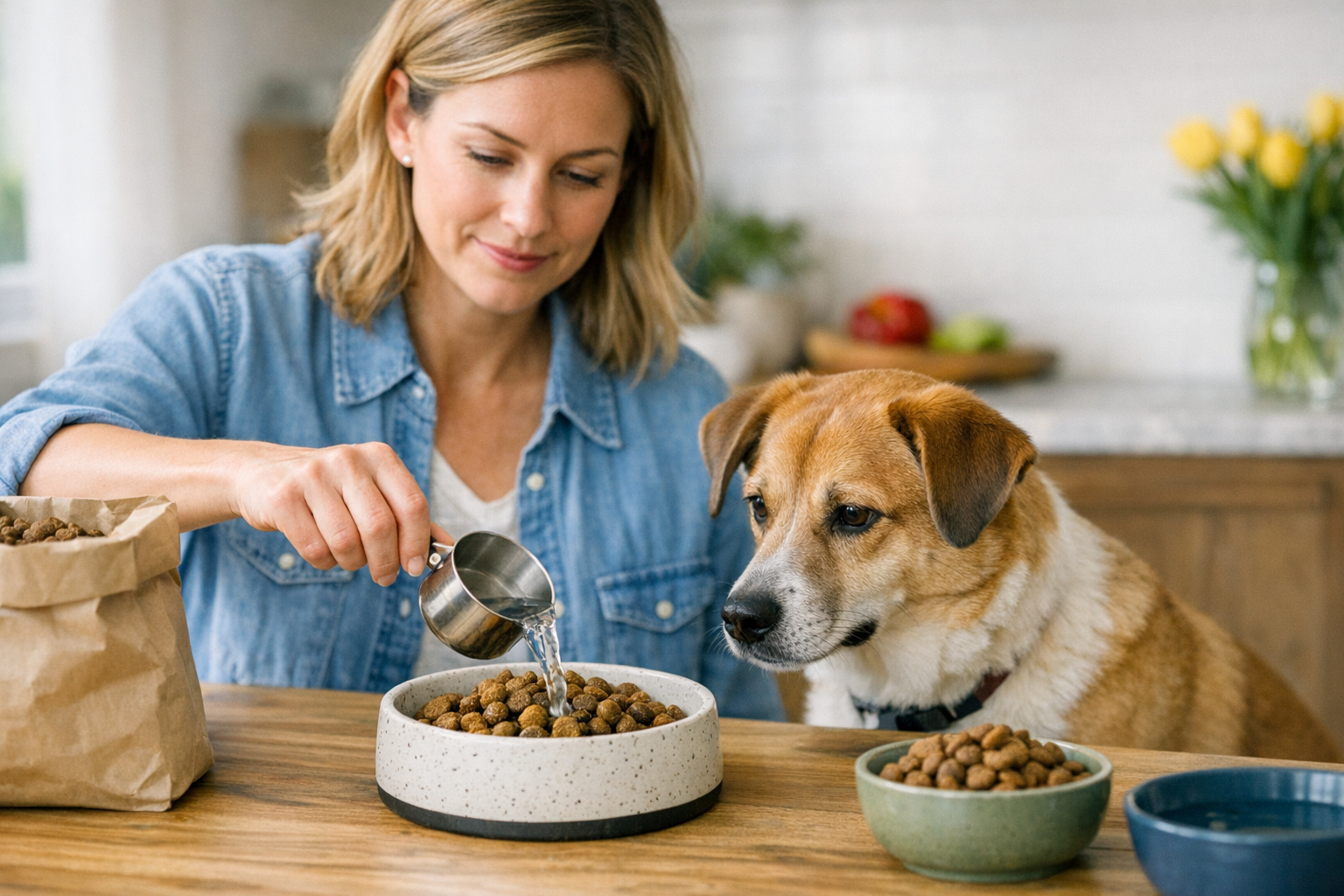
You stand in your kitchen watching your dog sniff at their bowl of dry kibble before walking away. Maybe they are a picky eater who seems bored with the crunch. Perhaps they are an older dog who struggles to chew those hard pellets. You might just worry they are not drinking enough water during a hot Illinois summer. Many pet owners wonder if adding a splash of water to the bowl is a helpful upgrade or a soggy mistake. At BaxterBoo, we hear this question from customers every day who want to make mealtime better for their companions. Adding water to dry dog food is actually a widely recommended practice that offers benefits for hydration and digestion. This guide covers why you might want to try it, the few risks to watch for, and the best way to serve a hydrated meal.
Quick Answer: You can absolutely mix dry dog food with water to improve hydration and aroma. It makes the food easier to chew for seniors and puppies while helping picky eaters enjoy their meals. Just be sure to pick up any uneaten portions quickly to prevent bacterial growth.
If your dog is reluctant to eat dry kibble, our guide on getting your dog to eat dry dog food is a helpful next read.
The Benefits of Adding Water to Kibble
Most dry dog food contains only about ten percent moisture. In the wild, a dog would get a significant portion of their hydration directly from their food. Modern kibble is convenient and shelf stable, but it is very dry. Adding water helps bridge that gap.
Improved Hydration and Urinary Health
Many dogs do not drink enough standing water from their bowls. This is especially true for dogs that are less active or those with certain health needs. When you add water to the food, you ensure they take in moisture with every bite. This extra fluid supports kidney function and helps flush the urinary tract. It can be a simple way to help prevent crystals or stones from forming in the bladder.
Better Digention and Nutrient Absorption
Dry kibble is often very dense. When a dog eats it dry, their body has to provide the moisture to break those hard nuggets down in the stomach. This can sometimes lead to bloating or gas. Softening the food with water starts the breakdown process before the food even hits the stomach. This makes it easier for your dog to absorb the nutrients in premium options like our Orijen selection or other high-protein recipes.
Enhancing Aroma for Picky Eaters
Dogs experience the world through their noses. Dry kibble does not have a very strong scent at room temperature. Adding warm water releases the fats and aromas within the food. This creates a natural gravy that smells much more enticing to a dog that has lost interest in plain dry food. It is a great trick for dogs recovering from an illness who need a little extra encouragement to eat.
Support for Seniors and Puppies
If you have a senior dog with missing teeth or sensitive gums, hard kibble can be painful to eat. Puppies transitioning from milk to solid food also struggle with the density of dry pellets. Softening the food makes it accessible for these life stages. It ensures they get the nutrition they need without the physical struggle of crunching. For younger pets, our Puppy Shop can also help you find age-appropriate feeding options.
Potential Downsides to Consider
While adding water is generally a great idea, there are a few things to keep in mind to keep your pet safe.
Risk of Spoilage
Dry food is designed to stay fresh in the bowl for hours. Once you add water, you have created a moist, warm environment where bacteria can grow. If your dog is a grazer who likes to take a few bites and come back later, adding water might not be the best choice. You must be willing to pick up the bowl after a short period.
Dental Health Concerns
There is a long standing belief that dry kibble helps clean a dog’s teeth by scraping away plaque. While some dental specific diets are formulated to do this, most standard kibble shatters too quickly to provide much benefit. However, if your dog is on a specific dental health plan, softening the food will remove any mechanical cleaning effect the kibble might have had.
The Mess Factor
A hydrated meal is a messy meal. Dogs with long ears or beards, like Spaniels or Schnauzers, may end up with soggy food stuck to their fur. You might find yourself cleaning the floor more often as your dog splashes the "gravy" around their feeding area.
How to Properly Mix Water and Kibble
To get the most benefit without the risks, you should follow a consistent routine. It is not just about pouring a cup of water over the bowl and walking away.
Step 1: Use the right water temperature. / Use warm water rather than cold or boiling. Warm water releases aromas best, but boiling water can destroy some of the delicate vitamins and minerals in premium foods like Stella & Chewy's Bountiful Bone Broth Dog Meal Topper - Beef.
Step 2: Find the correct ratio. / Start with a one to four ratio. This means one part water to four parts kibble. If your dog likes it, you can increase the water until the kibble is fully submerged.
Step 3: Let it sit. / Give the water about five to ten minutes to soak into the kibble. This ensures the center of the nugget is soft and prevents the dog from just lapping up the water and leaving the food.
Key Takeaway: Adding water to kibble is a simple, low cost way to improve a dog's health and mealtime enjoyment. Always use warm, filtered water and never leave moistened food out for more than twenty minutes.
For more on meal timing and freshness, our dry dog food freshness guide covers the basics of keeping kibble at its best.
The Twenty Minute Rule
Because moisture encourages bacterial growth, you should treat wet kibble like canned food. If your dog has not finished their meal within twenty minutes, pick up the bowl. Discard the leftovers and wash the bowl with hot, soapy water. Never save moistened kibble in the refrigerator for the next day, as the texture becomes unappealing and the risk of spoilage increases.
Using Toppers and Mixers Instead of Plain Water
If your dog is not interested in water alone, there are other ways to add moisture that provide even more nutritional value. We carry several options at BaxterBoo that can turn a boring meal into a feast.
- Bone Broth: Brands like The Honest Kitchen or Caru make bone broths specifically for pets. These are low in sodium and high in collagen, which supports joint health.
- Goat's Milk: Raw or dehydrated goat's milk is packed with probiotics. It is very easy on the digestive system and provides a creamy texture dogs love.
- Wet Food Toppers: Mixing a spoonful of canned food from Tiki Cat or Weruva into the dry kibble adds moisture and high quality protein.
- Dehydrated Food: Some foods are designed to be mixed with water. Honest Paws or Stella and Chewy's offer freeze dried patties that you crumble and hydrate to create a fresh, whole food meal.
If you want more variety at mealtime, our food topper collection is a great place to browse.
Vet Tip: If your dog has a chronic health condition like kidney disease or diabetes, consult your veterinarian before making significant changes to how you feed them. Some therapeutic diets are formulated with precise moisture and nutrient balances that should not be altered without professional guidance.
When Mixing Might Not Be Right
There are specific situations where you should stick to dry kibble or follow very strict instructions from a professional. If your dog is on a prescription diet for a condition like urinary stones or weight management, the formulation is very specific.
Our dog pharmacy is a helpful place to start when you need prescription support for a feeding plan or medical diet. If your vet has prescribed a food like Farmina Vet Life for a medical condition, ask them if adding water is appropriate. Sometimes the extra water is encouraged, but in other cases, it might dilute the effectiveness of the therapeutic ingredients.
Monitoring Your Dog's Reaction
Every dog is an individual. Some dogs might experience a slightly loose stool when you first start adding water. This is usually just the digestive tract adjusting to the higher moisture content. If the diarrhea persists for more than twenty four hours, stop adding the water and contact your veterinarian.
Maintaining Your Dog's Gear
When you start feeding a wetter diet, your bowls and mats will get dirtier. It is important to use non porous bowls like stainless steel or ceramic. Plastic bowls can develop tiny scratches where bacteria from the wet food can hide. We recommend washing the bowl after every single meal. If you use a silicone feeding mat, wipe it down daily to prevent a "sour food" smell from developing in your kitchen.
- Wash stainless steel bowls in the dishwasher for high heat sanitization.
- Replace plastic bowls if they show signs of wear or staining.
- Clean up any splashes on the wall or floor immediately to prevent ants or other pests.
If you are looking for a broader meal rotation, our dog food category makes it easy to compare kibble, toppers, and more.
Summary of the Hydration Method
| Feature | Benefits | Considerations |
|---|---|---|
| Warm Water | Releases aroma, softens quickly | Do not use boiling water |
| Bone Broth | Adds collagen and electrolytes | Ensure it is onion and garlic free |
| Goat's Milk | Provides probiotics and minerals | Some dogs may be sensitive to dairy |
| Canned Toppers | High protein, very palatable | Adds extra calories to the daily total |
Adding water to dry dog food is one of the easiest ways to support your pet's long term health. It helps their kidneys, improves their digestion, and makes their favorite part of the day even better. Whether you use plain filtered water or a fancy bone broth, your dog will likely appreciate the extra effort.
Bottom line: Mixing water with dry dog food is a healthy habit that supports hydration and makes meals more appetizing, provided you maintain strict bowl hygiene.
If you prefer convenient repeat ordering, our Autoship programme can help keep your pet’s food stocked on schedule, and the MVP Rewards programme adds extra value over time.
Conclusion
Deciding whether to mix water into your dog's food comes down to their specific needs. Most dogs will benefit from the extra hydration, especially during the summer or as they enter their senior years. It is a practical solution for picky eaters and a gentle way to help puppies grow. At BaxterBoo, we want to help you make informed choices about your pet's nutrition and wellness. Remember to start slowly, use warm water, and always keep an eye on how your dog reacts to the change. If you are managing a specific health condition, our pharmacy partnership is here to help with prescription diets that can be delivered right to your door.
- Start with a small amount of water to test your dog's interest.
- Never leave wet food out all day.
- Use high quality stainless steel bowls for easier cleaning.
- Consider using bone broth or goat's milk for an extra nutrient boost.
To find the perfect bowls, toppers, or high quality kibble for your next meal, visit our Dog Food section to see our curated selection of trusted brands. You can also browse our freeze-dried food hub if you want a water-friendly option that is designed to be rehydrated.
FAQ
How much water should I add to my dog's dry food?
A good starting point is one part water to four parts kibble. You can adjust this based on your dog's preference, as some dogs enjoy a "soup" while others prefer the kibble to be just slightly softened. Ensure you do not add so much that your dog leaves the food behind.
Can I use cold water to soak the kibble?
You can use cold water, but it will take much longer to soften the food. Warm water is more effective at releasing the natural fats and aromas that make the food taste better to your dog. Never use hot or boiling water, as it can burn your dog's mouth and potentially damage the nutritional value of the food.
Does soaking dog food in water cause bloat?
There is no definitive evidence that soaking kibble causes bloat. In fact, some experts believe that softening the food can prevent a dog from eating too fast and gulping air, which are known risk factors for bloat. If your dog is a high risk breed, it is always best to discuss feeding methods with your veterinarian. If you want to read more about the condition itself, our bloat prevention article is a useful companion read.
Can I leave soaked dog food out overnight?
No, you should never leave moistened dog food out for more than twenty to thirty minutes. The moisture combined with the protein in the food creates a perfect environment for bacteria like Salmonella and Listeria to grow. If your dog does not finish their meal, throw it away and wash the bowl thoroughly.






