
 Save 15% on your 1st Autoship learn more

 Email us
 Live Chat
 FAQs
FAQs





Introduction
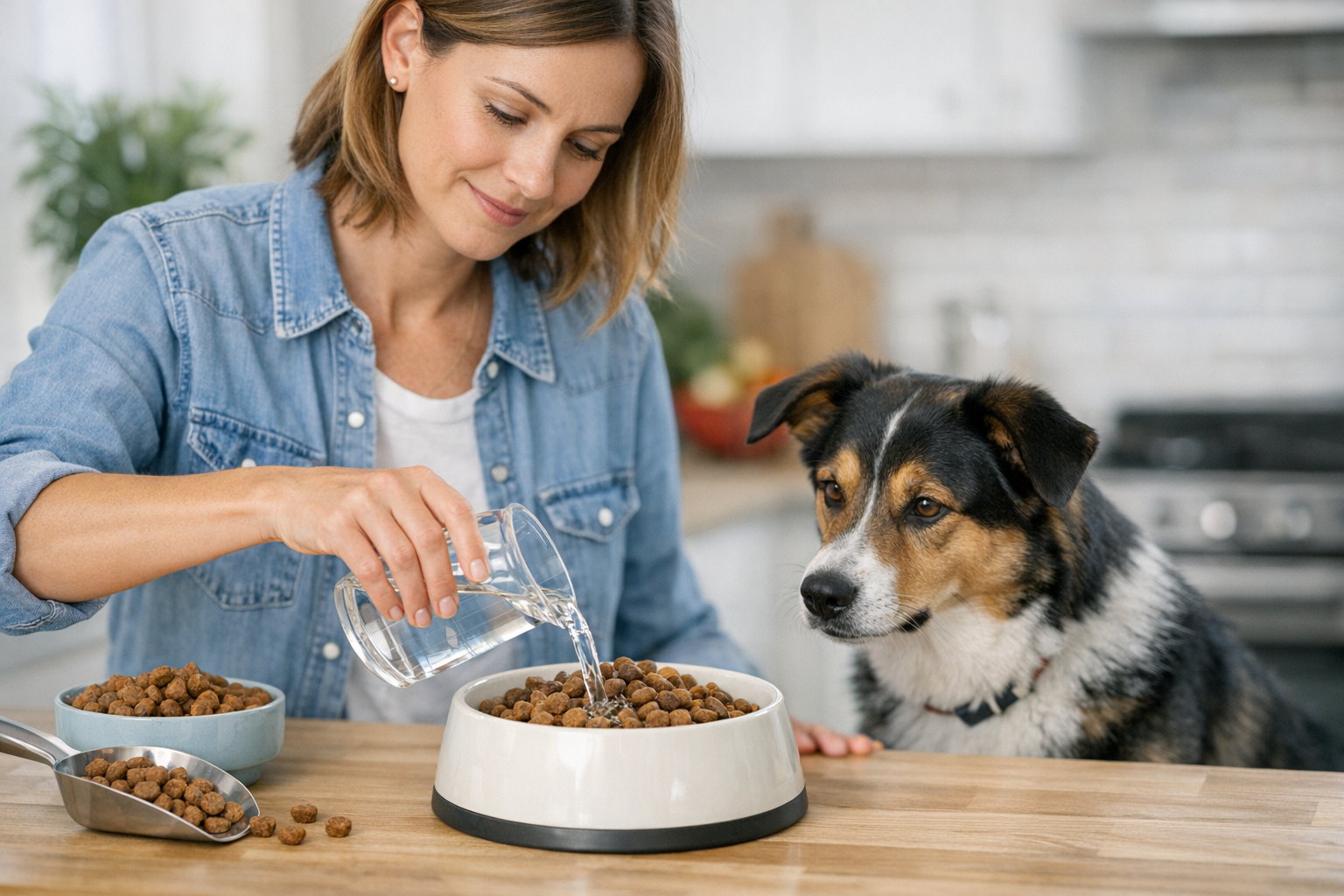
You are standing in the kitchen with a scoop of dry kibble in your hand. Your dog is waiting patiently, but you wonder if those hard, brown pellets are a bit too dry. It is a common question for many pet owners who want to ensure their companions are getting the best nutrition possible. At BaxterBoo, we hear this question frequently from people looking to improve their dog's mealtime experience, and our dog food category is a great place to start. Adding water to dry dog food is not just a matter of preference. It can actually change the nutritional profile and digestibility of the meal. This post will cover the benefits of hydration, the potential risks of spoilage, and the best ways to serve a moistened meal. Adding water is generally a great idea for most dogs when done correctly.
Quick Answer: Yes, you can and often should put water in dry dog food. It improves hydration, enhances aroma for picky eaters, and makes the food easier to digest. However, you must serve it immediately to prevent bacterial growth and spoilage.
The Science of Dry Kibble
To understand why you might add water, you first need to look at how dry food is made. Most commercial kibble is produced through a process called extrusion. Ingredients are mixed, heated under high pressure, and pushed through a die to create specific shapes. Finally, the pieces are dried to remove almost all moisture. This process is efficient and makes the food shelf-stable.
Standard dry dog food usually contains between 6% and 10% moisture. In contrast, a "natural" diet for a canine in the wild would consist of prey that is roughly 70% water. This means that dogs eating only dry kibble are starting at a significant moisture deficit. They must make up for this by drinking a lot of water from their bowl. Some dogs have a high thirst drive, but many do not drink enough to stay fully hydrated.
Adding water back into the food helps bridge this gap. It returns the meal to a state that is more aligned with what a dog's digestive system expects. While kibble is nutritionally complete, its physical form is very different from fresh food. Moistening the food changes the texture and can make the nutrients more accessible during the digestion process.
Key Benefits of Hydrating Dry Food
The most obvious benefit of adding water is hydration. Water is essential for every chemical reaction in your dog's body. It helps transport nutrients into cells and carries waste products out. If a dog is even slightly dehydrated, their organs have to work much harder to function.
Improving Kidney and Urinary Health
The kidneys are responsible for filtering toxins from the blood and excreting them through urine. This process requires a steady supply of fluid. When a dog eats dry food without enough extra water, their urine becomes more concentrated. This can increase the risk of crystals or bladder stones forming.
For dogs with a history of urinary tract issues, moisture is a primary tool for prevention. Increased water intake flushes the bladder more frequently. This prevents bacteria and minerals from sitting in the urinary tract for too long. If your dog has chronic kidney issues or recurring stones, our pet pharmacy carries prescription pet foods through our partnership with Pet's Choice. Always consult your veterinarian before switching to a medical diet for these conditions.
Enhancing Digestion and Preventing Bloat
Dry kibble can be heavy on a dog's stomach. When a dog swallows dry pellets, the food must absorb fluid from the stomach lining to begin breaking down. This can lead to temporary dehydration in the digestive tract. By adding water to the bowl, you start the breakdown process before the food even enters the body.
Hydrating the food also slows down fast eaters. Many dogs "inhale" their dry food, which can lead to choking or a dangerous condition called bloat. Wetting the food creates a heavier, more substantial texture. This often forces the dog to lap up the food rather than gulping it down whole. Slowing down the pace of eating is one of the simplest ways to support a healthy gut.
Benefits for Picky Eaters
Dogs experience the world through their noses. Dry kibble often has a muted scent because the fats and proteins are locked inside the dried structure. When you add warm water, it releases the aromas of the ingredients. This makes the meal much more enticing for a dog that has lost interest in their food.
This is especially helpful for dogs recovering from an illness. A reduced appetite is common when a dog feels unwell. A warm, fragrant meal can stimulate their senses and encourage them to eat the calories they need to heal.
Potential Downsides and Risks
While adding water is generally positive, it is not without risks. Most of these risks involve how the food is handled after it has been moistened.
The Risk of Bacterial Growth
Dry kibble is safe at room temperature because it lacks moisture. Bacteria like Salmonella and Listeria need water to grow. As soon as you add water to the bowl, you create a perfect environment for these pathogens. This is particularly dangerous if you have a "grazer" who likes to eat small amounts of food throughout the day.
If you add water, you can no longer leave the food out for hours. The bowl becomes a petri dish in a relatively short amount of time. You must be diligent about cleaning the bowl after every moistened meal to prevent biofilm from building up.
Dental Health Concerns
There is a long-standing belief that dry kibble cleans a dog's teeth through mechanical scraping. Some owners worry that softening the food will lead to dental decay. While there is a small amount of truth to this, most kibble is too brittle to provide real cleaning. It often shatters upon the first bite, providing little friction against the gum line.
However, if your dog relies on a specific dental health kibble, adding water will likely negate those benefits. For most standard diets, the hydration benefits of adding water far outweigh the minimal dental cleaning provided by dry pellets.
Digestive Sensitivity
Some dogs have very sensitive stomachs. A sudden change in the texture of their food can lead to loose stools or gas. If your dog has never had wet food, their digestive system might need time to adjust to the increased moisture content.
Key Takeaway: Hydrating kibble is excellent for kidney health and digestion, but it requires a strict feeding schedule. Never leave moistened food out for more than an hour to avoid bacterial contamination.
How to Properly Add Water to Kibble
To get the most out of this practice, you should follow a consistent method. You do not want to turn the food into a soup that lacks any texture, nor do you want to use water that is too hot.
Temperature Matters
Always use filtered, room temperature, or warm water. Never use boiling water. High heat can actually destroy some of the heat-sensitive vitamins and probiotics that are sprayed onto the kibble after the extrusion process. Warm water is best for releasing aromas and softening the outer layer of the pellets.
The Ideal Ratio
A good starting point is a 1:4 ratio. This means adding one part water to four parts kibble. For example, if you feed one cup of dry food, add a quarter cup of water. You can adjust this based on your dog's preference. Some dogs like a "gravy" consistency, while others prefer the pellets to stay somewhat firm.
The Soaking Time
Once you add the water, let the bowl sit for about two to five minutes. This allows the moisture to penetrate the hard exterior. If you have a senior dog with missing teeth, you may want to soak it for ten minutes to ensure the food is completely soft.
Step-by-Step Transition
Step 1: Measure the food. / Use your dog's standard portion of dry kibble.
Step 2: Add warm water. / Pour a small amount of filtered water over the top.
Step 3: Wait and stir. / Let it sit for a few minutes and stir to distribute the moisture.
Step 4: Serve and monitor. / Watch your dog eat to ensure they enjoy the new texture.
Step 5: Clean the bowl. / Wash the bowl with soap and water immediately after they finish.
Special Considerations for Puppies and Seniors
Different life stages have different requirements when it comes to food texture.
Puppies
Puppies moving from milk to solid food often struggle with hard kibble. Their baby teeth are sharp but small, and their jaws are not yet very strong. Making a "slurry" by blending soaked kibble with a little extra water is a great way to transition them. As they grow, you can gradually reduce the amount of water until they are comfortable with the texture. If you are shopping for age-specific meals, our Puppy Shop can help you compare options built for this stage of life.
Senior Dogs
Older dogs often face dental issues, including gum disease or missing teeth. Chewing hard kibble can be painful for them. Softening the food can significantly improve their quality of life. Furthermore, senior dogs are at a higher risk for dehydration as their thirst drive naturally decreases. Adding water to their meals ensures they are getting fluids even if they are not visiting the water bowl frequently. If you want more food ideas for older pets, our senior dog food collection is a helpful next stop.
Alternatives to Plain Water
If you want to add even more nutritional value to your dog's meal, you can use liquids other than plain water. These options can provide extra vitamins, minerals, and joint support.
Bone Broth
Bone broth is a powerhouse of nutrition. It is rich in collagen, which supports joint health and a healthy gut lining. Brands like The Honest Kitchen or Stella & Chewy's offer bone broths specifically formulated for pets. These are much safer than human bone broth, which often contains onions and excessive salt. At BaxterBoo, we carry a wide selection of these toppers that are easy to store and serve.
Goat Milk
Goat milk is often called "universal milk" because it is highly digestible for most mammals. It is packed with probiotics that support immune health. Adding a splash of goat milk to dry kibble provides moisture along with a boost to the digestive system.
Wet Food Mixers
Mixing a small amount of canned food with dry kibble is another way to add moisture. This provides a variety of textures and flavors. When you use this method, be sure to adjust the overall calorie count of the meal. You should reduce the amount of dry kibble to account for the calories in the wet food. For more ideas, our wet dog food collection is worth browsing.
Bottom line: Adding water is the most cost-effective way to hydrate kibble, but toppers like bone broth provide added functional health benefits.
When to Consult Your Veterinarian
Most dogs thrive with added moisture in their diet, but there are times when you should seek professional advice. If your dog suddenly stops drinking water from their bowl because they are getting it all in their food, keep an eye on their behavior.
If your dog shows signs of severe dental pain, such as dropping food or bleeding gums, simply softening the food is not a cure. They may need a professional cleaning or a dental procedure. Similarly, if your dog is excessively thirsty despite having water added to their food, this could be a sign of an underlying condition like diabetes or Cushing's disease.
Always talk to your vet before making major changes if your dog has a chronic health condition. They can help you determine the best moisture levels for your dog's specific needs. We always recommend keeping a record of how much your dog eats and drinks to help your vet make an accurate diagnosis.
Summary of Best Practices
Caring for a dog involves a lot of small decisions that add up to a healthy life. Adding water to dry food is a simple, effective way to improve their wellbeing. It supports their kidneys, helps them digest their meals, and makes dinner more exciting.
- Use warm, filtered water rather than boiling water.
- Stick to a 1:4 ratio to start.
- Soak for 2 to 5 minutes to release aromas.
- Discard uneaten food within 40 to 60 minutes.
- Consider healthy toppers like bone broth for extra nutrients.
Key Takeaway: Hydrating dry food is a practical way to support long-term health, especially for seniors and dogs prone to urinary issues.
If you are looking for ways to make mealtime better, consider our Autoship programme for regular deliveries of your dog's favorite kibble and hydrating toppers. Plus, our MVP Rewards programme lets you earn points on every purchase of food, treats, and supplements. For any ongoing medical needs, remember that we provide easy access to prescription diets and medications through our pet pharmacy.
FAQ
Does putting water in dry dog food cause bloat?
There is no clear evidence that adding water directly causes bloat, and in some cases, it may help by slowing down fast eaters. However, some studies suggest that foods with a high fat content or those containing citric acid may have different risks when moistened. If your dog is a large breed prone to bloat, consult your vet about the best feeding practices for their specific risk factors.
Can I use cold water to soften my dog's kibble?
Yes, you can use cold water, but it will take much longer to soften the pellets and it will not release the same enticing aromas as warm water. Cold water is perfectly safe and still provides the necessary hydration benefits. Avoid using ice-cold water, as some dogs may find the temperature unpleasant or it may cause mild stomach upset.
Will adding water to kibble make my dog's teeth rot?
No, adding water to kibble will not cause your dog's teeth to rot on its own. While soft food does not provide the same minimal scraping action as dry kibble, the primary cause of dental decay is bacteria and plaque buildup. Regardless of whether you feed dry or wet food, regular tooth brushing and professional cleanings are the only effective ways to maintain oral health.
How long can I leave moistened dry food in the bowl?
You should not leave moistened dry food out for more than 40 to 60 minutes. Once water is added, the carbohydrates and proteins in the kibble become a breeding ground for bacteria. If your dog does not finish the meal within an hour, discard the remains and wash the bowl thoroughly with soap and hot water.






