Save 15% on your 1st Autoship learn more

 Email us
 Live Chat
 FAQs
FAQs





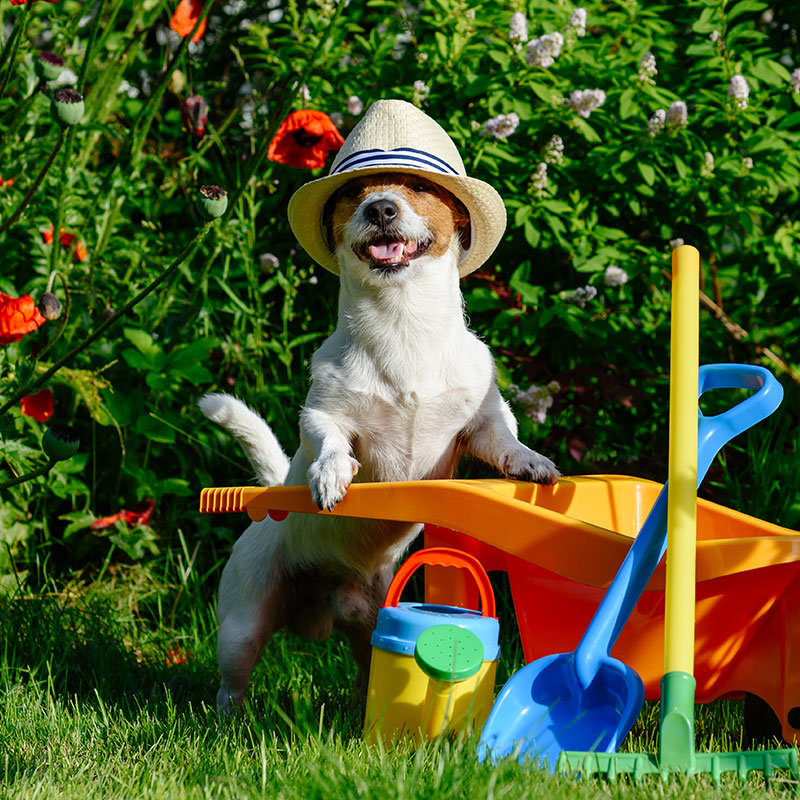
When most people plant their spring flower gardens, they do so with beauty and fragrances in mind. Rarely do they consider their pet's safety. However, if you have a cat, dog or other animal that has an insatiable appetite or that likes to taste test anything new—be it a treat, chew toy or houseplant—your pet's safety should be at the forefront of your mind.
Plants may be natural, but many contain poisonous elements that are harmful to all animals, people included. Pets are of particular concern around these plants as pets tend to eat items that, well, aren't meant for eating. Consumption of some toxic plants may lead to gastrointestinal upset or vomiting for cats and dogs while the consumption of other toxic plants may result in much more serious side effects, including death. You can keep your pets safe by knowing which plants pose a threat and either nixing them from your garden plans or working them into elevated pots that your pets cannot reach. Though the following list is not exhaustive, it should give you an idea of which common garden plants to avoid and why.
Azaleas
Azaleas, which are often categorized as rhododendrons, are beautiful, flowering and hardy shrubs. In the spring, these bushes bloom with bright clusters of fragrant flowers. All varieties are shade tolerant, and certain hybrids are heat or cold tolerate. They're also easy to care for. For these reasons, azaleas tend to be a gardener's favorite—which may pose a problem.
Though easy on the eyes, if ingested, azalea can wreak havoc on the stomach. Even eating just a few leaves can have serious side effects on your pet and result in vomiting, diarrhea and excess drooling. Without immediate medical attention, your pet could become dehydrated, fall into a coma and die.
Oleander
Oleander is another gardener favorite as it's a hardy, evergreen shrub that produces delicate, fragrant flowers. Many homeowners choose to use oleander as the base in their garden as it takes up a lot of space and looks pretty. However, when it comes to oleander, the phrase, "Looks can be deceiving" is apt.
Oleander is one of the most poisonous plants in the world. If even a single leaf is ingested by a cat, dog or even a child, the reaction is immediate and adverse. In best-case scenarios, it can lead to severe vomiting and slowed heartrate. In the worst-case scenario, ingestion of any part of oleander can be deadly. Though the plant may be appealing to the senses, you should keep it out of your garden and only admire it from afar.
Kalanchoe
Succulents are popular these days, especially in arid areas where it's difficult to keep more traditional flowering plants such as hydrangeas, tulips and daisies alive. However, you want to be careful of which succulents you bring into your home and plant in your garden, as some types, such as the kalanchoe, are toxic to cats and dogs.
Kalanchoe are characterized by hundreds of yellow, orange, red or pink flowers. The flowers and the leaves contain cardiac toxins which, if ingested by an animal, can lead to drooling, gastrointestinal irritation such as vomiting or diarrhea, changes in heart rhythm, weakness and collapse.
Lilies
Lilies are perhaps one of the most dangerous plants that cats can consume. The more benign lilies such as Calla lilies, Peace lilies and Peruvian lilies contain oxalate crystals that cause tissue irritation to the mouth, tongue, esophagus and pharynx, which may lead to excess drooling. True lilies, however, cause much more alarming consequences. For instance, the ingestion of even just a few leaves from Tiger, Easter, Day, Japanese and Asiatic lilies can lead to severe kidney failure, which is extremely painful before it eventually results in death.
Daffodils
If you're someone who likes to put as little maintenance into your garden after the first year as possible, you probably have a garden or field of daffodils. Daffodils, like tulips, come back year after year once you plant that first bulb. They're hardy and can survive in even the coldest of climates. They're also beautiful. Daffodils look like little rays of sunshine with their vibrant petals and bright yellow or orange snouts. However, no matter how lovely they appear to be, they're quite dangerous when consumed.
Daffodils contain lycorine, an alkaloid with potent emetic properties. If a cat or dog (or human) were to ingest any part of the flower—from the bulb to the stem to the flower—he or she would go through a severe bout of vomiting, diarrhea and/or abdominal pain. More severe reactions are characterized by respiratory depression or cardiac arrhythmias.
Sago Palm
Sago Palms are native to tropical and subtropical environments, but they're commonly found in homes throughout the contiguous U.S. Homeowners in Southern states such as Florida and Louisiana may be able to keep Sago Palms thriving in their yards, as those states are characterized by year-round warm temperatures and high levels of humidity. Sago Palms are exotic looking and can lend tropical appeal to just about any home or yard.
Though sago palms are very popular, not a lot of people are aware of the plant's poisonous properties. Every aspect of the sago palm, from the seeds to the fronds, are toxic to animals, with the seeds (nuts) being the most dangerous. This is because the Sago plant contains cycasin, which results in severe liver failure in dogs and causes acute gastrointestinal signs in all other animals. Symptoms of distress occur within 15 minutes to several of ingestion and may include drooling, diarrhea and vomiting. Other signs may stem from central nervous system failure and may include seizures, weakness, tremors and ataxia. Within two to three days of ingestion, severe liver failure is present, which you will recognize by jaundice, black, tarry stool and bloating in the abdomen. Unfortunately, even with aggressive treatment, the survival rate of liver failure caused by Sago Palm ingestion is just 50 percent.
If you're a plant person, don't be put off of planting your spring garden. Rather, be smart about what you put in it. Research plants before you put them in the ground, and if you must have a toxic plant in your sight, put it where no animal or child can access it.