
 Save 15% on your 1st Autoship learn more

 Email us
 Live Chat
 FAQs
FAQs





Introduction
You are relaxing on the couch when your dog settles in for a close-up snuggle. They let out a happy sigh or offer an enthusiastic lick, and suddenly, you notice it. The "dog breath" is more than just a minor smell. It is a sharp, metallic, or foul odor that signals something is wrong. When you lift their lip, you might see a film of yellow-brown tartar or red, puffy gums. At BaxterBoo, we talk to pet owners every day who are surprised by how quickly oral health can decline. Dental care is not just about fresh breath. It is a vital part of preventing systemic infections and long-term pain. This guide explains exactly what tools and products you can use to maintain your dog's smile safely.
Quick Answer: You should clean your dog's teeth using a combination of dog-specific enzymatic toothpaste, soft-bristled brushes, and dental chews. Avoid human toothpaste entirely, as it contains ingredients like xylitol or fluoride that are toxic to pets.
The Importance of Routine Oral Hygiene
Dental disease is one of the most common health issues seen in adult dogs. It usually begins with plaque, which is a soft film of bacteria that forms on the teeth within hours of eating. If it is not brushed away, minerals in the saliva harden that plaque into tartar, also known as calculus. Once tartar forms, you cannot simply brush it off at home. It requires professional scaling by a veterinarian.
The danger of ignoring this buildup goes beyond the mouth. Bacteria from infected gums can enter the bloodstream. From there, it can travel to the heart, kidneys, and liver, causing permanent organ damage. Keeping the teeth clean at home reduces the frequency of professional cleanings and protects your dog's overall longevity.
Key Takeaway: Home dental care is a preventative measure designed to stop plaque from hardening into tartar. It is much easier and more affordable to prevent buildup than it is to treat advanced gum disease.
Brushing Your Dog's Teeth at Home
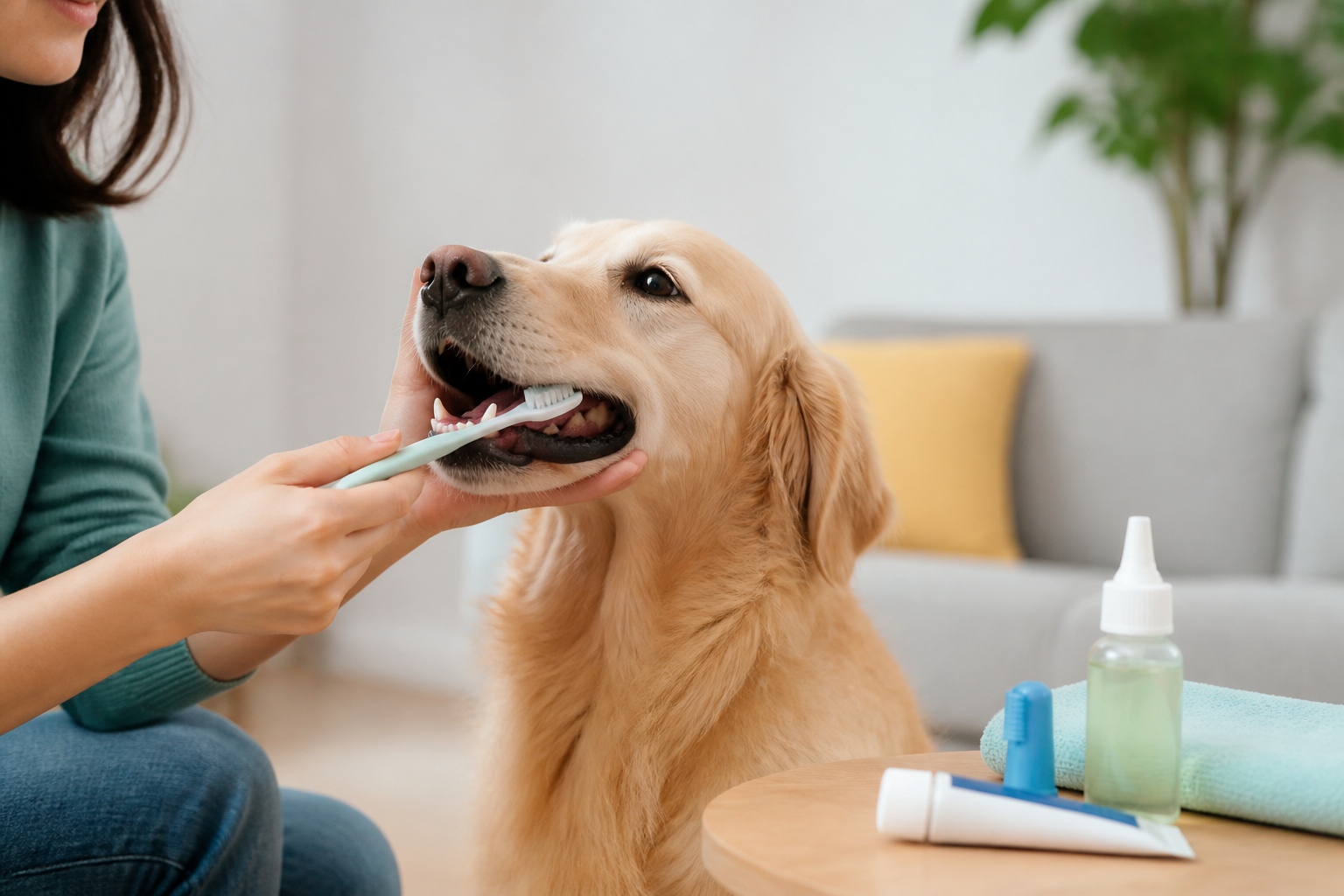
Brushing remains the gold standard for pet oral health. Nothing else provides the same mechanical scrubbing action to remove plaque from the gumline. However, you must use the right equipment to keep the process safe and effective. You can find brushes, toothpaste, wipes, and other options in our dog dental care selection.
Choosing the Right Toothbrush
You have several options depending on the size of your dog and their comfort level.
- Finger Brushes: These are small, flexible rubber caps that fit over your index finger. They have soft bristles on one side. They are excellent for puppies or dogs who are nervous about long objects being put in their mouths.
- Double-Headed Brushes: These have two sets of bristles at different angles. They are designed to clean the inside and outside of the teeth at the same time, which speeds up the process.
- Soft-Bristled Human Brushes: If you are in a pinch, a soft-bristled toothbrush designed for human infants can work. The head must be small enough to reach the back molars without gagging the dog.
The Necessity of Dog-Specific Toothpaste
You should never use human toothpaste for your pet. Human formulas often contain foaming agents like sodium lauryl sulfate, which can upset a dog's stomach. More importantly, many contain xylitol, an artificial sweetener that is life-threatening to dogs even in small amounts.
Dog toothpaste is enzymatic. This means it uses proteins to break down food particles and bacteria chemically. It also comes in flavors dogs actually enjoy, such as poultry, beef, or peanut butter. This makes the experience feel like a treat rather than a chore. For an all-in-one option, the OxyFresh Pet Dental Kit includes toothpaste, a water additive, and finger brushes.
Vet Tip: If you notice bleeding gums, loose teeth, or a sudden change in eating habits, stop brushing and call your veterinarian. These are signs of advanced periodontal disease that require medical intervention rather than just a cleaning.
Step-by-Step Brushing Routine
Step 1: Introduce the flavor. / Put a small amount of dog toothpaste on your finger and let your dog lick it off. Do this for a few days so they associate the paste with a reward.
Step 2: Get them used to mouth handling. / Gently lift your dog's lips and rub your finger along their gums. Keep these sessions very short and follow them with praise or a small toy.
Step 3: Introduce the brush. / Put toothpaste on the brush and let the dog lick it. Slowly transition to a few gentle circular strokes on the front "canine" teeth.
Step 4: Focus on the outside. / Most plaque accumulates on the cheek-facing side of the teeth. You do not necessarily need to brush the inside of the teeth, as the dog's tongue does some of that work naturally.
Step 5: Reward and repeat. / Always end on a positive note. Aim for a full brushing session at least three times a week, though every day is ideal for the best results. For additional brushing guidance, read our pet dental care tips.
Dental Chews and Treats
Not every dog will sit still for a toothbrush. If your dog resists or if you want to supplement your brushing routine, dental chews are a fantastic tool. These treats are designed with a specific texture that encourages deep chewing. As the dog's teeth sink into the treat, the material scrapes away plaque. Browse our dog dental treats for chews and oral-care snacks.
What to Look for in a Dental Treat
When shopping at BaxterBoo, look for treats that carry the Veterinary Oral Health Council (VOHC) seal. This seal indicates the product has been tested and proven to reduce plaque or tartar by a specific percentage.
- Greenies: These are a classic choice known for their chewy texture and toothbrush-like shape. They are highly digestible and formulated to provide a mechanical clean.
- Zesty Paws: This brand offers dental sticks that combine mechanical cleaning with ingredients that support gum health and fresh breath.
- Size Matters: Always choose a chew that matches your dog's weight. A treat that is too small can be swallowed whole, posing a choking hazard and providing no dental benefit.
Bottom line: Dental chews are a helpful supplement, but they are most effective when used alongside regular brushing rather than as a total replacement.
Using Dental Toys for Enrichment and Health
Chewing is a natural instinct for dogs. By providing the right toys, you can turn their playtime into a cleaning session. Some toys are specifically engineered with ridges, nubs, or grooves that massage the gums and whisk away debris.
Kong Dental Toys
Kong is a trusted name in the pet world for a reason. Their dental toys often feature "Power Grooves." You can smear a small amount of dog-safe toothpaste or peanut butter inside these grooves. As the dog works to get the food out, the rubber ridges scrub the surfaces of their teeth.
Rope Toys and Rubber Textures
Rope toys act like dental floss for dogs. As the fibers pass between the teeth, they can help dislodge trapped food. However, always supervise your dog with rope toys. If they start to shred and swallow the fibers, it can lead to dangerous intestinal blockages. Rubber toys with a "nubby" texture are often safer for aggressive chewers and are easy to sanitize in the dishwasher.
- Check toys daily for signs of wear.
- Discard toys that have small pieces breaking off.
- Avoid extremely hard materials like heavy bones or stones, which can cause tooth fractures.
Water Additives and Dental Wipes
For busy owners or senior dogs with sensitive mouths, there are low-effort options that still make a difference. These products work chemically or through light contact to manage bacteria levels. You can also explore our dog dental supplements for additional oral-care options.
Water Additives
A dental water additive is essentially mouthwash for dogs. You add a capful to their fresh water bowl every day. These formulas typically contain enzymes or ingredients like chlorhexidine that help kill the bacteria responsible for plaque and bad breath. They are usually tasteless and odorless, so most dogs do not even realize they are there. OxyFresh Pet Dental Water Additive is one brushless option.
Dental Wipes
If your dog will let you touch their mouth but hates the feel of a brush, dental wipes are a great middle ground. These are pre-moistened pads that you wrap around your finger. You simply swipe them over the surfaces of the teeth and along the gumline. While they do not reach deep into the crevices like a brush, they are much better than doing nothing at all.
Key Takeaway: Water additives and wipes are excellent "maintenance" tools for the days when you do not have time for a full brushing session.
The Role of Diet in Oral Health
What your dog eats every day impacts how much plaque forms in their mouth. While diet alone rarely solves dental problems, it is a significant factor in the overall environment of the mouth.
Dry Kibble vs. Wet Food
There is a common belief that all dry kibble cleans teeth because it is crunchy. This is only partially true. Most standard kibble is small and brittle. It shatters almost instantly when a dog bites it, providing very little scrubbing action. Wet food, on the other hand, can cling to the teeth and provide a sugary environment for bacteria to grow.
Prescription Dental Diets
If your dog is prone to heavy tartar buildup, your vet may recommend a prescription dental diet. These are available through our pet pharmacy via our partnership with Pet's Choice. Brands like Royal Canin and Farmina Vet Life produce specific dental formulas. These kibbles are much larger and have a fibrous structure that does not shatter. Instead, the tooth sinks into the nugget, which wipes the surface clean.
Vet Tip: If your dog has been diagnosed with early-stage periodontal disease, a prescription diet may be a necessary step. Consult your veterinarian to see if your pet requires an FDA-approved dental food to manage their condition.
When Home Cleaning Isn't Enough
Despite our best efforts, some dogs are genetically predisposed to dental issues. Smaller breeds, such as Pugs, Yorkies, and Chihuahuas, often have crowded mouths where teeth are shifted or overlapping. This creates perfect hiding spots for bacteria that no brush can reach.
If you see the following signs, it is time for a professional veterinary exam:
- Persistent Bad Breath: This is often the first sign of an infection.
- Discolored Teeth: Yellow or brown crust near the gumline is tartar that cannot be brushed away.
- Red or Bleeding Gums: This indicates gingivitis or more advanced gum disease.
- Difficulty Eating: If your dog drops food, whimpers while chewing, or only eats on one side, they may have a painful tooth.
- Facial Swelling: Swelling under the eye or along the jaw can indicate a tooth root abscess, which is a medical emergency.
For more guidance on warning signs, see our article about dogs hiding bad teeth.
Professional Cleanings and the Pharmacy
A professional cleaning is a medical procedure. It typically involves a general anesthetic so the vet can safely clean deep under the gumline and take X-rays to check for bone loss. For dogs with chronic dental infections, the vet may prescribe antibiotics or medicated oral rinses.
Our pharmacy provides a convenient way to get these FDA-approved medications and specialized diets. Through our partnership with Pet's Choice, we can help you manage your dog's long-term health needs with the same ease as ordering their favorite toys.
Bottom line: Professional cleanings are a restart button for your dog's oral health, while home care is the maintenance that keeps the results lasting longer.
Managing the Cost of Dental Care
Dental care can feel like a significant investment, especially when professional cleanings are involved. However, the cost of a yearly cleaning is much lower than the cost of treating heart disease or performing multiple tooth extractions later in life.
To make it more manageable, we recommend a few strategies:
- Autoship: Use our Autoship programme for your dental chews, toothpaste, and specialty diets to save on every order and ensure you never run out of supplies.
- MVP Rewards: Earn points on every dental care purchase that you can use toward future needs through the MVP Rewards programme.
- FIGO Pet Insurance: Consider a policy that offers dental coverage to help offset the cost of unexpected extractions or illnesses.
Natural Solutions and What to Avoid
Many owners look for natural ways to clean their dog's teeth. While some options are safe, others can be dangerous.
Safe Natural Aids
- Raw Carrots: Crunchy vegetables like carrots provide a mild mechanical scrub and are low in calories.
- Sliced Apples: These can help freshen breath, but they contain sugar, so they should be given in moderation.
What to Avoid
- Baking Soda: While often suggested in DIY pet toothpaste recipes, baking soda has a high alkaline content that can upset a dog's stomach if swallowed.
- Hard Bones: Cooked bones can splinter and pierce the digestive tract. Even raw bones, if too hard, can crack a dog's teeth.
- Human Mouthwash: Never use human mouthwash, as it almost always contains alcohol or xylitol.
Creating a Long-Term Dental Plan
Consistency is more important than perfection. If you can only brush your dog's teeth once a week, that is still better than never doing it at all. Combine that brushing with daily dental chews and a high-quality diet to create a multi-layered defense against plaque.
By taking an active role in what you clean your dog's teeth with, you are providing them with a better quality of life. They will be more comfortable, their breath will be fresher, and you will have peace of mind knowing you are protecting their heart and kidneys.
FAQ
Can I use coconut oil to clean my dog's teeth?
Coconut oil has mild antimicrobial properties and many dogs love the taste, so it can be used as a base for brushing. However, it does not contain the specialized enzymes found in pet toothpaste that actively break down plaque. It also adds extra fat and calories to your dog's diet, so use it sparingly.
How do I know if my dog's teeth are hurting them?
Dogs are experts at hiding pain, but you may notice subtle changes in their behavior. Look for "chattering" of the jaw, pawing at the mouth, or a sudden preference for wet food over dry kibble. If your dog stops playing with their favorite chew toys, it is a strong indicator of oral discomfort.
My dog hates the toothbrush, what is the next best thing?
If brushing is impossible, the next best option is a combination of VOHC-approved dental chews and a dental water additive. These provide both mechanical scrubbing and chemical plaque control with zero stress for the dog. You can also try dental wipes, which are often better tolerated than a brush.
Are professional non-anesthetic cleanings a good idea?
Cosmetic or non-anesthetic cleanings can make the teeth look white, but they cannot address the bacteria hiding under the gumline. Without anesthesia, a vet cannot perform X-rays or deep scaling, which are the most important parts of a dental exam. Most veterinarians recommend traditional cleanings to ensure the dog's health is fully protected.






