
 Save 15% on your 1st Autoship learn more

 Email us
 Live Chat
 FAQs
FAQs





Introduction
You lift your dog's lip to check their smile and realize the front teeth look great, but the back molars tell a different story. These hidden teeth are often covered in a thick layer of brown tartar that simple chewing does not seem to reach. At BaxterBoo, we understand that cleaning the back of the mouth is the most challenging part of a dental routine. These teeth are tucked away behind the jowls, making them prime real estate for plaque and bacteria. This guide covers exactly how to reach those difficult spots, the best tools for the job, and how to keep your dog calm during the process. Our goal is to provide practical steps that fit into your busy life while protecting your pet's long-term health.
Quick Answer: To clean a dog's back teeth, lift the jowl starting from the corner of the mouth to expose the molars. Use an angled pet toothbrush and enzymatic toothpaste to brush the outer surfaces in a circular motion for 30 seconds per side.
Why Back Teeth Require Special Attention
The back teeth of a dog consist of the premolars and molars. These are the heavy hitters of the mouth used for grinding and crushing food. Because of their location and shape, they have many nooks and crannies where food particles can become trapped. Unlike the smooth front incisors, the back teeth have complex surfaces that provide a perfect environment for plaque to thrive.
Plaque is a sticky film of bacteria that forms on the teeth within hours of eating. If it is not brushed away, it reacts with minerals in the saliva to harden into tartar, also known as calculus. Once tartar forms, it is very difficult to remove with a brush alone. The back of the mouth is also where the largest salivary glands are located. This constant flow of mineral-rich saliva means tartar often builds up faster on the upper back molars than anywhere else in the mouth.
Neglecting these teeth can lead to periodontal disease. This condition does not just cause bad breath and tooth loss. The bacteria found in diseased gums can enter the bloodstream. From there, it can travel to and potentially damage major organs like the heart, liver, and kidneys. Maintaining the health of the back teeth is a vital part of supporting your dog's overall systemic wellness.
Key Takeaway: Back molars are the primary site for tartar buildup due to their proximity to salivary glands and their complex grinding surfaces.
Essential Supplies for Successful Cleaning
Before you attempt to reach the back of your dog's mouth, you need the right gear. Using the wrong tools can make the experience painful or ineffective. We carry over 500 trusted brands at our Vernon Hills warehouse, and we have seen which products work best for reaching those deep molars. You can explore our dog dental care collection for toothbrushes, toothpaste, wipes, and other oral-care options.
Choosing the Right Toothbrush
A standard human toothbrush is rarely the best choice for a dog. Human brushes often have heads that are too large or bristles that are too stiff for canine gums. For the back teeth, you have three primary options:
- Dual-Headed Brushes: These have a long handle with a large brush on one end and a smaller, angled brush on the other. The small, angled end is specifically designed to reach the back molars in tight spaces.
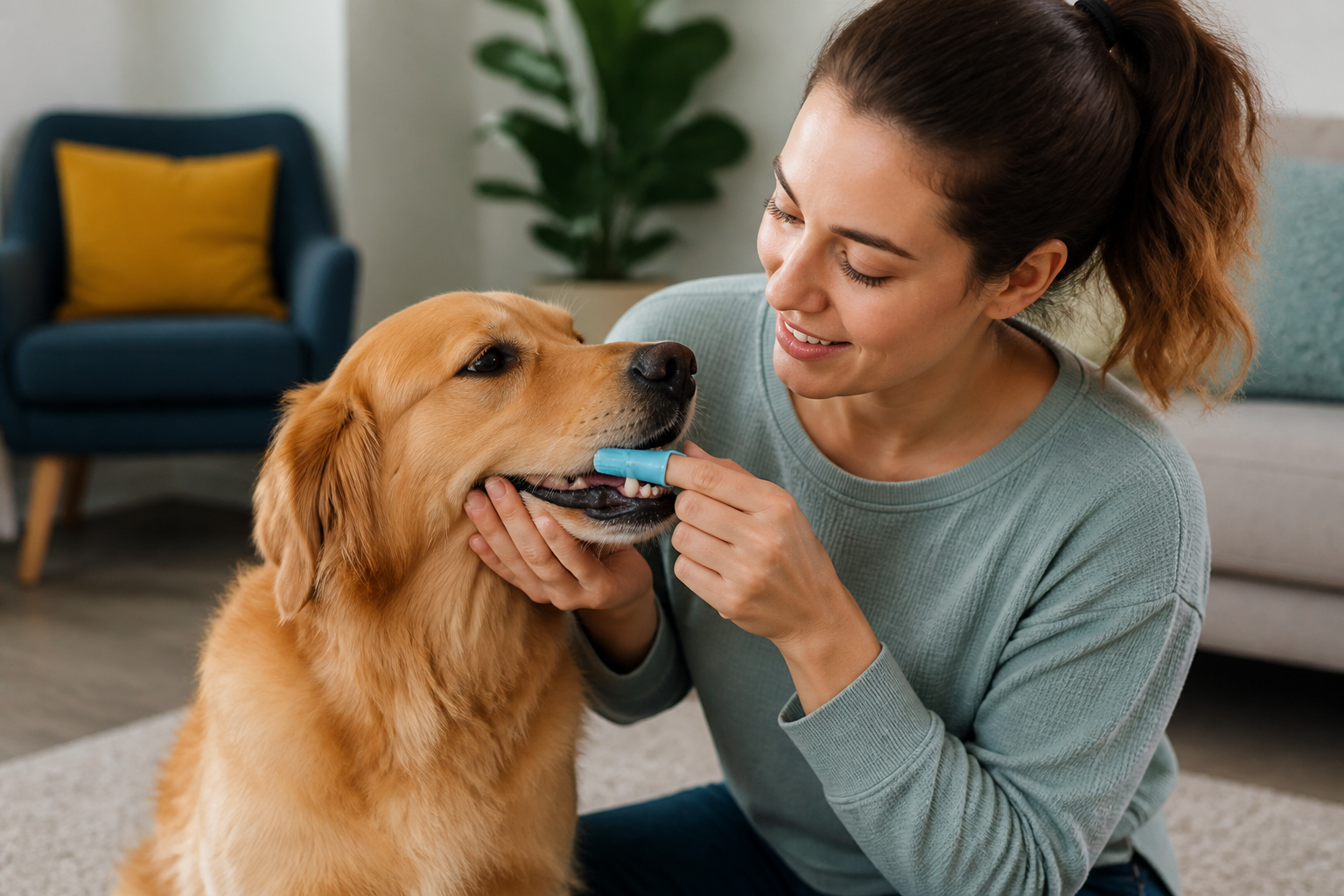
- Finger Brushes: These silicone sleeves fit over your index finger. They provide excellent tactile feedback, allowing you to feel exactly where you are in the mouth. This is very helpful if your dog has small jowls or is sensitive to plastic handles.
- 360-Degree Brushes: These have bristles all the way around the head. They are excellent for dogs that tend to move their heads a lot. You can clean the teeth regardless of which way the brush is facing.
Selecting Pet-Safe Toothpaste
Never use human toothpaste on a dog. Human formulas often contain xylitol, which is highly toxic to dogs even in small amounts. They also contain foaming agents like sodium lauryl sulfate, which are meant to be spit out. Since dogs swallow everything, these agents can cause significant stomach upset.
Enzymatic pet toothpaste is the standard for canine dental care. These formulas contain enzymes like glucose oxidase that help break down plaque even if you cannot brush every single surface perfectly. They come in flavors that dogs find delicious, such as poultry, beef, and peanut butter. This makes the toothpaste feel like a treat rather than a chore. For additional brushing guidance, read our pet dental care tips.
High-Value Rewards
Dental care should always be associated with something positive. Keep a bag of small, healthy treats nearby. Brands like Real Meat Co or Stella and Chewy's offer freeze-dried options that are highly motivating. You want your dog to look forward to the routine because they know a reward is coming afterward.
The Step-by-Step Technique for Cleaning Back Molars
Reaching the back of the mouth requires a different approach than cleaning the front. You must work with your dog's anatomy rather than against it. Follow these steps to ensure you are cleaning the molars effectively without causing discomfort.
Step 1: Choose a quiet location. / Find a spot where your dog feels secure, such as their bed or a carpeted area where they will not slip. Ensure there are no distractions like other pets or loud noises.
Step 2: Position yourself correctly. / For small dogs, it is often easiest to have them in your lap. For larger dogs, sit on the floor beside them. Do not stand over them, as this can feel intimidating.
Step 3: Lift the jowls. / Do not try to pry the entire mouth open. Instead, place your hand over the top of the muzzle and use your thumb to gently slide the corner of the lip upward and backward. This exposes the large premolars and the molars at the very back.
Step 4: Apply the toothpaste. / Put a pea-sized amount of enzymatic paste on the brush. Let your dog lick a little bit off first to get them interested in the flavor.
Step 5: Use circular motions. / Place the brush at a 45-degree angle to the gum line. Move the brush in small, gentle circles. Focus almost entirely on the outside of the teeth. A dog's tongue is very rough and does a decent job of cleaning the inside surfaces on its own.
Step 6: Target the upper molars. / The upper back molars are the most prone to disease. Spend at least 15 to 20 seconds on each side of the upper jaw specifically.
Step 7: Praise and reward. / Once you have finished both sides, give your dog a treat and plenty of verbal praise. This reinforces that they did a great job.
Vet Tip: If you notice the gums bleeding slightly when you first start a routine, do not panic. This is often a sign of mild gingivitis. If the bleeding is heavy or does not stop after a few sessions, consult your veterinarian to check for deeper infection.
Training Your Dog to Accept Back Tooth Cleaning
Most dogs are not born wanting their teeth brushed. It is a learned behavior that requires patience. If you force the issue, your dog may become fearful or aggressive. At BaxterBoo, we recommend a slow desensitization process that takes about a week. For more ideas, see our guide to warning signs of dental problems in dogs.
The One-Week Desensitization Plan
- Day 1 and 2: Simply let your dog lick the toothpaste off your finger. Do this twice a day. The goal is to make them love the taste of the paste.
- Day 3 and 4: While they are licking the paste, gently rub your finger along their gums and the outside of their back teeth. Do this for only 5 to 10 seconds.
- Day 5: Introduce the toothbrush. Let them lick the paste off the bristles. Move the brush around their mouth without actually brushing yet.
- Day 6: Try brushing one or two teeth on one side. Stop while they are still behaving well and give a big reward.
- Day 7: Attempt to brush the entire mouth, including those back molars. Keep the session under 60 seconds.
Consistency is more important than duration. A 30-second brushing session every day is much more effective than a 5-minute session once a month. If your dog becomes stressed, go back to the previous day's step for a little longer.
Bottom line: Short, daily sessions are the most effective way to build a lifelong habit of dental care.
Alternatives for Difficult Dogs
Some dogs simply will not tolerate a toothbrush in the back of their mouth. If you have a rescue dog with a history of mouth trauma or a senior dog with sensitive gums, you may need to look at other options. While brushing is the "gold standard," these alternatives can still make a significant difference.
Dental Wipes
Dental wipes are pre-moistened pads that you wrap around your finger. They contain many of the same plaque-fighting ingredients as toothpaste. They are often better tolerated than a brush because they feel like a natural extension of your hand. You can easily slide your finger along the back molars to wipe away soft debris.
Dental Chews and Toys
Chewing is a natural way for dogs to clean their teeth. When a dog chews on a textured surface, the mechanical action scrapes away plaque. Brands like Greenies or Kong offer products designed specifically for this purpose. Look for the VOHC (Veterinary Oral Health Council) seal on the packaging. This seal means the product has been tested and proven to reduce plaque or tartar by a specific amount. Browse our dog dental chews for options that can complement brushing.
For more ideas, explore these dental chew options for dogs.
Water Additives
These are tasteless liquids that you add to your dog's daily water bowl. They contain enzymes or minerals that help prevent bacteria from sticking to the teeth. This is a "passive" way to support dental health. It is particularly useful for dogs that are highly resistant to any form of mouth handling.
Prescription Dental Diets
In some cases, your veterinarian may recommend a specific dental diet. These kibbles are larger than standard food and have a fiber matrix that does not shatter immediately when the dog bites down. Instead, the tooth sinks into the kibble, allowing the fibers to scrub the surface of the tooth all the way to the gum line. This is especially helpful for the back molars, which do most of the crunching.
The Role of Professional Dental Care
Even with the best at-home routine, most dogs will eventually need a professional dental cleaning. Home brushing removes plaque, but it cannot remove tartar once it has hardened. Think of home care like brushing and flossing, and the vet visit like your twice-yearly dental cleaning.
A professional cleaning at a veterinary clinic is performed under general anesthesia. This is the only way to safely and thoroughly clean below the gum line, where the most serious disease occurs. During this procedure, the vet will use an ultrasonic scaler to remove tartar. They will also take dental X-rays to check for abscesses or bone loss that are invisible to the naked eye.
If your dog has chronic dental issues, your vet might prescribe specific medications or medicated oral rinses. Through our partnership with Pet's Choice, our BaxterBoo pharmacy carries a wide range of FDA-approved medications and prescription pet foods. This includes options for managing oral infections or specialized diets for pets with advanced periodontal disease. If your vet provides a prescription, we can help you manage those ongoing health needs conveniently.
Signs Your Dog Needs a Professional Exam
You should schedule a veterinary visit if you notice any of the following:
- Extremely foul breath that does not improve with brushing
- Loose, broken, or missing teeth
- Excessive drooling or dropping food while eating
- Blood on chew toys or in the water bowl
- Reluctance to eat hard kibble
- Yellow or brown crust along the gum line
Vet Tip: Do not wait for your dog to stop eating before seeking dental care. Dogs are experts at hiding pain, and a dog that is still eating can still have a very painful mouth.
Managing the Cost of Dental Care
Dental health is one of the most significant expenses for pet owners over a dog's lifetime. However, preventive care is much cheaper than emergency surgery. A bag of dental chews or a tube of toothpaste is a small investment compared to the cost of multiple tooth extractions under anesthesia.
We offer several programs to help make these costs more manageable. Our MVP Rewards program allows you to earn up to 5% back on every purchase, including dental supplies and treats. If you find a dental chew or food that your dog loves, our Autoship program provides a discount on your first order and ensures you never run out of the supplies you need to stay consistent. Additionally, our partnership with FIGO Pet Insurance can help cover the costs of unexpected dental injuries or illnesses.
Conclusion
Cleaning your dog's back teeth may seem daunting at first, but it is one of the most impactful things you can do for their health. By choosing the right tools, using a patient approach, and staying consistent, you can prevent many of the common issues associated with aging in dogs. Remember that some effort is always better than none. Even if you can only brush the back molars three times a week, you are still significantly reducing the risk of disease.
- Start slow with a tasty enzymatic toothpaste.
- Use an angled brush or finger brush to reach the back molars.
- Focus on the outer surfaces near the gum line.
- Supplement brushing with VOHC-approved dental chews.
- Consult your vet for regular professional exams and cleanings.
Protecting your dog's smile is a team effort between you, your veterinarian, and the right supplies. For all your dental care needs, from toothbrushes to prescription diets through our pharmacy, we are here to support you every step of the way. Consider VOHC-approved Checkups Dental Dog Treats as one option for supplementing your dog's dental routine.
Bottom line: Consistent at-home care focused on the back molars can add years of healthy, comfortable life to your dog's future.
FAQ
Why do my dog's back teeth get dirty so much faster than the front ones?
The back teeth are located near the major salivary glands, which release mineral-rich saliva that helps plaque harden into tartar quickly. Additionally, the jowls cover these teeth, preventing the natural cleaning action of the lips, and their complex shape allows food to get trapped easily.
Can I use a human toothbrush to clean my dog's back teeth?
It is not recommended because human brushes are often too large and stiff for a dog's mouth. An angled pet-specific brush or a finger brush is much more effective at reaching the tight spaces in the back of the jaw without causing discomfort or gum irritation.
My dog hates the toothbrush. Are there other ways to clean the molars?
Yes, you can use dental wipes, which are often better tolerated, or VOHC-approved dental chews that scrape the teeth as the dog bites down. Water additives and prescription dental diets can also help reduce plaque buildup if manual brushing is not an option.
How often do I really need to brush my dog's back teeth?
Ideally, you should brush your dog's teeth every day to remove plaque before it turns into tartar. If daily brushing is not possible, aiming for at least three times a week is still very beneficial for preventing periodontal disease and maintaining overall health.






