
 Save 15% on your 1st Autoship learn more

 Email us
 Live Chat
 FAQs
FAQs





Introduction
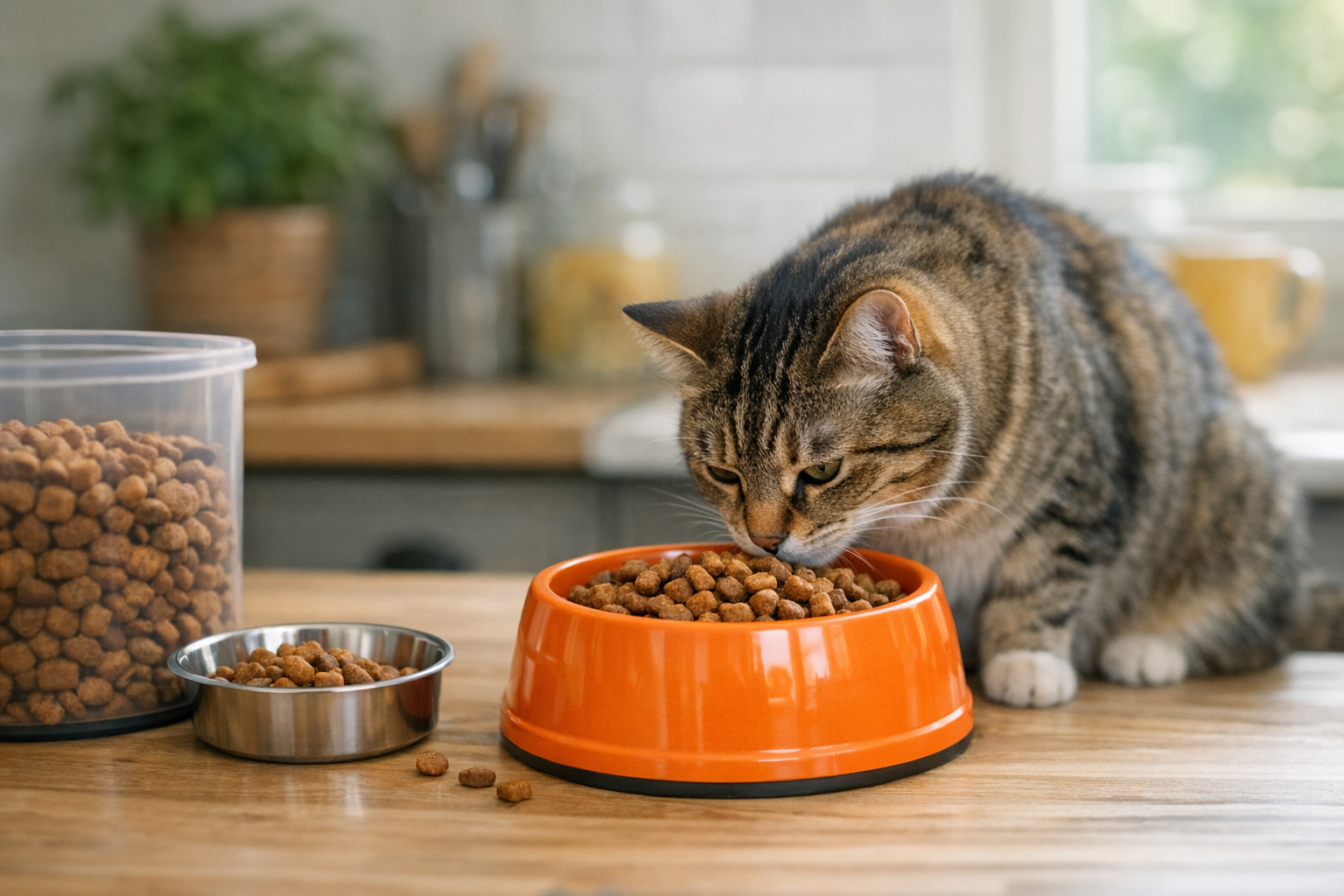
You hear the familiar crunching sound from the kitchen and assume your dog is enjoying an afternoon snack. You walk in to find your cat hunched over the dog’s bowl, happily munching away on large kibble. It is a common sight in multi-pet households. Curiosity or a simple empty bowl can lead a feline to sample their canine sibling's dinner. At BaxterBoo, we talk to pet parents every day who worry if this one-time snack is a medical emergency.
While a few stolen bites are generally not toxic, dog food is not a safe long-term diet for cats. They have very specific biological needs that dog kibble simply cannot meet. This article will explain the nutritional gaps between the species and how to manage a cat that prefers the dog’s menu. We want to help you ensure every pet in your home gets exactly what their body requires to thrive.
Quick Answer: A cat can safely eat a small amount of dry dog food as an occasional snack without immediate danger. However, dog food lacks essential nutrients like taurine and arachidonic acid that cats need to survive. Long-term feeding of dog food can lead to heart disease, vision loss, and organ failure.
The Biological Divide Between Dogs and Cats
To understand why dog food is insufficient for cats, we have to look at their biology. Dogs are classified as omnivores. This means they can derive nutrition from a wide variety of sources, including animal proteins, grains, and vegetables. Their bodies are flexible and can convert certain plant-based nutrients into the vitamins they need.
Cats are obligate carnivores. This term means they are biologically "obligated" to eat meat. Their entire digestive system is designed to process animal protein and fat. Unlike dogs, cats have lost the ability to manufacture several key amino acids and vitamins within their own bodies. They must get these pre-formed nutrients directly from animal tissue.
Protein Requirements
Cats require a significantly higher percentage of protein in their daily diet than dogs. Protein provides the nitrogen and amino acids necessary for maintaining their muscle mass and supporting their immune system. Most standard dry dog foods are formulated with protein levels that meet canine standards but fall far short of feline needs. If a cat eats dog food as their primary meal, they will slowly begin to break down their own muscle tissue to compensate for the deficiency.
Energy Metabolism
The way cats process energy is also unique. They rely heavily on protein and fats for energy rather than carbohydrates. While many modern dog foods contain grains or starches for energy, a cat’s liver is constantly "turned on" to process protein. This metabolic pathway does not slow down if protein intake is low. This makes cats much more sensitive to low-protein diets than almost any other mammal.
Key Takeaway: Cats are strict carnivores that require high levels of animal-based protein. Dog food is formulated for omnivores and lacks the concentrated protein levels necessary for feline metabolic health.
Essential Nutrients Missing in Dog Food
The biggest danger of feeding dog food to cats is the lack of specific micronutrients. Manufacturers balance dog food based on what a canine needs to survive. Because dogs can synthesize certain vitamins on their own, those vitamins are often absent or found in very low levels in dog kibble.
The Importance of Taurine
Taurine is an amino acid that is critical for heart health, vision, and reproduction in cats. Most mammals, including dogs and humans, can create taurine from other amino acids. Cats cannot. They must eat it.
If a cat does not get enough taurine, they can develop a condition called Dilated Cardiomyopathy. This is a serious heart disease where the heart walls become thin and weak. Taurine deficiency also causes central retinal degeneration. This can lead to permanent blindness. Because dogs make their own taurine, most dog foods do not have enough added taurine to sustain a cat.
Vitamin A and Beta-Carotene
Dogs can take beta-carotene from plants and convert it into active Vitamin A. Cats lack the enzyme necessary to make this conversion. They must consume "pre-formed" Vitamin A, which is found in animal liver and fats. Cat food is supplemented with this specific form of the vitamin. Dog food often relies on plant-based sources that a cat’s body simply cannot use. Without enough Vitamin A, a cat will suffer from poor skin quality, a dull coat, and a weakened immune system.
Arachidonic Acid
This is an essential fatty acid that helps regulate skin growth and blood clotting. Dogs can produce it internally from other fats. Cats cannot. It is almost exclusively found in animal fats. Dog food formulas often lack sufficient levels of this fatty acid because dogs do not need it in their diet. A cat deprived of arachidonic acid may struggle with slow wound healing and reproductive issues.
Arginine and Niacin
Cats are also extremely sensitive to a lack of arginine. This amino acid helps the body remove ammonia. A single meal completely lacking in arginine can cause a cat to show signs of ammonia toxicity. Similarly, cats cannot convert the amino acid tryptophan into niacin. They require much higher levels of B vitamins than dogs do.
Vet Tip: If you notice your cat is losing weight, acting lethargic, or has a dull coat after eating dog food, consult your veterinarian immediately. They can check for nutritional deficiencies and heart health. Our pharmacy carries prescription diets and supplements through our pet pharmacy if your vet determines your cat needs specialized nutritional support.
Why Cats Are Attracted to Dog Food
It can be frustrating when you buy premium cat food only to find your cat prefers the dog's kibble. There are several reasons for this behavior. Understanding the "why" can help you stop the habit before it causes health problems.
Curiosity and Texture
Cats are naturally inquisitive. They often want to investigate whatever another animal is eating. The larger size and different texture of dog kibble may be interesting to them. Some cats enjoy the "crunch" of a larger nugget. In some cases, the fat content sprayed on the outside of dog food to make it palatable for dogs also smells enticing to a cat.
Dominance and Boredom
In multi-pet homes, food can be a status symbol. A cat might eat from the dog's bowl to assert dominance over the dog. They are essentially saying, "What is yours is mine." In other cases, a cat might be bored. If they have free access to their own food all day, the dog's food represents a new and exciting "hunt."
Taste Bud Differences
Cats have fewer than 500 taste buds, while dogs have about 1,700. Cats also cannot taste sweetness. Because they have a more limited range of taste, they rely heavily on smell. If the dog food has a strong, meaty aroma, the cat may find it more appealing than their own dry food, especially if their own food has been sitting out and lost its scent.
Risks of Short-Term vs. Long-Term Consumption
It is important to distinguish between a "snack" and a "diet." Most of the time, a cat eating dog food is not a crisis, but it is never a good habit.
When It Is Not an Emergency
If your cat eats a few pieces of dog kibble, they will likely be fine. You might see some mild digestive upset. This could include a single bout of vomiting or slightly soft stools. This is usually just a reaction to a new food rather than a toxic response. Ensure your cat has plenty of fresh water and keep an eye on them for the next few hours.
When It Becomes Dangerous
The danger is cumulative. A cat that eats dog food for several weeks or months is at high risk. The nutritional deficiencies mentioned earlier take time to manifest. You might not realize anything is wrong until the heart or eyes are already damaged.
One specific danger is for cats with existing health issues. For example, if a cat has kidney disease, the mineral balance in dog food can put a massive strain on their organs. Dog food is often higher in magnesium and phosphorus than a cat with kidney issues can handle. If you are already shopping for preventive support, our cat healthcare category can help you compare relevant wellness options.
Bottom line: One meal of dog food won't hurt, but making it a habit is a recipe for serious health complications.
Practical Ways to Stop Your Cat from Eating Dog Food
If you are struggling with a kibble-thief, you need a management plan. You do not have to watch your pets 24 hours a day to keep them eating the right food.
Establish Scheduled Mealtimes
Free-feeding is the biggest contributor to food stealing. When bowls are left out all day, it is impossible to track who is eating what. Move both your cat and dog to a scheduled feeding routine. Put the bowls down for 20 minutes, then pick up whatever is left over. This teaches your pets that they must eat their own food when it is offered.
Create Separate Feeding Zones
Use the environment to your advantage. Cats feel safer eating in high places. Try feeding your cat on a sturdy counter, a cat tree, or a dedicated feeding shelf. Most dogs cannot reach these areas. This gives the cat a "safe zone" where they can eat without the dog bothering them. It also keeps the dog's bowl out of the cat's sight.
Use Technology
If your pets have specific prescription diets, consider a microchip-activated feeder. These bowls only open when they detect a specific pet’s microchip or a special collar tag. This is the most effective way to ensure the cat only eats cat food and the dog only eats dog food. We carry a variety of gear at BaxterBoo to help with pet management, and these types of feeders are excellent for multi-pet homes.
High-Quality Alternatives
Sometimes a cat steals dog food because they are bored with their own. Try offering a high-quality, protein-rich cat food that mimics the strong scents they find appealing. Brands like our selection of Stella & Chewy's products or our selection of Tiki Cat products offer formulas with very high meat content. These are often much more appealing to an obligate carnivore than standard grocery store kibble.
Step 1: Stop free-feeding. / Switch to two or three set mealtimes per day for all pets. Step 2: Pick a spot. / Place the cat's bowl in an elevated location where the dog cannot reach. Step 3: Supervise. / Stay in the room for the first week of the new routine to redirect the cat if they move toward the dog's bowl. Step 4: Clean up. / Remove all uneaten food immediately once the 20-minute feeding window is over.
When to Consult Your Veterinarian
If your cat has been eating dog food for an extended period, a professional checkup is necessary. Do not wait for symptoms to appear. Your vet can run blood work to check for protein levels and organ function. They can also perform a physical exam to listen for heart murmurs that might indicate a taurine deficiency.
If your cat is showing these symptoms, call your vet right away:
- Sudden weight loss or muscle wasting
- Clumsiness or bumping into furniture (signs of vision loss)
- Excessive panting or difficulty breathing
- Persistent vomiting or diarrhea
- Refusing to eat their regular cat food entirely
Our pet pharmacy allows us to provide prescription diets and medications through the BaxterBoo pharmacy. If your vet discovers a deficiency or a heart condition, we can help you get the specific food or medication your cat needs for their recovery.
Feeding for Longevity and Health
At BaxterBoo, we believe that nutrition is the foundation of a long and happy life. We have been operating since 2006, and we have seen how much a proper diet can change a pet's energy and coat quality. While it is tempting to think of dogs and cats as "basically the same," their internal chemistry tells a different story.
Feeding a cat dog food is essentially starving them of the tools they need to maintain their body. By sticking to species-specific formulas, you are protecting your cat's heart, eyes, and skin. Whether you choose a premium dry kibble or a moisture-rich wet food, ensure the label states it is "complete and balanced" for cats according to AAFCO standards. If you want to compare options, start with our cat food category or browse our dog food category for the products cats should not be eating as a primary diet.
If you are a new customer, you can get a $10 reward on your first order of $39 or more when you sign in at checkout. This is a great way to stock up on high-quality cat food or training tools to keep your cat away from the dog's bowl. We also offer our Autoship programme that saves you money on recurring deliveries, ensuring you never run out of cat food and feel tempted to reach for the dog's bag. You can also explore the MVP Rewards programme for even more ways to save.
Key Takeaway: Proper feline nutrition requires specific levels of taurine and animal protein that dog food cannot provide. Always prioritize cat-specific formulas to ensure your pet stays healthy and active.
Summary of Feline Nutritional Needs
- Protein: Needs to be the primary ingredient, sourced from named animals.
- Taurine: Absolutely essential for heart and eye health.
- Vitamins: Needs pre-formed Vitamin A and high levels of B vitamins.
- Fats: Requires animal-based fats for arachidonic acid.
- Calories: Cat food is typically more calorie-dense than dog food.
FAQ
Is dry dog food toxic to cats?
No, dry dog food is not toxic to cats in the same way that chocolate or onions are. A few stolen kibbles will not cause immediate poisoning. The danger lies in the lack of essential nutrients, which leads to long-term health failure if dog food is the primary source of nutrition.
Can I feed my cat dog food if I run out of cat food?
In an emergency, a single meal of dog food is better than no food at all. However, this should only happen once. You should get cat-specific food as soon as possible to ensure your cat gets the taurine and protein they need. For long-term convenience, our Autoship programme can help ensure you never run out of your cat's preferred diet.
My cat loves dog treats, are they safe to give?
Most dog treats are safe for cats in very small amounts as an occasional reward. However, they are not formulated for a cat's digestive system and may cause stomach upset. It is always better to use treats made specifically for cats, which are often higher in protein and more appropriately sized for a cat's mouth.
Why does my cat prefer the dog's food over their own?
Your cat might be drawn to the smell or fat content of the dog food. They may also be exhibiting dominance or simple curiosity about something "new." If your cat is consistently rejecting their own food, consult your vet to rule out dental issues or other health concerns that might be making their own food difficult to eat.






